Explore Cyprus with Our Interactive Map

Explore our top stories and discover ideas worth your time.

Sun-Chasing Yellow Blossoms of Cyprus

Sun-Chasing Yellow Blossoms of Cyprus

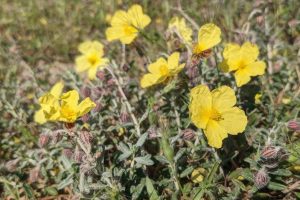
Springtime in Cyprus brings a splash of sunshine to rocky hills with Cyprus Rock-rose Helianthemum obtusifolium, a wildflower that's like a mini sunrose hugging the ground. This tough little plant, found only on the island, turns dry slopes into cheerful displays. But why does it follow the sun, and what ancient stories hide in its petals? www.inaturalist.org Just What Is This Sunny Cypriot Native? Helianthemum obtusifolium is a small, shrub-like wildflower from the rockrose family, the kind of plants that love sunny, dry spots around the Mediterranean. It's a perennial that pops up year after year, adding bright yellow touches to Cyprus's wild landscapes without needing much care. Roots in Cyprus's Ancient Earth and Botanical Tales Millions of years ago, as ancient seas dried up and tectonic shifts shaped Cyprus's rocky hills, plants like this one adapted to the island's isolation, evolving into unique species. First named in 1824 by French botanist Michel Félix Dunal, it draws from Greek words for "sun flower," reflecting how explorers in the 19th century uncovered Cyprus's floral secrets during Mediterranean expeditions. It's part of a broader story of how Cyprus, like a natural time capsule, preserved these gems from prehistoric times. A Fuzzy Bush with Crinkly Yellow Charms This low-growing plant reaches about 25-30 cm tall, with woody stems that spread out like a…

Read more

Seasons of Cyprus

Seasons of Cyprus

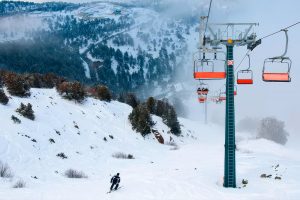
Cyprus experiences four distinct seasons, each with dramatic differences across its varied landscape. The same day that sees snow on Mount Olympus can bring 20-degree sunshine to coastal beaches just an hour away. This climate diversity creates a unique Mediterranean island where visitors can ski in the morning and swim in the afternoon. Understanding these seasonal patterns helps explain both the natural beauty and the agricultural traditions that define Cyprus. royalcaribbean.com The island enjoys roughly 300 days of sunshine annually, with temperatures influenced heavily by elevation. Coastal areas maintain mild winters and hot summers, while the Troodos Mountains create their own weather patterns. Average annual temperature along the coast reaches 26 degrees Celsius during the day and 17 degrees at night. The warm season lasts eight months, from April through November, making Cyprus one of the warmest locations in the Mediterranean region of the European Union. Winter and the Unexpected Snow Season Winter in Cyprus runs from December through February, but coastal residents often consider it autumn by northern European standards. Average temperatures along the coast hover around 16 to 17 degrees Celsius during the day, with nights cooling to 5 to 7 degrees. Rain falls occasionally, concentrated in these winter months which receive about 60 percent of the annual precipitation. Despite the rain, sunshine remains abundant with an average…

Read more
Larnaca Salt Lake Cyprus –  Birdlife Guide

Larnaca Salt Lake Cyprus –  Birdlife Guide

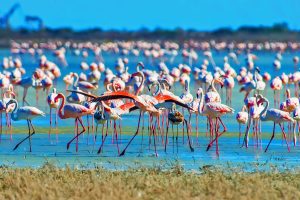
Larnaca Salt Lake is a complex network of four salt lakes of different sizes to the west of the city of Larnaca. The largest is Lake Aliki, followed by Lake Orphani, Lake Soros, and Lake Spiro. Three of these lakes interconnect to form the second largest salt lake complex in Cyprus after Limassol Salt Lake. Wikipedia-com The total surface area of the lakes adds up to 2.2 square kilometers, positioned between Larnaca International Airport and the historic Hala Sultan Tekke mosque. This location makes the salt lake one of the most visible natural landmarks for anyone arriving in Cyprus by air. Historical Background Archaeological finds show that the salt lake area has been inhabited since the Late Bronze Age, with a harbor that served the town unearthed near where the Hala Sultan Tekke mosque stands today. Ancient Larnaca, then known as Kition, functioned as one of Cyprus's major urban and commercial centers between 1650 and 1050 BC. The natural harbor provided strategic access to trading routes connecting Africa, Asia, and Europe. Before sediment deposit cordoned off the salt lakes, they formed a lagoon that was connected to the Mediterranean Sea. Over centuries, sediment accumulated in the channels linking the lagoon to the sea. Evidence suggests Bronze Age Cypriots dug an artificial channel to maintain port operations as natural waterways became…

Read more