Explore Cyprus with Our Interactive Map

Explore our top stories and discover ideas worth your time.

Education and Academic Institutions in Cyprus

Education and Academic Institutions in Cyprus

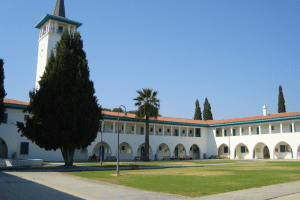
Education in Cyprus is overseen by the Ministry of Education, Sports and Youth. The education system is divided into pre-primary education for ages 3 to 6, primary education for ages 6 to 12, secondary education for ages 12 to 18, and higher education for ages 18 and above. Full-time education is compulsory for all children aged between 5 and 15. Shutterstock-com State-provided schooling including higher education is paid for by taxes, making public education free at all levels for eligible students. The Cypriot education system follows the Bologna framework, meaning degrees from Cyprus are recognized across Europe and globally, offering students internationally accepted qualifications. The Three Levels of Schooling Pre-primary education begins at age 3 and continues until age 6, though it is not mandatory. Public kindergartens operate under the Ministry of Education and follow a structured curriculum preparing children for primary school. Private kindergartens also exist, often offering bilingual or English-language programs. Shutterstock-com Primary education lasts six years from ages 6 to 12. The curriculum includes Greek language, mathematics, natural sciences, history, geography, religious education, physical education, music, and art. English language instruction typically begins in the third grade. Primary schools operate as single-shift schools, with classes from morning through early afternoon. Secondary education divides into two cycles. Lower secondary education, called Gymnasio, covers three years from ages 12…

Read more

Buffavento Castle Cyprs

Buffavento Castle Cyprs

Buffavento Castle stands at 960 meters above sea level in the Kyrenia mountain range of Cyprus. This medieval fortress is the highest and least preserved of three Byzantine strongholds built along the mountains. The name comes from Italian and means "Defier of the Winds," a fitting description for a castle constantly exposed to mountain winds at this elevation. cycprusfaqs-com The castle sits between St. Hilarion Castle to the west and Kantara Castle to the east, forming a defensive line across the Kyrenia Mountains. All three castles are visible from each other, allowing them to pass signals and warnings. Buffavento guarded the mountain passage from Kythrea to the north coast, controlling movement between the coastal plain and the interior. The location provides views in every direction. Looking north across the Mediterranean Sea, visitors can see the Turkish coast approximately 65 kilometers away on clear days. To the south, the Mesaoria Plain stretches toward Nicosia. On exceptionally clear days, Famagusta to the east and the Troodos Mountains to the south are visible. The castle overlooks nearly half the island from its rocky peak. The steep cliffs surrounding the fortress made it naturally defensible. The north, east, and west sides are protected by sheer drops, with only the southern approach allowing access. Historical Background The exact construction date remains unknown, though most historians…

Read more
Cyprus Mouflon Wildlife and Habitat

Cyprus Mouflon Wildlife and Habitat

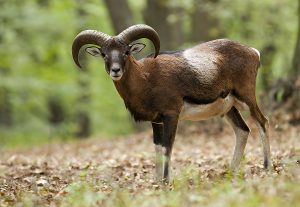
The Cyprus mouflon represents the only wild sheep endemic to Cyprus and the largest wild land mammal on the island. This subspecies stands about one meter tall at the shoulder and exhibits the classic features of mouflon: reddish to dark brown coats with distinctive black dorsal stripes and lighter saddle patches. The name "mouflon" comes from the Corsican words "mufro" for males and "mufra" for females. In Cyprus, locals call this animal "agrino," derived from the Greek word "Αγρινό." Adult males weigh up to 50 kilograms, while females typically reach around 35 kilograms. Males develop spectacular curved horns that grow in nearly complete circles, reaching lengths up to 85 centimeters. Most females do not develop horns, though some carry small versions. The Cyprus mouflon demonstrates island dwarfism, with shoulder heights averaging 15 centimeters less than their closest relatives, the Armenian mouflon. Ancient Arrivals and Near Extinction Archaeological evidence places sheep bones at the Neolithic village of Khirokitia, dating the mouflon's presence on Cyprus to approximately 10,000 years ago. Scientists believe early settlers brought wild sheep from Anatolia or the Levant during the early stages of sheep domestication. These animals later became feral, adapting to the island's mountain environments. Genetic studies show strong phylogenetic relationships between Cyprus and Anatolian mouflons, with origins likely traced to northwest Iran. visitcyprus-com The mouflon thrived…

Read more