Explore Cyprus with Our Interactive Map

Explore our top stories and discover ideas worth your time.

Cyprus Metal Crafts Through Ages

Cyprus Metal Crafts Through Ages

Cyprus holds a unique position in metalworking history. The island gave its name to copper itself, with the Latin term "cuprum" deriving from "Cyprus." For over 6,000 years, Cypriot artisans have shaped metals into tools, weapons, jewelry, and decorative objects. The tradition spans from simple Chalcolithic copper tools around 4000 BCE to Byzantine gold treasures and modern handcrafted silver jewelry. This heritage connects ancient mining operations in the Troodos Mountains with contemporary workshops where craftspeople maintain techniques passed down through generations. myfirstticket.com Historical Background The metal story in Cyprus begins during the Chalcolithic period when early settlers discovered native copper deposits. By 3000 BCE, Cypriots were already working copper to create artifacts of high quality that circulated throughout the Mediterranean. Archaeological evidence shows that copper smelting started during the third millennium BCE, transforming the island into a major production center. www.ancientcyprus.com The Bronze Age brought massive expansion. Cyprus became the largest copper supplier around the Mediterranean, with the island's strategic location between three continents making it a vital trading hub. Ancient texts from Babylon, Mari, and Alalakh dating to the 19th through 17th centuries BCE mention copper from Alashiya, the Bronze Age name for Cyprus. The Ulu Burun shipwreck discovered off Turkey's southwestern coast carried over 10 tons of Cypriot copper ingots when it sank in the late 14th century…

Read more
Traditional Caique and Dghajsa Boats Cyprus

Traditional Caique and Dghajsa Boats Cyprus

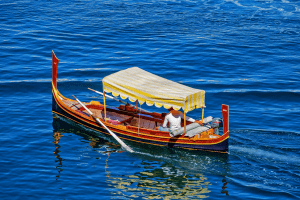
Along the Cypriot coast, the sea was never a distant backdrop. It was a working space, a source of food, and a route that connected villages to the wider Mediterranean. For generations, this relationship depended on small wooden boats shaped by experience rather than theory. Among them, the caïque and the varka (or local skiff) represent traditions of craftsmanship and seamanship. This article explores how these boats were built, how they were used, and why they still matter, not as romantic symbols, but as practical responses to life by the sea. Boats Designed by Water, Not by Paper Traditional Mediterranean boats were not designed on drafting tables. They were shaped directly by water conditions, weather patterns, and daily use. Boatbuilders worked from memory, observation, and repetition, adjusting proportions until a vessel behaved correctly at sea. The caïque and the dghajsa belong to this tradition. Both are wooden craft, built by hand, and adapted to short journeys, frequent use, and close interaction with coastlines. Their forms reflect accumulated knowledge rather than innovation for its own sake. Understanding these boats means understanding the environments they served. The Caïque: A Working Boat for Cypriot Waters The caïque is the vessel most closely associated with Cyprus and nearby regions of the Eastern Mediterranean. It was primarily a working boat, built for fishing and small-scale…

Read more

Community-Based Fishing Villages of Cyprus

Community-Based Fishing Villages of Cyprus

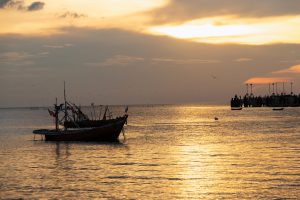
Along the Cypriot coast, fishing was never simply a job carried out at sea and forgotten once boats returned to shore. It was a shared way of life that shaped villages, relationships, and daily rhythm. In small coastal communities, fishing organised how people worked, ate, celebrated, and supported one another. Boats and nets mattered, but cooperation mattered more. Understanding Cyprus’s fishing villages means looking beyond catches and techniques to the social systems that grew around them and quietly endured. Adobe-Stock-com Villages Built Around Shared Work Community-based fishing villages developed where fishing was not an individual pursuit but a collective responsibility. Boats were small, crews were familiar, and labour depended on trust rather than contracts. Knowledge, tools, and effort were shared because survival demanded it. Cyprus’s coastline encouraged this structure. Shallow nearshore waters, sheltered bays, and predictable conditions suited small boats operated by families and neighbours. Fishing rarely rewarded isolation. Success came from working together, coordinating timing, and respecting unwritten rules shaped by experience. In these villages, fishing was not separate from life. It was life. A Way of Living Passed Down, Not Designed The roots of Cyprus’s fishing villages stretch back thousands of years. Archaeological evidence shows coastal communities relying on the sea from the Neolithic and Bronze Ages onward. Early fishers used simple vessels and local materials, learning quickly…

Read more