Explore Cyprus with Our Interactive Map

Explore our top stories and discover ideas worth your time.

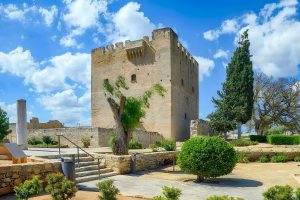
Cinematic Sea Cliffs and Stone Fortresses

Cinematic Sea Cliffs and Stone Fortresses

These fortifications originally served as watchtowers and defensive positions against Arab raids from the 7th to 10th centuries, with guards using fire signals to communicate between castles and warn coastal cities of approaching enemies. The strategic positioning allowed 360-degree views across both northern and southern coasts, with Kantara's summit offering visibility extending to Turkey, Lebanon's mountains 160 kilometers away, and across the Karpasia Peninsula. oloi-cy Saint Hilarion's Fairytale Architecture Saint Hilarion Castle occupies an impregnable position on a rocky outcrop at 732 meters, creating a structure believed to have inspired Walt Disney's design for Snow White and the Seven Dwarfs castle. The fortress divides into three distinct levels embedded into mountain rock, each featuring hidden rooms, secret tunnels, and gardens offering panoramic views of the Mediterranean and surrounding countryside. Byzantine builders originally constructed the castle in the 10th or 11th century, though some sources suggest earlier origins. pinterest-com The Lusignan dynasty from 1192 to 1489 expanded the fortifications extensively, adding chambers for knights, royal families, and administrative functions. The castle served simultaneously as military outpost and royal summer residence, with the upper level containing royal apartments that provided escape from coastal heat. The Venetians who ruled from 1489 to 1571 added heavy defensive walls and strong towers, though they later abandoned mountain castles in favor of coastal fortifications at Kyrenia,…

Read more

Cyprus Driving – Cities vs Mountains vs Village Roads

Cyprus Driving – Cities vs Mountains vs Village Roads

Cyprus offers drivers dramatically different experiences depending on where they travel. City streets demand alertness for roundabouts and parking challenges, mountain roads require careful handling on steep grades, and village lanes test patience with narrow passages. Understanding these differences helps drivers navigate the island safely and confidently. In-Cyprus-com Major cities like Nicosia, Limassol, and Paphos feature modern infrastructure with well-maintained roads, but they also present unique obstacles. Roundabouts appear frequently, especially at highway exits and major intersections. Traffic already on the roundabout has the right of way, so drivers must yield before entering. Local drivers move quickly through these circles, which can intimidate newcomers. Parking in city centers presents significant difficulties. Limassol has metered street parking along the seafront Molos promenade and in the old town, with pay-and-display machines requiring euro coins. Nicosia offers some free parking outside the Venetian walls along the moat, though finding a spot requires luck and patience. The old town streets are narrow, making it easy to accidentally block driveways or delivery zones. Traffic congestion hits peak levels during morning and evening rush hours. Nicosia sees particularly heavy traffic between 7:30 and 9:00 AM as commuters flood into the capital. The same pattern repeats between 5:00 and 6:30 PM when people leave work. Highway exits outside major cities require special caution because they are often…

Read more
Mesaoria Plain Cyprus Agricultural Heartland

Mesaoria Plain Cyprus Agricultural Heartland

The Mesaoria Plain stretches 96 kilometres across central Cyprus between two mountain ranges. Mesaoria, meaning "between the mountains" in Greek, is a broad central plain that extends from Morphou Bay in the west to Famagusta Bay in the east. The Troodos Mountains rise to the south, while the Kyrenia Range forms a wall to the north. The plain covers approximately 1,000 square kilometres with elevations ranging from 100 metres on average up to 325 metres at its highest points. wikimedia-org Nicosia, the capital of Cyprus, sits roughly in the centre of the plain along the Pedieos River. This positioning reflects centuries of strategic thinking, as the location provided access to both coasts. The plain contains dozens of villages and several major towns, making it the most densely populated region on the island despite its harsh summer climate and winter-dependent water supply. Historical Background Twenty million years ago, Cyprus existed as two separate islands corresponding to what would become the Kyrenia and Troodos mountain ranges. Approximately one million years ago, tectonic forces pushed up the land between these islands, creating the Mesaoria Plain and joining them into the single landmass known today as Cyprus. The Mediterranean Sea covered and exposed the plain multiple times as sea levels changed, but it has remained in its current form since the end of the…

Read more