Explore Cyprus with Our Interactive Map

Explore our top stories and discover ideas worth your time.

Mount Stavrovouni Cyprus Sacred Mountain

Mount Stavrovouni Cyprus Sacred Mountain

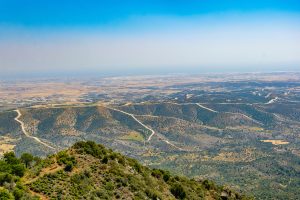
Rising 689 meters above the Mesaoria plain, Mount Stavrovouni has been a sacred site for over 2,000 years. The name derives from two Greek words: stavros (cross) and vouno (mountain), literally meaning "Mountain of the Cross." The monastery follows the strict ascetic rule of Saint Basil and maintains traditions similar to those of Mount Athos in Greece. Adobe-Stock-com The site is recognized as the earliest documented monastery in Cyprus. The oldest written reference appears in Byzantine records from the 4th century and confirms its establishment as a major religious center. A Russian monk named Abbot Daniel visited in 1106 and left detailed accounts of the monastery and its sacred relics in his travel memoirs. The monastery operates as a working religious community with approximately 20 monks dedicated to lifelong ascetic principles. Following Mount Athos traditions, the monastery prohibits women from entering its grounds, though female visitors can access the nearby chapel of Agia Varvara at the mountain's base. Historical Background According to tradition, Saint Helena founded Stavrovouni Monastery between 327 and 329 AD, following her attendance at the First Ecumenical Council of Nicaea in 325 AD. On a pilgrimage to Jerusalem, she discovered the three crosses used in the crucifixion of Jesus and the two thieves, excavated them, and planned to transport them to Constantinople. Adobe-Stock-com On her return to…

Read more

Archbishop’s Palace Nicosia Cypriot Orthodoxy Center

Archbishop’s Palace Nicosia Cypriot Orthodoxy Center

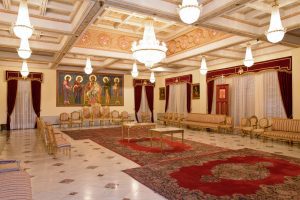
The Archbishop's Palace in Nicosia serves as the official headquarters of the Orthodox Church of Cyprus and the residence of the Archbishop. sciencedirect-com The Archbishop's Palace functions as both the administrative center of the Cypriot Orthodox Church and a major cultural complex. The building houses the offices of the archdiocese, the residence of the Archbishop of Nova Justiniana and All Cyprus, the Byzantine Museum with over 200 icons spanning 1,000 years, the Library of the Archbishopric, and an art gallery displaying European paintings from the 15th to 19th centuries. The palace stands adjacent to the Old Archbishop's Palace, which now contains the Folk Art Museum and the EOKA Struggle Museum. The complex represents the enduring power and influence of the Orthodox Church in Cypriot society, while also serving as a guardian of the island's cultural heritage. Historical Background The current Archbishop's Palace was constructed between 1956 and 1960, during the final years of British colonial rule and the lead-up to Cypriot independence. Archbishop Makarios III commissioned the palace, recognizing the need for a modern building to reflect the importance of the Church of Cyprus. The timing of construction proved significant, as Makarios would soon become not just the spiritual leader of the Orthodox community but also the first president of the Republic of Cyprus in 1960. wikipedia-org Greek architect George…

Read more
Tombs of the Kings Paphos Roman Burials

Tombs of the Kings Paphos Roman Burials

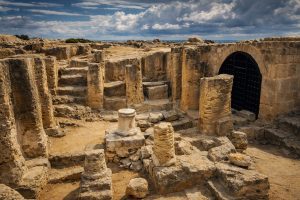
The Tombs of the Kings is an ancient burial complex in Paphos featuring underground chambers carved from solid rock. Located 2 kilometers north of Paphos harbor, this UNESCO World Heritage Site contains elaborate tombs used by high-ranking officials and aristocrats from the 3rd century BC to the 3rd century AD. flickr-com The site consists of a large necropolis spread across a wide area overlooking the Mediterranean Sea. Despite the name, no actual kings were buried here. The Cypriot monarchy was abolished in 312 BC, before most of these tombs were constructed. The name comes from the impressive size and grand architectural design of the burial chambers, which were considered worthy of royalty. The tombs served as the cemetery for Nea Paphos, an ancient city located near the modern harbor. Approximately 100 Ptolemaic aristocrats and high-ranking officials were buried here during the Hellenistic and Roman periods. The site continued to be used until around the 4th century AD and was later repurposed by early Christians as places of refuge during persecution. Historical Background The tombs were built during a time when Cyprus was under the control of the Ptolemaic Kingdom of Egypt, following the death of Alexander the Great. The Ptolemaic dynasty ruled Cyprus from 294 BC until 58 BC, when the island became part of the Roman Republic. This political…

Read more