Explore Cyprus with Our Interactive Map

Explore our top stories and discover ideas worth your time.

Pancyprian Gymnasium Museum Nicosia History

Pancyprian Gymnasium Museum Nicosia History

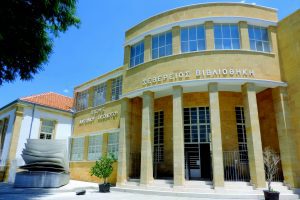
wikimedia.org The Museums of the Pancyprian Gymnasium occupy a series of restored houses just north of the school itself. These buildings house multiple collections under one roof, including a school history museum, archaeological and numismatic collections, an art gallery, natural history exhibits, antique maps, old weaponry, and a remarkable collection of Gothic sculptures. Each section contributes to a broader understanding of Cypriot education, culture, and history from different angles. The museum operates separately from the school but maintains a close connection to the institution that gave it life. Visitors enter from Thisseos Street rather than through the school grounds. The space has been carefully organized to guide guests through different aspects of the school's influence on Cyprus over more than two centuries. Historical Background Archbishop Kyprianos founded the Pancyprian Gymnasium in 1812 during Ottoman rule. The school was originally called the Hellenic School of Nicosia and stands today as the oldest continuously operating high school on the island. Before this institution, a school called Ellinomouseion had existed at the same location since 1753. The founding of the school represented a bold step in preserving Greek education and culture during a period of Ottoman control. Archbishop Kyprianos, who served as the head of the Cypriot Orthodox Church, saw education as essential to maintaining the cultural identity of the island's Greek population.…

Read more

Kourion Archaeological Museum Cyprus History

Kourion Archaeological Museum Cyprus History

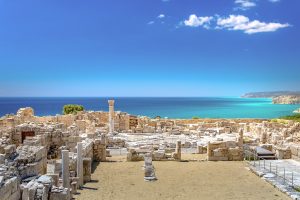
The Kourion Archaeological Museum stands as a small but powerful window into one of Cyprus's most important ancient city-kingdoms. The museum occupies a traditional building that once served as the private residence of George McFadden, who worked as Assistant Director of the University of Pennsylvania and led archaeological research at Kourion from 1934 to 1953. cyprusalive-com McFadden built this two-story house in 1938-39 to serve both as his home and as the excavation headquarters. After his death in 1953, the Cypriot government took ownership of the property. The building was renovated and opened as a museum in December 1969. The museum consists of two exhibition halls that showcase artifacts recovered from the ancient city of Kourion, the Sanctuary of Apollo Hylates, and surrounding communities. Despite its modest size, the collection offers visitors a comprehensive look at life in this ancient city-kingdom from the Early Bronze Age through the Roman period. Historical background George McFadden was not a trained archaeologist when he arrived in Cyprus in 1934. He was a wealthy Philadelphian who financed the excavations and enjoyed playing archaeologist. He brought his 90-foot yacht, the Samothrace, which was a Dutch pilot schooner built in Rotterdam and purchased in 1933. His financial support made the University of Pennsylvania's excavations possible. The expedition studied the conditions under which people lived in ancient…

Read more
Lapithos, Cyprus – History & Facts

Lapithos, Cyprus – History & Facts

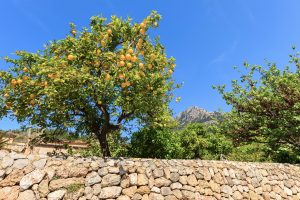
Lapithos sits on the northern coast of Cyprus beneath the Kyrenia mountains, where lemon groves once produced 11 million fruits per year and Byzantine treasures buried during Arab raids emerged a thousand years later in museum collections around the world. This settlement has existed for over 5,000 years under at least four different names. adobe-stock-com Lapithos is one of the oldest continuously inhabited sites on Cyprus. The modern town of Lapithos occupies the slopes of the Pentadactylos mountain range near where the ancient city kingdom once stood. The coastal ruins three kilometers north are called Lambousa, the name used during Roman and Byzantine times. Ancient writers, including Strabo, knew it as Lapethos. The philosopher Alexander of Ephesus called it Imeroessa, meaning attractive and passion-arousing. Assyrian inscriptions from 700 BC mention it as Sillu. Each name reflects a different period in the settlement's long history. Historical Background The oldest settlement at Lapithos dates to the Neolithic or Chalcolithic period and is located west of the current town at a site called Alonia ton Plakon. Archaeological evidence, including pottery and pottery wheels, confirms occupation as early as 3000 BC. Stone foundation walls, hearths, and three bothroi cut into rock have been found, though floods and later cultivation damaged much of the early settlement. adobe-stock-com According to Greek tradition, Spartan colonists led by…

Read more