Explore Cyprus with Our Interactive Map

Explore our top stories and discover ideas worth your time.

Deneia Necropolis Cyprus Bronze Age Site

Deneia Necropolis Cyprus Bronze Age Site

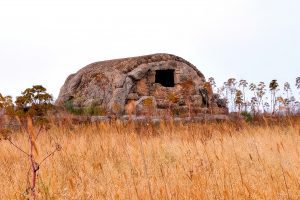
Just southeast of the modern village of Deneia in the Nicosia district lies one of Cyprus's most significant Bronze Age burial grounds. This ancient necropolis contains over 1,250 tombs that document nearly a thousand years of funerary practice, from approximately 2500 BCE through 1650 BCE, making it among the most extensively used cemeteries in prehistoric Cyprus. cyprusisland.net The Deneia necropolis represents an extraordinary concentration of chamber tombs carved into natural rock during the Early and Middle Bronze Age periods. Unlike many smaller cemeteries scattered across Cyprus that served individual villages, Deneia appears to have functioned as a regional burial ground that drew communities from a wider area. The tombs follow the standard Bronze Age design, with a dromos or entrance passage leading down to one or more roughly circular burial chambers. These chambers typically held multiple interments as families reopened tombs over generations to add new dead. Grave goods found at the site include red-polished pottery, copper tools and weapons, jewelry made from gold and precious stones, and clay figurines. Historical Background The people who used this cemetery lived during a critical transformation in Cypriot history. Around 2500 BCE, newcomers from Anatolia introduced new pottery styles and burial customs to Cyprus. These immigrants are identified by archaeologists as the Philia Culture, and they brought with them the knowledge to exploit…

Read more
Necropolis of Salamis Royal Tombs Cyprus

Necropolis of Salamis Royal Tombs Cyprus

The necropolis consists of two distinct burial areas that reflect ancient social hierarchy. The Royal Tombs, sometimes called the Tombs of the Kings, hold nine massive built chamber tombs where nobility and wealthy elites were buried with spectacular ceremony. These tombs feature long dromos passages, monumental entrances called propylaea, and burial chambers constructed from enormous limestone blocks. visitncy-com About 400 meters away sits the Cellarka cemetery, a network of over 100 smaller rock-cut chamber tombs carved directly into hard limestone. These served the general population of Salamis from the 7th through the 4th centuries BCE. The name Cellarka comes from the Greek word for cells, describing how closely the tombs cluster together. Historical Background According to Greek legend, Teucer founded Salamis around 1180 BCE after being exiled from his homeland, the island of Salamis near Athens. He named his new city after the place he left behind. Archaeological evidence suggests these stories contain some truth, as excavations found a chamber tomb south of the later Temple of Zeus that dates to the 11th century BCE, confirming a settlement existed here at roughly the time the legends describe. visitncy-com The earliest tombs may date back to the 11th century BCE, suggesting Salamis coexisted with nearby Enkomi, an earlier Bronze Age settlement that was gradually abandoned. The main period of tomb construction…

Read more
A Tapestry of Cyprus Sacred Spaces

A Tapestry of Cyprus Sacred Spaces

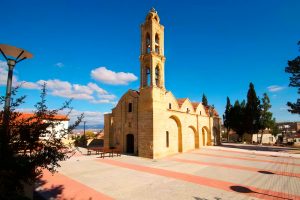
Most visitors to Cyprus know about its Greek Orthodox churches and ancient Christian monasteries, but the island's religious story is far richer and more complex. For millennia, Cyprus has been home to Jewish communities, Muslim mosques, Armenian and Maronite Christians, Sufi mystics, and Latin Catholic cathedrals - each faith leaving monuments that testify to survival, migration, and remarkable coexistence. orthodoxtimes.com Walking through Cyprus's cities means encountering this layered religious landscape where synagogues stand near mosques, Gothic cathedrals became prayer halls, and sacred springs were shared by people of different beliefs. Where Many Faiths Met and Mingled Cyprus has never belonged to a single religious tradition. Its position at the meeting point of Europe, Asia, and Africa made it a crossroads not only for trade and armies but also for belief systems. Long before Orthodox Christianity became dominant in the medieval period, Cyprus hosted Jewish traders and craftsmen, pagan mystery cults, and early Christian congregations mentioned in the New Testament. Later waves brought Islamic institutions during Ottoman rule, Armenian refugees fleeing persecution, Maronite Christians migrating from Lebanon and Syria, and Western European Crusaders establishing Latin Catholic strongholds. Rather than existing as isolated enclaves, these religious minorities participated actively in Cyprus's economy, diplomacy, and urban life. Their monuments - synagogues, mosques, churches of different denominations, and Sufi lodges - aren't marginal curiosities…

Read more