Explore Cyprus with Our Interactive Map

Explore our top stories and discover ideas worth your time.

Seasons of Cyprus

Seasons of Cyprus

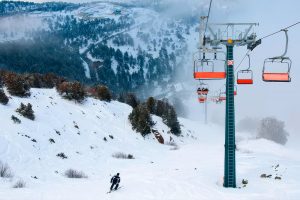
Cyprus experiences four distinct seasons, each with dramatic differences across its varied landscape. The same day that sees snow on Mount Olympus can bring 20-degree sunshine to coastal beaches just an hour away. This climate diversity creates a unique Mediterranean island where visitors can ski in the morning and swim in the afternoon. Understanding these seasonal patterns helps explain both the natural beauty and the agricultural traditions that define Cyprus. royalcaribbean.com The island enjoys roughly 300 days of sunshine annually, with temperatures influenced heavily by elevation. Coastal areas maintain mild winters and hot summers, while the Troodos Mountains create their own weather patterns. Average annual temperature along the coast reaches 26 degrees Celsius during the day and 17 degrees at night. The warm season lasts eight months, from April through November, making Cyprus one of the warmest locations in the Mediterranean region of the European Union. Winter and the Unexpected Snow Season Winter in Cyprus runs from December through February, but coastal residents often consider it autumn by northern European standards. Average temperatures along the coast hover around 16 to 17 degrees Celsius during the day, with nights cooling to 5 to 7 degrees. Rain falls occasionally, concentrated in these winter months which receive about 60 percent of the annual precipitation. Despite the rain, sunshine remains abundant with an average…

Read more

Cavo Greco Sunrise Viewpoint, Cyprus

Cavo Greco Sunrise Viewpoint, Cyprus

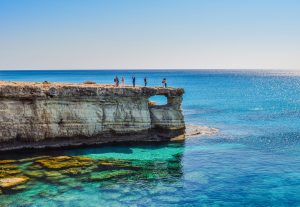
The Cavo Greco sunrise viewpoint sits at the southeastern edge of Cyprus, positioned at 95 meters above sea level on a small limestone mountain within Cape Greco National Forest Park. pixy-org This protected area spans 385 hectares between the resort towns of Ayia Napa and Protaras. The viewpoint marks the easternmost point of both the Republic of Cyprus and the European Union, offering unobstructed panoramas of the Mediterranean Sea, Famagusta Bay, and the surrounding coastline. Visitors come here primarily for the spectacular sunrise displays that occur daily, with the sun rising directly from the sea in vibrant colors that illuminate the limestone cliffs and turquoise waters below. Historical Background The limestone cliffs and formations seen today were created through a combination of tectonic activity and the erosive forces of the sea and wind over millions of years. The karst topography has produced numerous caves and natural arches throughout the area. The cape was known as Cape Pedalion in antiquity, and according to Strabo the trapezoidal hill lying above it was sacred to Aphrodite. Archaeological evidence shows the area has been inhabited since Neolithic times, with one of the oldest settlements in Cyprus discovered here in 1992. pixy-org Cape Greco was designated as a National Forest Park in 1993 to preserve its unique ecosystems and prevent further degradation. Between 1910 and…

Read more
Cape Greco National Forest Park, Cyprus

Cape Greco National Forest Park, Cyprus

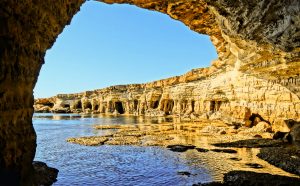
Cape Greco National Forest Park sits on the southeastern tip of Cyprus between the resort towns of Ayia Napa and Protaras. This protected area covers 385 hectares of dramatic coastal landscape where limestone cliffs drop into clear Mediterranean waters. The park opened in 1993 and remains free to visit 24 hours a day throughout the year. chooseyourcyprus-com The park features white limestone cliffs carved by wind and waves over thousands of years. These geological formations created numerous sea caves, natural rock bridges, and coastal platforms. The most famous rock formation is Kamara tou Koraka, a natural arch that stands 50 feet high and 23 feet wide. Erosion continues to shape this landmark, though roots from plants have unfortunately accelerated the process in recent years. The coastline offers crystal-clear water with visibility reaching up to 40 meters in good conditions. Sea temperatures range from 16 degrees Celsius in winter to 28 degrees Celsius in summer. These conditions combined with the rocky underwater landscape attract divers and snorkelers from across the island. Important Bird Area Status BirdLife International designated Cape Greco as an Important Bird Area in 2009 because it serves as a key migration site for thousands of birds traveling between Europe and Africa. The cape creates a migratory bottleneck where birds concentrate before crossing to or from the Mediterranean coast.…

Read more