Explore Cyprus with Our Interactive Map

Explore our top stories and discover ideas worth your time.

Cyprus Wild Mammal

Cyprus Wild Mammal

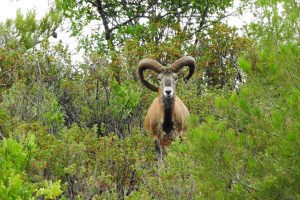
Imagine a rugged hillside in Cyprus, where ancient cedars cling to rocky slopes and the air hums with the distant call of a hidden survivor. This is the realm of the Cyprus mouflon, a wild sheep that has roamed the island's mountains for millennia, embodying the untamed spirit of Mediterranean wilderness. Let’s explore this elusive creature, a living link to Cyprus' prehistoric past that still graces its landscapes today. Sadly, this endemic mammal is listed as Endangered in IUCN Red List. www.inaturalist.org A Gentle Giant of the Hills The Cyprus mouflon, known scientifically as Ovis gmelini ophion, is a subspecies of wild sheep belonging to the broader family of Bovidae, which includes goats, antelopes, and cattle. These animals are ungulates – hoofed herbivores adapted to rugged terrains across Europe, Asia, and Africa and all modern sheep breeds are it’s descendants. Zooming into zoological details, the Cyprus mouflon belongs to the Caprinae subfamily, sharing traits with ibex and wild goats but distinguished by its non-shedding wool and seasonal breeding cycles. Genetic studies reveal close ties to Anatolian and Iranian mouflons, with mitochondrial DNA suggesting a basal lineage from early domestication escapes. In Cyprus, the mouflon stands out as an endemic treasure, perfectly tuned to the island's dry, mountainous environments, where it grazes and navigates steep cliffs with effortless grace. Echoes of…

Read more

Besparmak Mountains Cyprus Coastal Limestone

Besparmak Mountains Cyprus Coastal Limestone

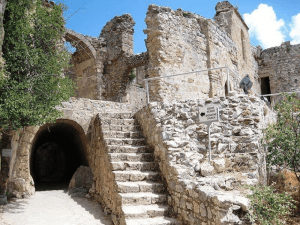
The Besparmak Mountains stretch like a limestone backbone along the northern coast of Cyprus, parallel to the Mediterranean for approximately 160 kilometers. Known also as the Kyrenia Mountains or Pentadaktylos, this narrow ridge rises abruptly from the coastal plain to create one of the island's most dramatic landscapes. The name Besparmak translates to five fingers in Turkish, referring to a distinctive peak that resembles an outstretched hand. Shutterstock-com Ancient Limestone from the Mesozoic Era The range consists primarily of hard crystalline limestone with some dolomite and marble formations dating to the Mesozoic period, formed between 250 and 65 million years ago beneath ancient seas. Unlike the volcanic Troodos Mountains in southern Cyprus, this northern range represents sedimentary formations from the Permian to Middle Miocene periods, pushed upward by collision of African and Eurasian tectonic plates. The highest peak, Mount Selvili Tepe, reaches 1,024 meters near Lapta. While only half the height of Troodos, the Kyrenia Mountains appear more imposing because they rise suddenly from the flat Mesaoria plain. The porous limestone acts as a natural filter, creating mountain aquifers that supply nearly all towns and villages in northern Cyprus. Pixabay-com Endemic Plants on Limestone Cliffs The limestone cliffs support diverse flora. Cyprus hosts 1,750 native plant species, of which 128 are endemic. The Kyrenia range contains 57 endemic species, concentrated…

Read more
Sun-Chasing Yellow Blossoms of Cyprus

Sun-Chasing Yellow Blossoms of Cyprus

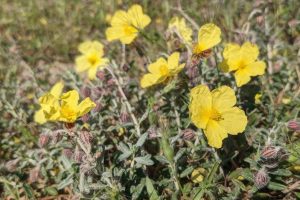
Springtime in Cyprus brings a splash of sunshine to rocky hills with Cyprus Rock-rose Helianthemum obtusifolium, a wildflower that's like a mini sunrose hugging the ground. This tough little plant, found only on the island, turns dry slopes into cheerful displays. But why does it follow the sun, and what ancient stories hide in its petals? www.inaturalist.org Just What Is This Sunny Cypriot Native? Helianthemum obtusifolium is a small, shrub-like wildflower from the rockrose family, the kind of plants that love sunny, dry spots around the Mediterranean. It's a perennial that pops up year after year, adding bright yellow touches to Cyprus's wild landscapes without needing much care. Roots in Cyprus's Ancient Earth and Botanical Tales Millions of years ago, as ancient seas dried up and tectonic shifts shaped Cyprus's rocky hills, plants like this one adapted to the island's isolation, evolving into unique species. First named in 1824 by French botanist Michel Félix Dunal, it draws from Greek words for "sun flower," reflecting how explorers in the 19th century uncovered Cyprus's floral secrets during Mediterranean expeditions. It's part of a broader story of how Cyprus, like a natural time capsule, preserved these gems from prehistoric times. A Fuzzy Bush with Crinkly Yellow Charms This low-growing plant reaches about 25-30 cm tall, with woody stems that spread out like a…

Read more