Explore Cyprus with Our Interactive Map

Explore our top stories and discover ideas worth your time.

Traditional Cypriot Rural Life – Goats, Sheep & Donkeys

Traditional Cypriot Rural Life – Goats, Sheep & Donkeys

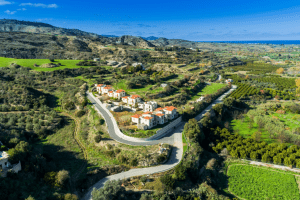
Cyprus's rural economy developed around livestock farming for thousands of years before modern tourism. Goats, sheep, and donkeys formed the backbone of village life, providing milk, meat, wool, transportation, and labor. These animals adapted perfectly to the island's hot, dry climate and rocky terrain. cypruslife-com Families raised small herds using methods passed through generations, with women typically managing milk production and cheese making while men handled field work and shepherding. The livestock fit naturally into Cyprus's agricultural cycle, grazing on wild plants during rainy months and consuming crop residues during summer. This system created self-sufficient communities where nearly every household maintained animals. Archaeological evidence shows Cypriots domesticated these species during the Aceramic Neolithic Period around 7000 BCE, making livestock farming one of the island's oldest continuous traditions. Ancient Origins of Cypriot Animal Husbandry Prehistoric settlers brought domesticated animals to Cyprus during the early Bronze Age around 2500 BCE. These people possessed navigation skills that allowed them to transport household goods and livestock across the Mediterranean. They introduced pigs, sheep, goats, and cattle to the island. Evidence from Bronze Age sites like Politiko Troullia shows communities consumed sheep, goat, cattle, and pig while also hunting fallow deer for ritual feasts. The indigenous Cyprus Fat-tailed sheep developed over millennia of breeding in local conditions. This triple-purpose breed produced milk, coarse wool, and…

Read more

Living Fossils in Cypriot Gardens

Living Fossils in Cypriot Gardens

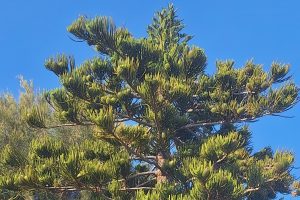
Stand in a quiet park in Limassol or Nicosia on a sunny day, and you might spot tall, pyramid-shaped trees that look like they stepped out of a prehistoric forest. These are the Araucaria trees ancient conifers from far-away lands that bring a touch of exotic elegance to our island's urban green spaces. Konstantin-Solovev Ancient Guardians of the Pine Family Araucaria trees belong to the Araucariaceae family, a group of evergreen conifers that once dominated vast forests across the southern hemisphere. In Cyprus, the most common is Araucaria heterophylla, often joined by its cousin Araucaria columnaris. Locally known as Αρωκάρια (Arokária), a name derived from the genus's scientific title, which honors the Arauco people of Chile where related species grow wild. Survivors from a Lost World These trees trace their lineage back over 200 million years to the time of the dinosaurs, when supercontinents like Gondwana were still united. Native to places like Norfolk Island in the Pacific for A. heterophylla, they arrived in Cyprus during the British colonial era around the early 20th century, planted as striking ornamentals in gardens and along avenues. Like many introduced species, they were chosen for their ability to thrive in our Mediterranean climate, echoing the island's long history of welcoming plants from distant shores. Symmetrical Towers of Green Araucaria heterophylla grows into a…

Read more
Cyprus E4 Trail – Europe Long Distance Route

Cyprus E4 Trail – Europe Long Distance Route

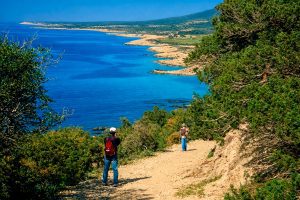
The E4 European Long Distance Path stretches over 10,450 kilometers from Tarifa in southern Spain to Cyprus, making it one of the most ambitious hiking routes in the world. The Cyprus section was added to the route in 2005 following a proposal by the Greek Ramblers Association to the European Ramblers Association. travel-com The trail connects Larnaca and Paphos international airports across approximately 540 to 660 kilometers depending on the route taken. The path crosses Spain, France, Switzerland, Germany, Austria, Hungary, Serbia, Bulgaria, Greece, and Crete before reaching Cyprus as its final destination. The Cyprus segment traverses the Troodos mountain range, the Akamas Peninsula, and long stretches of countryside through regions of exceptional natural beauty and ecological importance. Cyprus became only the second island on the entire E4 route, after Crete, making it a unique endpoint for this continental trail system. The development of Cyprus's section The Cyprus Forestry Department developed the island's E4 section in collaboration with the Cyprus Tourism Organisation to create a cross country route that showcases the island's diverse landscapes. The trail follows a primarily west to east direction, though it includes a significant loop at the eastern end near Larnaca. The route was carefully designed to balance accessibility with wilderness experience, passing through remote forest areas, traditional mountain villages, and coastal regions. agrotourism-com The Department…

Read more