Explore Cyprus with Our Interactive Map

Explore our top stories and discover ideas worth your time.

The Copper-Rich Troodos Mountains of Cyprus

The Copper-Rich Troodos Mountains of Cyprus

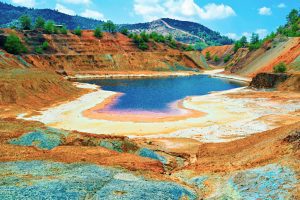
The copper-rich mountains of Cyprus, particularly the Troodos range, were seen by ancient inhabitants as divine gifts from the gods, providing not just vital metal for tools and trade but also spiritual protection and prosperity. These peaks, laced with reddish ore veins, blended natural bounty with sacred myths, making mining a reverent act and turning the island into a Bronze Age powerhouse. Exploring their story reveals how earth, faith, and human ingenuity intertwined to shape Cyprus's enduring legacy. visitsolea-com A Sacred Backbone of the Island Step into the heart of Cyprus, and you'll find the Troodos Mountains rising like ancient guardians, their slopes cloaked in pine forests and dotted with villages that seem frozen in time. These aren't just any hills - they're the island's geological core, a rugged massif stretching across the center, reaching up to Mount Olympus at over 1,950 meters. For early Cypriots, the mountains weren't mere landscape; they were a holy endowment, teeming with copper that fueled life, from farming tools to ceremonial artifacts. This blend of raw power and divine favor made the Troodos a symbol of abundance, where the gods' touch was felt in every shimmering vein of ore. Today, they stand as a reminder of how nature's gifts can inspire awe, drawing hikers, historians, and dreamers alike to their misty paths. From Ancient…

Read more

Pistacia Atlantica

Pistacia Atlantica

High on rocky hillsides where the Mediterranean sun bakes the earth, a sturdy, wide-crowned tree stands like an ancient sentinel. Its twisted trunk oozes fragrant resin, and in autumn its golden leaves and clusters of red-to-black fruits light up the landscape. Meet the wild pistachio, a true survivor and one of the quiet heroes of Cyprus’s native woodlands. wikimedia.org A Proud Member of the Cashew Family Scientifically known as Pistacia atlantica, this deciduous tree belongs to the genus Pistacia within the Anacardiaceae family – the cashew or sumac clan, which also includes the closely related mastic tree (Pistacia lentiscus), another iconic native of Cypriot maquis. Both species thrive in the island’s dry, rocky slopes and garigue, sharing the family’s trademark resin canals and compound leaves. Ancient Roots in Cyprus Landscapes Wild pistachios have been part of Cyprus since prehistoric times, forming part of the original maquis vegetation alongside carobs and olives. Ancient settlements like Tremithounta took their name from the tree (tremithos), and its resin called “Paphitiki pissa” or Cyprus turpentine was chewed as natural gum and traded across the Mediterranean. wikimedia.org British foresters in the 19th century recorded it in degraded shrublands, while today one of the island’s oldest living trees, estimated at over 1,500 years, still shades a village square as a protected natural monument. Distinctive Features That…

Read more
Ancient Tamassos, Cyprus

Ancient Tamassos, Cyprus

About 21 kilometres southwest of Nicosia, near the village of Politiko, lies one of ancient Cyprus's most significant city-kingdoms: Tamassos. It was not a coastal city with a grand harbour or a sprawling palace complex. It was something different. airial.travel Tamassos was an inland powerhouse, built almost entirely around one thing: copper. For centuries, this city sat on some of the richest copper deposits in the eastern Mediterranean, and that single resource shaped everything about it, from its economy to its politics, from its wealth to its eventual decline. Historical Background The land around Tamassos has been occupied since the Chalcolithic period, thousands of years before the city itself took shape. Small farming villages dotted the area well into the Early Bronze Age. But the real turning point came when people started mining and processing copper in large numbers. By the 8th century BC, Tamassos had grown into a formal city-kingdom, one of ten that ruled Cyprus at the time. The earliest written proof of the city comes from an Assyrian inscription dated to 673 BC, on the Prism of Esarhaddon, which mentions a place called "Tamesi" as a city paying tribute to the Assyrian Empire. Around the same time, Homer appears to have referenced Tamassos in the Odyssey, calling it "Temese." In that passage, the goddess Athena tells Odysseus'…

Read more