Explore Cyprus with Our Interactive Map

Explore our top stories and discover ideas worth your time.

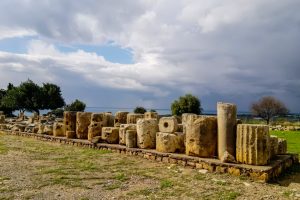
Palaepaphos Kouklia – Aphrodite Cult Center

Palaepaphos Kouklia – Aphrodite Cult Center

Kouklia is a village in the Paphos District built over the site of the ancient city of Palaepaphos, mythical birthplace of Aphrodite, which became the centre for her worship in the ancient world. This modest village 16 kilometers east of modern Paphos holds the remains of one of the longest continuously operating religious sanctuaries in human history. tripadvisor-com From around 1200 BC, Palaepaphos was a major religious centre famous all over Cyprus and throughout the Mediterranean. The city served as both a political capital and a sacred site, where the ancient goddess of fertility transformed over centuries into the Greek deity known as Aphrodite. The Sanctuary of Aphrodite is the most famous of the Ancient Greek Goddess' sanctuaries, and its ancient remains date back to the 12th century BC, whilst it remained a place of worship until the 3rd to 4th centuries AD. The sanctuary occupied a commanding position on a limestone plateau overlooking what was once a harbor and lagoon. According to Professor Maria Iacovou from the University of Cyprus, the sanctuary would have been located very close to the original port authority of ancient Paphos. The strategic location connected the religious site directly to sea routes, which brought pilgrims from across the Mediterranean world. Historical Background The Cypriots worshipped a goddess of fertility from as early as the…

Read more
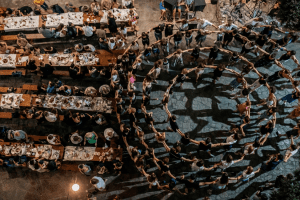
Panigyria Cyprus Village Saint Summer Celebration

Panigyria Cyprus Village Saint Summer Celebration

In Cyprus, a panigyri is not simply a festival marked on a calendar. It is a moment when a village gathers itself fully, reconnecting faith, memory, and everyday life into a shared experience. Held in honor of a patron saint, panigyria transforms religious observance into a living social ritual, where prayer flows naturally into food, music, dance, and reunion. These evenings are not for spectacle or tourism. They exist because the community expects them to exist, and because participation itself keeps them alive. To arrive at a panigyri is to step into a rhythm that has been repeated for generations. The setting may vary from village to village, shaped by geography and custom, but the feeling remains familiar. It is welcoming without formality, celebratory without excess, and deeply rooted in a sense of belonging that does not need explanation. What a Panigyri Really Is At its most basic level, a panigyri is a communal celebration held on the feast day of a village’s patron saint. It begins with a religious service, often followed by a procession of the saint’s icon, and gradually expands outward into the shared spaces of the village. Church courtyards, village squares, and nearby streets become places where people gather to eat, talk, dance, and remain together long into the night. What distinguishes this transition is how…

Read more

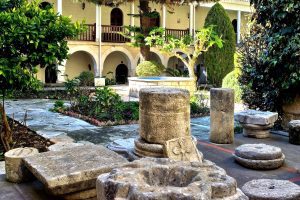
Saint Neophytos Cyprus Cave Monastery Writing

Saint Neophytos Cyprus Cave Monastery Writing

Saint Neophytos spent most of his life alone in a cave. That was his choice, and he fought for it at every turn. Born in 1134 in the small mountain village of Kato Drys near Lefkara, he was the son of farmers, one of eight children. julipapasgardens.com He became a monk at 18, a hermit by 25, and spent over 60 years sealed inside a rock-cut cave above Paphos. Yet for all his devotion to solitude, Neophytos was one of the most outspoken and prolific writers Cyprus has ever produced. He wrote about politics, religion, natural disasters, the suffering of ordinary people, and the foreign rulers who oppressed them. His cave was small, but his voice reached far beyond it. Historical Background Neophytos grew up poor and illiterate. When his parents arranged a marriage for him, he refused and fled to the Monastery of Saint John Chrysostomos in the Turkish-occupied part of Cyprus. There, he learned to read and write for the first time. He was given the role of assistant sacristan, but what he really wanted was to be left alone. His superiors told him he was too young for that kind of life. In 1158, they let him travel to the Holy Land instead. He spent six months visiting monasteries and sacred sites in Jerusalem, but came back…

Read more