Explore Cyprus with Our Interactive Map

Explore our top stories and discover ideas worth your time.

The Cypriot Limestone Kouros

The Cypriot Limestone Kouros

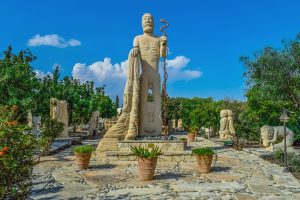
Cypriot limestone “kouroi” are Archaic-era standing male statues that look Greek at first glance but functioned differently, serving mainly as clothed votive figures placed in sanctuaries as lasting representations of worshippers and elite donors. Cyprus’s lack of marble pushed sculptors toward soft local limestone, shaping a calmer, more geometric style that was originally strengthened by bright paint rather than fine anatomy. This article explains how material, ritual purpose, and cross-Mediterranean influence combined to produce a distinctly Cypriot human figure tradition. metmuseum-com Kouros in Name Only The word kouros comes from Greek and refers to youthful male statues that became widespread in the Aegean world during the Archaic period. Greek kouroi are usually nude, carved in marble, and designed to embody physical perfection and idealised youth. Cyprus adopted the broad idea of the standing male figure, but transformed it completely. wikimedia-com Cypriot limestone figures are almost always clothed. They wear kilts, tunics, cloaks, or ceremonial garments influenced by Egyptian, Near Eastern, and East Greek styles. Rather than celebrating athletic bodies, these statues emphasise presence and status. They represent worshippers, priests, or elite donors, figures defined by their role within religious and civic life rather than by physical ideals. The stone that shaped the style One reason Cypriot sculpture looks the way it does lies beneath the ground. Cyprus has no natural…

Read more

Khirokitia UNESCO Chalcolithic Village Cyprus

Khirokitia UNESCO Chalcolithic Village Cyprus

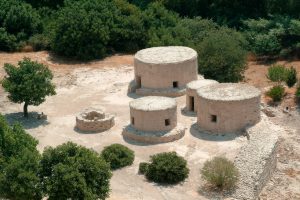
nashaplaneta.net Khirokitia (also spelled Choirokoitia) represents the peak of Cyprus's Aceramic Neolithic period, when communities built permanent settlements without any knowledge of pottery production. The site covers approximately 3 hectares at its maximum extent and consists of circular stone and mudbrick houses clustered together on a hillside. These structures were protected by massive stone walls that enclosed the settlement on multiple sides. The archaeological remains document a sophisticated farming society that thrived for over 1,500 years. Residents cultivated wheat and barley, raised domesticated sheep, goats, and pigs, and supplemented their diet through hunting and gathering wild foods. The settlement's name likely derives from the Greek words for pig (χοίρος) and cradle (κοιτίς), suggesting an area where pigs were raised, though several alternative etymologies exist in local tradition. Historical Background Porphyrios Dikaios, director of the Department of Antiquities of Cyprus, discovered Khirokitia in 1934 during archaeological surveys for the newly established Cyprus Museum. He identified surface scatters of prehistoric material on the terraced slopes of the Maroni River valley. Between 1936 and 1946, Dikaios conducted six excavation campaigns at the site despite interruptions from World War II between 1939 and 1945. His initial findings, published in The Journal of Hellenic Studies in 1934, first dated the settlement to around 4000 BC. However, radiocarbon dating later revealed a much earlier foundation date…

Read more
Famagusta Martinengo Bastion

Famagusta Martinengo Bastion

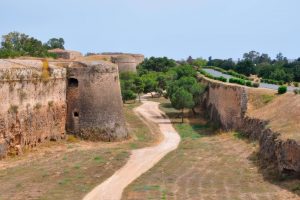
In the northwest corner of Famagusta's historic walled city stands one of the Mediterranean's most impressive examples of Renaissance military architecture. The Martinengo Bastion, also known as Tophane, represents a turning point in defensive technology and remains a testament to 16th-century engineering brilliance. visitncy.com When the Republic of Venice took control of Cyprus in 1489, military engineers quickly recognized a serious problem. The existing fortifications throughout the island were outdated and vulnerable to modern artillery. Medieval walls, built tall and thin to defend against siege towers and scaling ladders, could not withstand the devastating impact of cannon fire. Famagusta presented a particular challenge. As Cyprus's main port and commercial hub, the city required strong defenses. Yet its northwest corner remained especially weak, creating a dangerous gap in the defensive perimeter. The Venetians understood that this vulnerability could prove fatal if the Ottoman Empire decided to expand its territory into Cyprus. Giovanni Girolamo Sanmicheli Takes Command In 1550, the Venetians brought in Giovanni Girolamo Sanmicheli, nephew of the renowned fortification architect Michele Sanmicheli of Verona, to redesign Famagusta's defenses. The younger Sanmicheli arrived with experience in the latest military engineering techniques and an understanding of how warfare had evolved. wikipedia.org Construction took approximately nine years. Sanmicheli died in Famagusta in 1559 before seeing his masterwork completed, but his vision resulted in…

Read more