Explore Cyprus with Our Interactive Map

Explore our top stories and discover ideas worth your time.

The Cyprus Cedar (Cedrus brevifolia)

The Cyprus Cedar (Cedrus brevifolia)

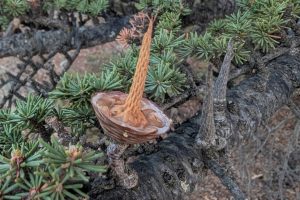
High in the Troodos Mountains of western Cyprus, ancient cedars stand like silent guardians of the island's wild heart. The Cyprus Cedar, an endemic conifer found only here, grows in scattered groves with its distinctive short needles and broad, layered branches. Encountering these majestic trees feels like stepping into a timeless forest where nature has preserved a rare piece of Mediterranean heritage. Description and naming The Cyprus Cedar, Ο κέδρος, known scientifically as Cedrus brevifolia s a large evergreen coniferous tree unique to Cyprus that forms pure or mixed stands in high mountain areas. Although it is sometimes treated as a variety of Cedrus libani, the famous cedars of Lebanon, Cyprus Cedar can be distinguished by its shorter, thicker and bluntish leaves, hence the scientific epithet — brevifolia (short-leaved). This cedar has thrived in Cyprus's mountainous landscapes for millennia, adapted to the island's isolated geography and igneous soils. Confined to a small region of 290 hectares in the western Troodos, it has evolved alongside other endemic species, surviving through ancient climatic shifts and becoming a key part of the local ecosystem long before human settlement. Appearance The Cyprus Cedar grows to 15–30 metres tall (sometimes more in ideal conditions), pyramidal at first and with a broad, umbrella-shaped crown in mature trees. Horizontally spreading branches create layered tiers. Its needles are…

Read more
Cyprus Red Fox

Cyprus Red Fox

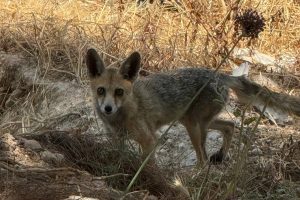
There is an animal on Cyprus that has been blamed for stolen chickens, celebrated in folktales, painted as the ultimate villain of the farmyard and yet, science tells us a very different story. The Cyprus fox, a unique island subspecies found nowhere else on Earth, is one of the most misunderstood creatures in the Eastern Mediterranean. Once you learn the truth about it, you may never look at a pair of amber eyes at dusk in quite the same way again. From the Family of Clever Ones The Cyprus fox belongs to the family Canidae the great clan that includes wolves, jackals, wild dogs, and domestic dogs. Within this family sits the genus Vulpes, the "true foxes," a group of about twelve species spread across the globe, from the tiny big-eared fennec fox of the Sahara to the ghost-white Arctic fox of the frozen north. Our island's fox is a member of Vulpes vulpes the red fox which is arguably the most successful and widespread wild carnivore on the planet, ranging from the Arctic Circle all the way down to North Africa, across Eurasia, and into North America. But the fox living in Cyprus is not simply a red fox that wandered over. It is a distinct island subspecies, formally described in 1907 by the American naturalist Gerrit Smith Miller,…

Read more

Othello Castle, Famagusta Medieval Fortress

Othello Castle, Famagusta Medieval Fortress

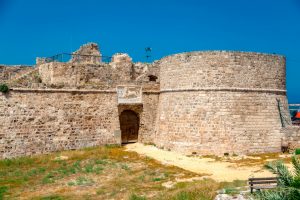
Othello Castle, also known as Othello's Tower, is a medieval fortress in Famagusta in in the Turkish-occupied part of Cyprus. The castle sits at the northeastern corner of the city's fortified walls, directly controlling access to the historic harbor. This location made it both the primary defensive stronghold and the main entrance to the walled city during the medieval period. visitncy-com The site had fortifications even before the current castle. A tower and defensive works were built here by the Prince of Tyre around 1310. The Lusignan rulers of Cyprus recognized the strategic importance of this harbor entrance and constructed a more substantial fortress in the 14th century. Originally called the Harbour Citadel, it served dual purposes as a military stronghold and possibly a residence for members of the royal family and their entourage. The castle's position allowed defenders to monitor all ship traffic entering or leaving Famagusta. In medieval times, a massive iron chain could be stretched across the harbor mouth to block enemy vessels. Modern ships continue to use the same harbor entrance that was active during Famagusta's golden age from 1300 to 1400. Historical Background When Cyprus was sold to the Republic of Venice in 1489, Famagusta became essentially a military base. The Venetians immediately recognized the need to upgrade the city's defenses against the threat of…

Read more