Explore Cyprus with Our Interactive Map

Explore our top stories and discover ideas worth your time.

Cypriot Musicians Shape Sound Between Worlds

Cypriot Musicians Shape Sound Between Worlds

Cyprus has always lived between places, and its contemporary music makes that position audible. Today’s Cypriot musicians collaborate across Europe and the Middle East in ways that feel natural rather than strategic, producing music that travels easily while remaining grounded in local identity. These projects are not about imitation or trend-chasing. They are about translation, turning geography, history, and lived experience into sound. To understand modern Cypriot music is to hear an island negotiating who it is, who it speaks to, and how it wants to be understood. A Geography You Can Hear Cyprus does not need to “reach outward” to collaborate. It is already surrounded by cultural conversation. For centuries, the island has absorbed and adapted influences from Byzantine liturgical traditions, Levantine musical systems, and later European forms introduced through political and cultural exchange. This layered inheritance means that modern collaboration does not feel like a rupture. It feels like continuity. When contemporary Cypriot musicians work with European producers or Middle Eastern artists, the blend often sounds intuitive. The island’s music has long been shaped by multiple tonal systems, rhythmic sensibilities, and storytelling traditions. Modern technology and global networks simply make those exchanges more visible. Collaboration as Cultural Anchoring, Not Fusion for Its Own Sake At first glance, this trend might look like stylistic fusion. In reality, something more…

Read more
Church of Panagia Podithou Renaissance Cypriot Art

Church of Panagia Podithou Renaissance Cypriot Art

Historical Background and Venetian Context The Church of Panagia Podithou, located near the village of Galata in the Troodos Mountains of Cyprus, is one of the monuments included in the UNESCO World Heritage group known as the Painted Churches of the Troodos Region. Built in 1502, during the period of Venetian rule over Cyprus, the church represents a distinctive moment in the island’s artistic history when Byzantine traditions interacted with Western Renaissance influences. While the building maintains the architectural form typical of Cypriot mountain churches, its wall paintings reveal stylistic changes that reflect exposure to Italian artistic trends. The church stands as a visual document of cultural exchange in the eastern Mediterranean at a time when political authority had shifted but Orthodox religious identity remained strong. wikimedia-org Under Venetian administration, Cyprus became more closely connected to Italian artistic currents, particularly those associated with the Renaissance. Venetian merchants, officials, and clergy moved between Cyprus and the Italian mainland, facilitating the circulation of ideas and artistic models. Despite these influences, Orthodox communities continued to commission church decoration rooted in Byzantine iconographic tradition. Panagia Podithou exemplifies this balance, preserving the theological framework of Orthodox art while incorporating stylistic features inspired by Western painting. The monument therefore illustrates how Cypriot artists and patrons negotiated cultural change without abandoning their spiritual heritage. Architectural Form and…

Read more
Modern Naval Heritage & Maritime Identity

Modern Naval Heritage & Maritime Identity

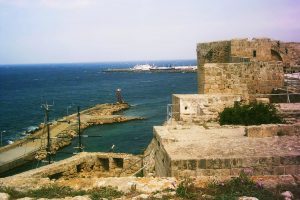
Cyprus has never treated the sea as a boundary. For centuries, its coastline functioned as a working edge where trade, defense, administration, and daily life met. In the modern period, this relationship was shaped most clearly by two naval powers: the Ottoman Empire and the British Empire. Their presence did not simply leave behind forts and harbors. It reshaped how the island was governed, how its ports functioned, and how Cypriots understood their place within the wider Mediterranean world. Globalgrasshopper-com This article explores how Ottoman and British naval priorities transformed Cyprus from a regional outpost into a strategic maritime asset, and why that legacy still defines the island’s identity today. An Island Positioned to Be Watched Cyprus sits at a crossroads of the eastern Mediterranean, close enough to Anatolia, the Levant, and Egypt to matter to every power operating in the region. This geography made neutrality impossible. Control of Cyprus meant visibility over key sea lanes, access to sheltered anchorages, and influence across multiple trading and military routes. Rather than isolating the island, the sea connected it outward. Cyprus became valuable not for its interior alone, but for how its coastline could support movement, surveillance, and supply. This strategic reality explains why naval priorities repeatedly shaped the island’s administration. What “Modern Naval Heritage” Really Means When discussing naval heritage in…

Read more