Explore Cyprus with Our Interactive Map

Explore our top stories and discover ideas worth your time.

Lemba Lakkous Archaeological Site Figurines

Lemba Lakkous Archaeological Site Figurines

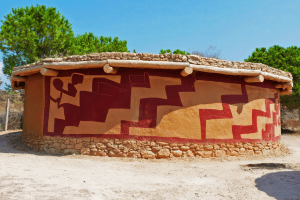
In the hills north of Paphos, a prehistoric village called Lemba-Lakkous offers a rare window into life 5,000 years ago. This Chalcolithic settlement produced some of Cyprus's most remarkable figurines and became the foundation for one of archaeology's most ambitious experiments: rebuilding an ancient village. cyprusmail-com Lemba-Lakkous sits just six miles north of Paphos in southwestern Cyprus, in a region known as the Ktima Lowlands. The settlement dates to the Late Chalcolithic period, from roughly 3500 to 2400 BC. This was a time when Cyprus saw remarkable cultural development, with around 100 villages spread across the island and communities mastering both stone tools and early copper metalwork. The site is part of a cluster of related settlements in the area, including Kissonerga-Mosphilia and Kissonerga-Mylouthkia. These villages likely held around 100 circular houses each, connected by shared traditions, pottery styles, and symbolic practices. How Archaeologists Uncovered the Site Modern excavations at Lemba-Lakkous began in 1976 under Professor Edgar Peltenburg of the University of Edinburgh. This marked the start of the Lemba Archaeological Project, which would transform our understanding of prehistoric Cyprus. The team worked at Lemba-Lakkous from 1976 to 1983, methodically uncovering layers of occupation that spanned centuries. paphoslife-com The excavations revealed seven structures, three of which preserved their stone foundations in excellent condition. The team established the Lemba Archaeological Research…

Read more
Ancient Tamassos, Cyprus

Ancient Tamassos, Cyprus

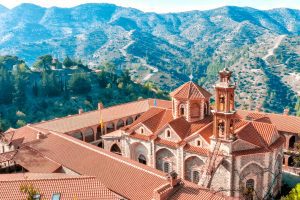
About 21 kilometres southwest of Nicosia, near the village of Politiko, lies one of ancient Cyprus's most significant city-kingdoms: Tamassos. It was not a coastal city with a grand harbour or a sprawling palace complex. It was something different. airial.travel Tamassos was an inland powerhouse, built almost entirely around one thing: copper. For centuries, this city sat on some of the richest copper deposits in the eastern Mediterranean, and that single resource shaped everything about it, from its economy to its politics, from its wealth to its eventual decline. Historical Background The land around Tamassos has been occupied since the Chalcolithic period, thousands of years before the city itself took shape. Small farming villages dotted the area well into the Early Bronze Age. But the real turning point came when people started mining and processing copper in large numbers. By the 8th century BC, Tamassos had grown into a formal city-kingdom, one of ten that ruled Cyprus at the time. The earliest written proof of the city comes from an Assyrian inscription dated to 673 BC, on the Prism of Esarhaddon, which mentions a place called "Tamesi" as a city paying tribute to the Assyrian Empire. Around the same time, Homer appears to have referenced Tamassos in the Odyssey, calling it "Temese." In that passage, the goddess Athena tells Odysseus'…

Read more
Cyprus E4 Trail – Europe Long Distance Route

Cyprus E4 Trail – Europe Long Distance Route

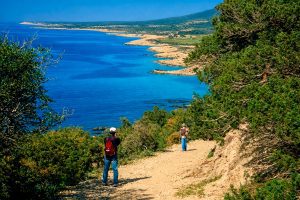
The E4 European Long Distance Path stretches over 10,450 kilometers from Tarifa in southern Spain to Cyprus, making it one of the most ambitious hiking routes in the world. The Cyprus section was added to the route in 2005 following a proposal by the Greek Ramblers Association to the European Ramblers Association. travel-com The trail connects Larnaca and Paphos international airports across approximately 540 to 660 kilometers depending on the route taken. The path crosses Spain, France, Switzerland, Germany, Austria, Hungary, Serbia, Bulgaria, Greece, and Crete before reaching Cyprus as its final destination. The Cyprus segment traverses the Troodos mountain range, the Akamas Peninsula, and long stretches of countryside through regions of exceptional natural beauty and ecological importance. Cyprus became only the second island on the entire E4 route, after Crete, making it a unique endpoint for this continental trail system. The development of Cyprus's section The Cyprus Forestry Department developed the island's E4 section in collaboration with the Cyprus Tourism Organisation to create a cross country route that showcases the island's diverse landscapes. The trail follows a primarily west to east direction, though it includes a significant loop at the eastern end near Larnaca. The route was carefully designed to balance accessibility with wilderness experience, passing through remote forest areas, traditional mountain villages, and coastal regions. agrotourism-com The Department…

Read more