Explore Cyprus with Our Interactive Map

Explore our top stories and discover ideas worth your time.

Othello Castle, Famagusta Medieval Fortress

Othello Castle, Famagusta Medieval Fortress

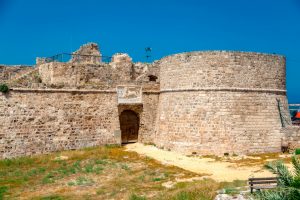
Othello Castle, also known as Othello's Tower, is a medieval fortress in Famagusta in in the Turkish-occupied part of Cyprus. The castle sits at the northeastern corner of the city's fortified walls, directly controlling access to the historic harbor. This location made it both the primary defensive stronghold and the main entrance to the walled city during the medieval period. visitncy-com The site had fortifications even before the current castle. A tower and defensive works were built here by the Prince of Tyre around 1310. The Lusignan rulers of Cyprus recognized the strategic importance of this harbor entrance and constructed a more substantial fortress in the 14th century. Originally called the Harbour Citadel, it served dual purposes as a military stronghold and possibly a residence for members of the royal family and their entourage. The castle's position allowed defenders to monitor all ship traffic entering or leaving Famagusta. In medieval times, a massive iron chain could be stretched across the harbor mouth to block enemy vessels. Modern ships continue to use the same harbor entrance that was active during Famagusta's golden age from 1300 to 1400. Historical Background When Cyprus was sold to the Republic of Venice in 1489, Famagusta became essentially a military base. The Venetians immediately recognized the need to upgrade the city's defenses against the threat of…

Read more
Citrus Groves That Shaped Cyprus Coast

Citrus Groves That Shaped Cyprus Coast

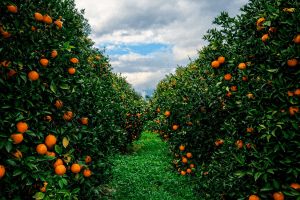
Citrus trees have never been a background crop in Cyprus. They reshaped coastal plains, sustained export economies, scented villages with orange blossom, and anchored everyday cooking. Oranges, lemons, grapefruits, and local hybrids thrive where mild winters meet long sunlight hours, making citrus one of the island's most recognisable and enduring farming traditions. Even as Cyprus modernises, citrus remains a quiet constant, rooted in land, memory, and daily life. Why Citrus Took Hold in Cyprus Citrus farming in Cyprus is defined by geography. The island’s coastal plains provide exactly what citrus trees require: frost-free winters, fertile soils, and long growing seasons. Unlike vineyards that climb into the mountains, citrus orchards stay close to the sea, shaping lowland landscapes around Morphou, Limassol, and Paphos. These groves were never ornamental. They provided reliable harvests, export income, and household staples, becoming as common in village courtyards as in commercial plantations. Over time, citrus trees blurred the boundary between agriculture and domestic life, integrating farming directly into everyday routines. The Coastal Landscapes That Grow Citrus Citrus orchards are closely tied to Cyprus’s coastal geography. The most productive groves sit on fertile alluvial soils where irrigation can be carefully managed. Historically, regions such as Morphou developed reputations as citrus heartlands due to access to natural springs and groundwater flowing from the Troodos foothills. Limassol’s coastal zones…

Read more

Panagia Angeloktisti Church Kiti – Byzantine Cyprus

Panagia Angeloktisti Church Kiti – Byzantine Cyprus

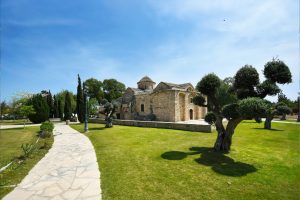
Panagia Angeloktisti Church stands in the village of Kiti, roughly 12 kilometers southwest of Larnaca. The church dates to the 11th century and was built over the ruins of a 5th century early Christian basilica. somewhereincyprus-com The name Angeloktisti translates to "Built by Angels" in Greek. The original apse of the basilica survived along with one of the finest pieces of Byzantine art on the island, a rare 6th century mosaic of the Virgin Mary and Child between the Archangels Michael and Gabriel. This stone church preserves multiple layers of Cyprus's religious history, from early Christian times through Byzantine and Frankish periods. The building serves as an active place of worship while housing artistic treasures that connect directly to the Byzantine Empire's golden age. Historical Background The residents of ancient Kition moved to Kiti to escape Arab invasions that plagued the coastal areas during the 7th and 8th centuries. Kition was an ancient Phoenician and Greek city-kingdom that served as a major port, exporting agricultural products across the eastern Mediterranean. As Arab raids intensified and the Byzantine Empire struggled to maintain control over Cyprus's periphery, inhabitants sought safer inland locations. Many Cypriot basilicas were destroyed around the 7th and 8th centuries, either from Arab raids or fires, since churches were wooden structures lit by oil lamps. The apse and mosaic…

Read more