Explore Cyprus with Our Interactive Map

Explore our top stories and discover ideas worth your time.

Panigyria Cyprus Village Saint Summer Celebration

Panigyria Cyprus Village Saint Summer Celebration

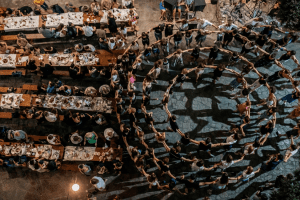
In Cyprus, a panigyri is not simply a festival marked on a calendar. It is a moment when a village gathers itself fully, reconnecting faith, memory, and everyday life into a shared experience. Held in honor of a patron saint, panigyria transforms religious observance into a living social ritual, where prayer flows naturally into food, music, dance, and reunion. These evenings are not for spectacle or tourism. They exist because the community expects them to exist, and because participation itself keeps them alive. To arrive at a panigyri is to step into a rhythm that has been repeated for generations. The setting may vary from village to village, shaped by geography and custom, but the feeling remains familiar. It is welcoming without formality, celebratory without excess, and deeply rooted in a sense of belonging that does not need explanation. What a Panigyri Really Is At its most basic level, a panigyri is a communal celebration held on the feast day of a village’s patron saint. It begins with a religious service, often followed by a procession of the saint’s icon, and gradually expands outward into the shared spaces of the village. Church courtyards, village squares, and nearby streets become places where people gather to eat, talk, dance, and remain together long into the night. What distinguishes this transition is how…

Read more

Kakopetria Historic Village Byzantine Churches

Kakopetria Historic Village Byzantine Churches

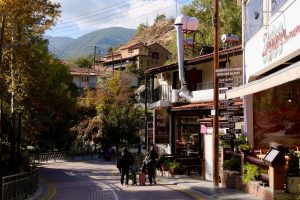
Kakopetria is a mountain village in the Troodos range that combines well preserved traditional buildings with important Byzantine heritage. It lies fifty five kilometers from both Nicosia and Limassol, stands at six hundred sixty seven meters above sea level, and offers a clear picture of Cyprus rural life with several important religious monuments. Shutterstock-com Two rivers, the Kargotis and the Garillis, pass through the village and join to form the Klarios River, which flows through the valley toward Morphou Bay. These rivers shaped the growth of the village and gave it a rich green landscape. Unlike many parts of Cyprus, Kakopetria has flowing water throughout the year. This supports dense vegetation such as plane trees, fruit gardens, and pine trees. The climate remains fairly dry with an average yearly rainfall of six hundred forty eight millimeters, while the higher elevation keeps temperatures cooler than coastal areas. The village is divided into two main areas. Old Kakopetria, also called Palia Kakopetria, lies between the two rivers and keeps its traditional character through narrow stone streets and two story stone houses with wooden balconies. New Kakopetria stretches toward the eastern side of the valley and features newer buildings. The old section received protected cultural heritage status, which ensures the preservation of its eighteenth and nineteenth century architecture. Historical Development Archaeological evidence from…

Read more
Copper Age Cyprus: Island That Shaped World

Copper Age Cyprus: Island That Shaped World

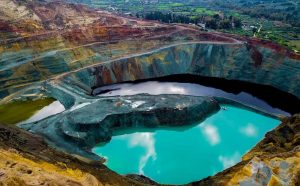
Long before Cyprus became famous for its beaches, it was known for something far more valuable: copper. Thousands of years ago, this small island became one of the most important places in the Mediterranean for the shimmering red metal buried in its mountains. The story of how Cyprus rose from simple farming villages to a Bronze Age powerhouse is one of innovation, trade, and transformation. Gherman Moiseyv What is Chalcolithic and Bronze Age Cyprus? The Chalcolithic and Bronze Age periods mark when Cyprus evolved from isolated farming communities into a wealthy, interconnected civilization. The Chalcolithic period (around 3900-2500 BC) was a transitional era when people first experimented with copper alongside traditional stone tools. The Bronze Age that followed (roughly 2500-1050 BC) saw Cyprus truly flourish. During this time, Cypriots mastered metalworking, built fortified towns, developed Mediterranean trade networks, and even created their own writing system. By the Late Bronze Age, Cyprus was renowned as the primary source of copper, the essential ingredient for making bronze. The Journey from Villages to Copper Kingdoms Human settlement in Cyprus goes back to around 7000 BC, when Neolithic farmers built some of the Mediterranean's earliest villages. At sites like Khirokitia, people lived in distinctive beehive-shaped stone houses clustered within protective walls. After a mysterious gap in habitation around 5500 BC, Cypriot culture re-emerged during…

Read more