Explore Cyprus with Our Interactive Map

Explore our top stories and discover ideas worth your time.

Roman Road Network Ancient Cyprus Routes

Roman Road Network Ancient Cyprus Routes

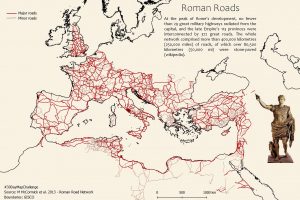
Cyprus already had roads before the Romans arrived. The earliest routes date back to the Bronze Age, and by the end of the Hellenistic period, a road network circled the entire island. These pre-Roman roads connected cities with their surrounding territories and linked major settlements along the coast. However, they were often simple tracks suitable for pedestrians and pack animals rather than the engineered highways Romans built elsewhere in their empire. pixabay-com When Cyprus became a Roman province in 22 BC under Emperor Augustus, the new administration inherited this existing network. The Romans added secondary roads and improved certain routes, but they did not rebuild the entire system to match the standards used in Italy or other provinces. This practical approach reflected Cyprus's geography and peaceful status. The island was stable enough not to require a large military presence, so the roads served primarily civilian purposes rather than rapid military deployment. Augustus and later Emperor Titus are credited in inscriptions as the creators of the formal Roman road system on Cyprus. The roads they established formed part of the imperial network, meaning they received official recognition and maintenance funding from Rome itself. How the Road System Worked The main roads formed a coastal highway that encircled the island, connecting all major cities. From this primary route, secondary roads branched inland…

Read more
Ayia Napa Sea Caves Rock Formations Waters

Ayia Napa Sea Caves Rock Formations Waters

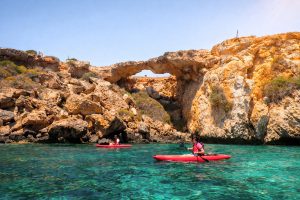
The Ayia Napa Sea Caves represent one of Cyprus's most photographed coastal features. Located just outside the resort town, these caves attract visitors year-round with their combination of geological beauty and recreational opportunities. shutterstock-com The sea caves form part of the rugged coastline around Cape Greco National Forest Park, positioned between Ayia Napa and Protaras on the southeastern edge of Cyprus. The caves themselves are carved into limestone cliffs that rise 6 to 12 meters above the sea. Some caves extend up to 80 meters into the rock. The area marks the western boundary of the 385-hectare Cape Greco National Forest Park, designated as protected land in 1993. Historical Background The formation of these caves demonstrates basic geological erosion over thousands of years. The cliffs consist of layered limestone, with each layer having different hardness levels. The middle layer is softer limestone that erodes more easily when waves crash against it repeatedly. The upper layer, made of harder rock, resists erosion better and creates a protective cap over the caves. This prevents collapse while the waves continue hollowing out the softer material underneath. The lowest layer, also harder, forms a natural platform or ledge several meters wide. tripadvisor-com Because the layers are not perfectly horizontal, parts of this ledge sit underwater while other sections remain dry. The irregular erosion patterns…

Read more
Wattles of Cyprus

Wattles of Cyprus

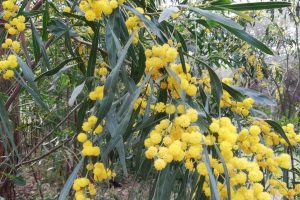
Picture a roadside verge or coastal slope in late February, when the Mediterranean light turns sharp and warm. Suddenly, whole thickets explode into vivid, butter-yellow spheres that light up the landscape like thousands of tiny suns. These are the wattles of Cyprus Australian guests that arrived with good intentions but have written their own lively, sometimes challenging chapter in the island’s green story. www.inaturalist.org Wattles in the World of Legumes Wattles belong to the enormous Acacia genus within the Fabaceae (legume) family – the same botanical clan as peas, beans, carobs and acacias of the ancient world. Most of the 1,000-plus Acacia species are native to Australia, where they are proudly called “wattles”. In Cyprus the star of the show is Acacia saligna, the golden wreath wattle or orange wattle, though a handful of other species (A. farnesiana, A. ligulata, A. karroo) appear in small numbers. Locally they are simply known as Ακακία (Akakia) – a name that echoes the ancient Greek “akakia”, used two thousand years ago by Dioscorides for the gum of Egyptian acacias. From Australian Shores to Cypriot Soil When British foresters took charge in 1878 they faced an island stripped of much of its woodland by centuries of grazing and fuelwood cutting. Following earlier recommendations by French arborist P.G. Madon (1881), they turned to fast-growing exotics.…

Read more