Explore Cyprus with Our Interactive Map

Explore our top stories and discover ideas worth your time.

Ancient Ledra Early History of Nicosia

Ancient Ledra Early History of Nicosia

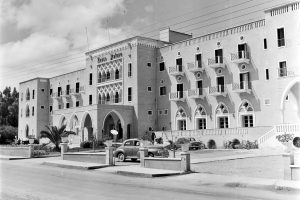
Ancient Ledra was a city-kingdom in the center of Cyprus where modern Nicosia stands today. It was established around 1050 BC and it became one of ten Cypriot kingdoms by the 7th century BC. Unlike coastal kingdoms that thrived on maritime trade, Ledra developed as an agricultural settlement in the fertile Mesaoria Plain. By Hellenistic times, it had dwindled to a small village before transforming into the capital city that continues to this day. oxfordre-com Archaeological remains from ancient Ledra have been found in several areas around modern Nicosia. The Bronze Age settlement was located on Leontari hill, approximately 6.5 kilometers southeast of the historical city center. This platform measures about 200 by 300 meters and includes a small cemetery. Historical Background The kingdom of Ledra appears for the first time in historical records on a clay prism of the Assyrian king Esarhaddon, dated to 672 BC. The inscription refers to the settlement as "Lidir" and records its ruler as "Unasagusu," generally identified as Onasagoras, the only king of Ledra whose name we know. He is listed ninth among ten Cypriot kingdoms that paid tribute to Esarhaddon. shutterstock-com The Assyrian text identifies Ledra as a "mat," meaning country or land, rather than a "kur," which denotes a city. This suggests that Ledra lacked a significant urban center and functioned more…

Read more
Folk Traditions Shaping New Cypriot Identity

Folk Traditions Shaping New Cypriot Identity

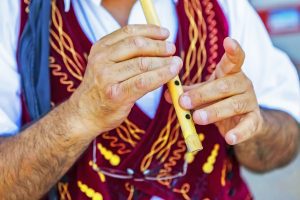
Cyprus's contemporary music scene is not driven by nostalgia, nor by imitation of global trends. Instead, it is shaped by a quiet but deliberate return to local sound. Over the past two decades, musicians across the island have begun reworking traditional Cypriot music into modern forms, blending ancient instruments, irregular rhythms, and modal melodies with rock, jazz, and electronic influences. The result is not a revival of folklore, but a living musical language that reflects modern Cypriot identity while remaining deeply rooted in place, memory, and shared experience. This evolving folk-fusion movement explains how Cyprus sounds today. It also reveals how music has become one of the island's most powerful tools for cultural continuity and dialogue. Not a Revival, but a Reconnection Unlike earlier attempts to modernize folk music, today's Cypriot fusion is not decorative. Traditional elements are not added for color. They shape the structure of the music itself. This shift became especially visible after Cyprus joined the European Union in 2004 and intensified following the financial crisis of 2013. As economic confidence declined, many artists began questioning imported cultural models and turned instead toward local traditions. Music became a way to explore identity without nostalgia, using inherited forms to speak about present realities. Importantly, this movement crosses political and cultural boundaries. Musicians from both sides of the island…

Read more

Cypriot Musicians Shape Sound Between Worlds

Cypriot Musicians Shape Sound Between Worlds

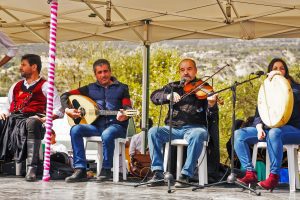
Cyprus has always lived between places, and its contemporary music makes that position audible. Today’s Cypriot musicians collaborate across Europe and the Middle East in ways that feel natural rather than strategic, producing music that travels easily while remaining grounded in local identity. These projects are not about imitation or trend-chasing. They are about translation, turning geography, history, and lived experience into sound. To understand modern Cypriot music is to hear an island negotiating who it is, who it speaks to, and how it wants to be understood. A Geography You Can Hear Cyprus does not need to “reach outward” to collaborate. It is already surrounded by cultural conversation. For centuries, the island has absorbed and adapted influences from Byzantine liturgical traditions, Levantine musical systems, and later European forms introduced through political and cultural exchange. This layered inheritance means that modern collaboration does not feel like a rupture. It feels like continuity. When contemporary Cypriot musicians work with European producers or Middle Eastern artists, the blend often sounds intuitive. The island’s music has long been shaped by multiple tonal systems, rhythmic sensibilities, and storytelling traditions. Modern technology and global networks simply make those exchanges more visible. Collaboration as Cultural Anchoring, Not Fusion for Its Own Sake At first glance, this trend might look like stylistic fusion. In reality, something more…

Read more