Explore Cyprus with Our Interactive Map

Explore our top stories and discover ideas worth your time.

Endemic Crocuses of Cyprus

Endemic Crocuses of Cyprus

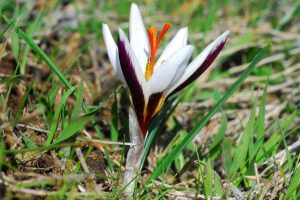
As winter's grip loosens on Cyprus's high peaks, delicate blooms emerge like whispers of color against the white. Cyprus is home to three special crocuses — endemic treasures found nowhere else — that brighten rocky slopes with lilac, white, and purple hues. But what makes each one unique, and how have they survived in this island paradise for millennia? www.inaturalist.org What Are These Charming Little Snow Defiers? These crocuses are small, wild flowers that grow from hidden bulbs underground, much like the colorful ones we plant in gardens. They're part of the iris family, a big group of plants known for their elegant petals and roles in everything from spices to myths. In Cyprus, these three — Crocus cyprius, Crocus hartmannianus, and Crocus veneris — add a touch of magic to the island's wild spots, blooming when most plants are still asleep. A Blooming Legacy from Cyprus's Ancient Times The crocus family sprouted in the Miocene, spreading across the Mediterranean and giving Cyprus its own versions, first noted by 19th-century explorers Boissier and Kotschy who named them after the island's beauty. Envisioning Three Distinctive Mountain Beauties Each of these crocuses has its own look that sets it apart. Crocus cyprius, or Κύπριος κρόκος (meaning "Cypriot crocus"), grows 5-10 cm tall with grass-like leaves striped white in the middle and funnel-shaped…

Read more

Cyprus Valleys Summer Guide

Cyprus Valleys Summer Guide

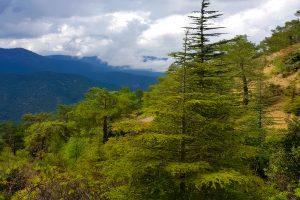
When summer temperatures on coastal Cyprus climb past 40 degrees Celsius, the mountain valleys offer something different. These elevated landscapes carved into the Troodos Mountains maintain temperatures 10 to 15 degrees cooler than the scorching lowlands. The valleys provide more than comfortable weather. They create microclimates where fruit trees thrive, rivers flow year-round, and villages preserve centuries of mountain culture. chooseyourcyprus.com Temperature drops about 5 degrees Celsius for every 1,000 meters of elevation gained. In July and August, when lowland areas reach 34 to 40 degrees, the mountain valleys average 28 degrees at their highest points. Night temperatures fall to comfortable levels, often 10 degrees cooler than daytime peaks. This temperature difference transforms the valleys into natural air conditioning systems for an island known for intense summer heat. Cedar Valley and the Paphos Forest Sanctuary Cedar Valley sits at the intersection of three districts, nestled within the 70,000-hectare Paphos Forest at elevations above 1,000 meters. The valley takes its name from 130,000 Cyprus cedars that grow nowhere else on Earth. Cedrus brevifolia represents an endemic subspecies closely related to the famous cedars of Lebanon. These trees, with their upright trunks and broad foliage, can reach 40 meters in height. cyprusisland.net The cedar forest shares space with Calabrian pines, which thrive in the Mediterranean climate and can grow to similar heights…

Read more
Atalanti Nature Trail Troodos Pine Forests

Atalanti Nature Trail Troodos Pine Forests

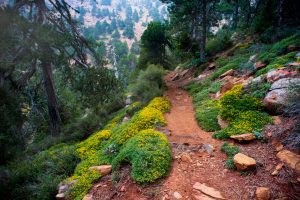
The Atalanti Nature Trail wraps around Mount Olympus at an altitude where black pines grow thick, and views stretch across the entire island of Cyprus. This 14-kilometer circular route offers a longer alternative to the more popular Artemis Trail, with the same mountain setting but fewer crowds. The path combines ecological education with genuine wilderness experience, complete with an abandoned chromite mine and an 800-year-old juniper tree. chooseyourcyprus.com The Atalanti Nature Trail sits at 1,700 to 1,750 meters above sea level in the Troodos National Forest Park. The route starts and ends at Troodos Square, the main gathering point in the Troodos Mountains. Despite its 14-kilometer length, the trail maintains a relatively flat profile throughout most of its course, with only the final quarter showing noticeable elevation changes. The trail is officially designated as a geo-trail, which means it includes geological interpretation along with natural history. Walking time ranges from 3 to 5 hours, depending on pace and how often hikers stop to examine the landscape. Historical Background Atalanti takes her name from Atalanta, one of the few female heroes in Greek mythology who appears as a central figure. According to myth, her father abandoned her as an infant because he wanted a son. A she-bear found and nursed the child until hunters discovered her and raised her. She grew…

Read more