Explore Cyprus with Our Interactive Map

Explore our top stories and discover ideas worth your time.

Cyprus Scenic Lanes: Fields, Hills & Local Life

Cyprus Scenic Lanes: Fields, Hills & Local Life

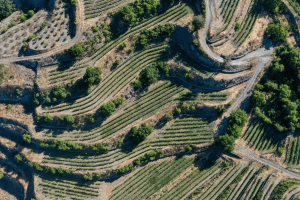
Cyprus scenic lanes wind through agricultural fields, olive groves, and mountain villages far from coastal tourist centers. These narrow roads connect rural settlements and farmland, offering glimpses into traditional Cypriot life that has changed little over generations. pixabay-com The countryside lanes range from paved roads between villages to dirt tracks through vineyards and wheat fields. Unlike major highways, these routes meander through natural landscapes where farmers still tend crops by hand and donkeys carry loads up hillsides. Travelers who venture beyond main roads discover the authentic rhythm of rural Cyprus. Stone houses with wooden balconies, elderly residents sitting in doorways, children playing in village squares, and farmers working terraced fields create scenes that feel timeless. The slower pace allows observation of details easily missed from expressways. Agricultural Routes Through History Cyprus has maintained agricultural roads for thousands of years. Ancient pathways connected farms to market towns, enabling trade in wheat, olives, wine, and copper. Many modern lanes follow routes established during Byzantine times or earlier. pixabay-com The Mesaoria Plain, stretching between the Troodos and Kyrenia mountain ranges, developed an extensive network of agricultural roads. This central plain became the island's breadbasket, producing cereals that fed communities across Cyprus. Farmers needed reliable routes to transport harvests to coastal ports for export. Mountain roads evolved differently. Villages in the Troodos range required…

Read more
Kourion Mosaics Apollo To Basilicas Guide

Kourion Mosaics Apollo To Basilicas Guide

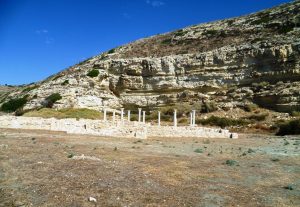
Kourion’s mosaics record Cyprus’s shift from a classical city organised around temples and civic life to an early Christian centre rebuilt under episcopal authority after mid-fourth-century earthquakes. In villas and basilicas, floors and inscriptions became a visual language that guided movement, reinforced belief, and redefined what power looked like in public space. wikimedia-org This article explains how disaster opened the ground for change, how the Episcopal Complex reshaped the city’s core, and how mosaic imagery at sites like the House of Eustolios shows a community rebuilding identity as well as architecture. Apollo Hylates and Old Order For centuries, Kourion thrived as a Greco-Roman city, complete with temples, baths, theatres, and elite villas. Public life revolved around civic institutions and traditional religious cults, most notably the Sanctuary of Apollo Hylates. Christianity was present early, introduced to Cyprus in the first century, but in Kourion it remained largely private and unobtrusive. Everything changed in the mid-fourth century. A catastrophic earthquake, most notably the one in 365 CE, devastated the city. Entire neighbourhoods collapsed, public monuments were abandoned, and the old religious landscape effectively ended. The destruction was not symbolic. It was physical, sudden, and comprehensive. When rebuilding began, it followed a new logic. wikimedia-org Instead of restoring pagan sanctuaries, Kourion was reorganised around Christian authority. The centre of gravity shifted from temples…

Read more

Ancient Enkomi Cyprus Bronze Age City

Ancient Enkomi Cyprus Bronze Age City

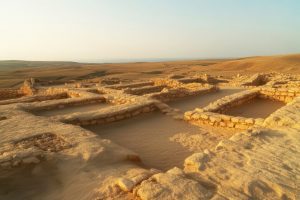
On the eastern coast of Cyprus near today’s Famagusta, Enkomi was one of the most important Bronze Age cities in the Mediterranean. For over 600 years, this walled city controlled much of the region’s copper trade and acted as a key link between the Near East, Egypt, and the Aegean world. visitnorthcyprus-com Enkomi was a major Late Bronze Age settlement, occupied from around 1650 BCE to 1050 BCE. The city grew near a Mediterranean inlet, which has since filled with silt, leaving the ruins several kilometers from the sea. At its height, between 1340 and 1200 BCE, Enkomi was one of Cyprus’s main centers for copper production and export. Historical Background Enkomi was first settled in the Middle Bronze Age, around 2000 BCE, when Cyprus traded with Egypt’s Middle Kingdom. Activity at the site slowed during the 17th and 16th centuries BCE, possibly because Hyksos control in Egypt disrupted trade. mail-com The city became important again after 1550 BCE, when Egypt’s Eighteenth Dynasty reunited the country and started importing copper again. This period marked the start of Enkomi’s rise as a major urban center. During the Late Bronze Age, Cyprus was part of a wider trade network across the eastern Mediterranean. Cities like Ugarit, Byblos, Sidon, and Tyre became regular trading partners, and by 1400 BCE, Mycenaean Greeks also developed…

Read more