Explore Cyprus with Our Interactive Map

Explore our top stories and discover ideas worth your time.

A Tapestry of Cyprus Sacred Spaces

A Tapestry of Cyprus Sacred Spaces

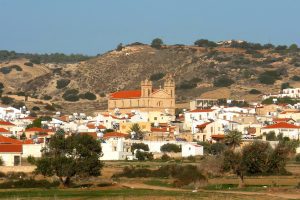
Most visitors to Cyprus know about its Greek Orthodox churches and ancient Christian monasteries, but the island's religious story is far richer and more complex. For millennia, Cyprus has been home to Jewish communities, Muslim mosques, Armenian and Maronite Christians, Sufi mystics, and Latin Catholic cathedrals - each faith leaving monuments that testify to survival, migration, and remarkable coexistence. orthodoxtimes.com Walking through Cyprus's cities means encountering this layered religious landscape where synagogues stand near mosques, Gothic cathedrals became prayer halls, and sacred springs were shared by people of different beliefs. Where Many Faiths Met and Mingled Cyprus has never belonged to a single religious tradition. Its position at the meeting point of Europe, Asia, and Africa made it a crossroads not only for trade and armies but also for belief systems. Long before Orthodox Christianity became dominant in the medieval period, Cyprus hosted Jewish traders and craftsmen, pagan mystery cults, and early Christian congregations mentioned in the New Testament. Later waves brought Islamic institutions during Ottoman rule, Armenian refugees fleeing persecution, Maronite Christians migrating from Lebanon and Syria, and Western European Crusaders establishing Latin Catholic strongholds. Rather than existing as isolated enclaves, these religious minorities participated actively in Cyprus's economy, diplomacy, and urban life. Their monuments - synagogues, mosques, churches of different denominations, and Sufi lodges - aren't marginal curiosities…

Read more

Othello Castle, Famagusta Medieval Fortress

Othello Castle, Famagusta Medieval Fortress

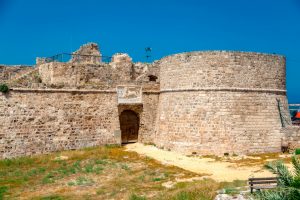
Othello Castle, also known as Othello's Tower, is a medieval fortress in Famagusta in in the Turkish-occupied part of Cyprus. The castle sits at the northeastern corner of the city's fortified walls, directly controlling access to the historic harbor. This location made it both the primary defensive stronghold and the main entrance to the walled city during the medieval period. visitncy-com The site had fortifications even before the current castle. A tower and defensive works were built here by the Prince of Tyre around 1310. The Lusignan rulers of Cyprus recognized the strategic importance of this harbor entrance and constructed a more substantial fortress in the 14th century. Originally called the Harbour Citadel, it served dual purposes as a military stronghold and possibly a residence for members of the royal family and their entourage. The castle's position allowed defenders to monitor all ship traffic entering or leaving Famagusta. In medieval times, a massive iron chain could be stretched across the harbor mouth to block enemy vessels. Modern ships continue to use the same harbor entrance that was active during Famagusta's golden age from 1300 to 1400. Historical Background When Cyprus was sold to the Republic of Venice in 1489, Famagusta became essentially a military base. The Venetians immediately recognized the need to upgrade the city's defenses against the threat of…

Read more
Cyprus Wine Museum Erimi Limassol History

Cyprus Wine Museum Erimi Limassol History

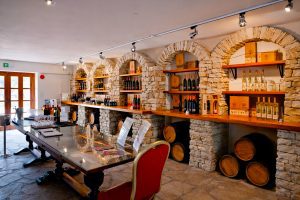
The Cyprus Wine Museum sits at the most important historical crossroads in Cyprus. The location connects the road between ancient Kourion and Kolossi Castle, the old Limassol to Paphos route, and the roads leading to the wine villages in the Troodos Mountains. Erimi village itself has produced wine for over 5,500 years. The prehistoric settlement of Sotira lies nearby, where archaeologists discovered the oldest grape seed remains on the island. Kolossi Castle stands just a short distance away, the medieval headquarters of the Knights Hospitaller who gave Commandaria wine its name. wanderlog-com Historical Background Composer Anastasia Guy founded the museum in 2004 after years of planning. The building belonged to her family for generations and originally functioned as a traditional Cypriot inn. Guy recognized that Cyprus was one of the first wine-producing countries in the world and saw an opportunity to preserve this heritage. The concept, developed in 1998, received approval from the Cyprus Tourism Organization in 2001 and underwent construction from 2002 to 2004. President Tassos Papadopoulos performed the official inauguration in 2004. The museum immediately began enriching its collections with archaeological items on loan from the Cyprus Archaeological Museum, the Pierides Museum of Marfin Laiki Bank, and other institutions. In 2005, the Ministry of Transport approved official road signs directing visitors from archaeological sites and public roads. The…

Read more