Explore Cyprus with Our Interactive Map

Explore our top stories and discover ideas worth your time.

Mythical Heroic Ancestors of Tamassos

Mythical Heroic Ancestors of Tamassos

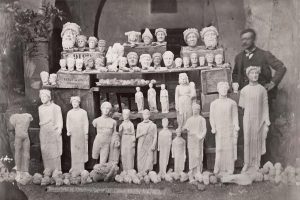
In ancient Cyprus, the mythical heroic ancestors of Tamassos were revered as semi-divine founders and protectors, linking the city's copper-rich lands to gods like Aphrodite and epic Greek heroes. These figures, from local legends to Trojan War descendants, explained the kingdom's prosperity and sacred status, blending human resilience with divine favor. Their stories turned hills and mines into living tales, inviting us to explore how myths rooted a community in its rugged inland home. A Kingdom Forged in Myth and Metal Nestled in Cyprus's central plains, Tamassos wasn't a coastal powerhouse like Salamis or Paphos - it was an inland gem, thriving on fertile soils and the island's legendary copper veins. Picture rolling hills dotted with olive groves and springs, where ancient people built a city-kingdom around 2000 BC that lasted through empires. Without sea views, its identity drew from the earth: copper mines that fueled Bronze Age trade, making it a hub for tools, weapons, and art. But Tamassos was more than mines; it was a sacred landscape where myths felt as solid as the ground. Heroic ancestors weren't fairy tales here - they were the glue holding community, ritual, and power together, explaining why this spot, amid the Mesaoria plain, was chosen by the gods for abundance and endurance. amricha-com Legends That Built an Inland Empire The heroic…

Read more

Basilica of Kampanopetra Salamis Christian Architecture

Basilica of Kampanopetra Salamis Christian Architecture

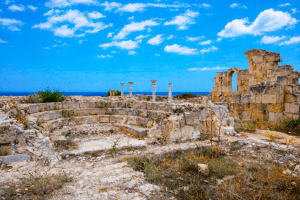
The Basilica of Kampanopetra is a large Early Christian church complex located at the archaeological site of ancient Salamis, near modern Famagusta in the Turkish-occupied part of Cyprus. Built during the late 5th or early 6th century CE, the basilica served the city of Constantia, the name given to Salamis after it was rebuilt following devastating earthquakes in 332 and 342 CE. The complex consists of four major sections arranged in a linear sequence. From west to east, these include a large western courtyard, a second western atrium connected to a narthex (entrance hall), the main three-aisled basilica, and an eastern atrium. The entire structure measures approximately 152 meters in length and reaches nearly 38 meters at its widest point. This makes it one of the largest Early Christian basilicas in Cyprus. The name "Kampanopetra" has been interpreted in different ways. Some sources translate it as "stone by the monks' cells," while others suggest it means "stone bell." The name likely refers to features or traditions associated with the site during medieval times when a small monastic community continued to use portions of the ruined basilica. Historical Background Salamis was one of Cyprus's most important cities throughout antiquity. According to legend, it was founded around the 11th century BCE by Teucer, a hero from the Trojan War who was exiled…

Read more
Dasoudi Beach Limassol

Dasoudi Beach Limassol

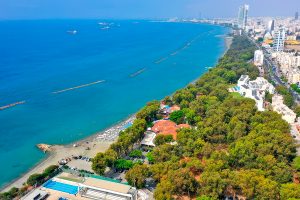
Dasoudi Beach extends one kilometer along the Limassol coastline in Germasogeia, approximately 3.5 kilometers east of the city center. The beach is the only one in Cyprus which, despite proximity to the city center, boasts rich greenery that reaches all the way down to the sandy coast. cyprusdiscover.com The name Dasoudi translates from Greek as little forest, referring to the park's ambiance created by dense eucalyptus and pine groves. This urban beach combines standard Mediterranean beach facilities with unusual additions including an Olympic-size swimming pool and a forested park that provides natural shade and scenic walking paths just meters from the waterline. Historical Background Dasoudi Park was established in the mid-20th century as part of a greening initiative in Limassol. City planners recognized the need for public recreational space along the rapidly developing tourist corridor east of downtown. Eucalyptus trees were planted specifically to reinforce sandy dunes and provide shade during hot summer days. These Australian imports adapted well to Mediterranean conditions, growing quickly to create the forested atmosphere that defines Dasoudi today. allaboutlimassol.com The park and beach developed together rather than sequentially, with infrastructure planned to integrate both elements. Walking paths wind through eucalyptus, pine, and acacia groves parallel to the shoreline, creating a buffer zone between urban development and the beach itself. This design allows visitors to transition…

Read more