Explore Cyprus with Our Interactive Map

Explore our top stories and discover ideas worth your time.

Kyrenia Castle: Fortress Facing the Sea

Kyrenia Castle: Fortress Facing the Sea

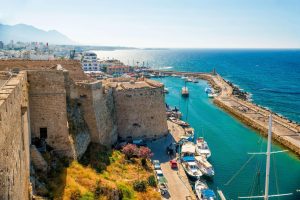
Kyrenia Castle stands at the edge of one of Cyprus’s most sheltered harbours, where land and sea have negotiated power, trade, and survival for centuries. Unlike hilltop fortresses built to dominate territory from afar, this castle was designed to watch the water closely. Its purpose has always been practical: to protect the harbour, control movement, and adapt to whoever ruled Cyprus at the time. That continuous adaptation rather than a single defining moment is what gives Kyrenia Castle its lasting significance. Adobe-Stock-com A Fortress Built for a Living Harbour Kyrenia Castle occupies a narrow strip of land between the town and the sea, positioned so that every vessel entering the harbour passes beneath its walls. From its earliest days, the castle was inseparable from daily life. Trade ships, fishing boats, and naval vessels all moved through the same space, watched over by stone walls that were never purely symbolic. Adobe-Stock-com This closeness to the harbour distinguishes Kyrenia Castle from many medieval fortifications. It was not a distant refuge, but an active participant in the rhythms of the town. Its defensive role was intertwined with commerce, communication, and maritime control. Byzantine Foundations and the First Line of Defence The earliest phase of Kyrenia Castle dates to the Byzantine period, when coastal settlements across the Eastern Mediterranean were reinforced against Arab naval…

Read more

Cyprus Police Museum (Nicosia)

Cyprus Police Museum (Nicosia)

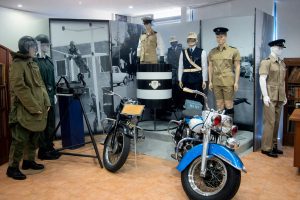
The Cyprus Police Museum chronicles law enforcement history in Cyprus from British colonial times through independence to the present day. The British Chief of Police, W.C.C. King, founded the museum in 1933 during the colonial period. cyprusbutterfly-com The museum documented criminal methods and police responses during a period when Cyprus was transitioning from traditional village life to a more modern urban society. The facility displays uniforms, weapons, equipment, police vehicles, and documents that trace the development of policing on the island. The museum also houses important materials from World War II and the 1955 to 1959 National Liberation Struggle against British rule. Evolution to a Historical Institution Over decades, the museum's scope expanded beyond purely criminal matters. While crime-related exhibits remain important, the collection now covers the broader history of the Cyprus Police Force. The institution documents how policing changed through different political periods, from British colonial administration through the establishment of the Republic of Cyprus in 1960 to modern law enforcement practices. cyprusbutterfly-com The Police Museum is owned by the Cyprus Police and managed by Department A of the Police Headquarters. It operates as a public institution with free admission, making police history accessible to all visitors. The museum serves both educational purposes and institutional memory, preserving the legacy of police work in Cyprus. Police History Collections A substantial…

Read more
Leventis Municipal Museum of Nicosia, Cyprus

Leventis Municipal Museum of Nicosia, Cyprus

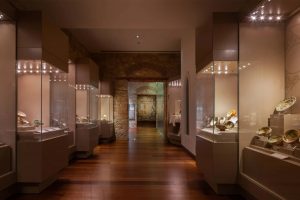
The Leventis Municipal Museum tells the story of Europe's last divided capital through over 10,000 objects collected across five thousand years. Within two years of opening in 1989, it won the European Museum of the Year Award for bringing modern museum standards to Cyprus. shutterstock-com The museum occupies a complex of three historic buildings on Ippokratous Street in the Laiki Geitonia neighborhood within the Venetian walls of Nicosia. The main building at number 17 once served as the clinic of Dr. Themistocles Dervis, who was mayor of Nicosia for 27 years between 1929 and 1959. The building at number 15 operated as the Victoria Hotel. The third structure at 18 Solonos Street is a small traditional house from the late 18th century, where Nikolaos Tsikkinis, one of the city's best-known teachers, was born and lived. Historical Background In the early 1980s, the Dervis family mansion stood in ruins and faced demolition. Lellos Demetriades, who served as mayor of Nicosia from 1971 to 2001, saw an opportunity. He wanted to create a civic history museum as part of his broader effort to revitalize the old city within the walls. Although demolition work had already begun, the Municipality of Nicosia managed to purchase the building. leventismuseum-org Demetriades approached the A.G. Leventis Foundation with his vision. Constantine Leventis, the first chairman of the…

Read more