Explore Cyprus with Our Interactive Map

Explore our top stories and discover ideas worth your time.

Green Transportation Options in Cyprus

Green Transportation Options in Cyprus

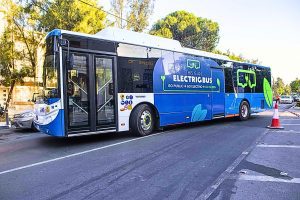
Cyprus faces a unique transportation challenge. With 658 automobiles per 1,000 people, the island holds one of the highest car ownership rates globally. Only 3% of journeys in Greater Nicosia use public transport, while cycling accounts for just 2%.  i-ytimg-com This heavy reliance on private vehicles contributes to traffic congestion, air pollution, and carbon emissions. However, the island is actively developing sustainable alternatives through government initiatives, infrastructure improvements, and European Union support. Building a Greener Transport Network Cyprus has committed to ambitious environmental targets. The National Energy and Climate Plan aims to increase renewable energy sources to 23% of total consumption and 14% in the transport sector by 2030.  sb-cyprus The government launched Sustainable Urban Mobility Plans for Limassol and Larnaca, with a combined investment of over €100 million. These plans include 62 kilometers of improved transport corridors, dedicated bus lanes, cycling paths, three central bus stations, and four park-and-ride facilities. Larnaca began implementing its plan in late 2025, delivering new cycling lanes, redesigned bus corridors, improved pavements, and upgraded traffic systems through January 2027. dom-com-cy Cyprus Public Transport introduced the island's first electric buses in 2023. These Yutong buses measure 12 meters long, accommodate up to 80 passengers, and feature accessible seating with designated wheelchair areas. The company is developing an advanced energy management system that integrates solar photovoltaic…

Read more

Larnaca Fort Cyprus Ottoman Coastal Fortress

Larnaca Fort Cyprus Ottoman Coastal Fortress

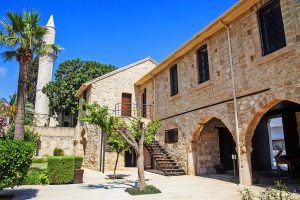
Larnaca Fort is a coastal defensive structure that started as a Byzantine fortification and took its current form during Ottoman rule in the 17th century. The fort sits directly on the waterfront at the western edge of one of Cyprus's most popular seaside promenades. Despite its modest size compared to larger Cypriot castles like Kyrenia or Kolossi, the fort played an essential role in protecting Larnaca harbour and the southern coast from pirates and invaders. Today, it houses the Larnaca Medieval Museum and hosts cultural events in its courtyard. shutterstock-com Historical Background Archaeological evidence suggests the Byzantines built a small fortification on this site in the late 12th century. Larnaca, known in ancient times as Kition, had been inhabited since the 14th century BC. The medieval fort became necessary when the Genoese captured Famagusta, Cyprus's main port, in 1373. This forced the Lusignan Kingdom of Cyprus to develop Larnaca as an alternative major port. larnakaregion-com According to medieval chronicler Florius Boustronius, King James I of Cyprus ordered the expansion of the Byzantine fortification into a more substantial castle between 1382 and 1398. The castle's primary purpose was to defend the harbour and protect the increasingly important port town. During this period, Larnaca transformed from a minor coastal settlement into one of the kingdom's principal trading centers, making coastal defenses critical…

Read more
Roman Road Network Ancient Cyprus Routes

Roman Road Network Ancient Cyprus Routes

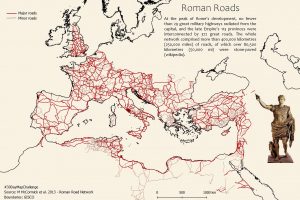
Cyprus already had roads before the Romans arrived. The earliest routes date back to the Bronze Age, and by the end of the Hellenistic period, a road network circled the entire island. These pre-Roman roads connected cities with their surrounding territories and linked major settlements along the coast. However, they were often simple tracks suitable for pedestrians and pack animals rather than the engineered highways Romans built elsewhere in their empire. pixabay-com When Cyprus became a Roman province in 22 BC under Emperor Augustus, the new administration inherited this existing network. The Romans added secondary roads and improved certain routes, but they did not rebuild the entire system to match the standards used in Italy or other provinces. This practical approach reflected Cyprus's geography and peaceful status. The island was stable enough not to require a large military presence, so the roads served primarily civilian purposes rather than rapid military deployment. Augustus and later Emperor Titus are credited in inscriptions as the creators of the formal Roman road system on Cyprus. The roads they established formed part of the imperial network, meaning they received official recognition and maintenance funding from Rome itself. How the Road System Worked The main roads formed a coastal highway that encircled the island, connecting all major cities. From this primary route, secondary roads branched inland…

Read more