Explore Cyprus with Our Interactive Map

Explore our top stories and discover ideas worth your time.

Sotira Kaminoudhia Bronze Age Copper Hub

Sotira Kaminoudhia Bronze Age Copper Hub

Sotira Kaminoudhia is an Early Bronze Age settlement and cemetery complex located in the Sotira parish and covering an area of approximately one hectare. The site was excavated by Stuart Swiny of the Cyprus American Archaeological Research Institute between 1978 and 1986 as part of a wider regional survey project. The settlement occupies the lower slopes and flat fields north of Teppes hill, where Porphyrios Dikaios had earlier excavated the well known Neolithic site that gave rise to the term Sotira culture. shutterstock-com The site spans three distinct phases: Philia, dated to approximately 2500 to 2300 BC, Early Cypriot I to II from 2300 to 2100 BC, and Early Cypriot III from 2100 to 2000 BC. The excavated settlement remains belong exclusively to the EC III phase, while the earlier periods are represented by associated cemeteries located on either side of a small valley. Radiocarbon dating of organic material from well stratified deposits provided the first absolute chronology for the Cypriot Early Bronze Age and resolved long standing debates concerning the duration and internal sequence of this period. Surface survey evidence suggests continuous occupation across all three phases rather than short term or shifting settlement patterns once thought typical of Early Bronze Age Cyprus. This long occupation sequence places Kaminoudhia alongside sites such as Marki Alonia and Alambra Mouttes, which…

Read more
Pyrgos Mavroraki Sacred Metallurgical Landscape

Pyrgos Mavroraki Sacred Metallurgical Landscape

Pyrgos-Mavroraki is an Early to Middle Bronze Age settlement on the southern coast of Cyprus near modern Limassol. Excavations began in the early 2000s by the Italian Archaeological Mission of ITABC-CNR. Radiocarbon dating shows copper smelting started here as early as 4229–3960 BC during the Chalcolithic period. Even older copper slag from 8631–8291 BC was found, possibly from accidental metal use while making lime. This makes Pyrgos one of the earliest places for metal work in the Mediterranean. The settlement was on the slope of a small hill in a valley crossed by a stream. It sat on rocks with copper and had easy access to nearby mines at Mavrovouni and other sites. People lived there continuously from the 9th millennium BC until an earthquake destroyed it around 1850 BC. Historical Background The area around Pyrgos was rich in copper deposits and had plenty of water, making it ideal for metalworking. Nearby mines created a line of activity along the coast through villages such as Aghios Tychonas, Parekklisha, Pyrgos, Moni, Monagroulli, Asgata, and Kalavassos. mavroraki-eu Excavations at Pyrgos-Mavroraki revealed the full process of copper production. Archaeologists found workshops with basalt anvils, thousands of copper nuggets, broken crucibles, clay molds, stone tools, and pit furnaces dating to the early Bronze Age. These finds show how copper was extracted, processed, and shaped…

Read more
Mythological Locations and Legends of Cyprus

Mythological Locations and Legends of Cyprus

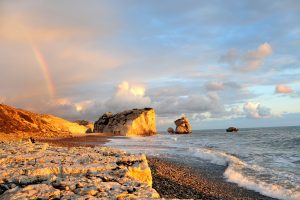
Cyprus isn't just an island of beaches and ancient ruins - it's the legendary birthplace of Aphrodite, the goddess of love and beauty. For thousands of years, pilgrims, poets, and lovers have traveled here seeking the divine magic said to linger in its shores, and the myths born on this island have shaped Western culture in ways that still resonate today. Adobe-Stock-com An Island Steeped in Divine Legend Cyprus holds a unique place in Greek mythology as the earthly home of Aphrodite. According to legend, the goddess emerged from the sea foam near Cyprus's shores, making the island sacred ground. The connection runs so deep that Aphrodite herself was often called "Kypria" - the Cyprian goddess - a title that linked her identity inseparably to this Mediterranean island. wikipedia-org Beyond Aphrodite, Cyprus is woven into myths involving tragic love, divine kings, and miraculous transformations. These stories explained the island's remarkable fertility, legendary copper wealth, and status as a crossroads of cultures. Today, these myths remain alive in the landscape itself. From Ancient Cults to Eternal Legends Long before classical Greek myths were written down, Cyprus was home to fertility cults dating back to Neolithic times. When Mycenaean Greeks arrived around the 12th century BC, they built temples and gradually merged local worship traditions with their own pantheon, creating a unique…

Read more