Explore Cyprus with Our Interactive Map

Explore our top stories and discover ideas worth your time.

Salamis City, Cyprus – History & Facts

Salamis City, Cyprus – History & Facts

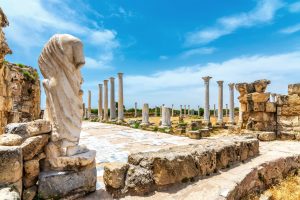
Salamis stands as one of the most important archaeological sites on the island of Cyprus. Located on the eastern coast near modern Famagusta, this ancient city flourished for over 1,800 years before nature forced its abandonment. The ruins spread across one square mile along the coast, offering visitors a remarkable glimpse into ancient Mediterranean civilization. cyprusparadise.com According to Greek legend, Salamis was founded by Teucer, son of King Telamon. After the Trojan War ended, Teucer could not return home because he failed to avenge his brother Ajax. Banished by his father, Teucer sailed to Cyprus and established a new city named after his birthplace, the island of Salamis near Athens. Archaeological evidence dates the earliest settlement to the 11th century BC during the Late Bronze Age. The city likely emerged as a replacement for nearby Enkomi, which was abandoned when its harbor silted up. Cyprus held immense strategic value due to its rich copper deposits, and Salamis became a crucial hub in Mediterranean trade networks. From Kingdom to Capital By the 6th century BC, Salamis had grown into the most powerful city on Cyprus. King Euelthon, who ruled from 560 to 525 BC, claimed authority over the entire island and became the first Cypriot king to mint coins. The city came under Persian control in 525 BC but maintained considerable…

Read more

Football and Sports Culture in Cyprus

Football and Sports Culture in Cyprus

Football dominates the sporting landscape of Cyprus, but the island nation embraces a diverse athletic culture that extends far beyond the pitch. From passionate club rivalries to individual Olympic achievements, sports unite communities across this Mediterranean island of 1.14 million residents. ipla.pluscdn-pl The British introduced football to Cyprus in the early 20th century, and locals embraced it with enthusiasm. By September 1934, the Cyprus Football Association was formed to regulate what had become the island's favorite sport. The organization joined FIFA in 1948 and UEFA in 1962, officially connecting Cypriot football to the international stage. The Cypriot First Division serves as the top tier of the country's football league system, with 14 teams currently competing in the 2025-26 season. Teams play 26 matches in the first round against each other, twice at home and away. The league then splits into two groups for the second round. The top six teams compete for the championship and European qualification spots, while the bottom eight fight to avoid relegation. APOEL Nicosia stands as the most successful club in Cypriot football history, holding 29 national championships and 21 cup titles. The club made history in the 2011-12 season when they became the first and only Cypriot team to reach the Champions League quarter-finals. APOEL won their group that included Porto, Shakhtar Donetsk, and Zenit…

Read more
Kyrenia Mountains Cyprus Nature Reserve

Kyrenia Mountains Cyprus Nature Reserve

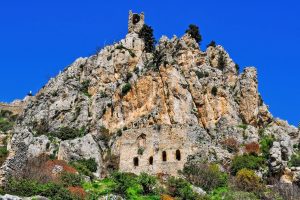
The Kyrenia Mountains form a dramatic limestone barrier along the northern coast of Cyprus. This narrow mountain range stretches for 160 kilometers from Cape Andreas in the east to Cape Kormakiti in the west. shutterstock-com The Kyrenia range, also known as Pentadaktylos Mountains, rises abruptly from sea level to reach its highest point at Mount Selvili, which stands at 1,024 meters. The mountains run parallel to the coast, separated from the sea by a narrow coastal plain. To the south, the range overlooks the wide Mesaoria Plain, which extends toward the Troodos Mountains in central Cyprus. The name Pentadaktylos means "five fingers" in Greek and refers to a distinctive peak in the western section that resembles a hand with five fingers reaching toward the sky. This sharp ridge has become one of the most recognizable natural landmarks on the island. Historical Background The Kyrenia Mountains consist of the oldest rocks in Cyprus, formed from sedimentary deposits that accumulated from the Permian period through the Middle Miocene. These sedimentary formations were pushed upward when the African and Eurasian tectonic plates collided millions of years ago. The range represents the very edge of the Eurasian plate. northcyprusinform-com The mountains are primarily made of hard crystalline limestone, with areas of dolomite and marble. This limestone composition creates a rugged landscape with steep escarpments…

Read more