Explore Cyprus with Our Interactive Map

Explore our top stories and discover ideas worth your time.

Machairas Monastery

Machairas Monastery

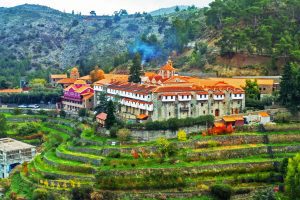
Holy Monastery of Panagia Machaira is a historic monastery dedicated to the Virgin Mary located about 40 km from the capital of Cyprus, Nicosia. The monastery is built near Mount Kionia, at an elevation of 870 meters, and surrounded by dense pine forests. The monastery towers like a fortress on a steep hillside above the Pediaios River, Cyprus's longest waterway. shutterstock-com The Sacred, Royal and Stavropegic Monastery of the Virgin of Machairas ranks as one of the island's three most important monasteries alongside Kykkos and Agios Neophytos, holding special privileges that grant independence from the Archbishop of Cyprus. The Discovery of a Sacred Icon According to tradition, the icon is one of the seventy icons painted by the Apostle Luke. The icon had been placed above the Holy Soros, or reliquary, of the Virgin Mary in the Church of Blachernae in Constantinople. During the eighth century iconoclasm period when religious images faced destruction, a devout monk rescued the icon and brought it to Cyprus, hiding it in a cave where it remained forgotten for centuries. tripadvisor-com Around 1145, the hermits Ignatios and Neophytos, blessed with divine grace, discovered the cave which was obscured by bushes. To reach the cave where the icon was, a knife was given to them by a divine hand with which they used to cut the…

Read more
Akrotiri Environmental Protected Area, Cyprus

Akrotiri Environmental Protected Area, Cyprus

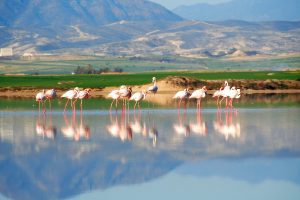
The Akrotiri Peninsula stands at the southernmost tip of Cyprus, where wetlands, salt lakes, and coastal habitats create one of the most important wildlife sanctuaries in the Mediterranean. This protected area combines ancient traditions with modern conservation to safeguard a landscape that supports rare species found nowhere else on Earth. tripadvisor.com Akrotiri Peninsula covers 60 square kilometers within the British Sovereign Base Area, just southwest of Limassol. The area centers around the Akrotiri Salt Lake, Cyprus's largest aquatic system, surrounded by coastal dunes, Mediterranean juniper forests, saltmarshes, and reedbeds. It holds designations as a Ramsar Wetland of International Importance, a Special Protection Area for birds, and a Special Area of Conservation. Historical Background Thousands of years ago, Akrotiri existed as an island separated from Cyprus. The Kouris River carried sediment to its delta over millennia, building up land that formed a bridge connecting the western side to the mainland. Later, a second bridge formed on the eastern side from sediment deposited by the Garilis River. This double tombolo formation trapped the salt lake in the center and took at least 56,000 years to complete. A Remarkable Concentration of Wildlife The peninsula hosts over 800 plant species, representing 40 percent of all plants found on Cyprus. About 300 bird species use the area, with 70 percent of Cyprus's entire bird population…

Read more

Cyprus Mining Museum Skouriotissa Copper History

Cyprus Mining Museum Skouriotissa Copper History

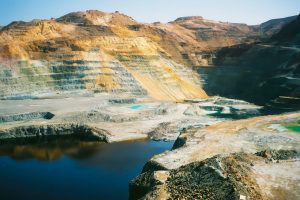
The Museum of Mining Heritage in Katydata village tells the story of Cyprus through its most defining resource: copper. Located near the Skouriotissa copper mine, the oldest continuously operated copper mine in the world, this small museum preserves the island's 4,000-year relationship with the metal that gave Cyprus its name. сvisitsolea-com The museum sits in the centre of Katydata village, next to the Community Council office. The village lies approximately 13 kilometres from Astromeritis, positioned in the Solea Valley where Cyprus's richest copper deposits concentrate. The Community Council and Emigrants Association of Katydata created the museum to document the mining heritage that shaped their region and connected Cyprus to ancient Mediterranean civilizations. Inside the Mining Caverns The first hall recreates the underground experience of working in Cyprus's copper mines. Designers modeled the space after the caverns of the Fukassa Mines, one of several ancient mining sites in the area. Large wooden beams support the low ceiling, mimicking the structural supports that prevented cave-ins in actual mine tunnels. The walls bear colours matching the minerals found in nearby deposits, giving visitors a sense of the geological environment miners worked within. visitsolea-com This immersive approach helps people understand the physical conditions of mining work. The damp caverns, low ceilings, and confined spaces tell a story beyond what artifacts alone could convey. Tools…

Read more