Explore Cyprus with Our Interactive Map

Explore our top stories and discover ideas worth your time.

British colonial architecture in Cyprus

British colonial architecture in Cyprus

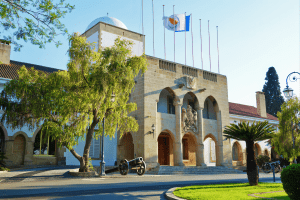
British colonial architecture in Cyprus reflects 82 years of British rule from 1878 to 1960. Unlike other colonies where British builders copied English designs directly, architecture in Cyprus followed a different path. British planners created a local style that combined European ideas with Cypriot building traditions. shutterstock-com During this period, around 700 colonial buildings were constructed across the island. These included government offices, hospitals, post offices, courthouses, schools, and police stations. Most of these buildings were planned and built by the Public Works Department, which employed architects and engineers from Britain, other British territories, and Cyprus. Historical Background Cyprus came under British control in 1878 when the Ottoman Empire leased the island to Britain. At that time, the island was economically weak. Most towns and villages had an appearance closer to Middle Eastern settlements than European cities. tripadvisor-com The contrast between Cyprus and Britain was clear. Britain was a major industrial power with global influence, while Cyprus remained largely rural. When World War I began and the Ottoman Empire joined Germany, Britain canceled the lease and formally annexed Cyprus in 1914. In 1925, Cyprus became an official crown colony. This change marked a turning point in British construction policy. Early colonial buildings were simple and practical, showing Britain’s limited interest in long term investment. After full colonial status was established,…

Read more
Modern Naval Heritage & Maritime Identity

Modern Naval Heritage & Maritime Identity

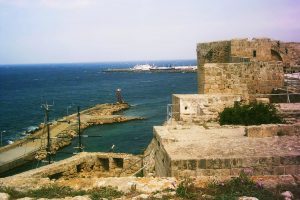
Cyprus has never treated the sea as a boundary. For centuries, its coastline functioned as a working edge where trade, defense, administration, and daily life met. In the modern period, this relationship was shaped most clearly by two naval powers: the Ottoman Empire and the British Empire. Their presence did not simply leave behind forts and harbors. It reshaped how the island was governed, how its ports functioned, and how Cypriots understood their place within the wider Mediterranean world. Globalgrasshopper-com This article explores how Ottoman and British naval priorities transformed Cyprus from a regional outpost into a strategic maritime asset, and why that legacy still defines the island’s identity today. An Island Positioned to Be Watched Cyprus sits at a crossroads of the eastern Mediterranean, close enough to Anatolia, the Levant, and Egypt to matter to every power operating in the region. This geography made neutrality impossible. Control of Cyprus meant visibility over key sea lanes, access to sheltered anchorages, and influence across multiple trading and military routes. Rather than isolating the island, the sea connected it outward. Cyprus became valuable not for its interior alone, but for how its coastline could support movement, surveillance, and supply. This strategic reality explains why naval priorities repeatedly shaped the island’s administration. What “Modern Naval Heritage” Really Means When discussing naval heritage in…

Read more

Mesaoria Plain Cyprus Agricultural Heartland

Mesaoria Plain Cyprus Agricultural Heartland

The Mesaoria Plain stretches 96 kilometres across central Cyprus between two mountain ranges. Mesaoria, meaning "between the mountains" in Greek, is a broad central plain that extends from Morphou Bay in the west to Famagusta Bay in the east. The Troodos Mountains rise to the south, while the Kyrenia Range forms a wall to the north. The plain covers approximately 1,000 square kilometres with elevations ranging from 100 metres on average up to 325 metres at its highest points. wikimedia-org Nicosia, the capital of Cyprus, sits roughly in the centre of the plain along the Pedieos River. This positioning reflects centuries of strategic thinking, as the location provided access to both coasts. The plain contains dozens of villages and several major towns, making it the most densely populated region on the island despite its harsh summer climate and winter-dependent water supply. Historical Background Twenty million years ago, Cyprus existed as two separate islands corresponding to what would become the Kyrenia and Troodos mountain ranges. Approximately one million years ago, tectonic forces pushed up the land between these islands, creating the Mesaoria Plain and joining them into the single landmass known today as Cyprus. The Mediterranean Sea covered and exposed the plain multiple times as sea levels changed, but it has remained in its current form since the end of the…

Read more