Explore Cyprus with Our Interactive Map

Explore our top stories and discover ideas worth your time.

Cape Greco National Forest Park

Cape Greco National Forest Park

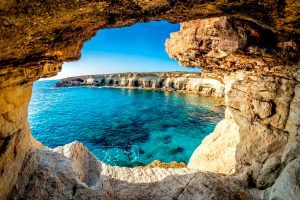
Cape Greco National Forest Park occupies 385 hectares on a rocky promontory at the southeastern tip of Cyprus, nestled between the resorts of Ayia Napa and Protaras. The park was designated as a National Forest Park in 1993 to protect this area of unspoiled natural beauty. The broader Natura 2000 site encompasses 1,876 hectares, including 915 hectares of terrestrial area and 961 hectares of marine zones. tripbucket.com The dramatic limestone cliffs rise 30 feet above turquoise Mediterranean waters, creating spectacular coastal scenery. Sea caves carved by thousands of years of wave action punctuate the coastline, while natural rock arches frame views of the endless blue horizon. The park combines hiking trails, cycling paths, endemic plant species, and coastal beauty in a relatively compact area. Visitors experience Cyprus at its wildest and most beautiful, with pine scented paths overlooking crystal clear waters. The lost juniper forest and current vegetation Cape Greco was originally covered by a dense juniper forest that gave the area its distinctive character. Between 1910 and 1920, these trees were rapidly cut down and burned to power steam flour mills that operated in abundance in the Paralimni area. Since then the slow growing juniper has never fully recovered, though scattered specimens still survive alongside varieties of pine. tripbucket.com Today the vegetation consists mostly of sparse low level growth,…

Read more
Bay Laurel of Cyprus

Bay Laurel of Cyprus

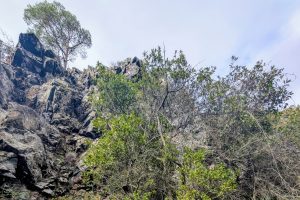
Imagine brushing past a glossy-leaved tree beside a sparkling Cypriot stream – the air instantly fills with a warm, spicy, almost resinous perfume that lingers on your fingers for hours. This is the bay laurel, standing quietly yet majestically among the island’s wild places, its leaves whispering stories of gods, victors and everyday Cypriot kitchens. www.inaturalist.org A Fragrant Evergreen of the Laurel Family Laurus nobilis, the true bay laurel or sweet bay, belongs to the Lauraceae family – a small but aromatic group that also includes cinnamon and camphor. In Cyprus it grows as an evergreen tree or large shrub, often reaching 8–15 metres in sheltered spots, though it stays more shrub-like when exposed to wind or grazing. From Apollo’s Wreath to Cypriot Streams The bay laurel has been part of Mediterranean life since antiquity. In Cyprus it was already well known when Unger and Kotschy explored the island in 1862 – they recorded it as frequent around Limassol and noted its presence among myrtle, olive and other maquis trees. Even earlier, the great physician Dioscorides (1st century AD) described its leaves and berries in detail, recommending them for digestion, inflammation and as a warming oil. In Greek mythology the tree is sacred to Apollo: when the nymph Daphne fled his advances she was transformed into a laurel, which the…

Read more
Morphou Plain Cyprus Citrus Farming Heartland

Morphou Plain Cyprus Citrus Farming Heartland

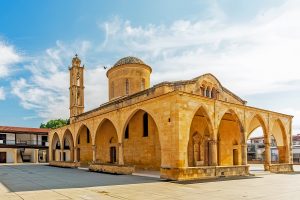
The Morphou Plain spreads across northwestern Cyprus as the island's most fertile agricultural region. The plain covers several hundred square kilometres of exceptionally productive farmland watered by underground aquifers and seasonal streams. The town of Morphou serves as the region's commercial centre with a current population of approximately 18,000 to 24,000 people. shutterstock-com The area produces over half of Cyprus's citrus fruits, primarily oranges, lemons, and grapefruits, along with substantial quantities of apples, vegetables, melons, and strawberries. The distinctive red soil, rich in minerals and organic matter, creates ideal conditions for intensive agriculture. Unlike much of Cyprus, which struggles with water scarcity, the Morphou Plain benefits from abundant groundwater that allows year-round cultivation and supports the island's most productive farming operations. Historical Background The Morphou region has sustained human settlement since at least the Bronze Age, with archaeological evidence suggesting continuous occupation for over 4,000 years. The fertile soil and reliable water supplies attracted early agricultural communities who recognized the land's exceptional productivity. The ancient city-kingdom of Soli developed on the plain's coastal edge, thriving from approximately the 11th century BC until Arab raids destroyed it in the 7th century AD. facebook-com Soli's prosperity derived from two resources: rich copper deposits in the nearby hills and fertile agricultural lands that fed mining communities and produced surplus for export. According to…

Read more