Explore Cyprus with Our Interactive Map

Explore our top stories and discover ideas worth your time.

Cyprus Cliffside Horizons Power of the Drop

Cyprus Cliffside Horizons Power of the Drop

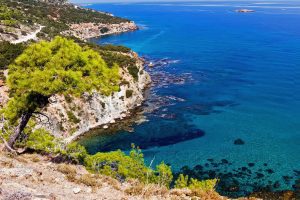
Cyprus is often imagined as a land of calm beaches and gentle shorelines, but some of its most striking coastal landscapes rise sharply instead of stretching outward. In several parts of the island, the land ends abruptly in high limestone cliffs that fall straight into the Mediterranean, creating views that feel expansive, exposed, and quietly dramatic. These vertical coastlines offer a very different way of experiencing Cyprus, one shaped by height, light, and the sudden meeting of land and sea. facebook-com Where Cyprus Breaks the Horizontal Line Most Mediterranean coastlines encourage the eye to travel sideways. Cyprus’s cliffs do the opposite. They pull the gaze downward and outward at once, creating a sense of scale that feels rare in a region better known for gentle beaches. These dramatic drops appear along several stretches of the island, each with a different character. In the east, Cape Greco’s pale limestone edges meet intensely blue water in clean, sculpted forms. Along the south coast near Pissouri, the white cliffs of Cape Aspro rise sharply and uninterrupted, some reaching heights of over 250 metres. In the west, the Akamas Peninsula remains rugged and untamed, where steep land meets sea without much warning or infrastructure. What unites these places is not just their height, but the feeling they create. Standing at the edge of these…

Read more

Venetian Fortifications of Cyprus – Coastal Defenses

Venetian Fortifications of Cyprus – Coastal Defenses

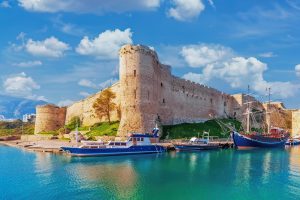
The Venetian fortifications of Cyprus represent some of the most impressive defensive structures built during the Renaissance period. Between 1489 and 1571, the Republic of Venice controlled Cyprus and invested heavily in fortifying three major cities: Nicosia, Famagusta, and Kyrenia. visitnorthcyprus-com These fortifications were designed to protect the island from Ottoman invasion using the latest military engineering techniques of the 16th century. The walls featured pentagonal bastions, thick earthwork ramparts, and deep moats, all adapted for the age of gunpowder artillery. Despite their sophisticated design, these fortifications faced their ultimate test in 1570 when Ottoman forces invaded Cyprus. The siege of Famagusta in particular demonstrated both the strength of Venetian military architecture and the determination of defenders who held out for nearly a year against overwhelming odds. Historical Background Cyprus became a Venetian possession in 1489 when Queen Catherine Cornaro, who had married into the Lusignan royal family of Cyprus, was forced to abdicate and cede the island to Venice. The Republic saw Cyprus primarily as a military base to protect its commercial interests in the Eastern Mediterranean. Venice had been active in Cyprus since around 1000 AD, and the island's location made it valuable for controlling Levantine trade routes. The island also produced profitable cotton and sugar exports. wikipedia-org For decades, Venetian governors emphasized the need for better fortifications,…

Read more
Theatre of Kourion Greco Roman Theatre Cyprus

Theatre of Kourion Greco Roman Theatre Cyprus

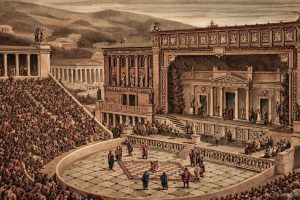
The Theatre of Kourion is one of the most impressive ancient theatres in Cyprus. It was built in the Late Hellenistic period and later enlarged under Roman rule. The theatre shows how important performances and public gatherings were in ancient times. Its location on a cliff overlooking the Mediterranean Sea highlights both careful city planning and an appreciation for natural beauty. The theatre could hold up to 3,500 spectators and was used for plays and other public events for many centuries. trapvisitor-com The History of Kourion and Its Theatre Kourion was one of the most important city-kingdoms in ancient Cyprus. Tradition says it was founded by Greeks from Argos in the Peloponnese in the 13th century BCE, during the Mycenaean expansion. Archaeological evidence supports links with Argos, and the city’s people saw themselves as descendants of Greek settlers. wikipedia-org The city sat on hills above the fertile Kouris River valley, giving it both rich farmland and strong defenses. This location helped Kourion become a major political and economic center during the Classical, Hellenistic, and Roman periods. The theatre was first built at the end of the 2nd century BCE under Ptolemaic rule. The original building was fairly small. In the early 2nd century AD, under Roman Emperor Trajan, it was greatly expanded. More seats were added, and the architecture was…

Read more