Explore Cyprus with Our Interactive Map

Explore our top stories and discover ideas worth your time.

Byzantine Cyprus: Eastern Mediterranean Defense

Byzantine Cyprus: Eastern Mediterranean Defense

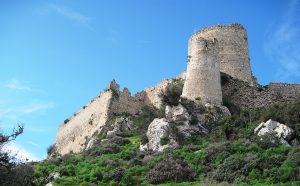
Cyprus was never a distant outpost of the Byzantine Empire. From late antiquity through the Middle Ages, it functioned as a frontline maritime shield, protecting the sea lanes that connected Anatolia, the Levant, and the Aegean. Byzantine naval defense on Cyprus was not limited to fleets and battles. It was a layered system combining geography, coastal fortifications, mountain surveillance, communication networks, and naval presence. Together, these elements allowed the empire to detect threats early, control movement at sea, and preserve stability in one of the Mediterranean’s most contested regions. pexels-com An Island Positioned to Watch the Sea Cyprus sits at a natural crossroads of the Eastern Mediterranean. From its shores, routes radiate toward southern Anatolia, Syria and Palestine, Egypt, and the Aegean. This position made the island unavoidable for any power seeking maritime dominance in the region. For the Byzantine Empire, Cyprus acted as a forward sentinel. Control of the island meant early visibility over naval traffic moving between the Islamic-controlled Levant and the Byzantine heartlands of Asia Minor. Losing Cyprus would have meant losing advance warning, leaving the southern coast of Anatolia and the Aegean islands exposed to sudden raids. This strategic reality shaped every aspect of Byzantine policy on the island. From Roman Province to Maritime Bastion In the early Roman and late antique periods, Cyprus was relatively…

Read more

The Mottled Giants by Cypriot Streams

The Mottled Giants by Cypriot Streams

Beside a sparkling mountain stream in the Troodos foothills, tall trees with beautiful patchwork trunks cast deep, cool shade over the water. Their large, hand-shaped leaves rustle gently, while round, spiky fruit-balls dangle like tiny planets through the winter. This is the Oriental Plane, Platanus orientalis – Cyprus’s own river guardian and one of the island’s most majestic native trees. www.inaturalist.org A Member of an Ancient Family Known scientifically as Platanus orientalis, the Oriental Plane belongs to the small but noble Platanaceae family within the order Proteales. The Tree of Hippocrates, under which Hippocrates—the "Father of Medicine"—taught at Kos, is reputed to have been an oriental plane. In Cyprus it is the only native plane tree, perfectly adapted to life along permanent watercourses where it often forms beautiful gallery forests with willows and alders. From Ancient Rivers to Modern Cyprus The Oriental Plane has been part of Cyprus’s landscape since prehistoric times and is listed as fully indigenous in the Flora of Cyprus. It was already noted by 19th-century British foresters in riverine woodlands, and in 2001 the Department of Forests honoured it as one of Cyprus’s Trees of the Year. Today it remains a flagship species of the island’s precious riparian habitats. www.inaturalist.org Distinctive Features That Make It Unmistakable The Oriental Plane is a large deciduous tree reaching 20–30…

Read more
Cyprus Kourkoutas Lizard

Cyprus Kourkoutas Lizard

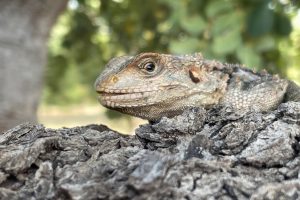
Imagine a creature that looks like a miniature dragon, basking on sun-warmed rocks with starry patterns twinkling on its back. This is the kourkoutas, Cyprus' very own rock agama a nimble lizard that's as much a part of the island's rugged landscapes as olive trees and ancient ruins. But what makes this endemic resident so special, and why does it deserve a spotlight in Cyprus' wildlife tales? www.inaturalist.org Getting to Know the Starred Survivor The kourkoutas, or Cyprus rock agama, is a biggest of lizards in Cyprus that's perfectly adapted to island life. It's not a giant though – growing up to about 35 centimeters from nose to tail tip – but it's a tough little explorer of Cyprus' diverse terrains. Think of it as a scaled sun-lover that's at home anywhere from sandy beaches to mountain peaks, always ready to dart away from curious eyes. A Journey from Ancient Lands The kourkoutas belongs to the agama family, a group of lizards with roots stretching back to ancient times across Asia, Africa, and Europe. Its scientific name, Stellagama stellio cypriaca (or more correctly Laudakia cypriaca), highlights its starry appearance and Cypriot origins. Fossil records and genetic studies suggest its ancestors arrived on Cyprus during the late Pleistocene, evolving in isolation to become a unique subspecies. Unlike its mainland cousins in…

Read more