Explore Cyprus with Our Interactive Map

Explore our top stories and discover ideas worth your time.

St. Sophia Cathedral Gothic Landmark Cyprus

St. Sophia Cathedral Gothic Landmark Cyprus

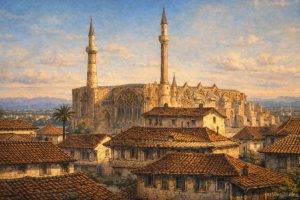
In the center of North Nicosia stands the largest Gothic building in Cyprus. Originally a cathedral, it was later turned into a mosque but still keeps its French Gothic style. Over 800 years, the building has seen coronations, earthquakes, sieges, and the rise and fall of kingdoms, making it one of the most important historic sites on the island. wikipedia-com St. Sophia Cathedral, now called Selimiye Mosque, was built in the 13th century. It was converted into a mosque in 1570 after the Ottoman conquest of Cyprus. The building measures 66 by 21 meters inside and can hold about 2,500 worshippers. It was the coronation church for the Lusignan kings of Cyprus and later for the titular kings of Jerusalem and Armenia. Historical Background Construction of St. Sophia Cathedral began in 1209 under the Lusignan dynasty, a French royal family that ruled Cyprus after the Crusades. Its design was strongly inspired by Notre-Dame de Paris and other French cathedrals. French masons came to Cyprus to lead the work, while local craftsmen helped. The building took more than 150 years to finish, with the final parts completed around 1326. For over 200 years, St. Sophia was the coronation church for the Lusignan kings. Kings of Cyprus were crowned here as rulers of Jerusalem, even though Jerusalem was no longer under their…

Read more
Culinary Festivals and Food Events Cyprus

Culinary Festivals and Food Events Cyprus

Culinary festivals in Cyprus are not staged food shows or seasonal attractions created for visitors. They are extensions of village life, shaped by agriculture, memory, and the belief that food is meant to be shared. Across the island, festivals dedicated to wine, halloumi, olives, and everyday cooking traditions offer a way to understand Cyprus through participation rather than observation. Food as a Social Language In Cyprus, food festivals usually revolve around a single local product or a small group of related dishes. These events are organised by municipalities, village councils, or community groups, not private promoters. Their purpose is communal before it is celebratory. fastforward-com Recipes, techniques, and rituals that rarely appear in written form are performed publicly, often by people who learned them informally from parents and grandparents. Preparing food together, offering it freely, and eating collectively reinforces the Cypriot idea of hospitality, where sharing food is inseparable from social belonging. Festivals Guided by the Agricultural Calendar The timing of culinary festivals follows the land rather than marketing schedules. Cyprus’s climate supports vineyards, olive groves, dairy farming, and small-scale agriculture, and festivals emerge naturally around moments of harvest and seasonal transition. Spring festivals often highlight fresh produce and early agricultural yields. Summer events reflect abundance and outdoor life, while autumn brings the most significant celebrations, particularly those dedicated to…

Read more

Ancient Terraces and Orchards in Cyprus Mountains

Ancient Terraces and Orchards in Cyprus Mountains

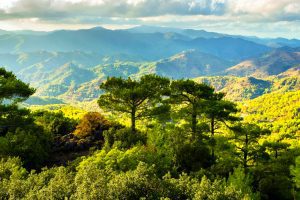
The mountains of Cyprus hold secrets carved into their slopes. For thousands of years, people built stone terraces across steep hillsides, creating agricultural systems that still influence the landscape today. These terraces supported orchards and crops in places where farming seemed impossible, showing the remarkable skill of ancient communities in managing their environment. chooseyourcyprus.com Recent archaeological work reveals that terrace farming on Cyprus dates back at least 3,000 years. The Bronze Age settlement of Politiko-Troullia, occupied between 2050 and 1850 BCE, provides clear evidence of this practice. Located in the foothills of the Troodos Mountains, this village sat at the interface between the fertile Mesaoria Plain and the copper-rich mountains, making it an ideal location for both agriculture and metal production. Historical Background The terraces at Politiko-Troullia were not simple structures. Archaeological surveys identified 168 ancient terrace walls in the study area, constructed with local stone and designed to serve multiple purposes. Longer terrace walls created level plots for agriculture, while shorter walls focused on erosion control and supporting fruit trees. These ancient farmers understood their environment well. They built terraces on slopes with specific geological features, particularly near pillow lavas and limestone deposits where sediment availability and water drainage were optimal. Surface geology played a crucial role in determining where to construct terraces, as the walls needed both stable…

Read more