Explore Cyprus with Our Interactive Map

Explore our top stories and discover ideas worth your time.

Traditional Percussion and Rhythm of Cyprus

Traditional Percussion and Rhythm of Cyprus

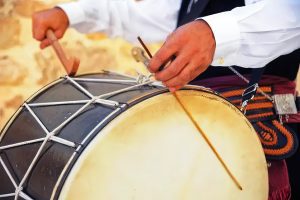
Traditional percussion in Cyprus is not decoration. It is structured. Long before written music or formal performance spaces, rhythm organised ritual, movement, and social life on the island. From village squares to wedding processions, the drum provided a shared pulse that told people when to gather, how to move, and when a moment mattered. Cypriot percussion did not evolve to impress an audience. It evolved to hold a community together. teriremproject-org Why Rhythm Comes First in Cypriot Music Cyprus sits at a cultural crossroads between the Eastern Mediterranean, Anatolia, and the Levant. Melodies travelled easily across these regions, but rhythm was what anchored them locally. Percussion gave Cypriot music its internal order, allowing dances, songs, and rituals to remain recognisable even as influences shifted over centuries. Unlike modern ensembles where rhythm supports melody, traditional Cypriot music often works the other way around. The drum sets the framework. Everything else responds. The Daouli: A Drum Built for the Open Air The most recognisable percussion instrument in Cyprus is the daouli, a large double-headed drum designed to be heard across open spaces. Its size and volume were practical. Village celebrations, processions, and agricultural festivals needed sound that could travel without amplification. The daouli is worn over the shoulder and played with two different sticks. One produces deep, grounding beats. The other delivers…

Read more

Artemis Trail (Troodos) – Cyprus, Europe

Artemis Trail (Troodos) – Cyprus, Europe

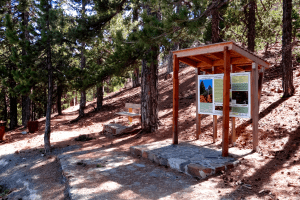
The Artemis Trail circles the highest peak in Cyprus at nearly 2,000 meters above sea level, where black pine forests meet panoramic mountain views. This 7-kilometer loop takes hikers around Mount Olympus through one of the island's most distinctive natural environments. The trail offers an accessible mountain experience that combines ancient forests, geological curiosities, and views that stretch from the Troodos peaks to the distant Mediterranean coast. chooseyourcyprus.com The trail is a circular route that takes between 2.5 to 3 hours to complete, with minimal elevation change throughout the walk. Despite its high altitude location, the path remains relatively flat, making it accessible to hikers of various fitness levels. The trail forms part of the Troodos National Forest Park and sits within a protected NATURA 2000 area. Historical Background The trail takes its name from Artemis, the ancient Greek goddess of wilderness and wild animals. In Greek mythology, Artemis was the daughter of Zeus and Leto, and the twin sister of Apollo. She was known as a fierce protector of forests, mountains, and untamed nature. The connection between the goddess and this mountain trail reflects both the wild character of the location and its role as a protected natural environment. Along the route, hikers encounter ruins of makeshift fortifications known as 'Teishia tis Palaias Choras'. These stone remnants date back…

Read more
Agia Paraskevi Necropolis, Cyprus – History & Facts

Agia Paraskevi Necropolis, Cyprus – History & Facts

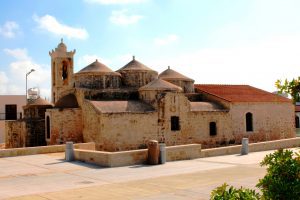
The Agia Paraskevi necropolis is an extensive Bronze Age burial ground located approximately half a mile north of the Church of Agia Paraskevi in the Nicosia district. The site occupies the edge of a plateau southwest of Cyprus's modern capital. It takes its name from the nearby Byzantine church. This cemetery was used continuously throughout the Early and Middle Bronze Age periods, roughly from 2400 BCE to 1100 BCE. The site contains hundreds of rock-cut chamber tombs where ancient communities buried their dead along with pottery, tools, jewelry, and other grave goods. These artifacts provide detailed information about how Cypriots lived, traded, and organized their societies during prehistoric times. The necropolis is particularly important because it represents the burial ground for ancient Ledra, one of the early kingdoms mentioned in Assyrian records. While the settlement itself lies buried beneath modern Nicosia, the cemetery on the plateau has survived and offers the most complete picture of life in central Cyprus during the Bronze Age. Historical Background The Agia Paraskevi necropolis came to archaeological attention in the late 19th century. In 1883 and 1884, German archaeologist Dr. Max Ohnefalsch-Richter conducted extensive excavations at the site. His work uncovered numerous tombs and established the cemetery's importance for understanding Cypriot prehistory. cyprusisland.net Ohnefalsch-Richter arrived in Cyprus in 1878 as a journalist but quickly shifted…

Read more