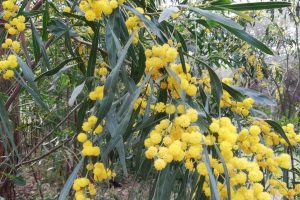
Picture a roadside verge or coastal slope in late February, when the Mediterranean light turns sharp and warm. Suddenly, whole thickets explode into vivid, butter-yellow spheres that light up the landscape like thousands of tiny suns. These are the wattles of Cyprus Australian guests that arrived with good intentions but have written their own lively, sometimes challenging chapter in the island’s green story.
Wattles in the World of Legumes
Wattles belong to the enormous Acacia genus within the Fabaceae (legume) family – the same botanical clan as peas, beans, carobs and acacias of the ancient world. Most of the 1,000-plus Acacia species are native to Australia, where they are proudly called “wattles”. In Cyprus the star of the show is Acacia saligna, the golden wreath wattle or orange wattle, though a handful of other species (A. farnesiana, A. ligulata, A. karroo) appear in small numbers. Locally they are simply known as Ακακία (Akakia) – a name that echoes the ancient Greek “akakia”, used two thousand years ago by Dioscorides for the gum of Egyptian acacias.
From Australian Shores to Cypriot Soil
When British foresters took charge in 1878 they faced an island stripped of much of its woodland by centuries of grazing and fuelwood cutting. Following earlier recommendations by French arborist P.G. Madon (1881), they turned to fast-growing exotics. Acacia cyanophylla (an old name for A. saligna) and other wattles were planted by the million records from the 1930s note over three million wattle seedlings.
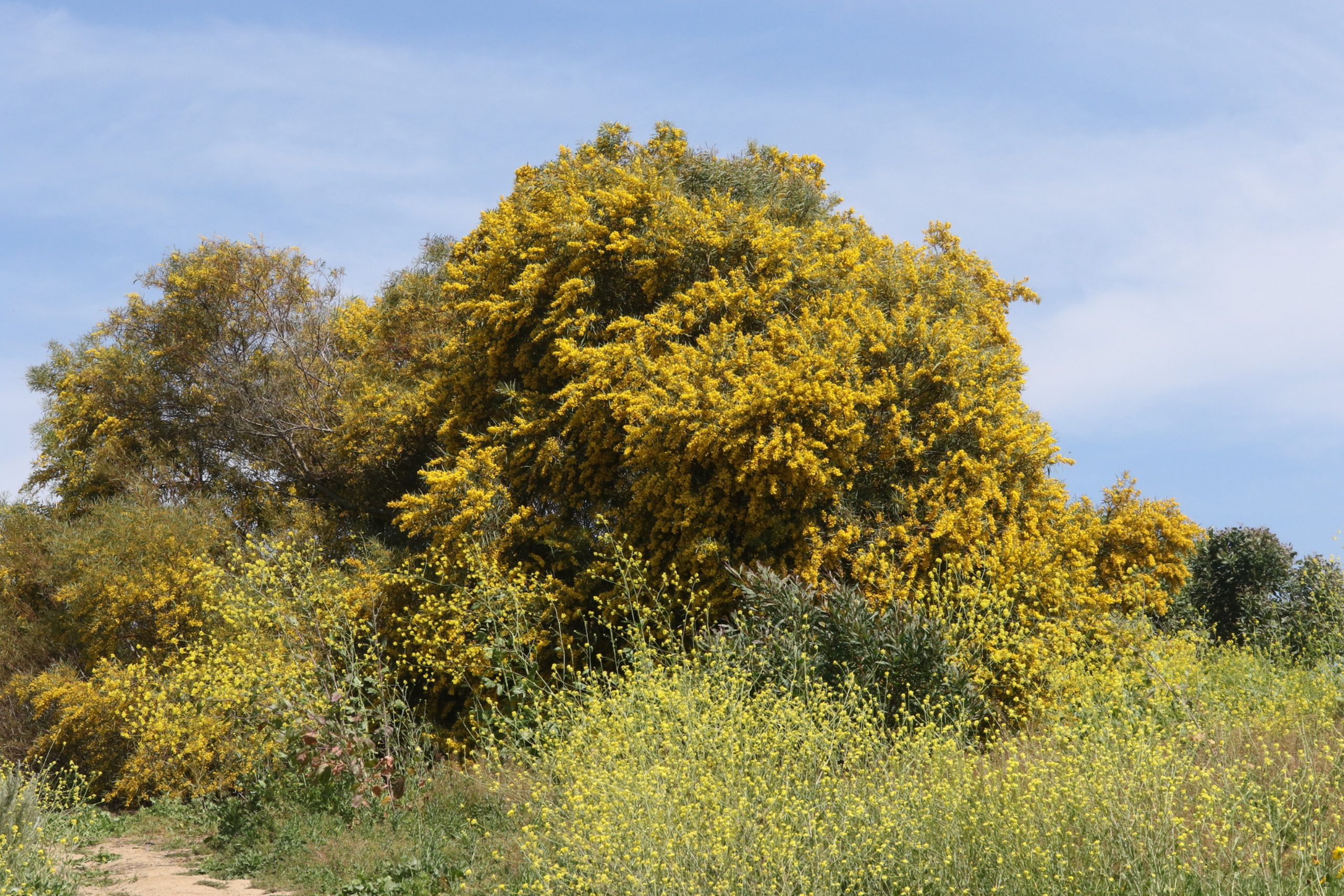
They were chosen to stabilise sand dunes, drain marshy ground around Larnaca and Limassol salt lakes (helping control malaria mosquitoes), provide quick fuelwood and shelter windbreaks. Like the eucalypts planted at the same time, wattles were seen as hardy pioneers for a thirsty land. By the mid-20th century they had naturalised and begun to spread far beyond the original plantations.
What They Look Like
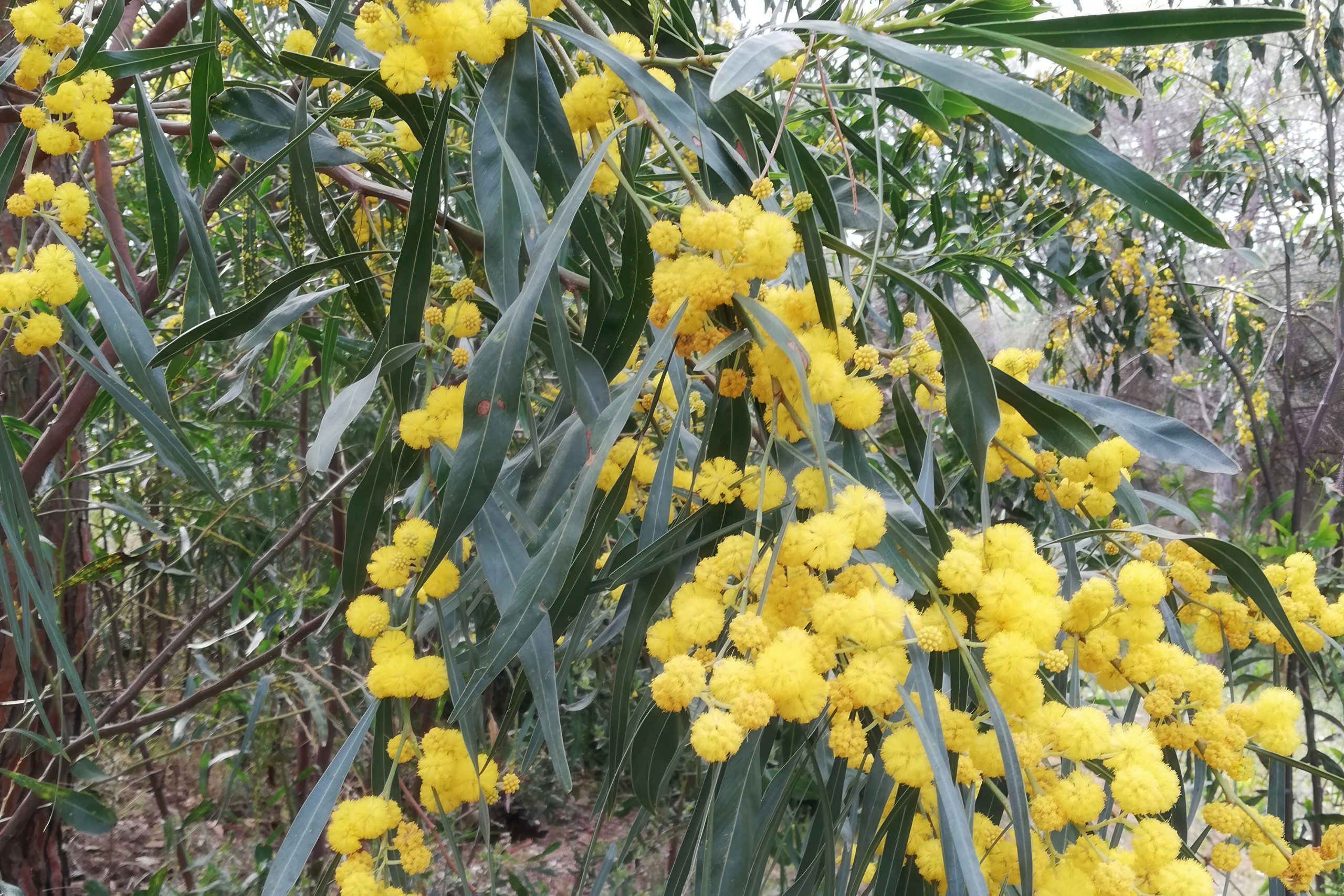
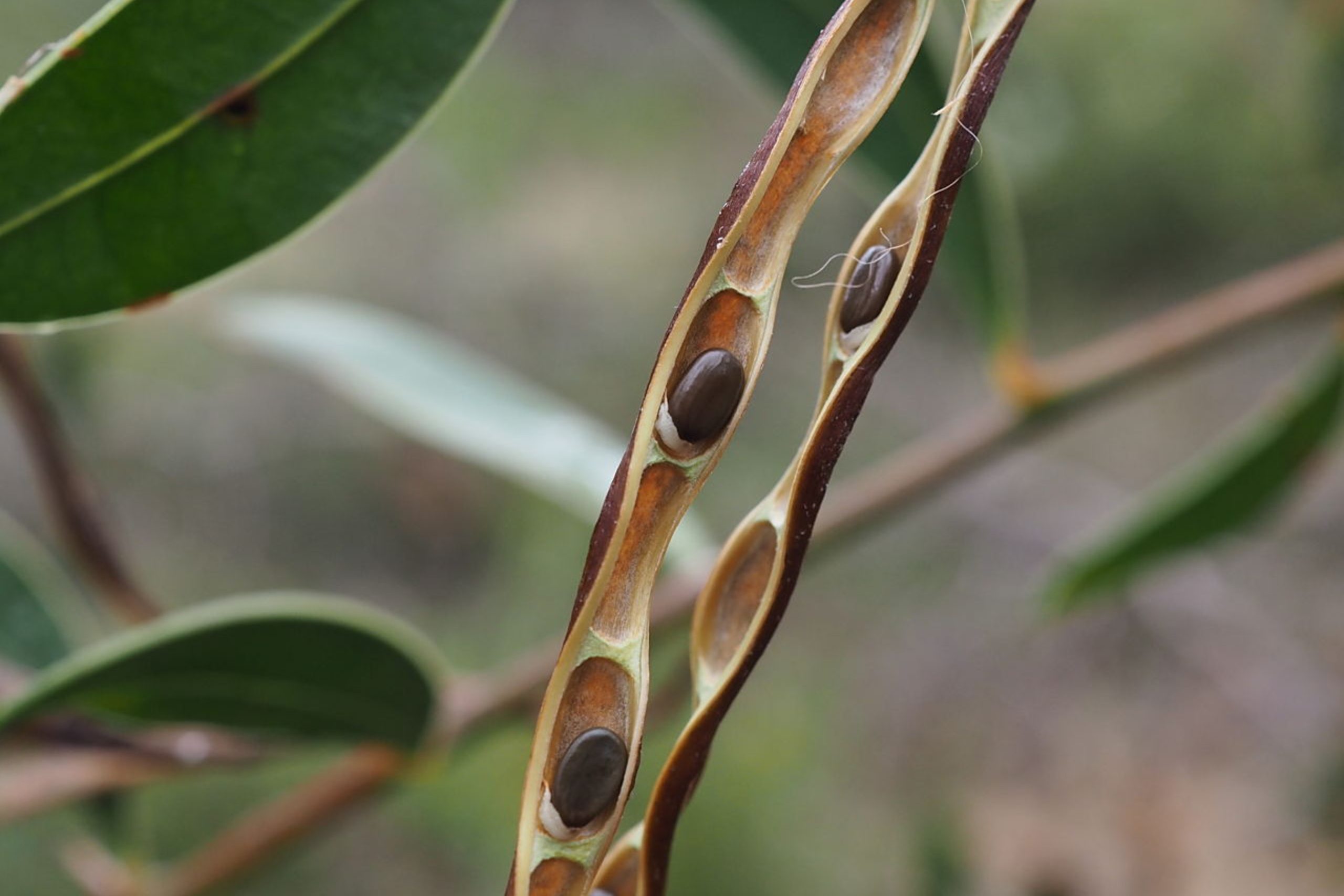
Acacia saligna grows as a dense, spreading shrub or small tree, usually 2–8 metres tall, with a short trunk and a graceful, weeping habit. Instead of true leaves it has long, narrow, willow-like phyllodes (flattened leaf-stalks) up to 25 cm long, grey-green with a prominent gland at the base that secretes sugary nectar to attract ants. In late winter and early spring the branches are smothered in bright golden-yellow globular flower heads, each a fluffy ball of tiny stamens. The fruit is a flat, curved legume pod that twists and splits to release hard, dark seeds. The whole plant has a slightly resinous, pleasant scent when crushed.
Delightful Discoveries
- The name “wattle” comes from the old English use of flexible acacia branches to weave “wattles” for walls and fences.
- Ants are the plant’s best friends: they carry the seeds to their nests, protecting them and helping them germinate after fires or soil disturbance – a clever partnership that makes the species a champion coloniser.
- Like other legumes, wattles fix nitrogen from the air into the soil, actually improving poor ground – one reason they were welcomed, but also why they can out-compete slower native plants.
- In spring the golden blooms are a magnet for bees, producing a light, pleasant honey that Cypriot beekeepers have long appreciated.
- A single mature tree can produce thousands of seeds that remain viable in the soil for decades, waiting for the next disturbance.
Deeper Layers
Today Acacia saligna is the most widespread and problematic of the group, forming dense thickets that shade out native maquis and garrigue. Other species such as A. farnesiana (sweet acacia) are less aggressive. The plant is not listed on the IUCN Red List as threatened – quite the opposite: it is recognised as one of Cyprus’s most serious invasive aliens. Recent studies and projects (including work at Akrotiri, Cape Pyla and the Karpas) show how it invades coastal habitats, reduces biodiversity and even alters soil chemistry to favour itself. Yet its fast growth and nitrogen-fixing ability still make it useful in highly degraded or urban-edge sites where nothing else will grow.
In Today’s Cyprus
In an age when projects like LIFE-ArgOassis champion native drought-tolerant species for resilient hedgerows, the wattles stand as a vivid reminder of the double-edged sword of introduced plants. They still provide quick shelter, fuel and spring colour, and many older stands are enjoyed by walkers and picnickers. But conservationists, foresters and volunteers now work hard to remove them from sensitive areas, replacing them with carob, mastic, wild olive and hawthorn to restore the island’s natural balance. The story of the wattle is therefore a living lesson in careful stewardship.
Seeing Them for Yourself
The easiest and most spectacular way to meet Cyprus wattles is a spring drive along the south or east coast roads, or a gentle walk through coastal scrub near Akrotiri, Cape Pyla or the Karpas peninsula. In February and March the golden clouds are impossible to miss pull over safely, breathe in the sweet scent and listen to the constant hum of bees.
Many accessible verges and disturbed slopes offer perfect viewing without disturbing fragile habitats. Where removal work is under way you may even see teams carefully clearing thickets and replanting natives, turning yesterday’s “quick fix” into tomorrow’s restored maquis.