Kyrenia Castle stands at the edge of one of Cyprus’s most sheltered harbours, where land and sea have negotiated power, trade, and survival for centuries. Unlike hilltop fortresses built to dominate territory from afar, this castle was designed to watch the water closely. Its purpose has always been practical: to protect the harbour, control movement, and adapt to whoever ruled Cyprus at the time. That continuous adaptation rather than a single defining moment is what gives Kyrenia Castle its lasting significance.
- A Fortress Built for a Living Harbour
- Byzantine Foundations and the First Line of Defence
- Expansion, Siege, and Medieval Power
- Venetian Engineering and the Age of Cannons
- Inside the Walls: Unexpected Histories
- Layers of Use Beyond Warfare
- Kyrenia Castle Today
- Visiting the Castle: What to Expect
- Why Kyrenia Castle Still Matters
A Fortress Built for a Living Harbour
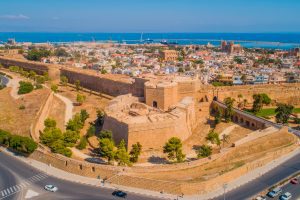
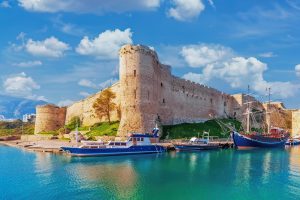
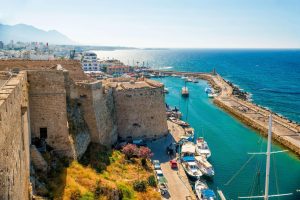
Kyrenia Castle occupies a narrow strip of land between the town and the sea, positioned so that every vessel entering the harbour passes beneath its walls. From its earliest days, the castle was inseparable from daily life. Trade ships, fishing boats, and naval vessels all moved through the same space, watched over by stone walls that were never purely symbolic.
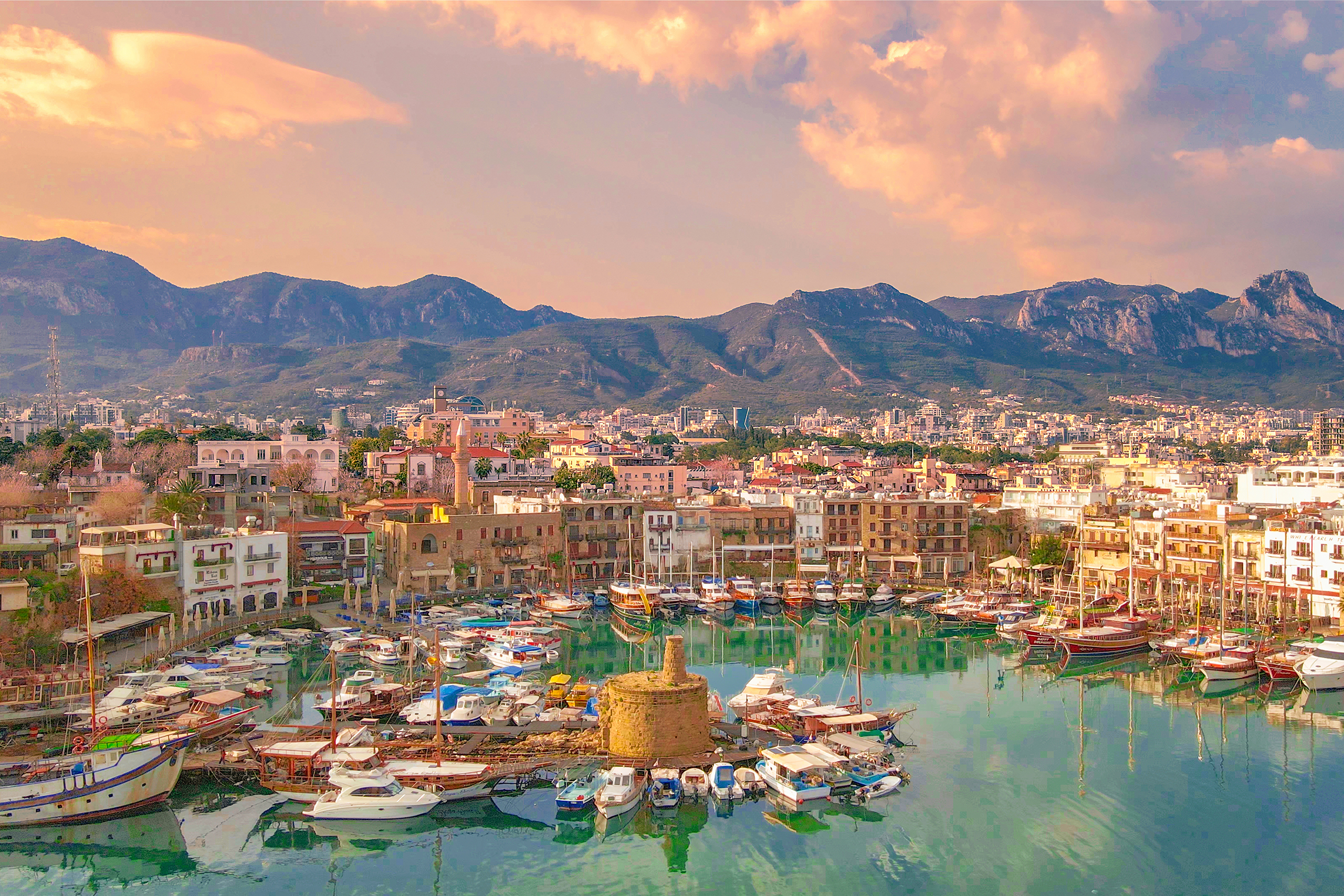
This closeness to the harbour distinguishes Kyrenia Castle from many medieval fortifications. It was not a distant refuge, but an active participant in the rhythms of the town. Its defensive role was intertwined with commerce, communication, and maritime control.
Byzantine Foundations and the First Line of Defence
The earliest phase of Kyrenia Castle dates to the Byzantine period, when coastal settlements across the Eastern Mediterranean were reinforced against Arab naval raids. Construction likely began in the 7th century, using earlier foundations that may have included Roman structures.
The castle’s strategic importance became widely recorded in 1191, when Richard the Lionheart captured it during the Third Crusade after defeating Isaac Komnenos, the local Byzantine ruler. This event marked the beginning of a succession of rulers who would reshape the castle without changing its essential purpose.
Expansion, Siege, and Medieval Power
Under the Lusignan dynasty, Kyrenia Castle underwent significant expansion. Towers were strengthened, gates reinforced, and interior spaces adapted for prolonged occupation. During this period, the castle endured extended sieges, including one that lasted several years in the 14th century.
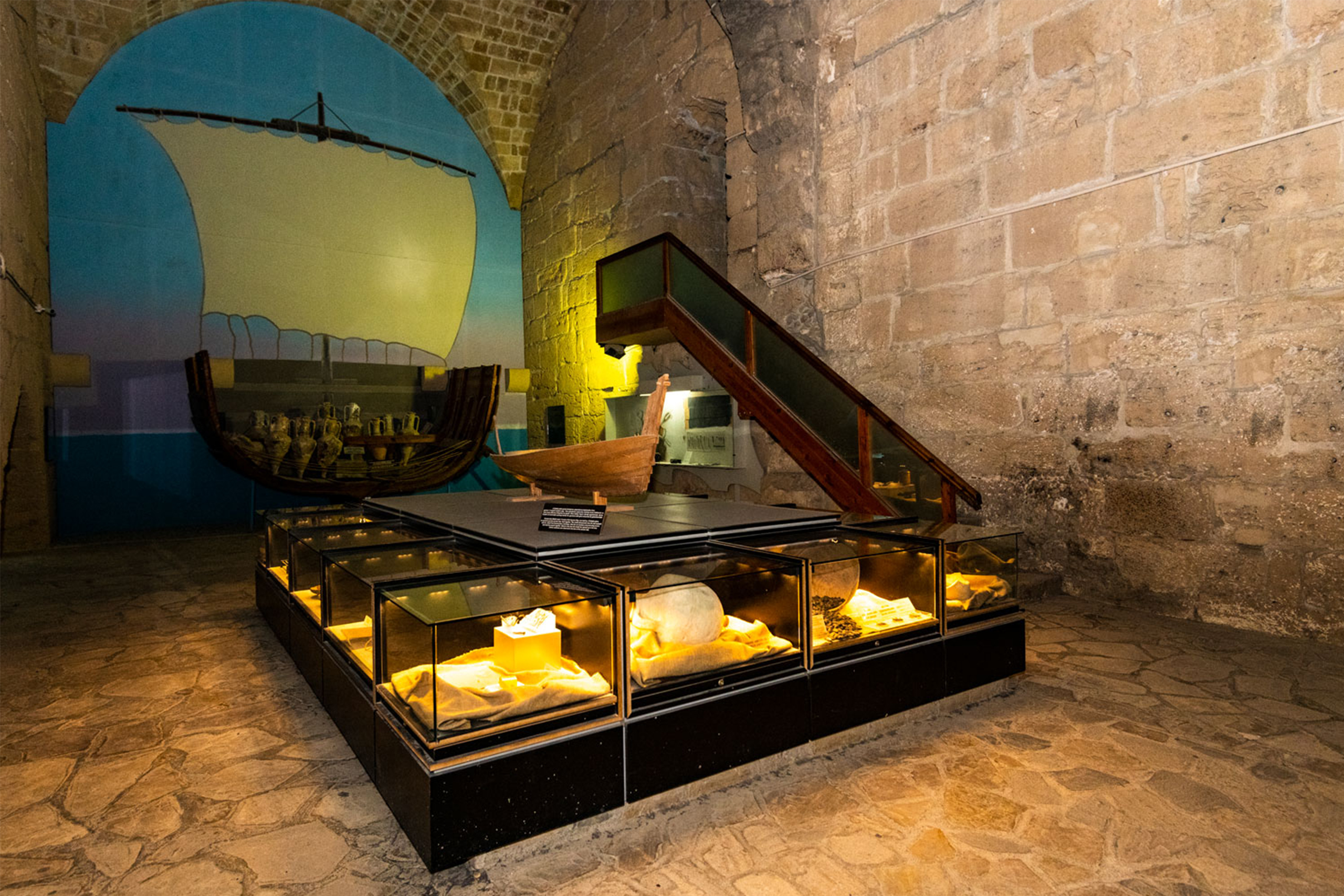
These sieges revealed both the strength and the limitations of medieval defensive design. While the castle held firm against traditional warfare, changing military technology would soon require a different approach.
Venetian Engineering and the Age of Cannons
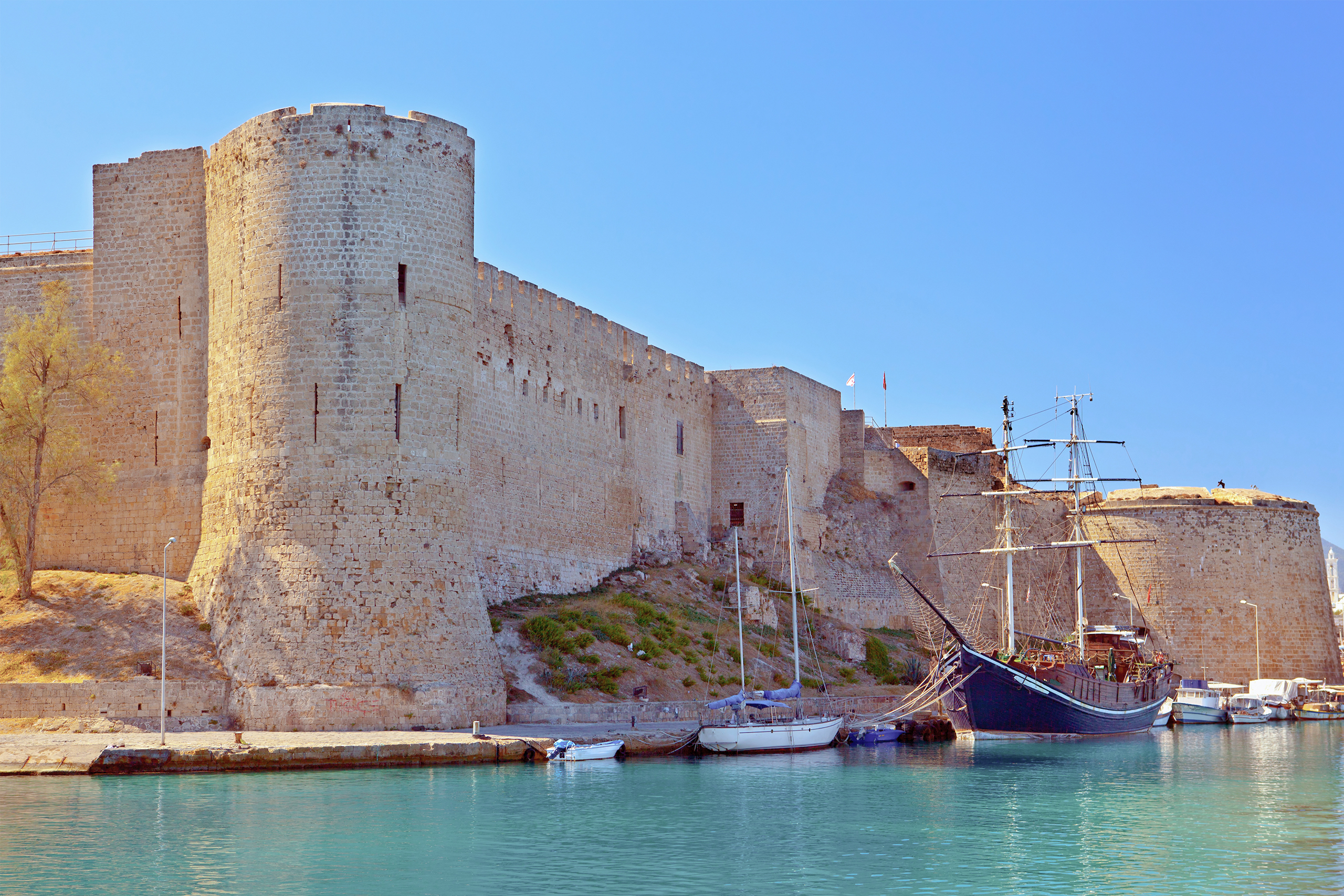
When Venice assumed control of Cyprus in the late 15th century, Kyrenia Castle was transformed to meet the realities of artillery warfare. Square towers were replaced with rounded bastions, walls were thickened, and sloped surfaces were introduced to deflect cannon fire rather than absorb it.
These Venetian modifications remain some of the most visually distinctive features of the castle today. They reflect a shift from medieval defence to early modern military engineering a reminder that the castle’s form evolved in response to changing threats rather than aesthetic ambition.
Inside the Walls: Unexpected Histories
Passing through the castle gates leads into a large central courtyard surrounded by stone chambers and ramps that rise to the battlements. Within this fortified space lies one of the site’s most remarkable features: the Shipwreck Museum.
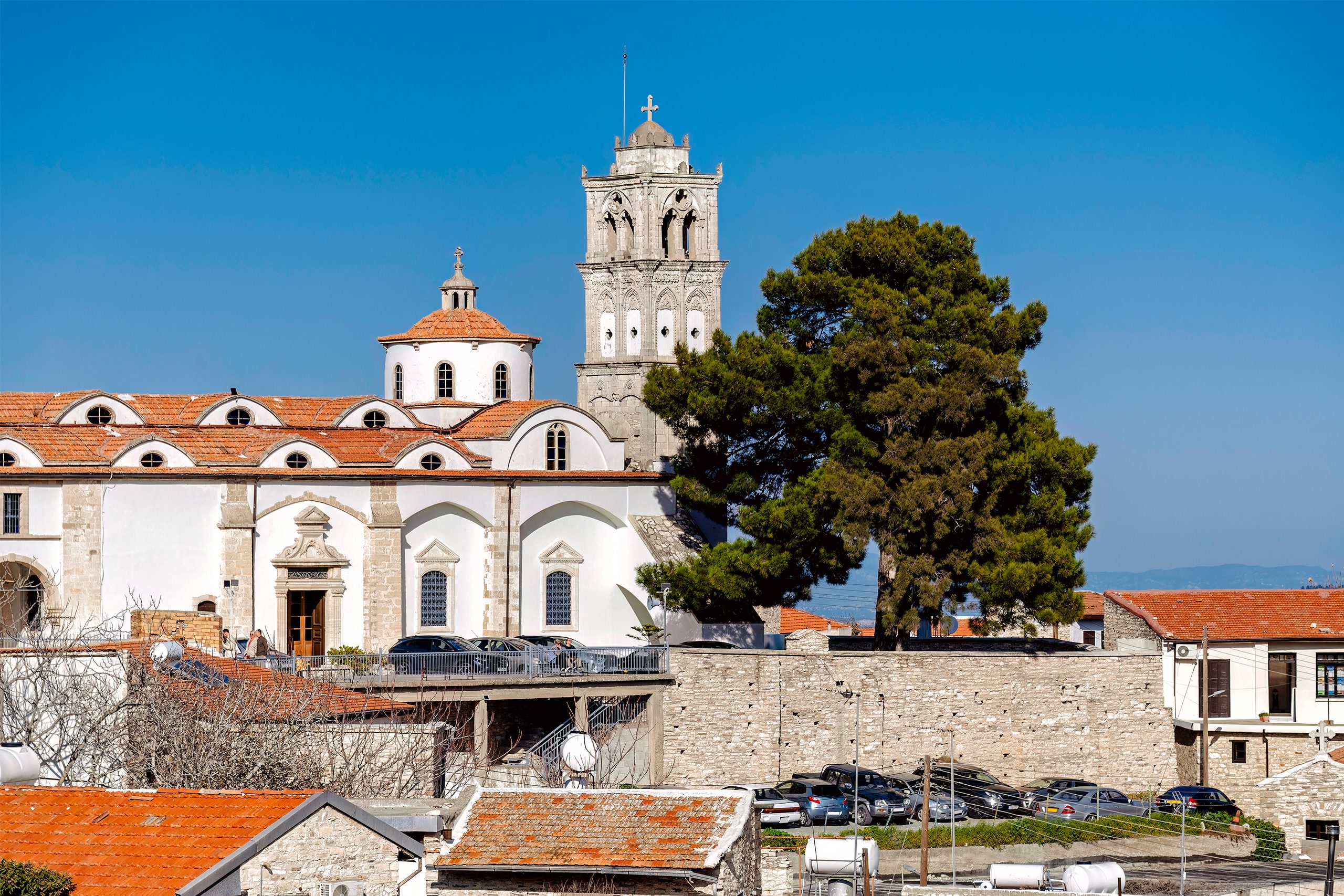
The museum houses the remains of a Greek merchant vessel that sank more than 2,300 years ago, along with amphorae and personal items recovered from the wreck. These artifacts offer a rare, intimate glimpse into ancient maritime life, connecting the castle’s defensive role to the much older history of Mediterranean trade.
Also within the castle is the Byzantine Chapel of St. George, dating to the 10th century. Built using reused Roman columns and capitals, the chapel was once located outside the fortress before later fortifications enclosed it. Its quiet presence contrasts sharply with the heavy military architecture around it.
Layers of Use Beyond Warfare
Kyrenia Castle did not lose relevance when its military role declined. During the British period, parts of the castle were used as a prison. After 1974, it served as a storage site for religious icons until they could be relocated safely.
These later uses reveal something essential about the castle: it was never abandoned. Each era found a way to incorporate the structure into contemporary needs, reinforcing its role as a functional space rather than a frozen monument.
Kyrenia Castle Today
Today, Kyrenia Castle is one of the most recognisable landmarks in the Turkish-occupied part of Cyprus. Visitors walk its walls, explore its interior spaces, and look out over the same harbour the castle was built to protect. From the battlements, the view includes fishing boats, cafés, and marinas modern life unfolding directly beneath medieval stone.
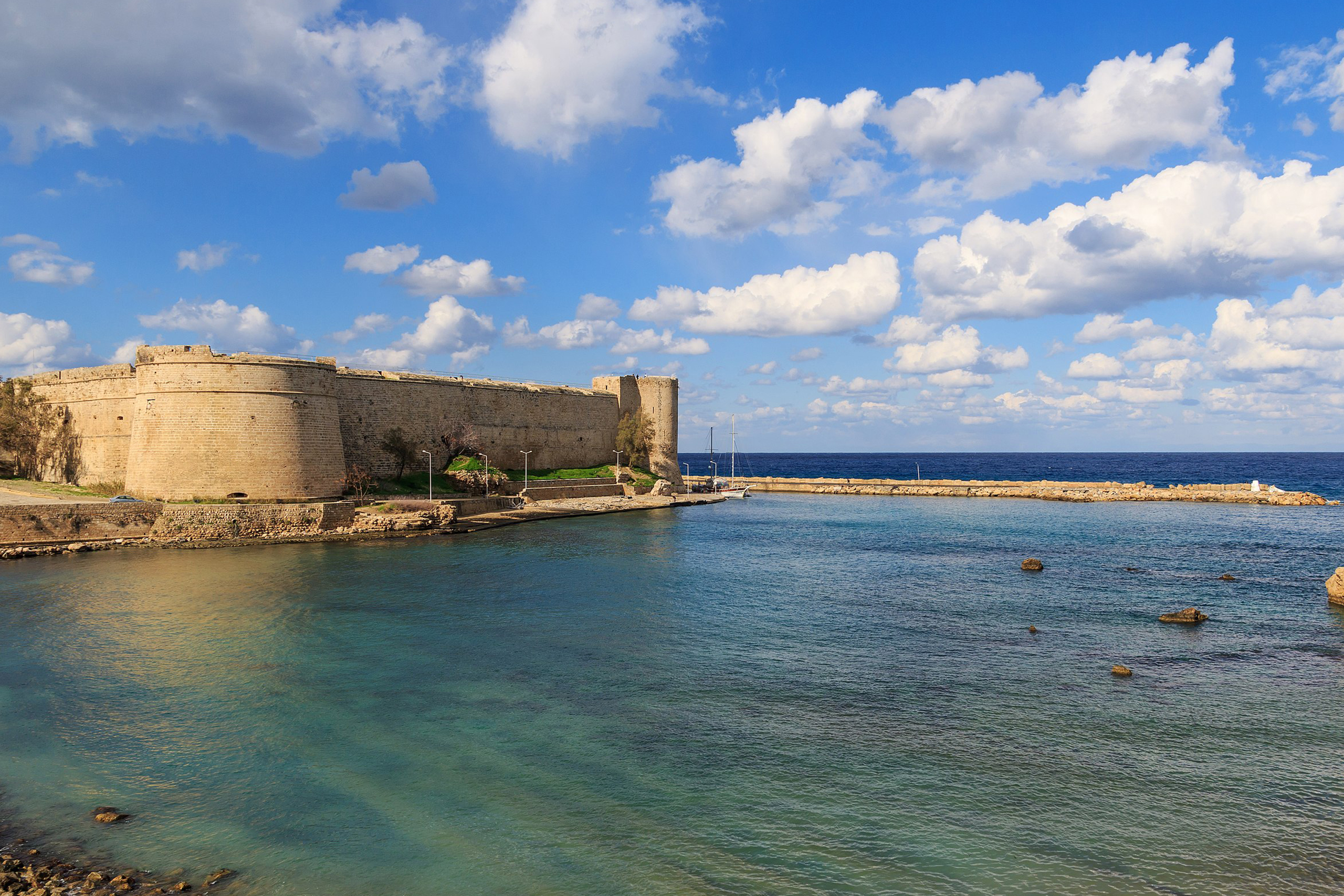
The castle now functions as a place of learning and reflection. It offers insight into how Cyprus has been shaped by maritime trade, imperial competition, and constant adaptation. Rather than telling a single story, the castle presents many layered, overlapping, and still visible.
Visiting the Castle: What to Expect
Kyrenia Castle is easily accessible and can be explored comfortably in one to two hours. Stone ramps and stairways lead to the battlements, so sturdy footwear is recommended. From the walls, visitors can see the harbour below and the Kyrenia mountain range beyond.
Late afternoon is often the most rewarding time to visit, when the light softens and the stone walls take on a warmer tone. The atmosphere is calm rather than imposing, shaped by sea sounds and the steady presence of the town around it.
Why Kyrenia Castle Still Matters
Kyrenia Castle matters because it demonstrates how places survive by adapting. It has been Byzantine, Crusader, Venetian, Ottoman, British, and modern without ever turning its back on the sea that justified its existence.
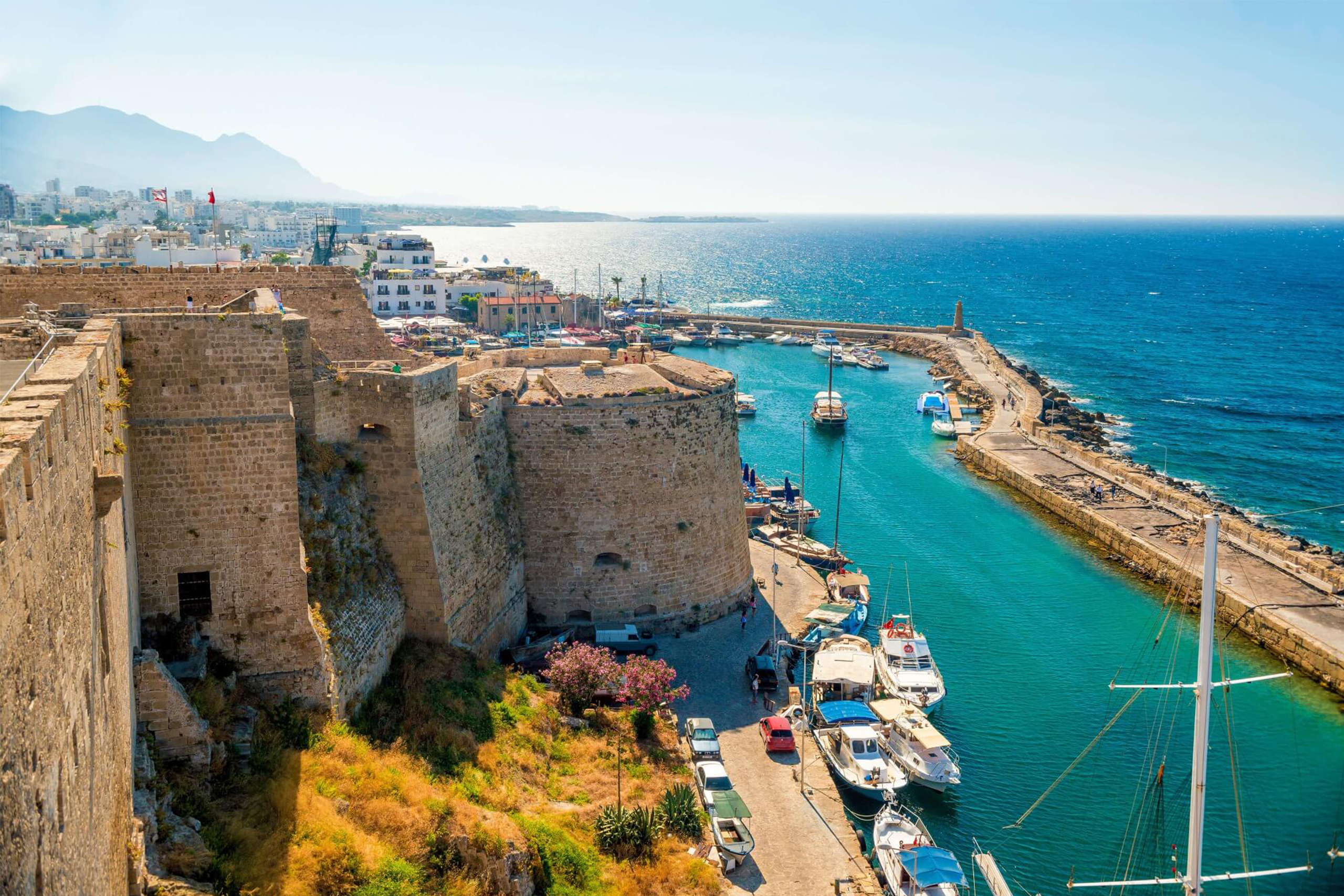
Standing between harbour and horizon, the castle shows how Cyprus has always lived in dialogue with the Mediterranean. Power shifted, technology changed, and empires rose and fell, but the need to protect, observe, and engage with the sea remained constant. Kyrenia Castle is the physical expression of that continuity.