Located two kilometres north of Paphos harbour, the Tombs of the Kings represent one of Cyprus’s most significant archaeological sites. This necropolis consists of underground burial chambers carved directly into solid rock, dating from the 4th century BC to the 3rd century AD.
The Tombs of the Kings served as the main burial ground for ancient Nea Paphos during the Hellenistic and Roman periods. The site contains seven major excavated tombs, though no actual kings are buried here. The name derives from the monumental scale and architectural complexity of the structures, which were reserved for high-ranking Ptolemaic officials, aristocrats, and members of the governing elite.
- Historical Background
- Hellenistic Architecture: Underground Palaces Carved in Rock
- Fascinating Facts About the Tombs of the King
- Fascinating Facts About the Tombs of the King
- Early Christians and the Tombs: A Hidden Sanctuary
- UNESCO World Heritage Site Status and Modern Significance
- A Random Photo
- Fascinating Facts About the Tombs of the King
- Why the Tombs of the Kings Matter to Cyprus
Historical Background
The burial ground was established in the 4th century BC following Alexander the Great’s death, when Cyprus came under Ptolemaic control. Nea Paphos (“New Paphos”) was founded during this period and quickly became the island’s administrative capital. The city’s strategic position and direct sea route to Alexandria made it a major centre for Ptolemaic governance in the Eastern Mediterranean.
Cyprus was ruled by non-Cypriot officials appointed directly by the Ptolemaic rulers. These governors held combined authority as military commanders, high priests, and naval admirals. They brought Egyptian burial customs to the island, which influenced the design of the burial grounds.
The site remained in continuous use through both Ptolemaic and Roman periods until the 3rd century AD. After Cyprus fell under Roman control in 58 BC, some tombs were reused by early Christian communities during periods of persecution, continuing until Emperor Constantine legalized Christianity in 313 AD.
Hellenistic Architecture: Underground Palaces Carved in Rock
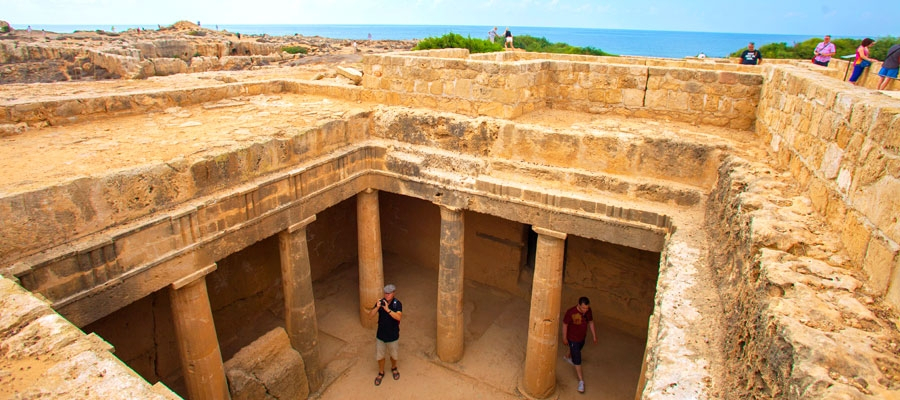
Walking through the Tombs of the Kings feels like stepping into an underground city built for eternity. The seven main excavated tombs are scattered across a wide area. Each one is carved directly from bedrock with incredible precision. What makes these tombs extraordinary is their design. They look like actual houses. This follows an ancient Egyptian tradition that believed the dead should rest in spaces resembling their homes in life.
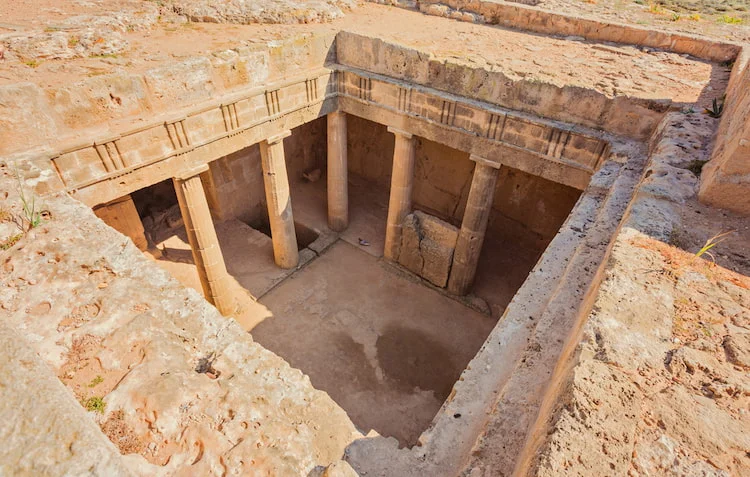
The most impressive is Tomb Number 3. It features an open courtyard below ground level, surrounded by elegant Doric columns that still stand today. Some tombs have niches built into rock walls where bodies were placed, similar to Roman catacombs. Others feature elaborate details like decorated doorways, painted frescoes, and columns with traditional Greek designs. Many tombs also contain wells at their centre. These served both practical purposes and held symbolic meaning.
Fascinating Facts About the Tombs of the King
Fascinating Facts About the Tombs of the King
One of the most intriguing aspects is Tomb Number 8, which stands apart from all others. At its centre sits a mysterious square rock with a carved chamber inside, surrounded by a corridor and burial chambers. When archaeologists excavated this tomb, they found two stone bird figures that sparked debate.
Some experts believe these represent eagles, the royal emblem of the Ptolemaic dynasty. This suggests the tomb might hold remains of a Ptolemaic king, possibly Ptolemy XIV, brother of the famous Cleopatra VII. Others argue the birds are falcons, representing the Egyptian god Horus. Either way, these symbols indicate someone of extraordinary importance was meant to be buried here.
The tombs also reveal fascinating details about ancient burial practices. The Paphian custom of including Rhodian amphorae among burial offerings helped archaeologists date the tombs. Manufacturing stamps on the handles of these large clay jars became an unexpected key to understanding the timeline of burials throughout the Eastern Mediterranean.
Tragically, much of what these tombs once held has been lost. It’s believed the original burials included gold jewellery, precious objects, and personal belongings. But very few treasures were found during official excavations. Grave robbers likely cleared out most valuables centuries ago, leaving archaeologists to piece together the story from what remained.
Early Christians and the Tombs: A Hidden Sanctuary
The tombs took on a completely different role centuries after they were first built. When Cyprus came under Roman control in 58 BC, early Christians began arriving on the island. Many settled in Paphos. During the brutal persecutions of the first through fourth centuries AD, Christians fled to these tombs.
They used them as secret meeting places to celebrate religious ceremonies away from Roman authorities. Evidence of their presence remains today in Christian crosses and frescoes painted on chamber walls.
According to biblical accounts, Cyprus became a refuge for Christians escaping persecution. The underground chambers provided perfect hiding spots. The very spaces that once celebrated pagan beliefs quietly transformed into early Christian sanctuaries. This continued until Emperor Constantine made Christianity the official religion of Rome in 313 AD, finally ending the need for secret worship.
UNESCO World Heritage Site Status and Modern Significance
In 1980, the Tombs of the Kings earned recognition as part of the UNESCO World Heritage Site. This designation includes all of Paphos and the nearby ancient site of Kouklia. This status acknowledges the tombs as a treasure of human history that must be preserved for future generations.
The site has been actively excavated since 1977. It’s managed by the Department of Antiquities of the Republic of Cyprus. Archaeologists continue to study the necropolis, slowly revealing more secrets. The tombs provide a unique window into how different cultures left their mark on this single location. These includes Greek, Egyptian, Roman, and early Christian.
For modern Cypriots, the Tombs of the Kings represent an important link to the island’s complex history. They stand as proof that Cyprus has always been a meeting point of civilizations, where East meets West. Different people brought their traditions and beliefs to create something new. The architectural style itself shows this blending, combining Macedonian tomb designs with Egyptian funerary traditions and local Cypriot elements.
A Random Photo
Fascinating Facts About the Tombs of the King
The site is located two kilometres north of Paphos harbour and is accessible by car, taxi, or local bus route 615. The burial ground is open year-round with standard entrance fees. The walking paths connect the major tomb complexes across the site, which typically requires two to three hours to explore thoroughly.
The temperature inside the tombs remains noticeably cooler than surface conditions. The site offers limited shade, making early morning or late afternoon visits advisable during summer months. Visitors should bring water, sun protection, and appropriate footwear for uneven terrain.
Why the Tombs of the Kings Matter to Cyprus
The Tombs of the Kings document Paphos’s role as a major political and economic centre during the Greek and Roman periods. The architectural investment required for these structures indicates substantial wealth and the presence of a powerful administrative class. The site provides physical evidence of Cyprus’s position within larger Mediterranean trade and political networks.
The later use by early Christian communities adds a second layer of historical importance, documenting the spread and eventual acceptance of Christianity in the Roman Empire. The tombs represent over six centuries of continuous cultural activity, making them valuable for understanding long-term social and religious change in the region.
Meta Description: Discover the Tombs of the Kings in Paphos, a UNESCO World Heritage Site featuring 4th century BC Greek burial chambers, Doric columns, and early Christian artifacts carved into solid rock.