 English
 Greek
Greek German
 Russian
The Painted Churches in the Troodos Region represent a collection of ten Byzantine and post-Byzantine monuments dating from the 11th to the 16th centuries. These structures range from small rural chapels to monastery complexes, all sharing two defining characteristics. These are richly decorated interior frescoes and distinctive steep-pitched wooden roofs.
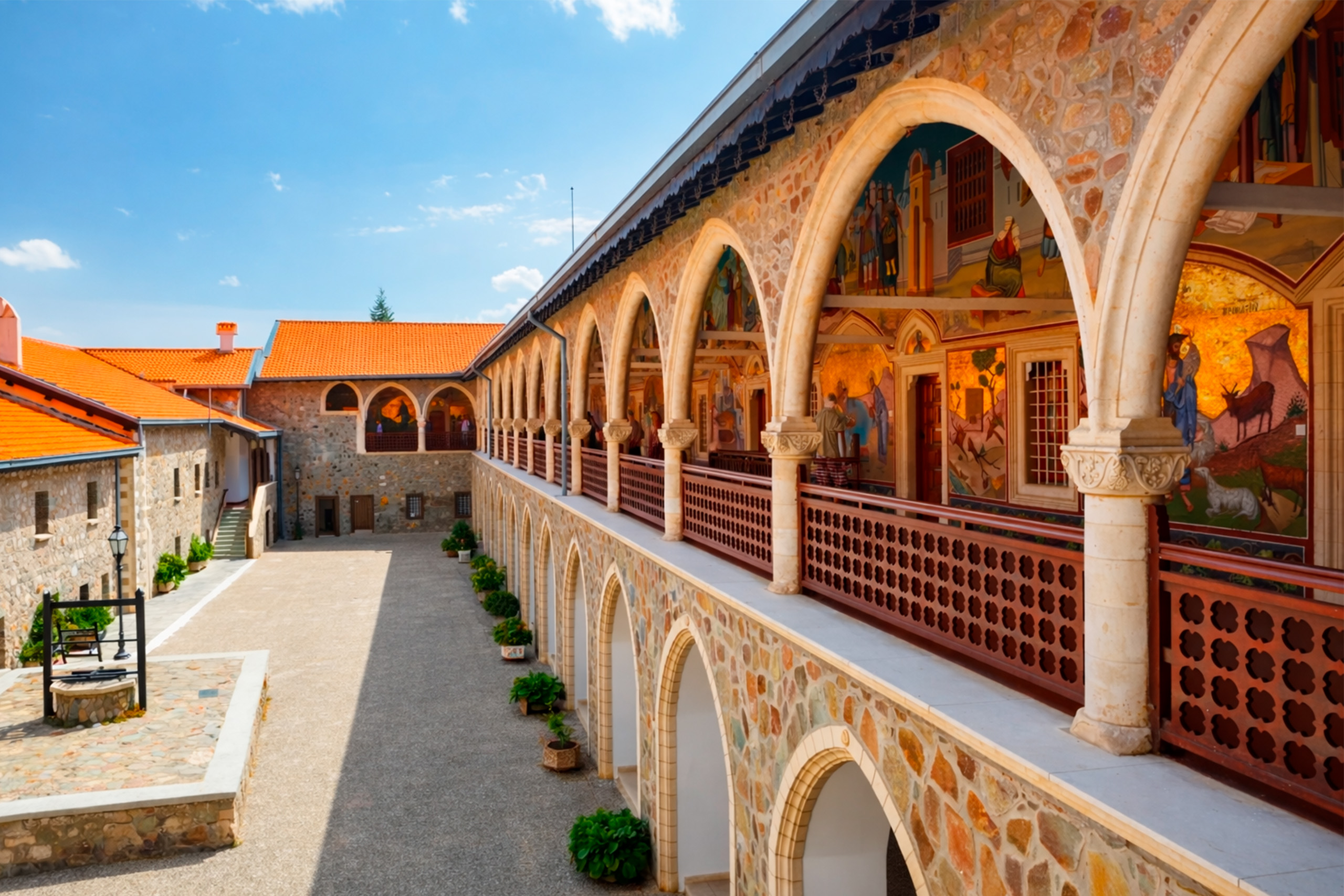
Nine of the churches are located in the Nicosia District, while one, Timios Stavros in Pelendri, sits in the Limassol District. Together they provide an exceptional record of Byzantine and post-Byzantine painting in Cyprus, documenting artistic developments across five centuries of religious expression.
Historical Background
Cyprus became fully Byzantine in 965 AD when Emperor Nikephoros II Phokas sent General Niketas Chalkoutzes to reconquer the island. Before this, Cyprus had existed for nearly 300 years as a condominium jointly administered by the Byzantine Empire and the Arab Caliphate following agreements made in 688 AD under Emperor Justinian II and Caliph Abd al-Malik. This unusual arrangement, though frequently violated by both sides, kept the island relatively demilitarized and required Cypriots to pay taxes to both powers equally.
After the Byzantine reconquest in 965, Cyprus became a theme (military province) and experienced a period of modest prosperity and peace. The island’s Muslims either left or converted to Christianity. During the two centuries that followed, taxes remained high, but trade in silk and food products flourished. Major cities, including Kyrenia, Famagusta, Nicosia, and Limassol, were either founded or significantly expanded during this period.
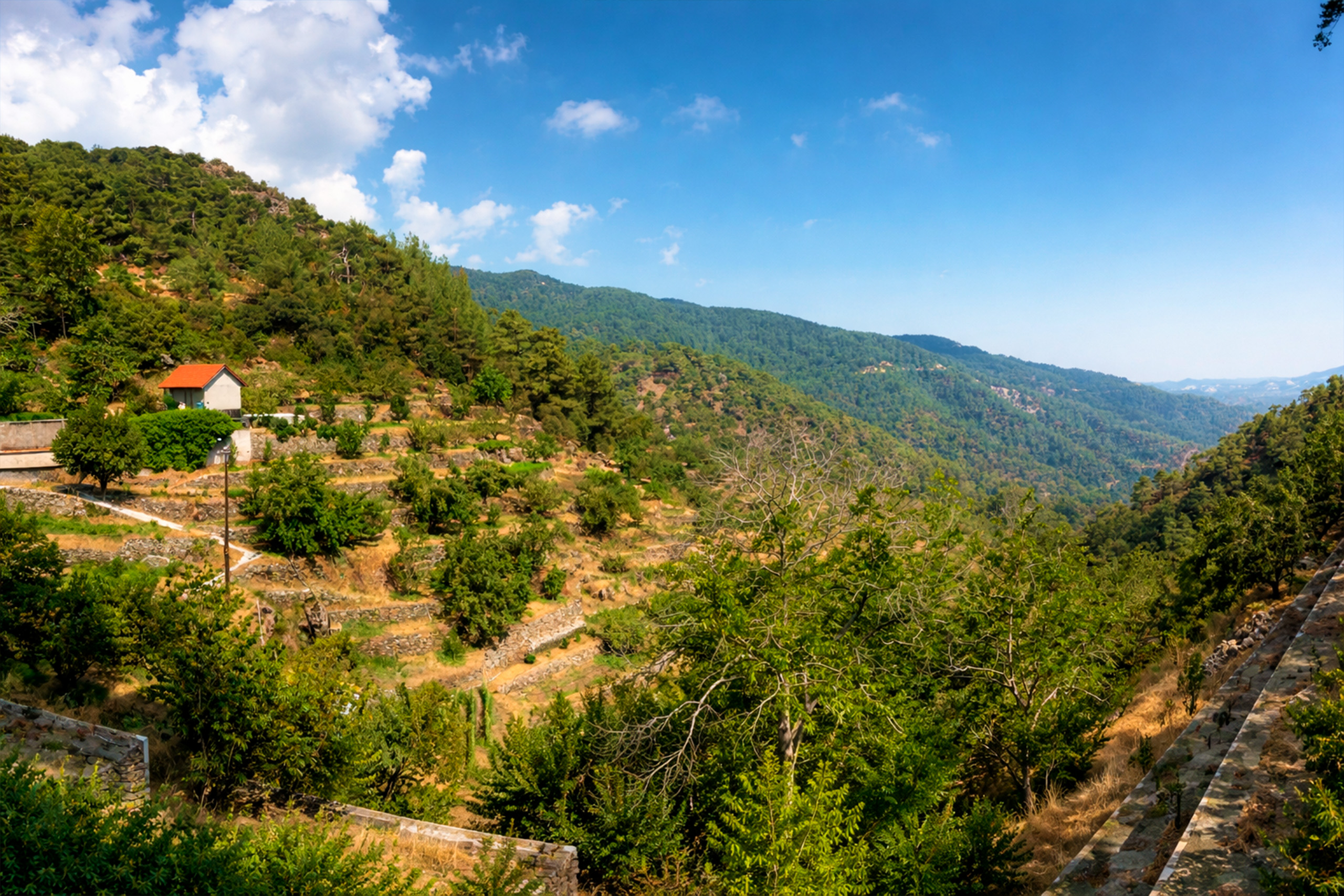
This era of stability created conditions favorable for religious construction. Monasteries and churches proliferated across the island, with the Troodos Mountains becoming a particular center of monastic activity. The remote mountain location provided isolation suitable for contemplative religious life while also offering practical advantages. The cooler climate at higher elevations made the region more comfortable during Cyprus’s hot summers, and the distance from coastal areas provided some protection from raids.
Architectural Features
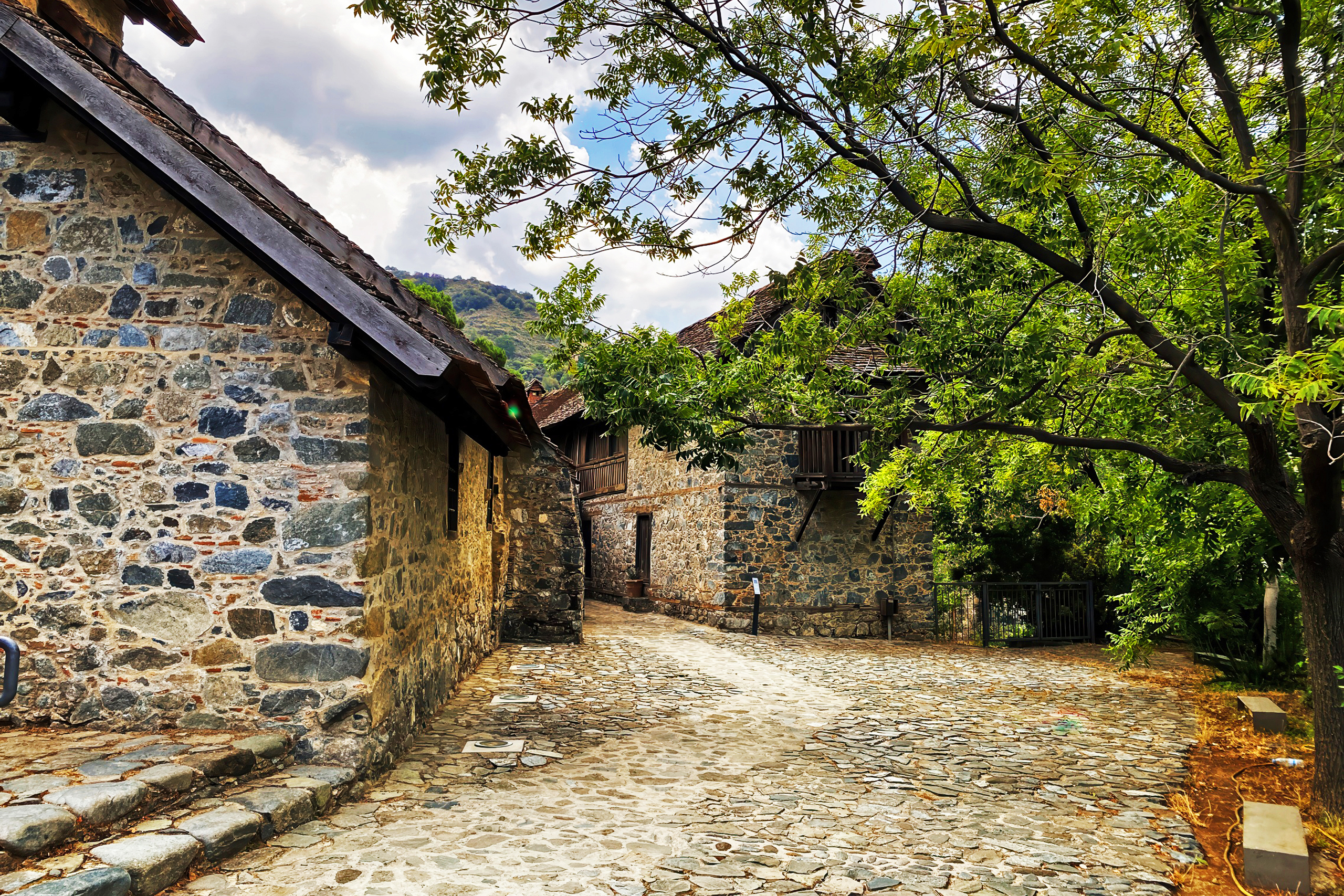
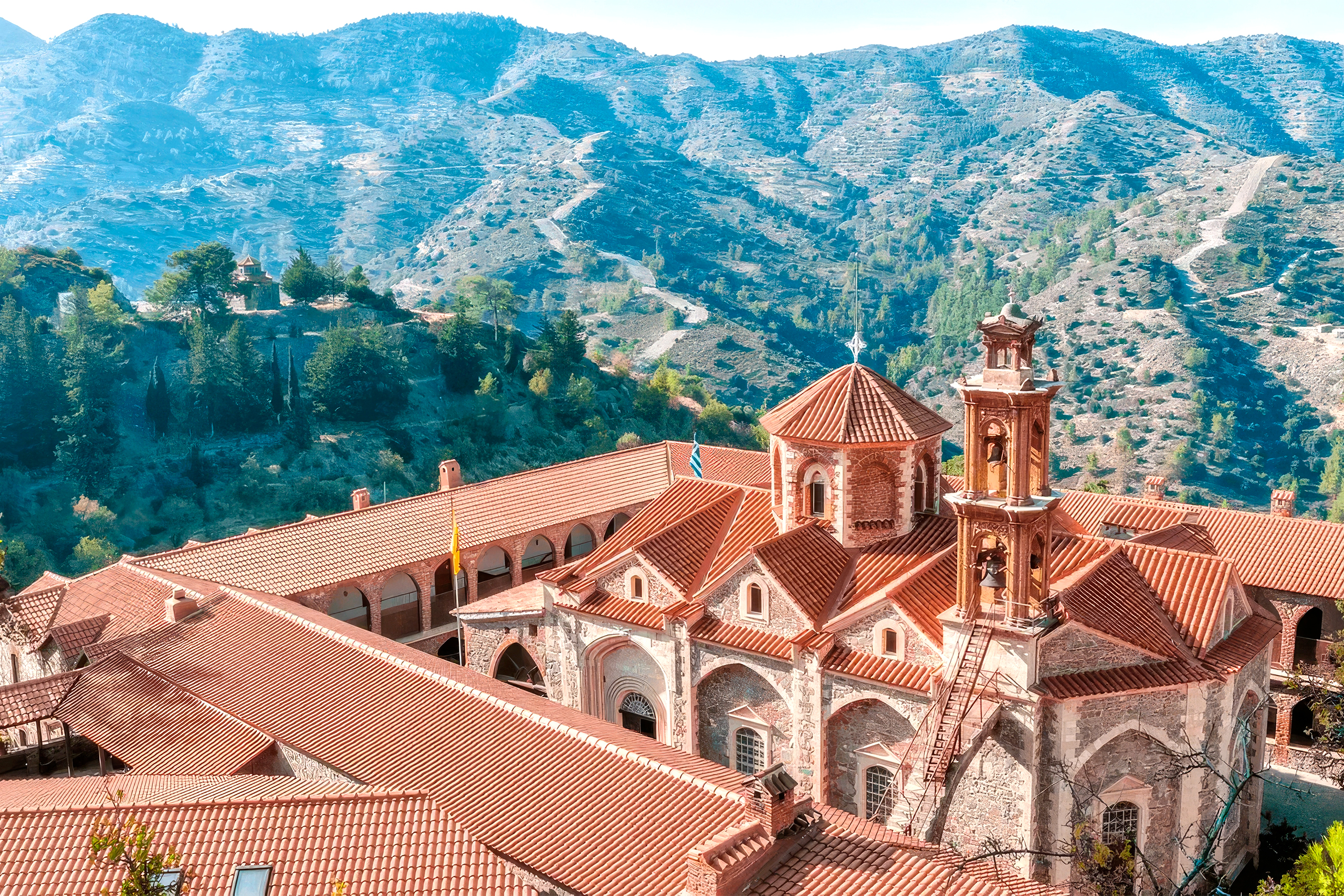
The churches of the Troodos region developed a unique architectural form found nowhere else in the Byzantine world. Their most distinctive feature is the steep-pitched wooden roof covered with flat hooked tiles made from local clay. These gabled roofs were specifically designed to protect the buildings from the region’s rain and occasional snow. In several cases, the wooden roof structure creates a second protective layer over original Byzantine masonry domes and vaulted forms underneath.
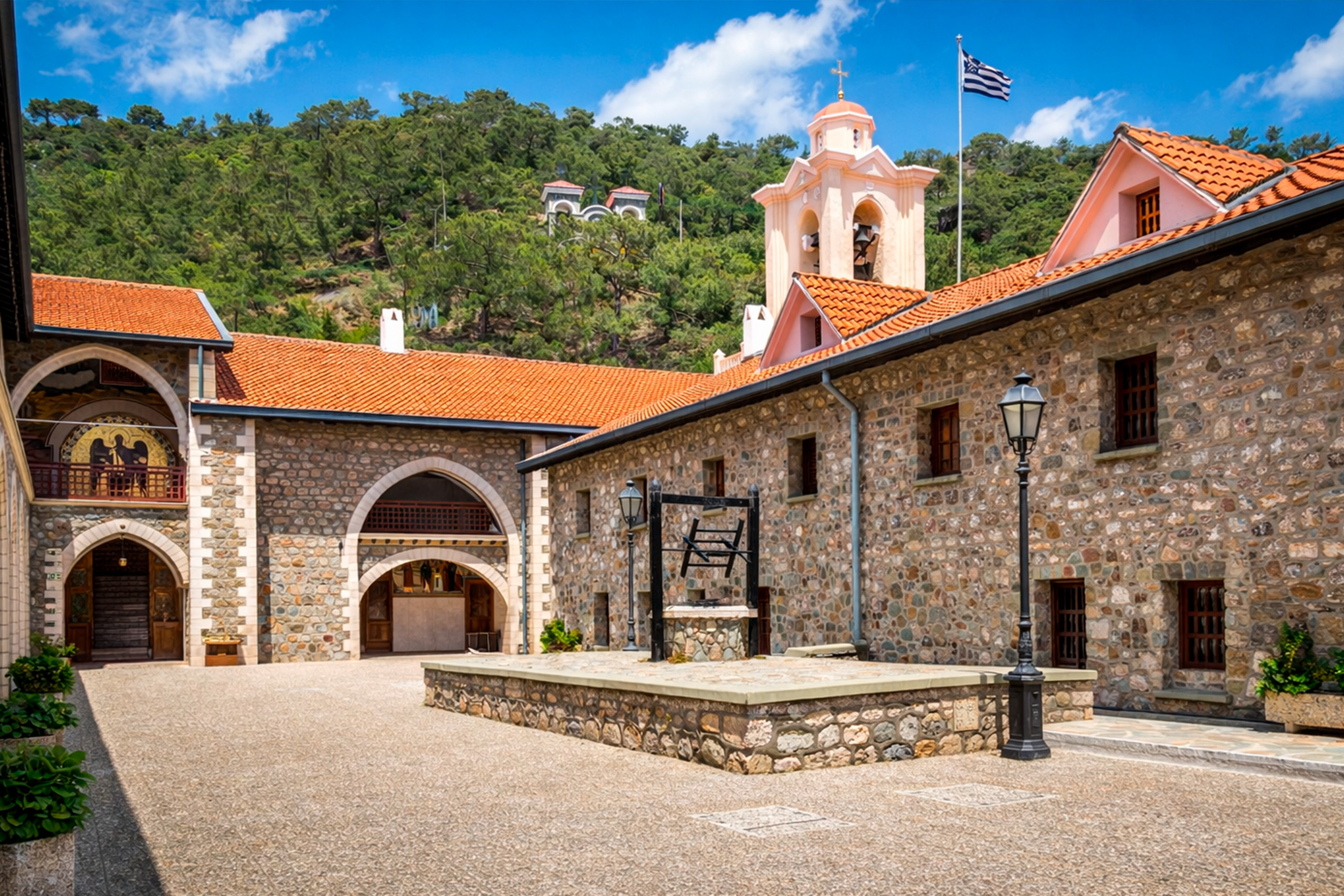
The architecture is almost certainly of indigenous Cypriot origin, adapted to local geography, history, and climate. Most of the churches follow simple plans, single-aisled structures with timber roofs, though some incorporate more complex arrangements. The Church of Panagia in Moutoullas, built in the 13th century, represents the earliest surviving example of the steep-pitched wooden roof design.
Many churches feature later additions, including porticos and narthexes that extend around three sides of the original building, with the protective roof covering both the church and these additions. The exterior appearance is deliberately modest, often indistinguishable from ordinary rural buildings. This humble architectural style stands in stark contrast to the sophisticated artistic programs inside.
The Ten Churches
The Church of Agios Nikolaos tis Stegis (St. Nicholas of the Roof), Kakopetria
The Church of Agios Nikolaos tis Stegis (St. Nicholas of the Roof) in Kakopetria dates to the 11th century and represents the oldest surviving monastery church (katholikon) in Cyprus. The protective timber roof that gives it its name helped preserve fragile frescoes spanning multiple periods from the 11th through 17th centuries.
The Agios Ioannis Lampadistis Monastery, Kalopanagiotis
The Agios Ioannis Lampadistis Monastery in Kalopanagiotis comprises a compact complex with several chapels built chronologically, allowing visitors to observe the evolution of Byzantine art across different periods. The monastery sits on the bank of the Setrachos River in the Marathasa Valley. The oldest church dates from the 11th century.
The Church of Panagia Phorviotissa (Asinou), near Nikitari
The Church of Panagia Phorviotissa (Asinou) near Nikitari was established between 1099 and 1105 by Magister Nikiforos Ischyrios, who later became the monk Nikolaos. The monastery of Forbion, from which the church takes its name, was founded in 1099 and remained active until the end of the 18th century during Ottoman occupation. An inscription from 1105/6 above the southern entrance records the monastery’s foundation.
The Church of Panagia tou Arakou, Lagoudera
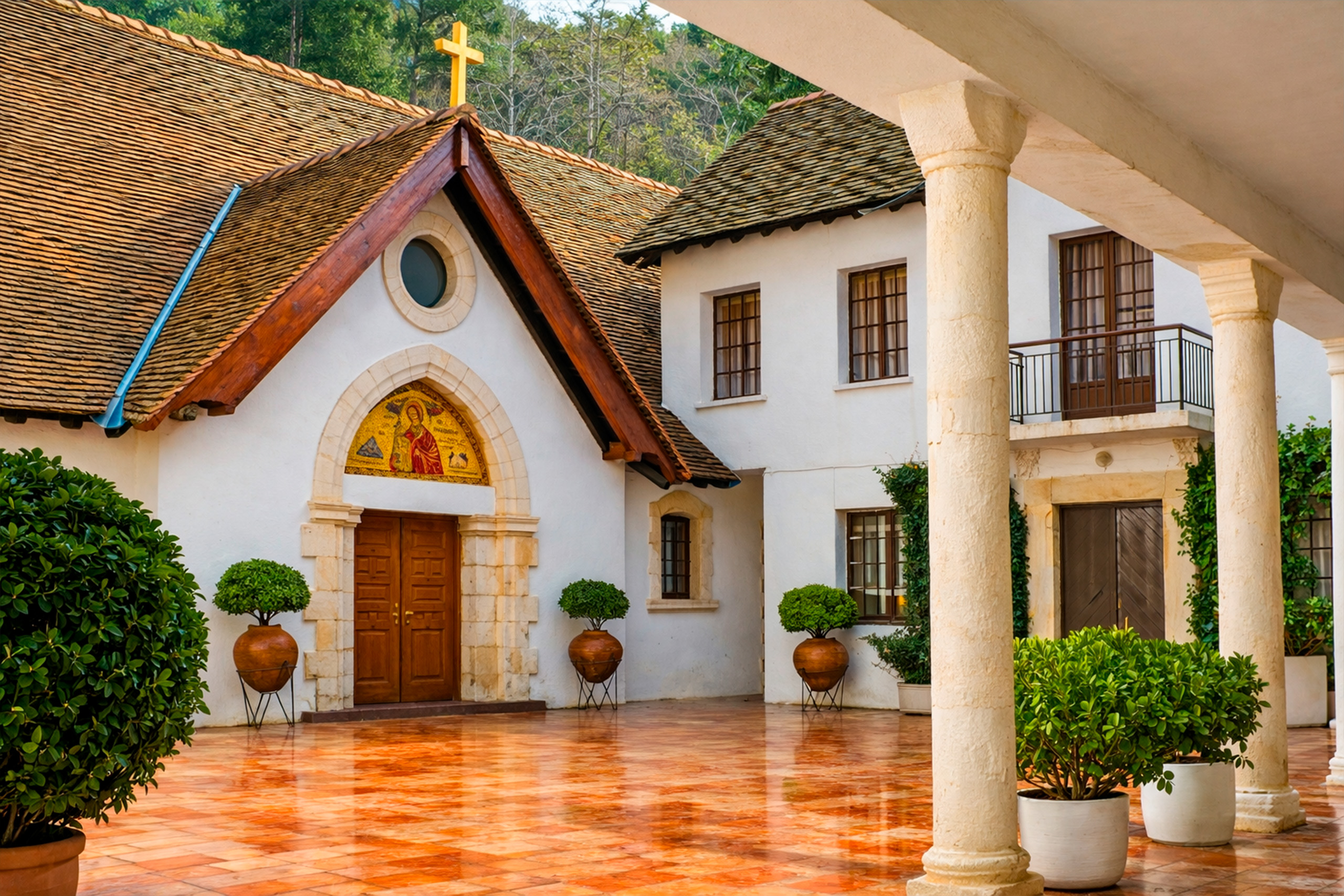
The Church of Panagia tou Arakou in Lagoudera, built in the 12th century, is considered one of the most important Byzantine churches on the island. It features bold colors and dramatic compositions in its later medieval frescoes, providing what many consider a textbook example of the island’s artistic peak. The church originally served as a monastery katholikon during a period when monastic life flourished in Cyprus.
The Church of Panagia, Moutoullas
The Church of Panagia in Moutoullas was built through the efforts of Ioannis of Moutoullas and his wife. Many believe it was initially constructed as a private chapel. The church is notable for its carved wooden basins, a feature found in several other churches in the village.
The Church of Timios Stavros (Holy Cross), Pelendri
The Church of Timios Stavros (Holy Cross) in Pelendri is the only one of the ten churches located in the Limassol District. It contains unique 14th-century wall paintings. The church has three sections, each constructed in a different period, with the oldest dating to 1178. The name Timios Stavros relates to Saint Helena, mother of Roman Emperor Constantine the Great, who spent part of her life in Cyprus and is believed to have brought several relics to the island, including parts of the Holy Cross.
The Church of Panagia Podithou, Galata
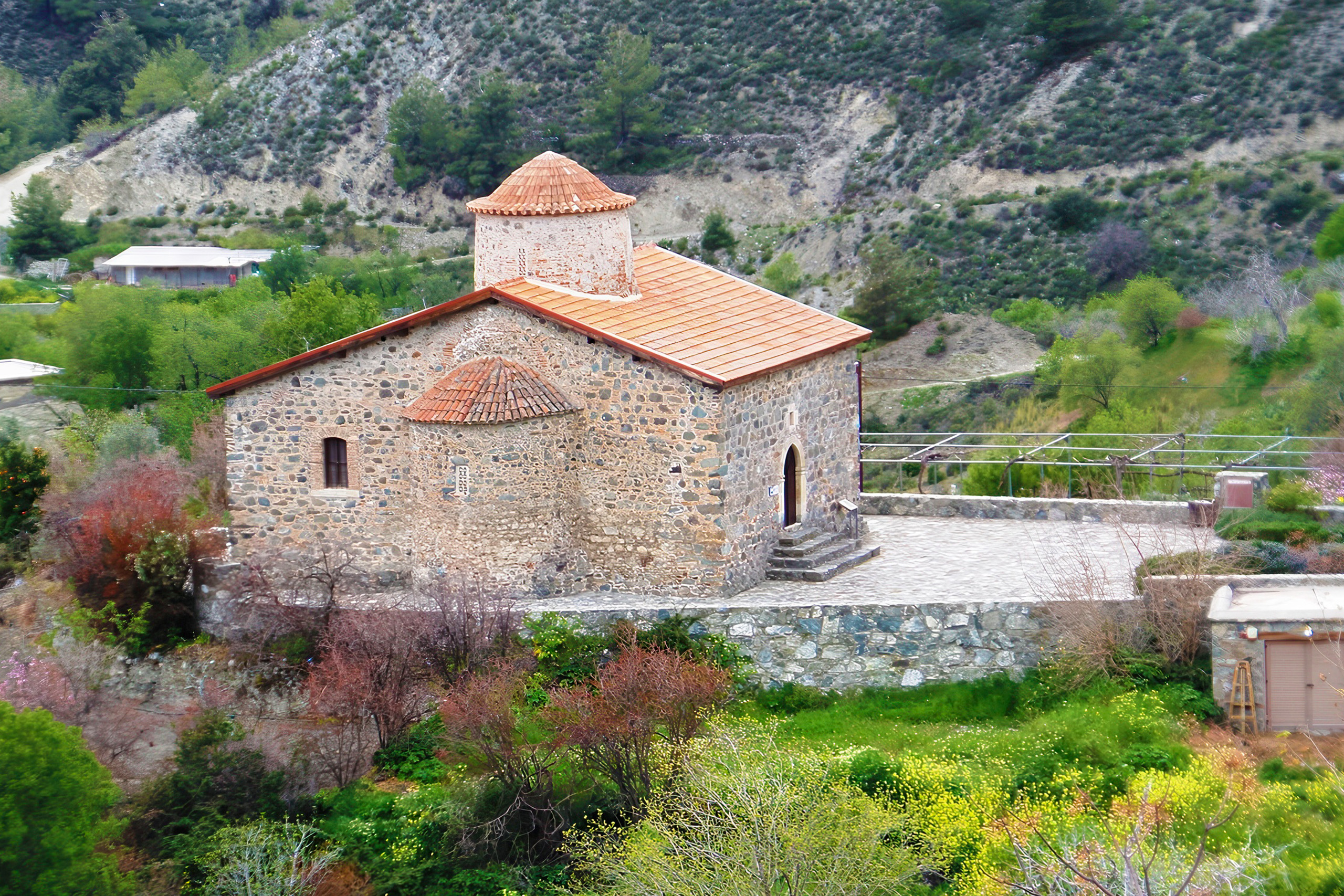
The Church of Panagia Podithou in Galata was built in 1502 as part of a monastery that functioned from the 16th to the 18th century. An inscription above the entrance on the northern wall indicates that priest Petros Peratis and his wife Pepanis sponsored the building. A fresco depicts them offering the church’s effigy to Christ through the Theotokos. After the Greek Revolution of 1821, the monastery began to decline and was eventually dissolved.
The Church of Stavros Agiasmati, Platanistasa
The Church of Stavros Agiasmati in Platanistasa was built in the late 15th century as a monastery church. While the exact construction date remains unclear, decorations were completed in 1494. Flat, hooked tiles cover the single-aisled, wooden-roofed structure, and the roof extends beyond the building to form a parapet, a feature unique in Cyprus.
The Church of Archangel Michael, Pedoulas
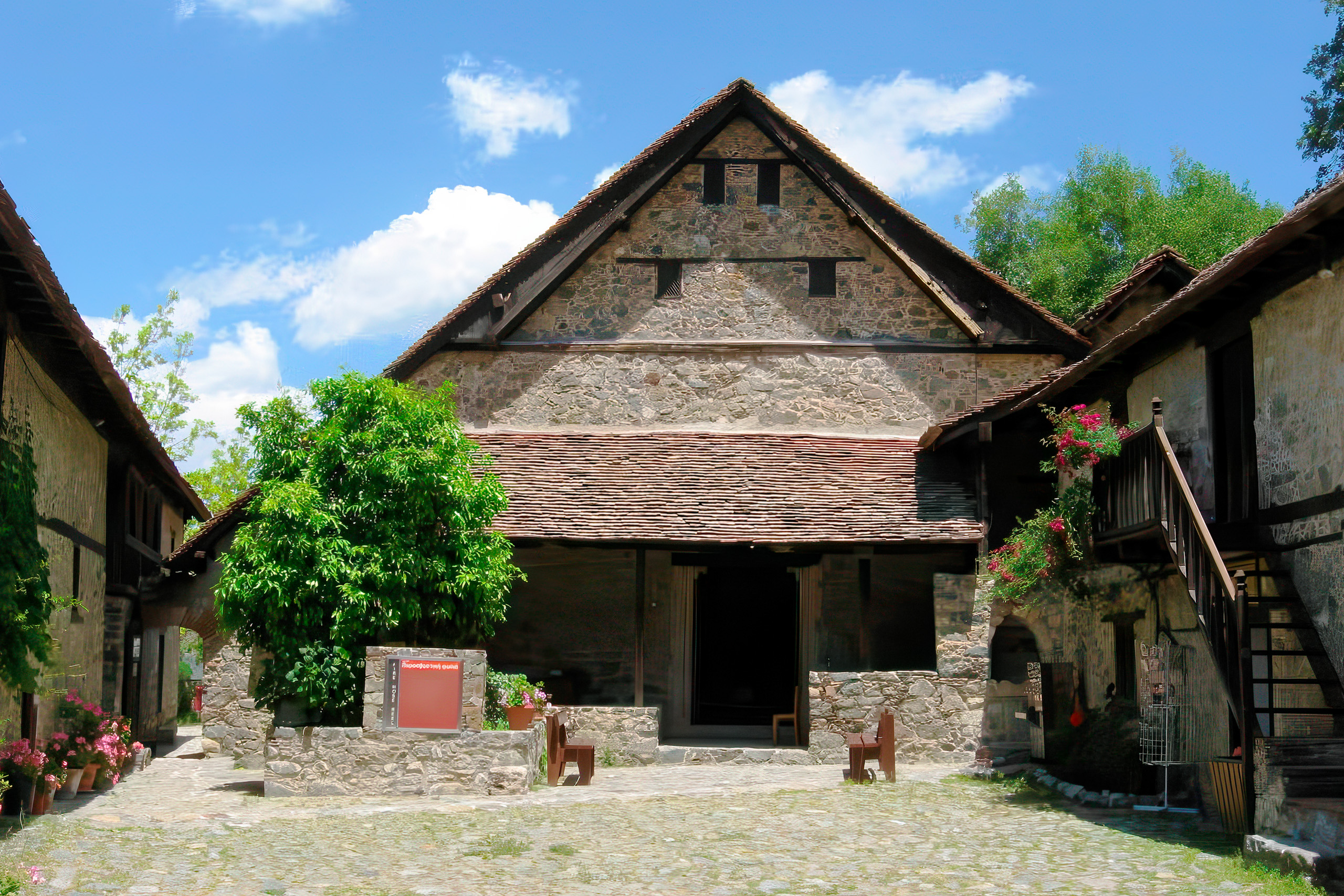
The Church of Archangel Michael in Pedoulas was built and decorated with frescoes in 1474 through the donation of Priest Vasilios Chamados. The church’s murals demonstrate the post-Byzantine style that developed in Cyprus before Venetian rule.
The Church of Metamorfosis tou Sotiros (Transfiguration of the Savior), Palaichori Oreinis
The Church of Metamorfosis tou Sotiros (Transfiguration of the Savior) in Palaichori Oreinis, added to the UNESCO list in 2001, was constructed in the early 16th century. It sits on a hill overlooking the eastern section of the village and features wall paintings influenced by various styles. The church is the only one of the ten with a tower standing next to it.
Cultural Significance
The paintings of the Troodos churches bear outstanding testimony to Byzantine civilization, particularly during the time of the Comnene dynasty. They document relationships between Eastern and Western Christian art that provide answers to complex questions about ties between the two religious traditions. Very close relationships existed during the 12th century between painting in Cyprus and Western Christian art, visible in both stylistic relationships (as seen in the Nikitari paintings) and iconographical relationships (evident in the Lagoudera paintings).
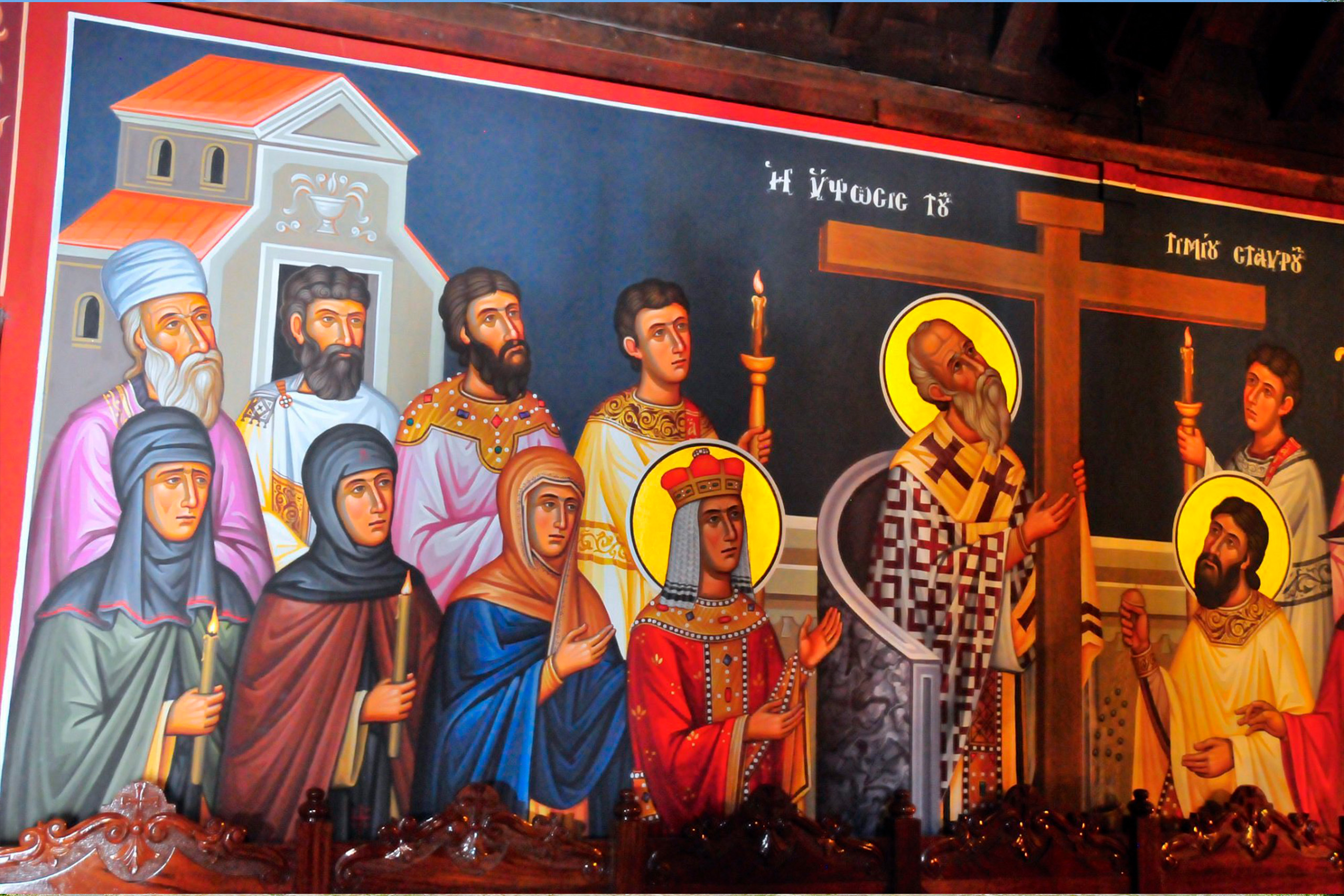
These Cypriot monuments precede the constitution of the Frankish Lusignan Kingdom, which became a fundamental link in the chain of East-West artistic exchanges. The churches demonstrate how Cyprus served as a cultural crossroads where Byzantine traditions met and interacted with influences from Western Europe, creating hybrid artistic forms that reflected the island’s complex political and cultural position.
Conservation and Access
All ten churches remain living monuments that continue to function as places of worship and venues for other religious practices, preserving their original purpose. This ongoing use as active religious sites helps maintain the wholeness and integrity of the properties. UNESCO granted the serial property enhanced protection status in November 2010 through the Committee for the Protection of Cultural Property in the Event of Armed Conflict.
Conservation efforts face ongoing challenges from humidity, structural decay, and human impact. The Department of Antiquities of Cyprus, with support from UNESCO and other organizations, implements management and conservation plans to preserve the delicate frescoes for future generations. Ground-penetrating radar surveys conducted as part of archaeological research have revealed evidence of monastery complexes and buildings that once surrounded the preserved churches, providing insights into monastic life during the Byzantine period.
Visiting the Churches
The churches are located across three areas of the Troodos region: Pitsilia, Solea, and Marathasa. Brown road signs with church symbols mark the way to these sites, though they do not use the UNESCO symbol. Village roads are often narrow and winding. Visiting all ten churches requires a full day of driving through mountain terrain.
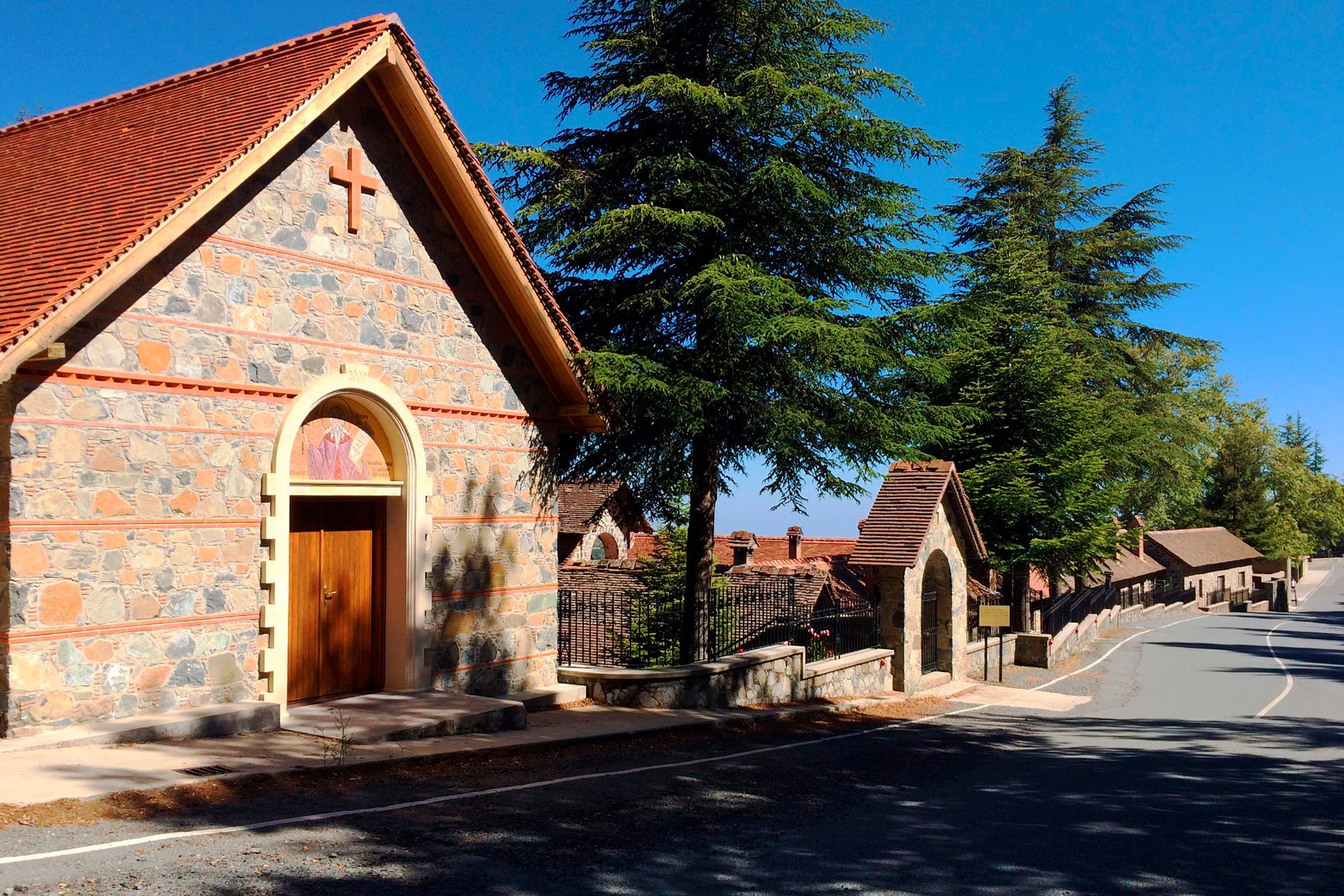
Access to the churches can be challenging as many are not continuously open. Some churches have scheduled opening hours, typically Monday through Saturday, with limited hours and closed on Sundays. Others require advance arrangements. Visitors sometimes benefit from encountering organized tour groups whose guides can unlock churches. Photography is generally prohibited inside the churches to protect the frescoes.
Significance for Cyprus
The painted churches of the Troodos region represent a crucial chapter in Cyprus’s cultural heritage. They document the island’s role as a meeting point between Byzantine and Western Christian traditions, preserving artistic developments that might otherwise have been lost. The unique architectural solutions developed specifically for Cypriot conditions demonstrate local adaptation and innovation within broader Byzantine cultural frameworks.
These monuments preserve not only artistic masterpieces but also historical records of donors, artists, and the communities that built and maintained them. They provide evidence of Cyprus’s prosperity during certain periods, the strength of Orthodox Christianity on the island, and the ways Cypriot culture absorbed and transformed external influences.