 English
 Greek
Greek German
 Russian
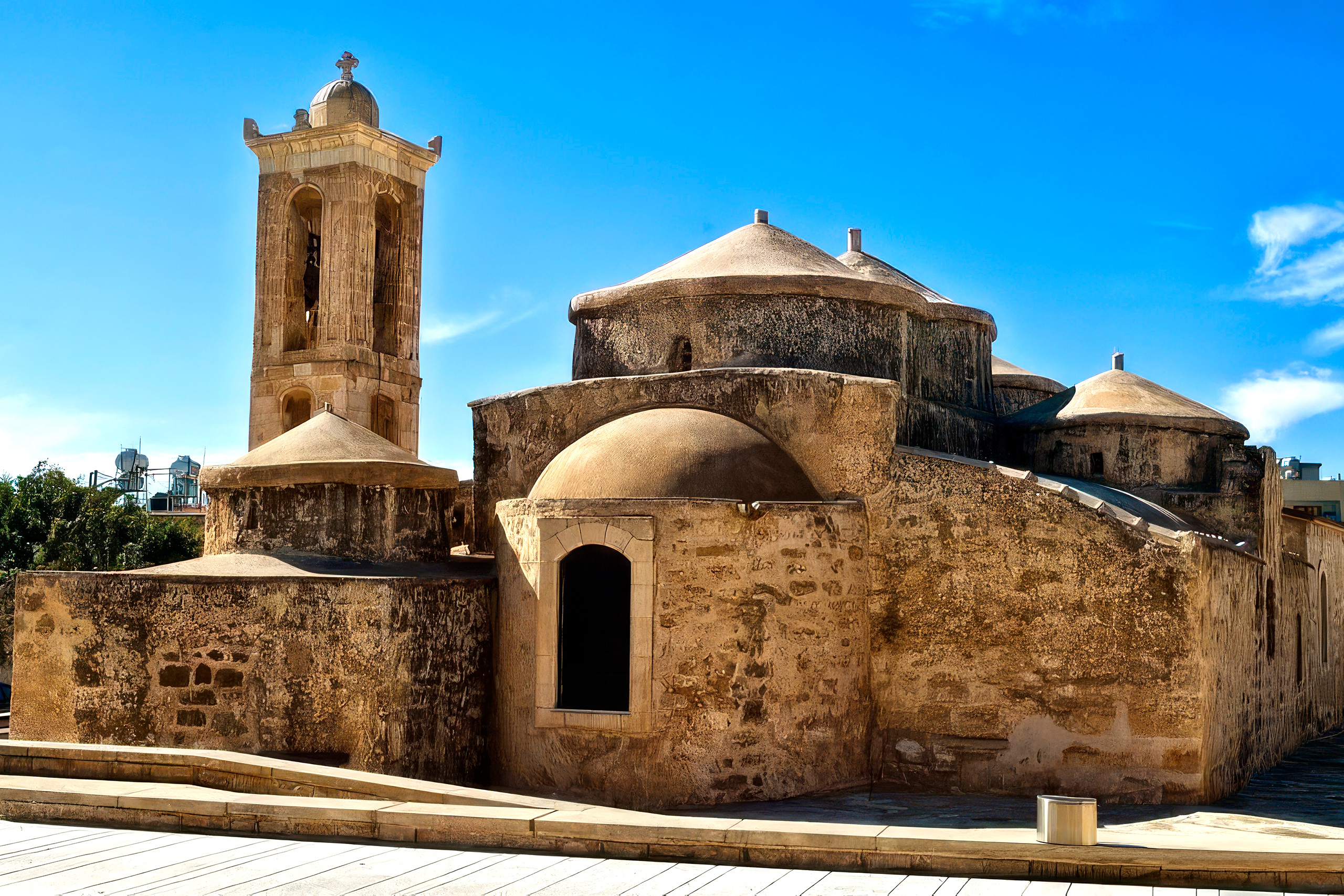
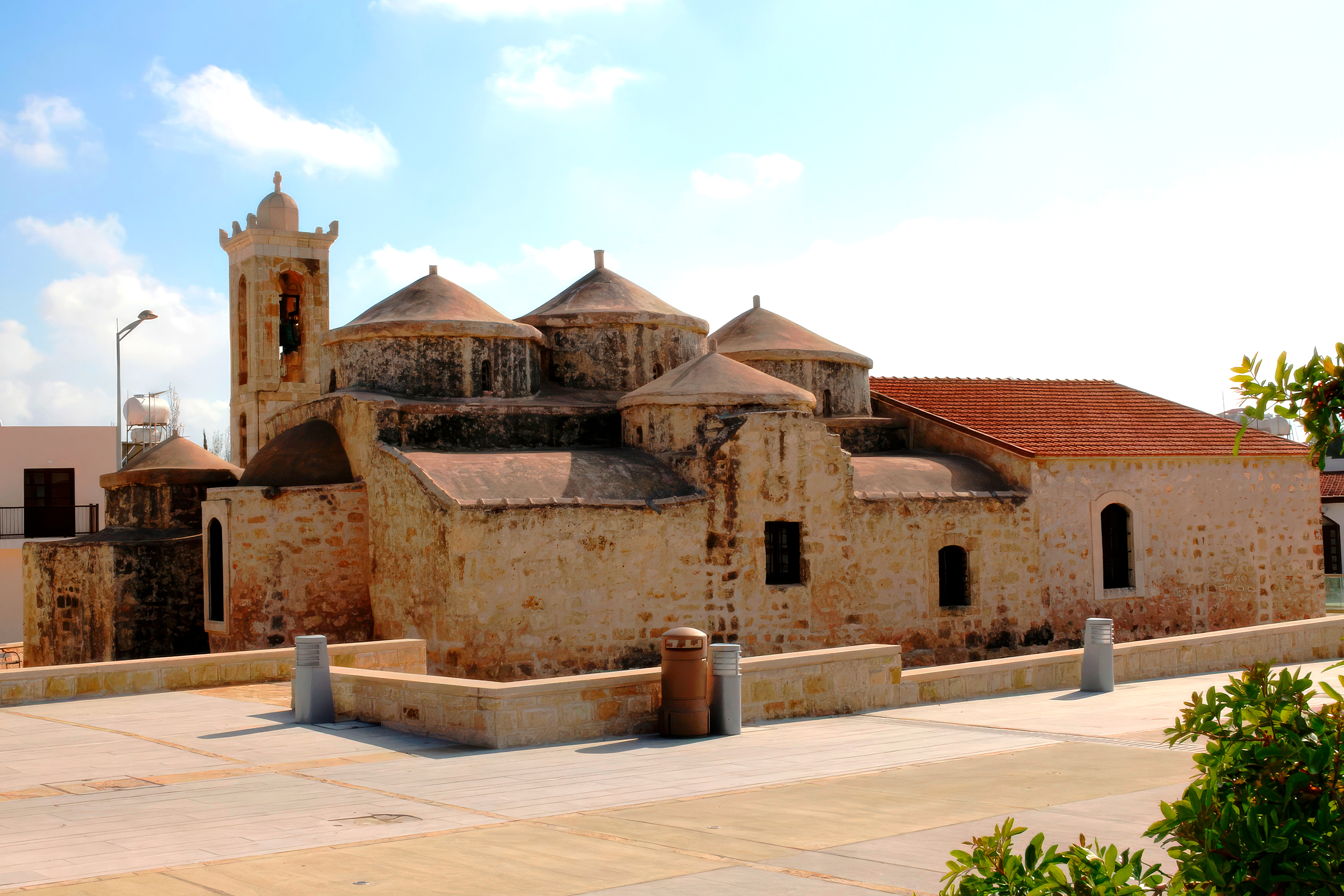
The Agia Paraskevi necropolis is an extensive Bronze Age burial ground located approximately half a mile north of the Church of Agia Paraskevi in the Nicosia district. The site occupies the edge of a plateau southwest of Cyprus’s modern capital. It takes its name from the nearby Byzantine church.
This cemetery was used continuously throughout the Early and Middle Bronze Age periods, roughly from 2400 BCE to 1100 BCE. The site contains hundreds of rock-cut chamber tombs where ancient communities buried their dead along with pottery, tools, jewelry, and other grave goods. These artifacts provide detailed information about how Cypriots lived, traded, and organized their societies during prehistoric times.
The necropolis is particularly important because it represents the burial ground for ancient Ledra, one of the early kingdoms mentioned in Assyrian records. While the settlement itself lies buried beneath modern Nicosia, the cemetery on the plateau has survived and offers the most complete picture of life in central Cyprus during the Bronze Age.
Historical Background
The Agia Paraskevi necropolis came to archaeological attention in the late 19th century. In 1883 and 1884, German archaeologist Dr. Max Ohnefalsch-Richter conducted extensive excavations at the site. His work uncovered numerous tombs and established the cemetery’s importance for understanding Cypriot prehistory.
Ohnefalsch-Richter arrived in Cyprus in 1878 as a journalist but quickly shifted his focus to archaeology. He became a prominent excavator and dealer in antiquities. His excavations at Agia Paraskevi yielded large collections of pottery, bronze objects, and other artifacts. Many of these objects were sold to museums around the world, including the Penn Museum in Philadelphia and collections in Oxford.
In 1894, British archaeologists working for the British Museum conducted additional excavations at the site. They opened fourteen tombs along the northern edge of the plateau, between the Larnaka road and stone quarries near the village of Agii Omologitades. By this time, much of the surface area had already been explored by Ohnefalsch-Richter, but the British excavations still provided valuable information about tomb construction and burial practices.
The most significant modern excavations occurred in 1955, when J.R. Stewart and his wife Eve led an expedition on behalf of the Nicholson Museum at the University of Sydney. They specifically targeted Early Bronze Age tombs belonging to the Philia culture, one of the earliest phases of Bronze Age occupation in Cyprus. Their work clarified the origins of the Early Bronze Age on the island and recovered important pottery and artifacts.
Excavations have continued periodically since then. In 2011, Cypriot archaeologist Dr. Giorgos Georgiou uncovered exceptionally important finds, including terracotta models depicting social activities. These rare objects provide unique insights into Bronze Age religious practices and community life.
The Bronze Age Communities of Central Cyprus
The Agia Paraskevi necropolis served the ancient kingdom of Ledra, which controlled the upper valley of the Pediaeus River in central Cyprus. This kingdom is mentioned in Assyrian records from the 7th century BCE. King Esarhaddon of Assyria recorded receiving tribute from Onasagas, king of Ledra, around 680-669 BCE.
Archaeological evidence shows that communities in this area existed much earlier than the Assyrian records. The necropolis contains tombs dating back to approximately 2400 BCE, during the Early Bronze Age. At this time, Cyprus was undergoing major transformations. Communities were shifting from purely agricultural villages to more complex societies engaged in copper production and trade.
The Philia culture represents one of the earliest Bronze Age phases at Agia Paraskevi. This culture, dated to around 2400-2250 BCE, shows strong connections with Anatolia in modern Turkey. Pottery styles, metal objects, and burial practices all indicate contact with communities across the sea. This suggests that even in its earliest phases, Cyprus was connected to broader Mediterranean trade networks.
During the Middle Bronze Age (around 2000-1650 BCE), the communities became more prosperous and socially complex. Tombs from this period contain higher-quality pottery, bronze weapons and tools, and imported luxury items. The grave goods show increasing wealth disparities, suggesting that some families or individuals held higher status than others.
The Structure and Contents of the Tombs
The tombs at Agia Paraskevi are chamber tombs carved into the soft bedrock of the plateau. Access to each tomb was through a vertical shaft or sloping passageway called a dromos. From this entrance, chambers were cut horizontally into the rock to create burial spaces.
Many tombs contained multiple burials, indicating they were used by families over several generations. Bodies were typically placed in a crouched position, sometimes in simple pits and sometimes in pottery vessels called pithoi. Some tombs also contained burial niches cut into the chamber walls.
The pottery found in these tombs is particularly valuable for dating and understanding the site. Early Bronze Age ceramics include distinctive types like Red Polished Ware, a pottery style with burnished red surfaces. This ware was decorated with incised patterns or raised bands. Black Polished Ware also appears in some tombs, showing the variety of pottery traditions present in early Cyprus.
Middle Bronze Age tombs contained more elaborate pottery types, including White Painted Ware decorated with geometric patterns in brown or black paint. Red-on-White Ware, with red painted designs on a white background, also became common. These pottery styles help archaeologists distinguish different time periods and understand cultural changes.
Bronze objects recovered from the tombs include daggers, knives, pins, and earrings. Early Bronze Age tombs often contain copper or bronze tools of relatively simple design. Middle Bronze Age burials show more sophisticated metalworking, with finely crafted weapons and jewelry. Some tombs also yielded gold ornaments, though these are rare.
Important Archaeological Discoveries
Several exceptional finds from Agia Paraskevi have significantly advanced understanding of Bronze Age Cyprus. Among the most remarkable are terracotta models discovered in recent excavations. These small clay structures depict buildings with human figures inside, showing scenes of social or religious activities.
One model shows multiple figures placed within an enclosure. Similar models have been found at other Cypriot sites like Bellapais, but examples are extremely rare. These objects appear to represent shrines or ceremonial spaces. They may have been placed in tombs to provide the deceased with religious protection or to show their participation in important rituals during life.
The models offer unique visual evidence about Bronze Age architecture and social organization. They show details of building construction, including roof structures and interior arrangements. The human figures provide information about clothing, postures during ceremonies, and the number of people involved in rituals.
Bronze Age jewelry from the site includes earrings, pins with decorated heads, and spiral ornaments. Some pins have elaborate finials showing advanced metalworking skills. The presence of these objects indicates both technological expertise and social practices involving personal adornment.
Pottery vessels from Agia Paraskevi show remarkable variety. Some tombs contained large storage jars, others had fine serving vessels, and still others included small juglets probably used for oils or perfumes. The pottery forms evolved over time, with earlier periods favoring round-based vessels and later periods producing flat-based forms more suitable for storage and display.
Stone tools, including flint blades and grinding stones, appear in many tombs. These utilitarian objects were buried alongside more valuable items, suggesting they had importance in death as in life. Bone tools, particularly needles and awls used for textile work, also appear regularly.
Visiting Information and Current Status
The Agia Paraskevi necropolis is not open to the public as a formal archaeological site. The area has been heavily impacted by urban development, and most tombs are no longer accessible. Visitors interested in Bronze Age Cyprus should instead visit the Cyprus Museum in Nicosia, where significant collections from Agia Paraskevi are displayed.
The museum exhibits include pottery sequences showing the development of Cypriot ceramic styles, bronze weapons and tools demonstrating metalworking evolution, and jewelry illustrating Bronze Age craftsmanship. These objects provide the best way for general visitors to learn about the necropolis and its importance.
Archaeologists and researchers can access detailed information about Agia Paraskevi through academic publications. Susan F. Kromholz’s study of unpublished tombs in the Cyprus Museum and Giorgos Georgiou’s recent excavation reports provide comprehensive data about the site.
The Legacy of Ancient Ledra
Agia Paraskevi represents more than just a burial ground. It stands as evidence that Cyprus’s interior regions played important roles in the island’s prehistory. While coastal sites often receive more attention due to their connections to maritime trade, interior communities like ancient Ledra contributed significantly to Cypriot culture.
The necropolis helps complete the picture of Bronze Age Cyprus. It shows how the island transitioned from the Chalcolithic period into the Bronze Age, how communities organized themselves socially, and how they participated in Mediterranean-wide cultural developments. The terracotta models, in particular, provide rare glimpses into religious and social practices that are otherwise difficult to reconstruct.
For modern Cyprus, sites like Agia Paraskevi connect the present to the deep past. They demonstrate that the area around Nicosia has been continuously important for thousands of years. The ancient kingdom of Ledra may have been relatively small and never achieved the prominence of coastal kingdoms like Salamis or Kition, but it maintained a distinct identity and contributed to the complex mosaic of Cypriot Bronze Age civilization.