 English
 Greek
Greek German
 Russian
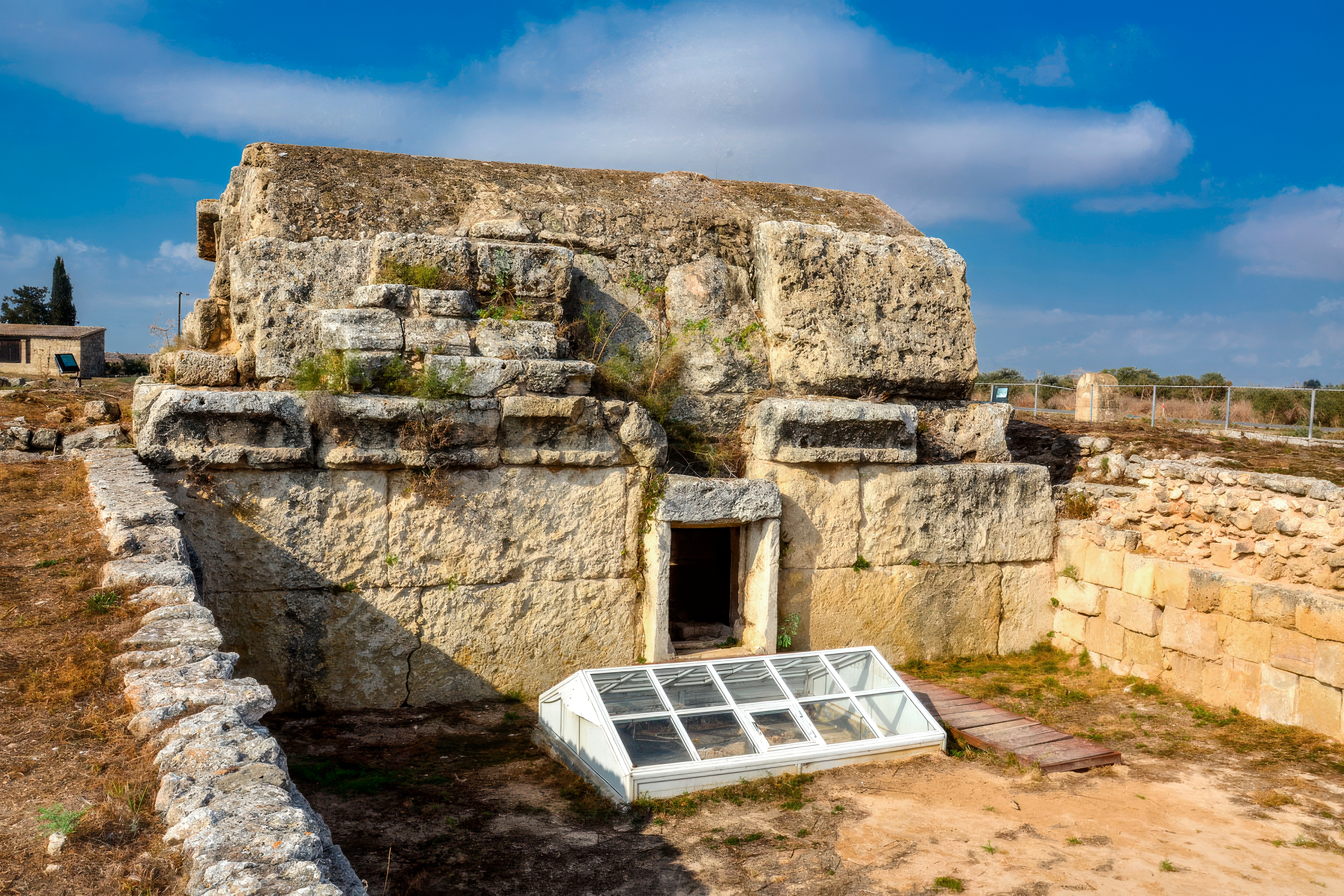
The necropolis consists of two distinct burial areas that reflect ancient social hierarchy. The Royal Tombs, sometimes called the Tombs of the Kings, hold nine massive built chamber tombs where nobility and wealthy elites were buried with spectacular ceremony. These tombs feature long dromos passages, monumental entrances called propylaea, and burial chambers constructed from enormous limestone blocks.

About 400 meters away sits the Cellarka cemetery, a network of over 100 smaller rock-cut chamber tombs carved directly into hard limestone. These served the general population of Salamis from the 7th through the 4th centuries BCE. The name Cellarka comes from the Greek word for cells, describing how closely the tombs cluster together.
Historical Background
According to Greek legend, Teucer founded Salamis around 1180 BCE after being exiled from his homeland, the island of Salamis near Athens. He named his new city after the place he left behind. Archaeological evidence suggests these stories contain some truth, as excavations found a chamber tomb south of the later Temple of Zeus that dates to the 11th century BCE, confirming a settlement existed here at roughly the time the legends describe.
The earliest tombs may date back to the 11th century BCE, suggesting Salamis coexisted with nearby Enkomi, an earlier Bronze Age settlement that was gradually abandoned. The main period of tomb construction occurred between 800 and 575 BCE, when Salamis competed with other Cypriot city-kingdoms, particularly Kition, for dominance on the island.
Centuries of Looting and Modern Excavation
Tomb raiders plundered the site for centuries, tunneling into burial chambers to steal gold, ivory, and precious metals. Early British excavations in 1896 followed the same destructive approach, tunneling through the earth mounds above tombs rather than properly excavating the entrance passages. These early digs found the chambers empty because looters had already stripped them.
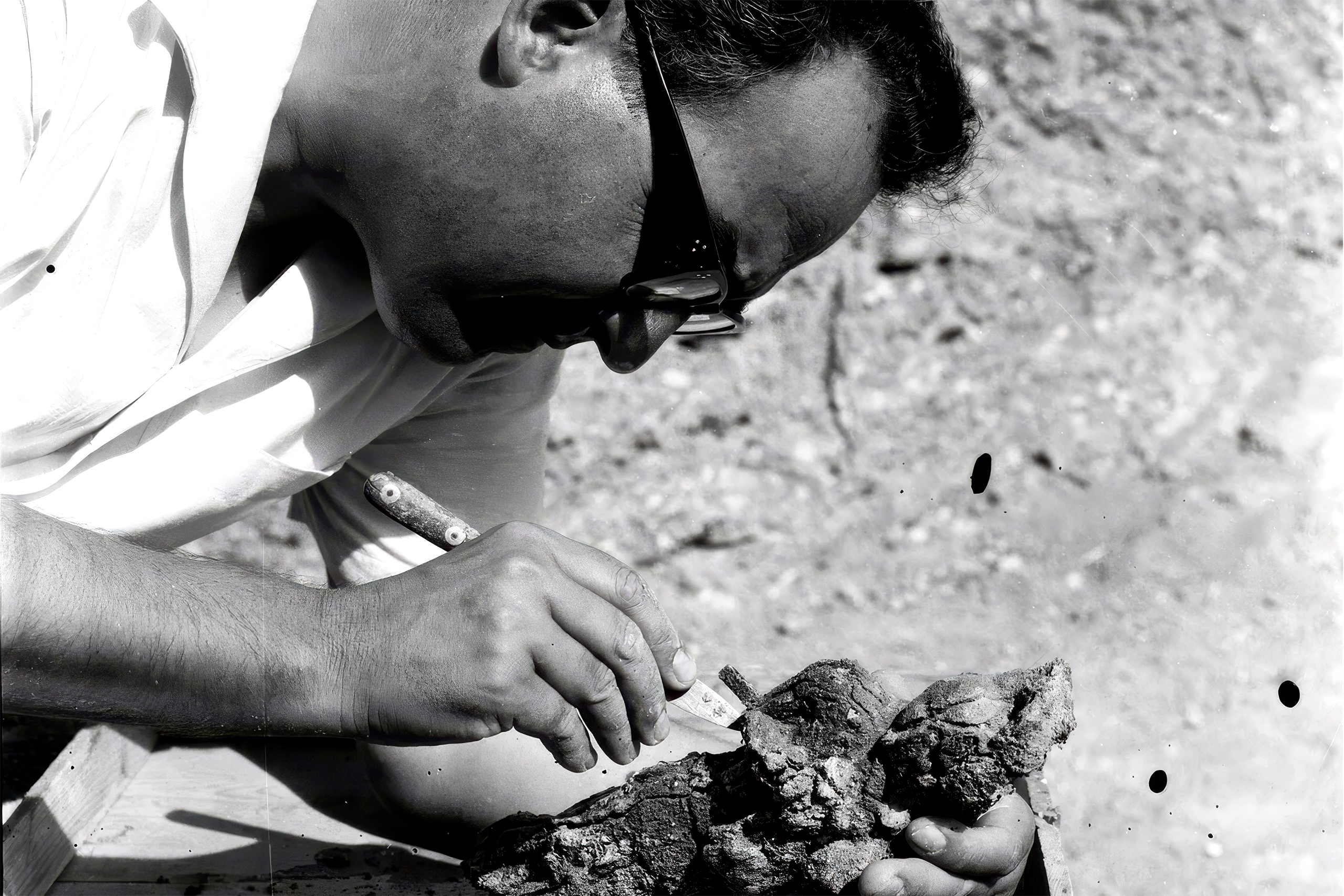
Scientific excavation began in 1957 when archaeologists Vassos Karageorghis and Porphyrios Dikaios started systematic work at the site. They discovered that while tomb chambers had been looted, the dromos passages and ceremonial areas at tomb entrances remained largely intact. These areas preserved evidence of elaborate funeral rituals, including sacrificed horses, chariots, and funeral feasts.
Architecture of Power and Status
The Royal Tombs divide into two types based on size and orientation. Five large tombs, including the famous Tombs 1, 3, 47, 50, and 79, face northeast to southwest and feature formal ceremonial spaces called propylaea at the end of their dromos passages. Four smaller tombs face perpendicular to these, lack propylaea, and show simpler construction.
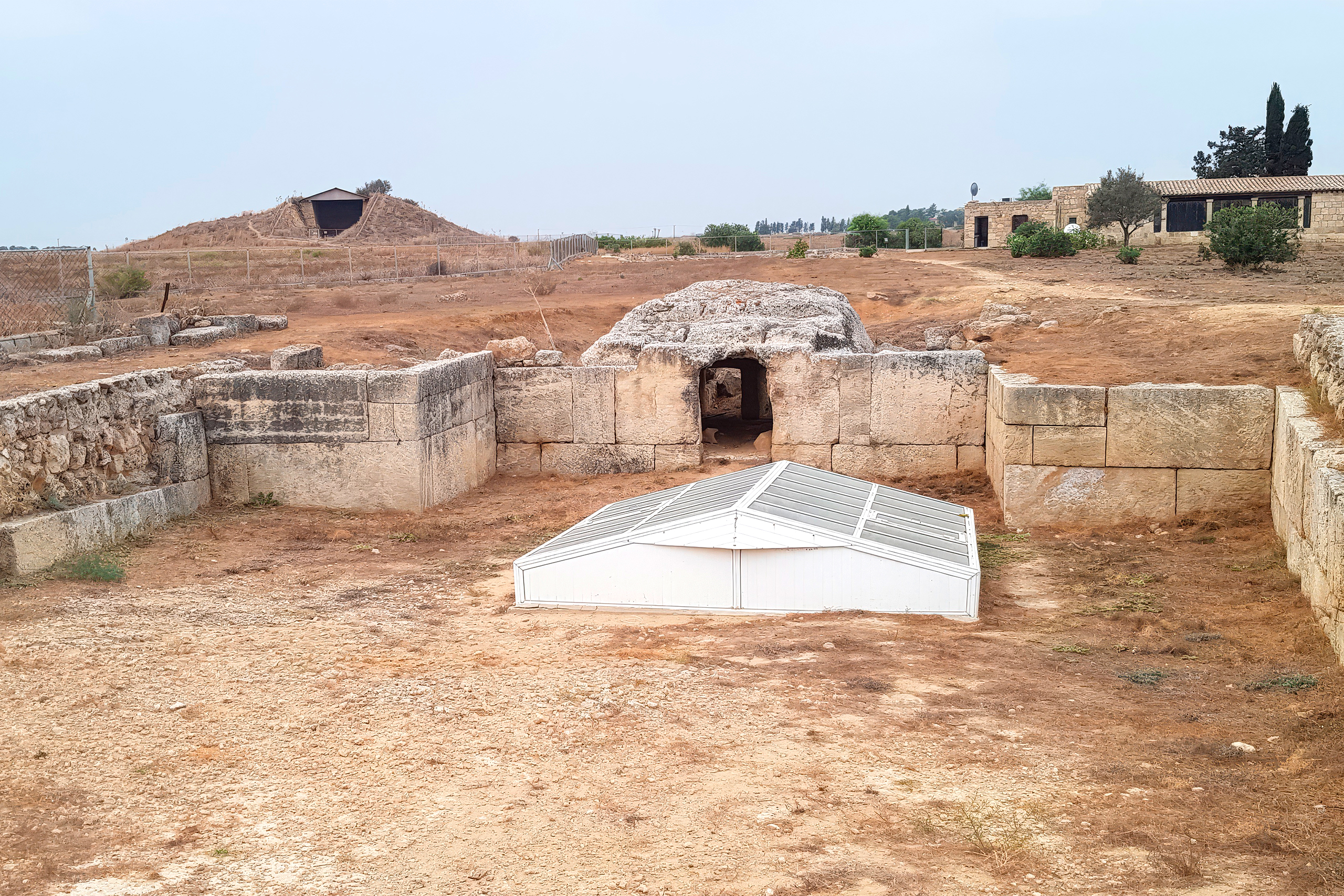
Tomb 47 stands as the largest in the necropolis. A spacious cemented dromos leads to a monumental temple-like structure in front of a chamber built from enormous well-dressed limestone blocks. The dromos measures about 9 meters long and descends gradually to the entrance, which was sealed with massive stone slabs.
At Cellarka, the architecture is simpler but still impressive. Each tomb was carved entirely into hard limestone, with steep staircases descending to rectangular chambers. The chambers are bordered by smoothly-cut limestone blocks. Because the hard rock existed only in a narrow strip of land and the cemetery served the community for 400 years, tombs were built extremely close together, some even overlapping earlier burials.
The Riches of Tomb 79
Tomb 79 yielded the most spectacular finds ever discovered in Cyprus. Two burials took place here in quick succession near the end of the 8th century BCE. When the second burial occurred, workers simply pushed the first remains toward the back of the chamber to make room.
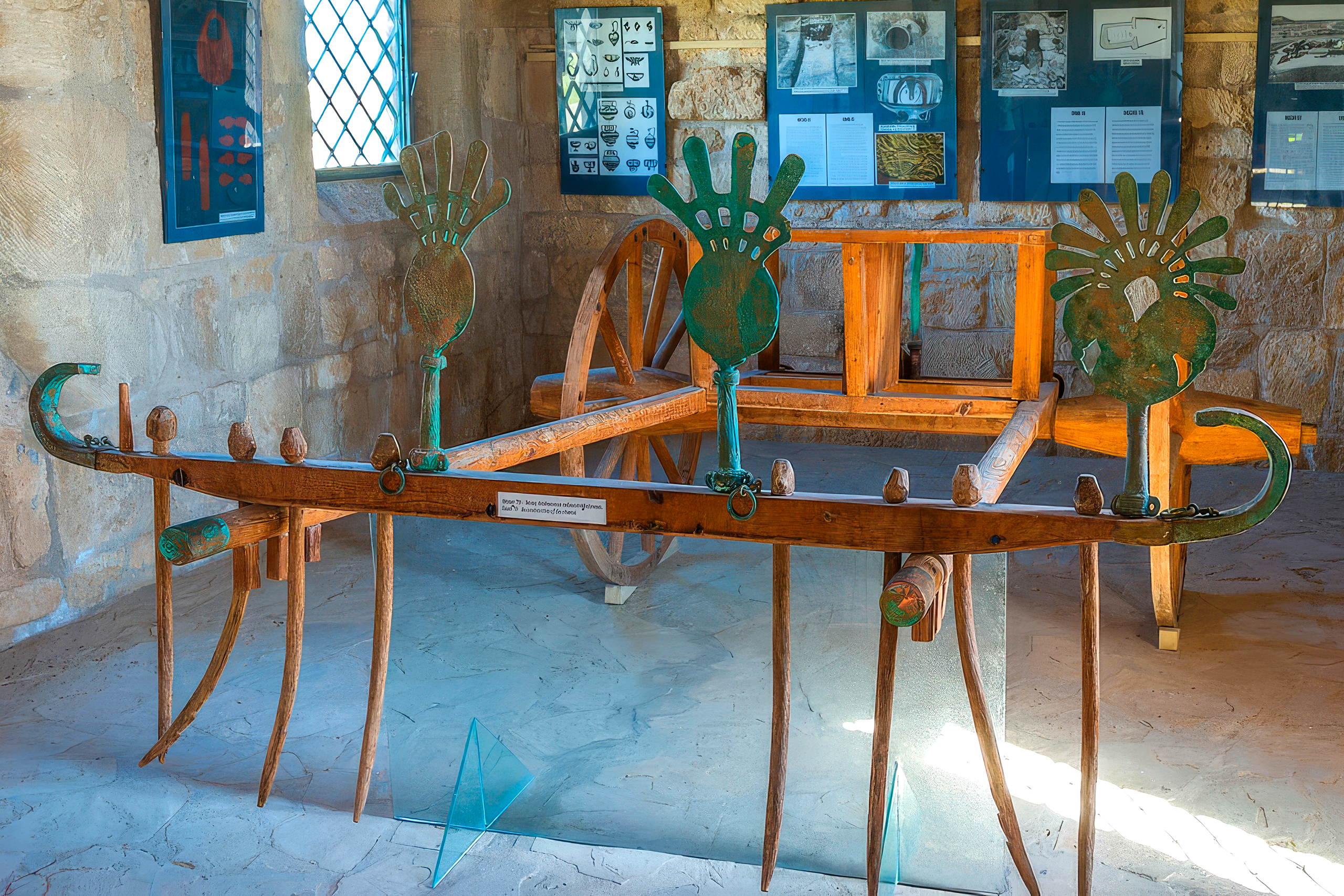
A four-horse chariot stood in the dromos, its wheels held by magnificent lynch pins nearly two feet long. One end of each pin featured a bronze sphinx head, while the other held a hollow bronze figure of a warrior wearing a crested helmet and body armor inlaid with blue glass from Egypt. A long sword hung from the warrior figure on a baldric. The two-horse hearse had bronze lion heads on its corners and front.
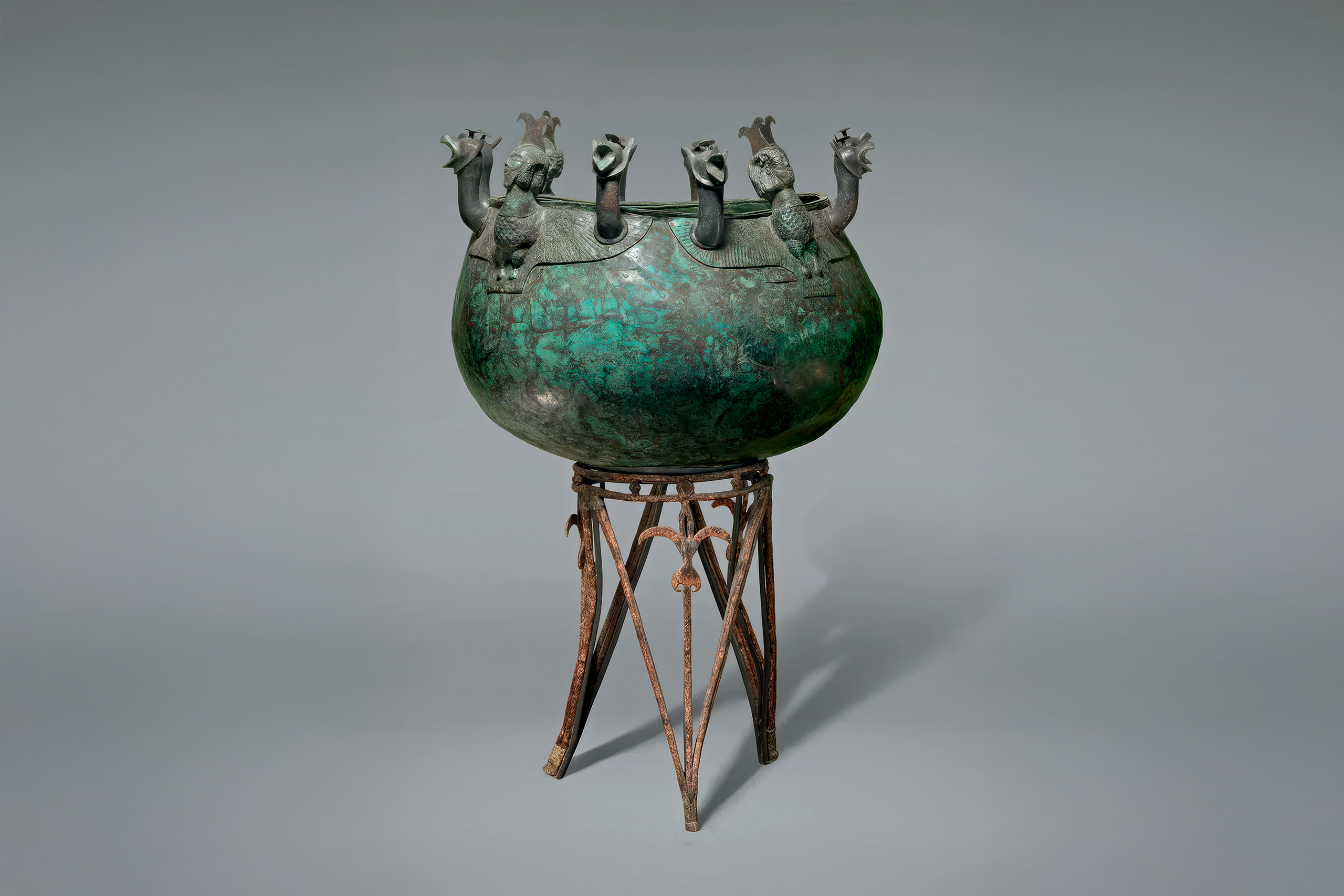
The grave goods included three elaborate chairs covered with silver or ivory, an ivory-veneered bed, ceramic vessels, weapons, iron fire spits, murex shells, and two bronze cauldrons decorated with griffin and sphinx heads around their rims. The horse gear piled in a corner included breast plates with embossed designs of oriental animals and myths, plus two side pendants showing the goddess Ishtar as mistress of wild beasts.
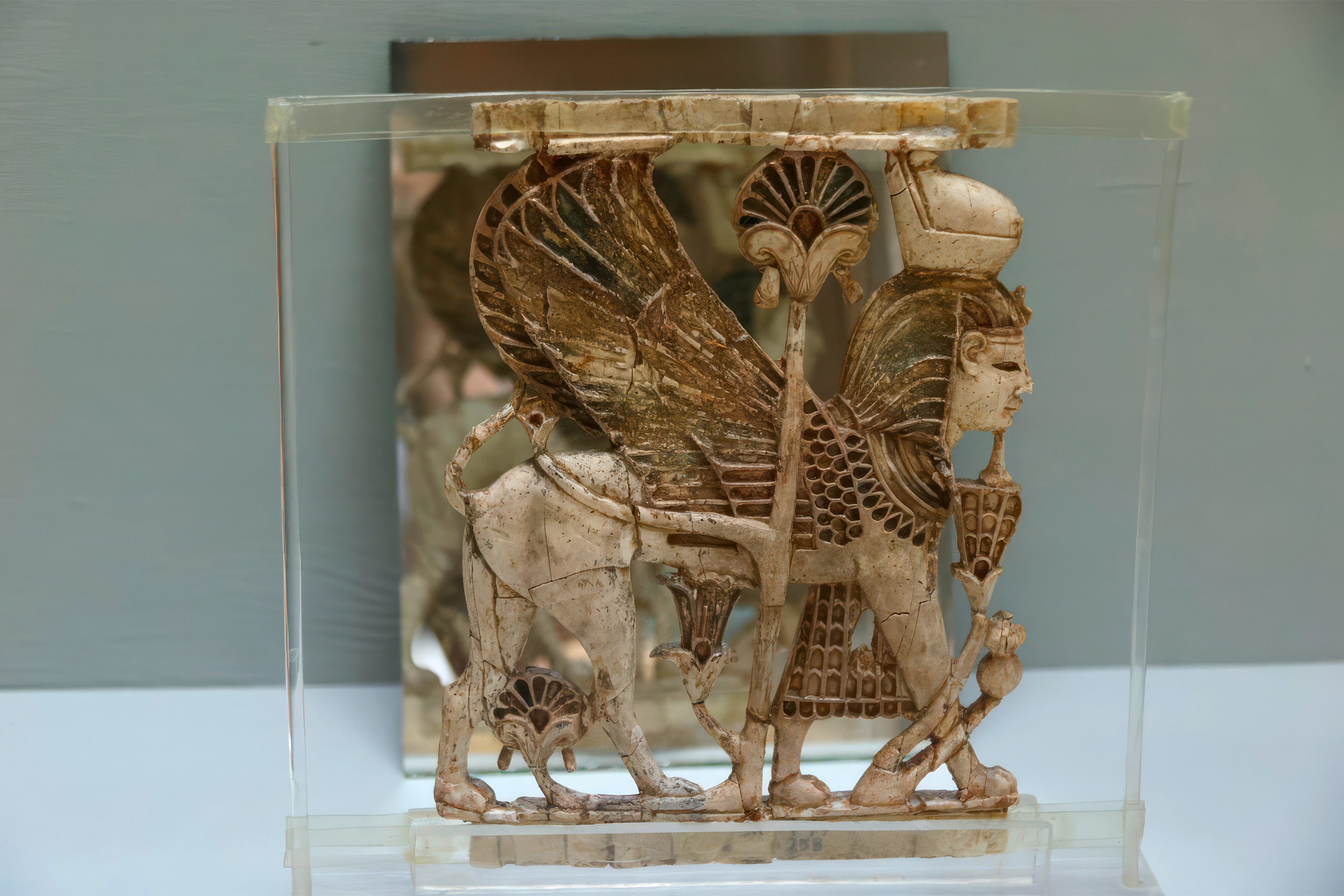
The finest ornament was an openwork, two-sided plaque of a winged sphinx wearing the crowns of Egypt. The throne and bed featured blue glass inlays that matched glass found in contemporaneous ivories from Nimrud in Mesopotamia, demonstrating wide-ranging trade connections between Cyprus, Egypt, and the Near East.
Shifting Power and Social Change
The differences between Royal Tomb burials and Cellarka burials reveal clear social stratification. Royal Tombs featured horses instead of donkeys, chariots instead of simple wagons, elaborate propylaea, and massive quantities of luxury goods. Cellarka tombs contained more modest offerings, though evidence shows that sacrifices and funeral feasts also occurred there.
Around 575 BCE, construction of new Royal Tombs ceased. Instead of building fresh monuments, families began reusing existing tombs, roughly when elite burials started appearing at Cellarka in imitation of the Royal Necropolis. This shift suggests major changes in how power was organized in Salamis.
The transformation reflects competition not just within Salamis but between Cyprus city-kingdoms. Questions of territorial boundaries, trade privileges, and political alliances were all at stake. Salamis emphasized international connections through displays of foreign luxury goods, particularly items from Assyria, Phoenicia, and Egypt, to assert supremacy over rival kingdoms like Kition.
From Pagan Tomb to Christian Chapel
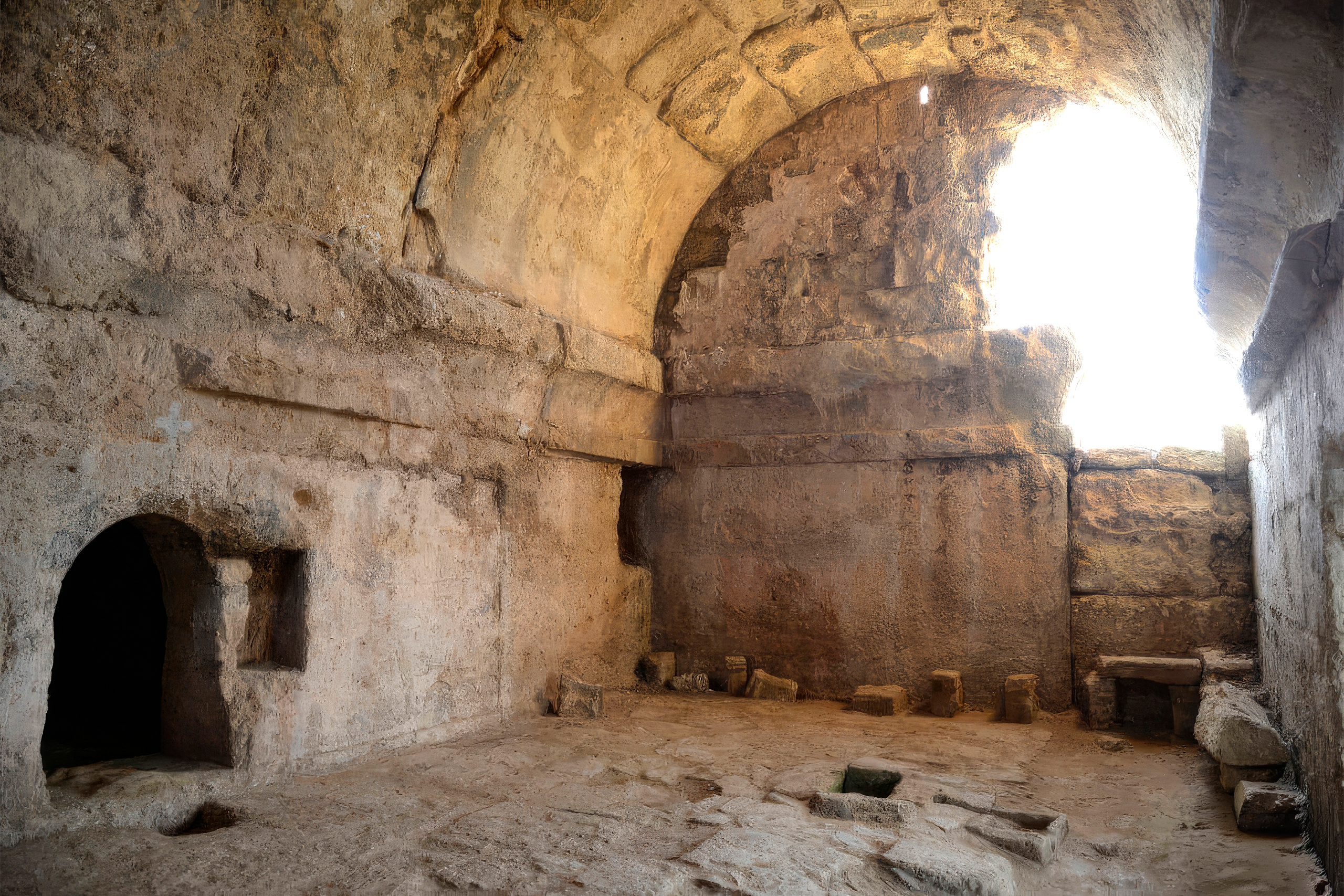
Tomb 50 has a unique history. During Roman times, workers added a large vaulted chamber to this ancient burial site and carved niches into the walls for sarcophagi. Excavators found Roman pottery, lamps, and clay sarcophagus fragments from this period of reuse.

From approximately the 14th century onward, the tomb functioned as a Christian chapel dedicated to St. Catherine of Alexandria. According to legend, Catherine was imprisoned here after converting to Christianity. The smaller, older chamber contained an altar, while the larger Roman chamber held an icon of St. Catherine. Some construction stones were taken from nearby Tomb 47, and part of the cornice matches exactly.
Where the Treasures Went
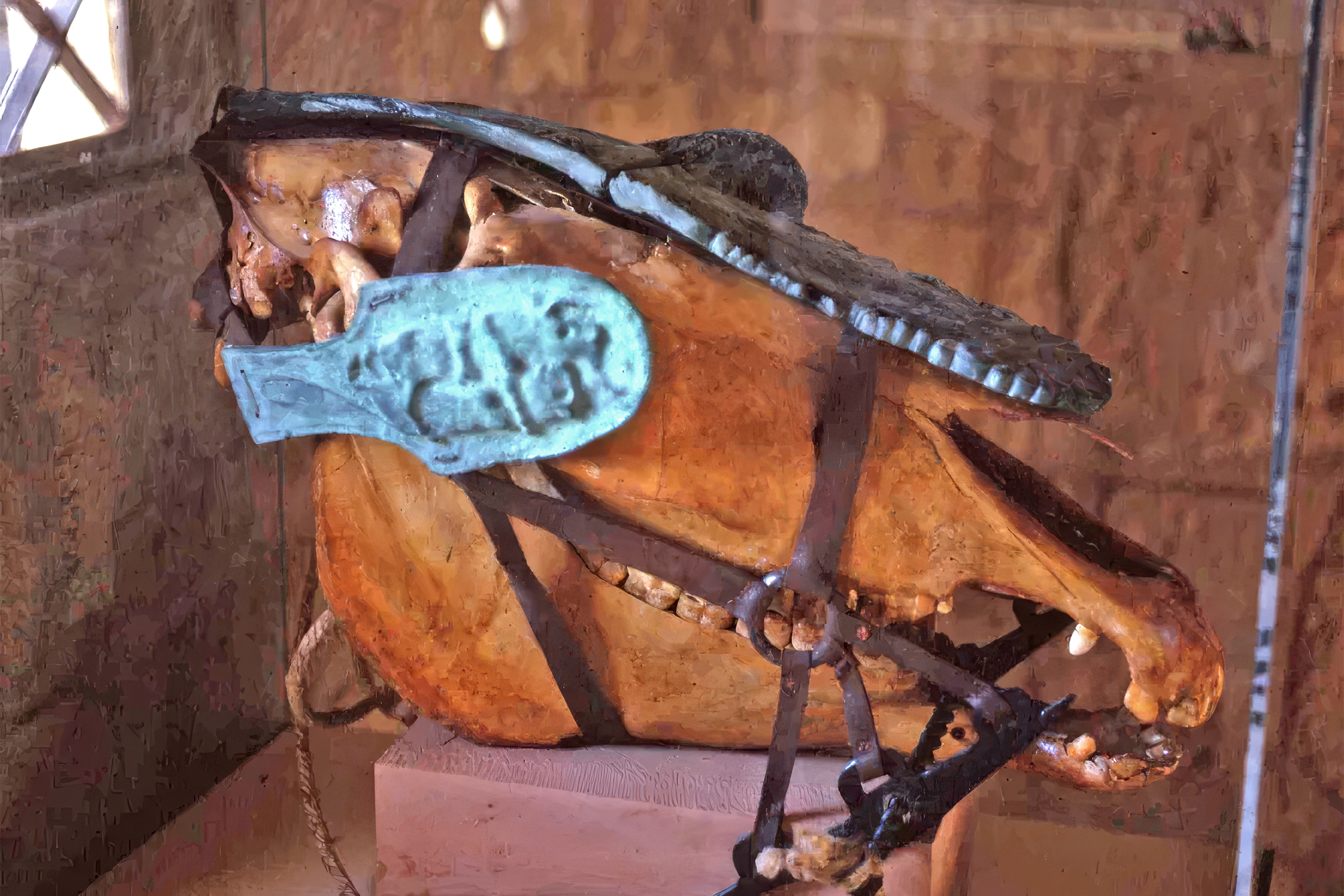
Most spectacular finds from the Royal Tombs now reside in museums. The Cyprus Museum in Nicosia displays the ivory-veneered bed from Tomb 79, along with gold and ivory thrones, bronze cauldrons, and the magnificent sphinx plaques. A small on-site museum near the tombs exhibits photographs of artifacts discovered during excavations, horse bridles, and other items of tack that survived the looting.
The careful documentation during modern excavations preserved knowledge of burial contexts even when objects were moved to museums. Photographs taken during excavation show items exactly as they were found, providing crucial evidence for understanding ancient funeral practices.
Visiting the Ancient Necropolis
The Royal Tombs sit along the road to St. Barnabas Monastery, clearly signposted south of the main Salamis archaeological site. Horse skeletons remain visible at several tomb entrances, protected by greenhouse-like structures. Visitors can walk down the dromos passages and see where chariots once stood and funeral pyres burned.
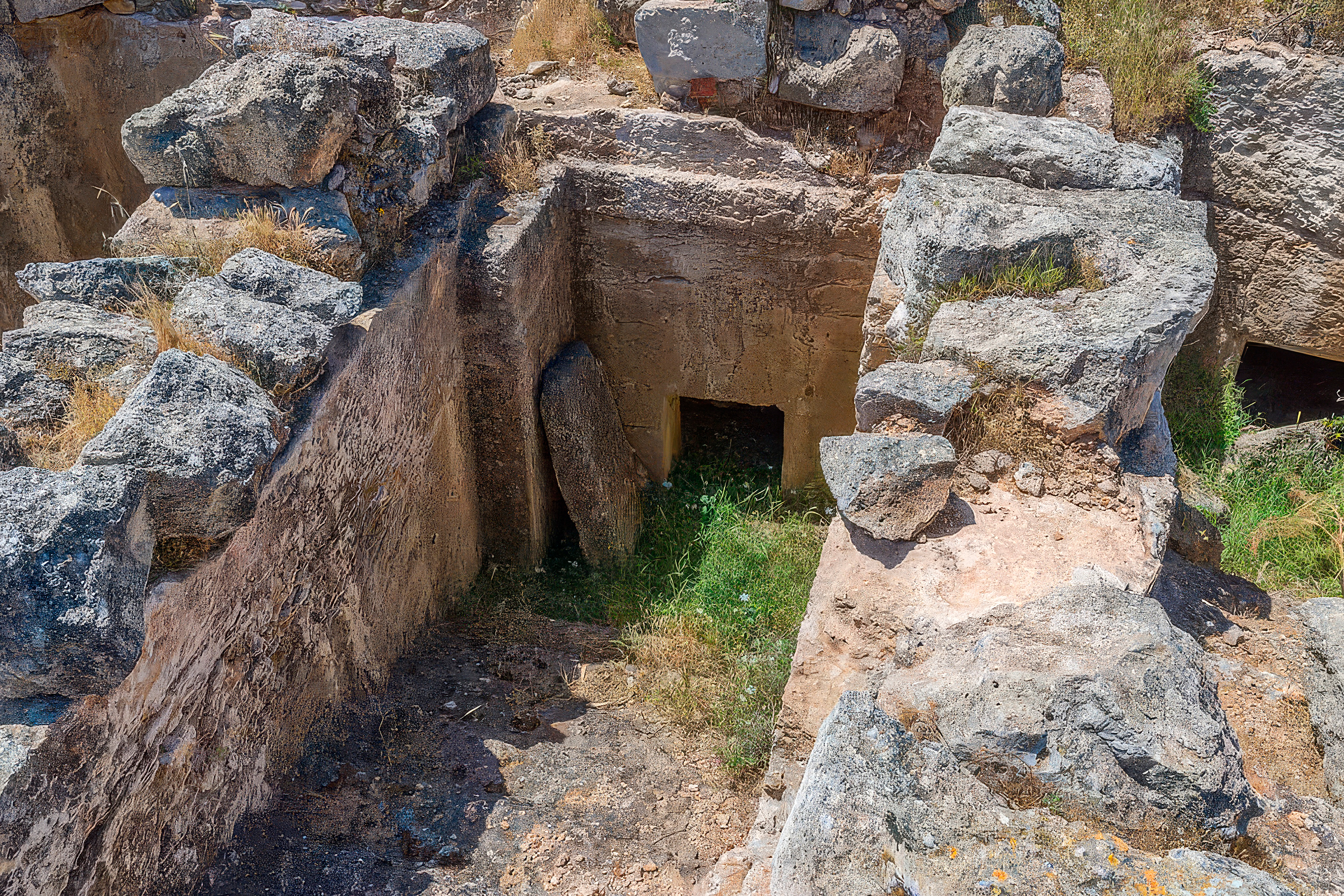
Cellarka lies about 400 meters from the Royal Tombs, marked by a lone eucalyptus tree. The steep stairs leading down to underground chambers remain accessible, though many tombs overlap each other due to the confined space and long period of use.
The site spreads across agricultural land, and much of the necropolis remains unexcavated. More tombs almost certainly lie beneath the fields, but full excavation seems unlikely given current land use. What has been uncovered offers a powerful glimpse into how ancient Cypriots honored their dead and displayed their wealth and status.
Why Salamis Matters
The Necropolis of Salamis matters because it reveals how ancient societies used death and burial to communicate power, legitimacy, and cultural identity. The elaborate horse sacrifices, imported luxury goods, and monumental architecture were not just about honoring the dead but about impressing the living.
The contrast between the Royal Tombs and Cellarka shows us a complete ancient community, from wealthy elites to common citizens, all following traditions they believed connected them to Greek heroes and Mycenaean ancestors. The funeral rituals performed here shaped political power on Cyprus during a critical period when city-kingdoms competed for dominance.
When you stand in the dromos of Tomb 47 or look at the skeletons of horses that died 2,700 years ago, you witness evidence of beliefs about honor, status, and the afterlife that defined an entire civilization. These tombs preserve not just bones and bronze but the values and ambitions of people who built a kingdom on this Mediterranean island.