 English
 Greek
Greek German
 Russian
Nea Paphos Archaeological Park preserves the heart of an ancient city that served as the capital of Cyprus for over 600 years. Located on the southwestern coast near modern Paphos, this UNESCO World Heritage Site contains some of the finest Roman mosaics in the eastern Mediterranean, alongside temples, fortresses, and the remains of a once-thriving urban center.
Historical Background
Nea Paphos was founded in the late 4th century BC by Nikokles, the last king of Palaipaphos (Old Paphos), about 10 kilometers inland. The new coastal location offered better harbor access and strategic advantages for trade across the Mediterranean. When Ptolemy I of Egypt took control of Cyprus in 294 BC, he made Nea Paphos the island’s administrative capital, a status it maintained through the Ptolemaic, Roman, and early Byzantine periods.
The city reached its peak during Roman rule, from 58 BC onward. As the seat of the Roman proconsul, Nea Paphos became a wealthy urban center with impressive public works and luxurious private homes. According to the Acts of the Apostles, Paul the Apostle visited the city in 45 AD and converted the Roman proconsul Sergius Paulus to Christianity. It makes Cyprus one of the first Roman territories to have a Christian governor.
The city suffered severe damage from earthquakes in the 4th century AD, particularly the devastating quake of 365 AD that affected much of the eastern Mediterranean. While Nea Paphos continued as a settlement through the Byzantine period, it never recovered its former prominence. Arab raids in the 7th century further weakened the city, and its population gradually declined.
Major Archaeological Features
● The archaeological park centers on four main Roman villas, each named after the mythological scenes depicted in their floor mosaics.
● The House of Dionysus, discovered in 1962, contains over 2,000 square meters of mosaic floors dating from the 2nd to 4th centuries AD.
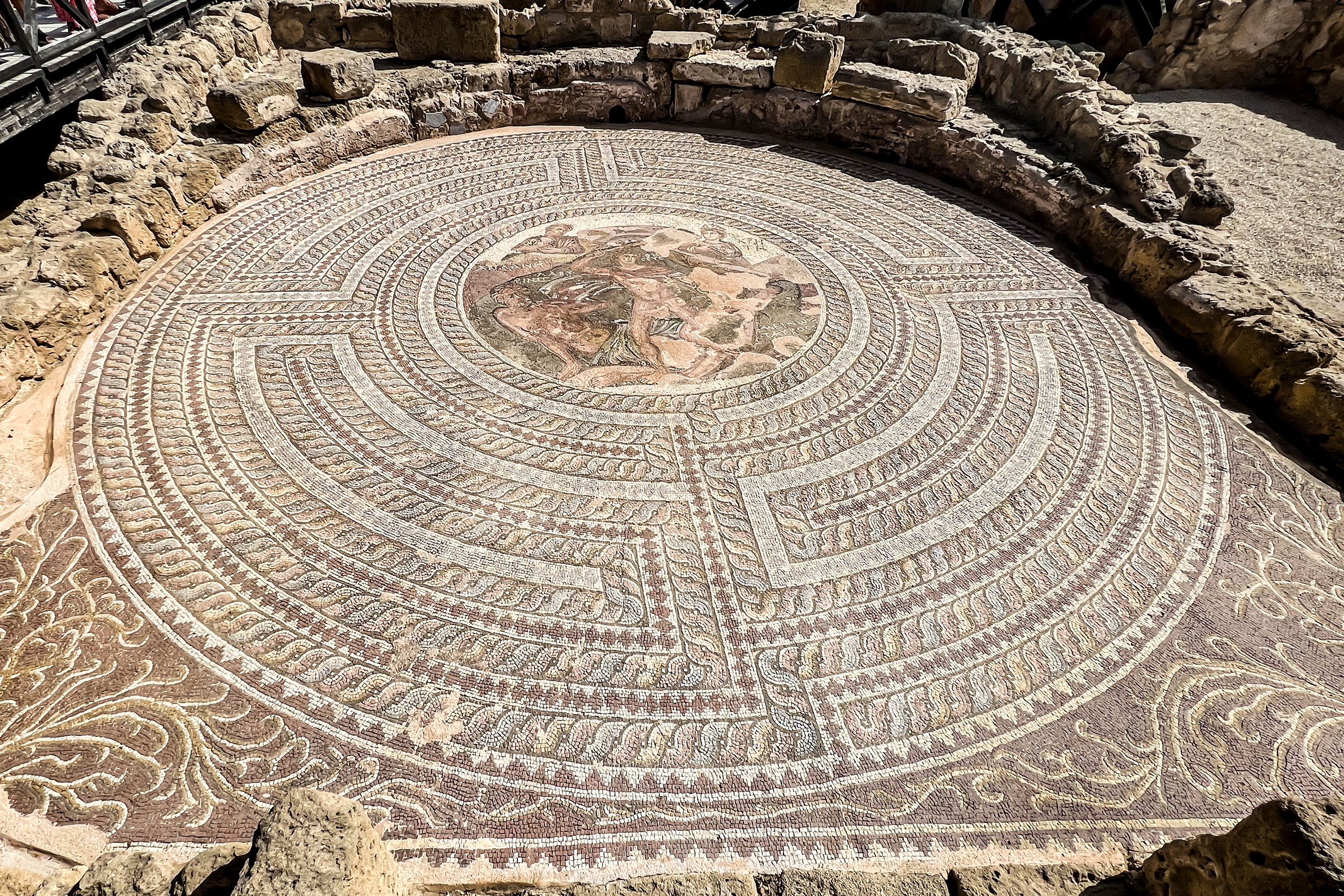
● The House of Theseus, believed to have been the residence of the Roman proconsul, features a 3rd-century mosaic showing Theseus fighting the Minotaur. This villa remained in use into the 7th century and includes more than 100 rooms arranged around courtyards.
● The House of Aion contains a single large mosaic floor from the 4th century depicting five mythological panels, while the House of Orpheus showcases the legendary musician charming animals with his lyre.
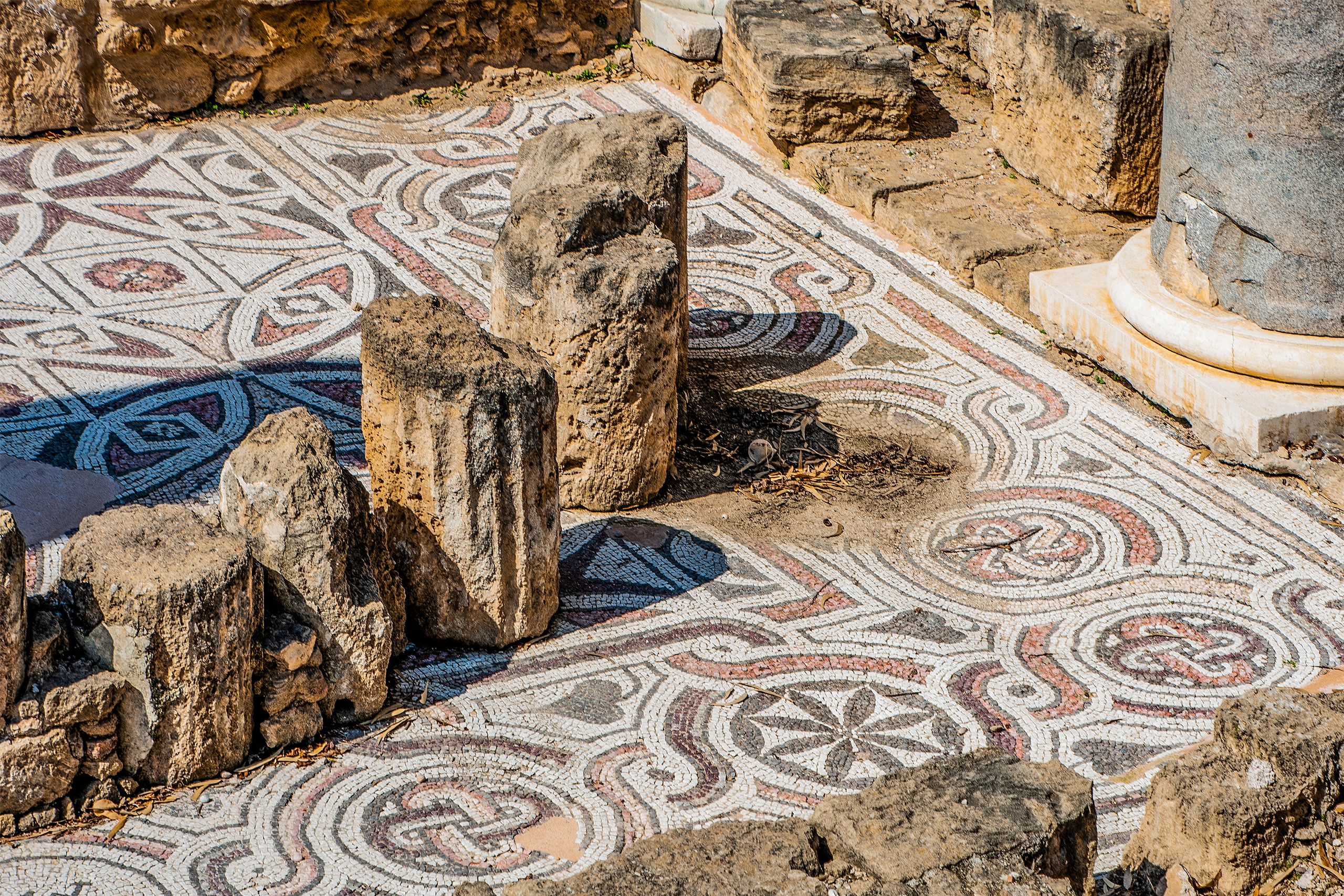
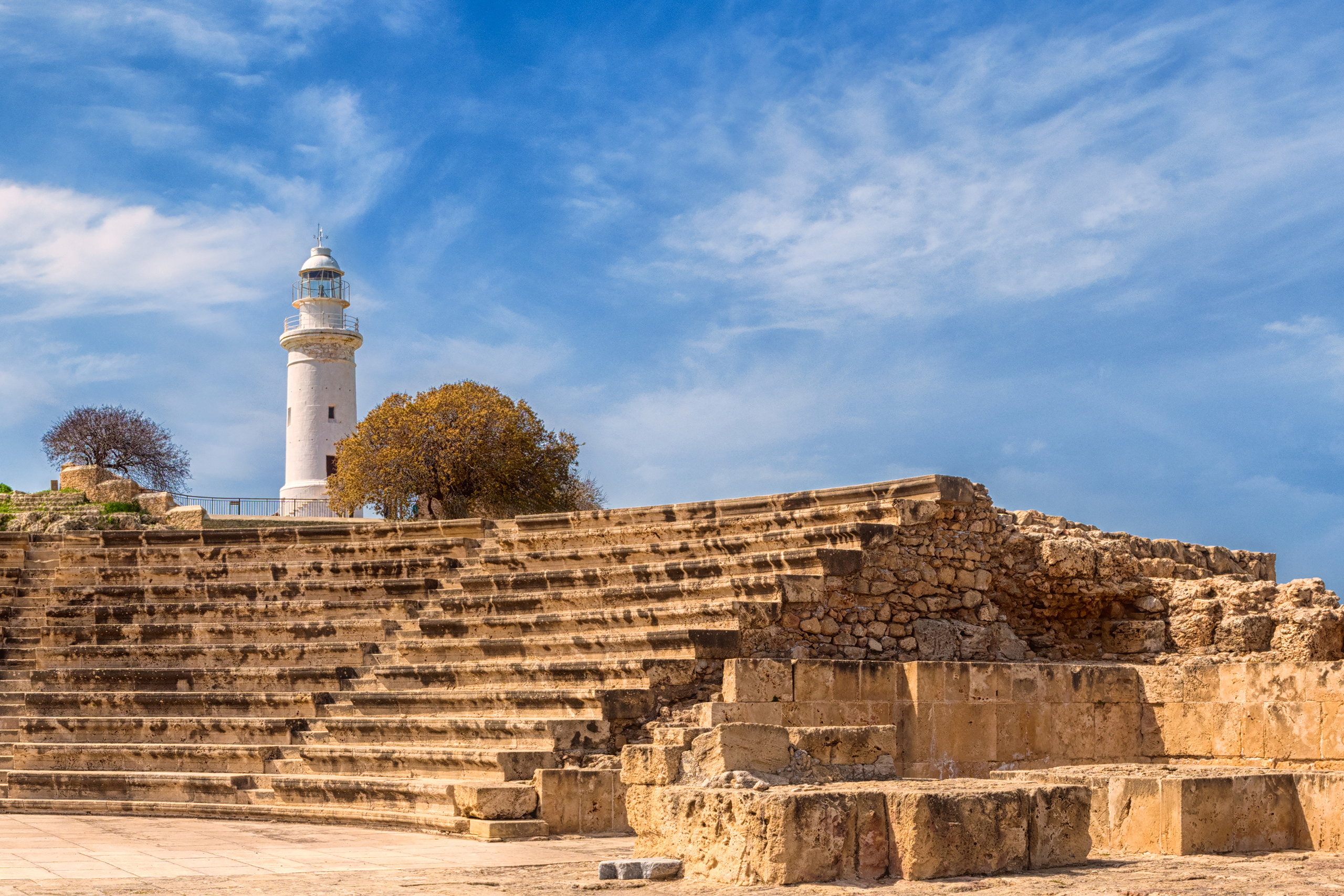
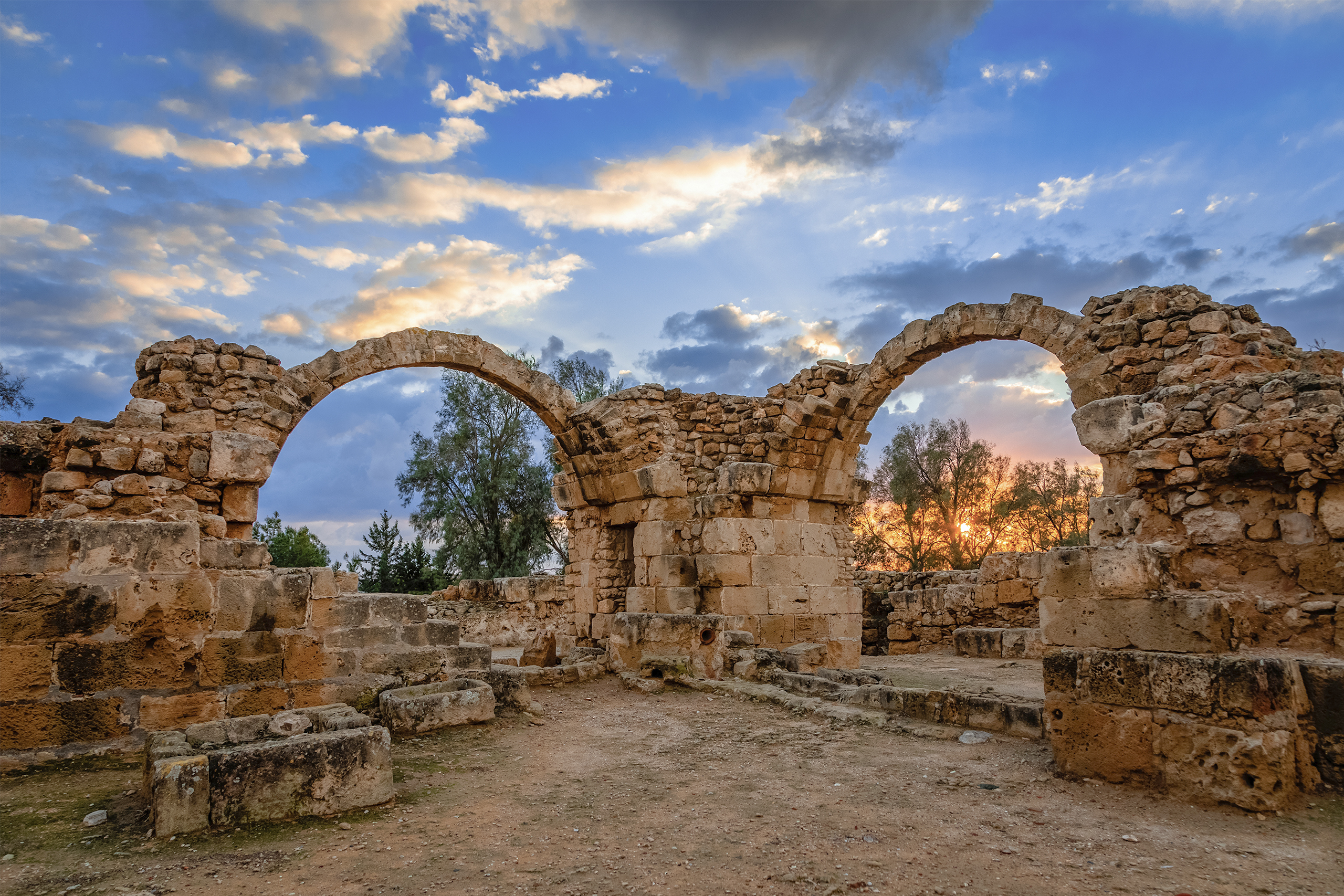
Beyond the villas, the site includes the Asklepion (a healing temple dedicated to the god of medicine), the Odeion (a 2nd-century theater restored and still used for performances), and the Saranda Kolones fortress, a Byzantine and Crusader castle built over earlier Roman structures. The ancient agora and sections of the city walls are also visible.
Fascinating Facts About Paphos Mosaics and Ancient Ruins
The mosaic in the House of Dionysus depicting the god’s triumph over the Indian king is one of the largest single mythological scenes found in Cyprus. It measures approximately 3 by 6 meters. Some mosaics contain over a million individual tesserae, the small stone cubes used to create the images.
The Paphos Theater, located just outside the main archaeological park, could seat 8,500 spectators and is still partially carved into the hillside. During Roman times, the theater hosted gladiatorial contests and theatrical performances.
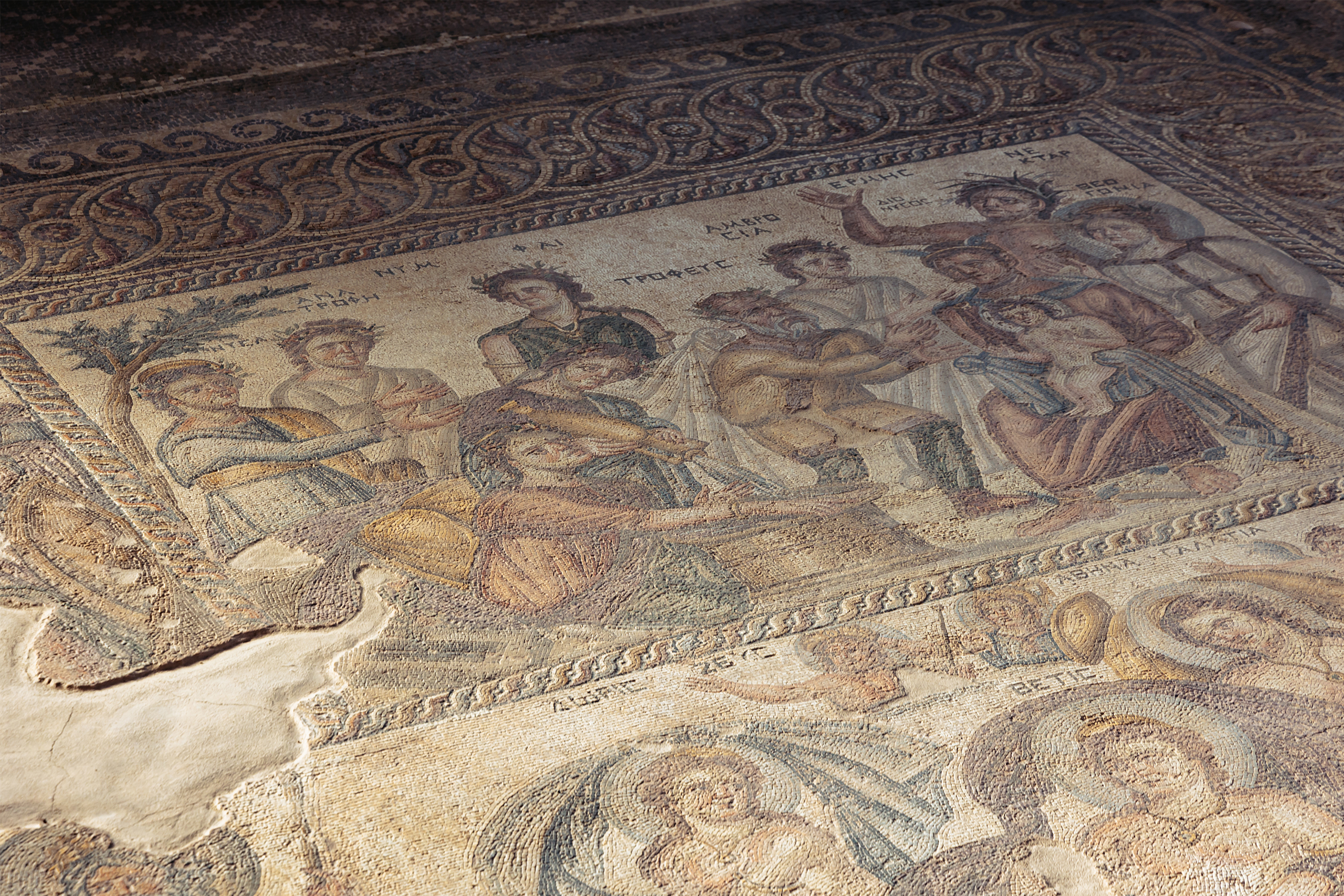
A mosaic in the House of Aion shows the infant Dionysus being bathed by nymphs while Zeus looks on. This rare scene includes personifications of abstract concepts like Trophus (Nourishment) and Nectar rendered as human figures.
Archaeological Discoveries and What the Mosaics Reveal About Roman Life
The mosaics provide valuable insights into daily life in Roman Cyprus. Hunting scenes depict the animals that once roamed the island, including leopards and wild boar. Seasonal figures illustrate agricultural practices and clothing styles, while wine-making scenes highlight the long-standing importance of viticulture, dating back to Paphos’s role as a major center of worship for Aphrodite.
Excavations also show that some Roman villas were later occupied by Christian families, who adapted pagan spaces for their own use. In several locations, mosaics with mythological scenes display deliberate damage to faces or bodies, likely reflecting early Christian opposition to pagan imagery.
The site continues to offer new discoveries. Recent excavations have revealed additional structures, including a Roman villa uncovered in 2008, where intact wall paintings survive alongside floor mosaics—an uncommon preservation of both decorative elements together.
Nea Paphos Today
Nea Paphos Archaeological Park remains central to Cyprus’s cultural identity and tourism. The site draws hundreds of thousands of visitors each year, many coming to see mosaics regarded by scholars as among the finest examples of Roman provincial art.
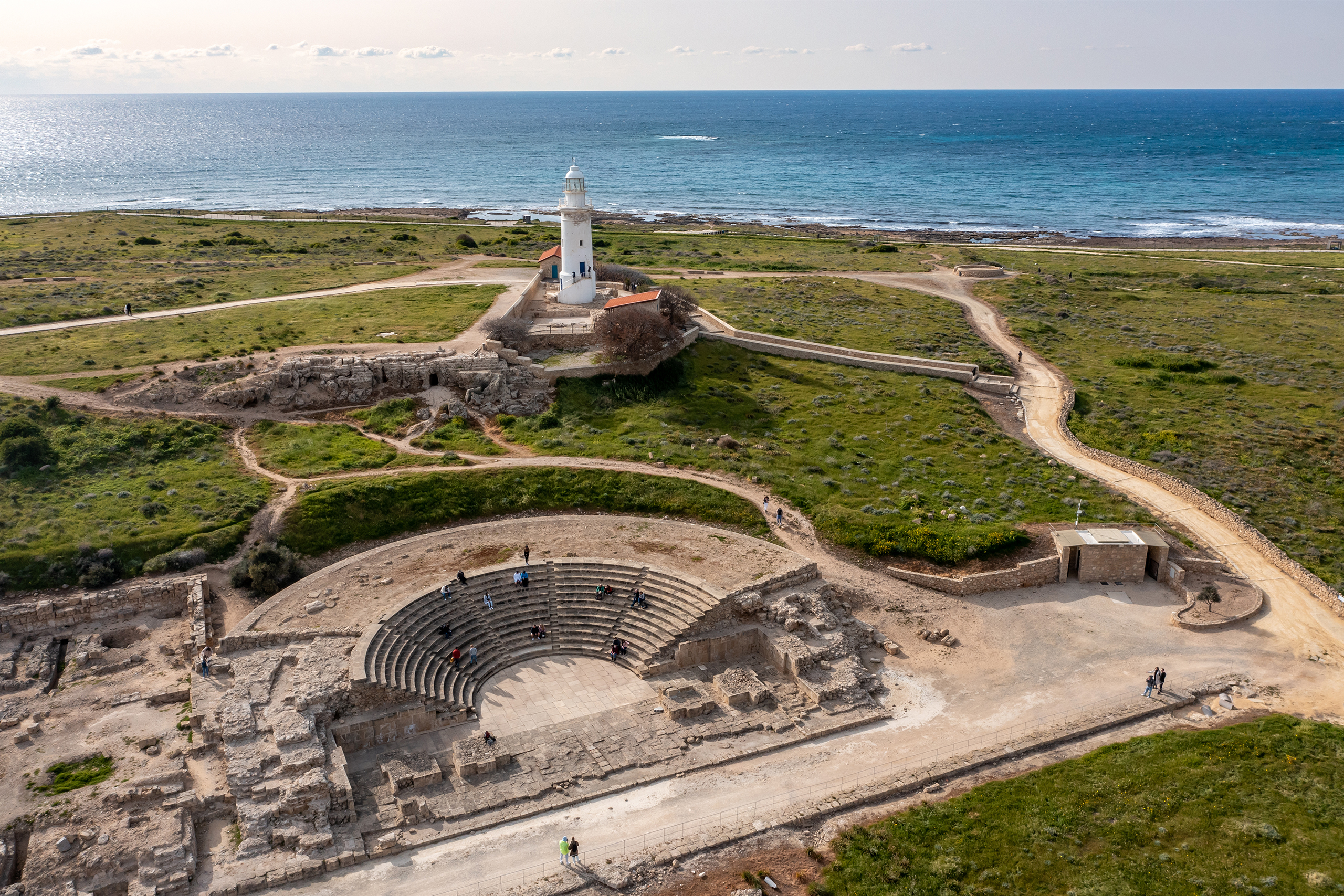
The park also serves as an active research site, where archaeologists from the University of Cyprus and international teams carry out ongoing excavations. Each season brings new discoveries that deepen understanding of how the ancient city developed and functioned over time.
Modern Paphos has embraced its ancient heritage. When the city was named a European Capital of Culture in 2017, attention turned to its archaeological treasures, with improvements to facilities and visitor interpretation at the park. Local schools frequently bring students to the site, helping young Cypriots connect with their island’s past.
Why Nea Paphos Archaeological Park Matters
Nea Paphos Archaeological Park offers one of the most complete pictures of Roman provincial life in the eastern Mediterranean. The site demonstrates Cyprus’s historical role as a crossroads of civilizations, where Hellenistic traditions merged with Roman administration and early Christian influences. The preservation quality here is exceptional, with mosaics that have survived nearly two millennia still displaying their original colors and intricate details.