Religions traditions and rituals

Cyprus Religion & Everyday Moral Values

Cyprus Religion & Everyday Moral Values

Religion in Cyprus functions less as private ideology and more as a shared moral framework that shapes hospitality, honour, family rituals, and the annual rhythm of life. Orthodox Christianity, Islam, and smaller communities such as Armenians and Maronites developed side by side, turning belief into a social structure that often outlasted shifting rulers and institutions. This article explains how faith became intertwined with identity, how it still guides everyday behaviour, and how modern Cyprus is reshaping religious practice without erasing its moral centre. Faith as Daily Social Order Cyprus has always sat at a crossroads between continents, cultures, and empires. Christianity and Islam did not simply arrive here as belief systems. They became organising principles for society itself. Rather than…

Read more

Saints Feast Days in Cyprus

Saints Feast Days in Cyprus

Commemorative days in Cyprus establish the seasonal rhythm of rural life throughout the year, with each community recognizing a historical figure through formal ceremonies and traditional public festivals called panigyria. These events integrate regional customs with large-scale social gatherings, featuring organized walks, artifact displays, communal meals, folk music, and traditional dances that continue until dawn. Unlike various international traditions where individual birthdays are the primary focus, Cypriots emphasize these shared name days with significant social enthusiasm. The regional calendar includes hundreds of these occasions honoring figures from antiquity, the Byzantine era, and more recent local history. Major events like the August 15 commemoration attract thousands to historical landmarks and village squares, while smaller festivals serve to maintain regional identity and…

Read more
Cyprus Village Prayer Traditions

Cyprus Village Prayer Traditions

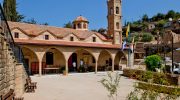
Daily prayer life in traditional Cyprus villages revolved around Orthodox Christian practices that structured time according to liturgical calendars rather than secular schedules. Families maintained home iconostases with oil lamps burning constantly before sacred images, recited morning and evening prayers, blessed meals with the sign of the cross, and observed fasting periods that eliminated meat and dairy for approximately 180 days annually. The village church anchored communal religious life through Sunday Divine Liturgies, daily services during Lent and Holy Week, and feast day celebrations honoring patron saints. These panigyria transformed routine existence into sacred time through extended liturgies, icon processions, communal feasting, folk music, and traditional dances that reinforced religious identity while strengthening social bonds. The Orthodox calendar provided the…

Read more
Seasonal Fishing Rituals of Cyprus

Seasonal Fishing Rituals of Cyprus

Cyprus fishing communities maintain ancient rituals that connect Orthodox faith with maritime traditions. The most significant ceremony occurs on Epiphany, January 6, when priests bless coastal waters and throw a cross into the sea for young men to retrieve. This ritual invokes protective power for fishermen and sailors throughout the coming year. The island's fishing heritage stretches back thousands of years, with fish being one of the main trade products in ancient times. Traditional fishing techniques, boat blessings, and seasonal ceremonies bind communities to the sea that sustains them. These rituals serve practical and spiritual purposes, ensuring divine protection for dangerous work while reinforcing social bonds among fishing families. The ceremonies mark the rhythm of fishing seasons and create moments…

Read more
Saint Icon Processions in Villages

Saint Icon Processions in Villages

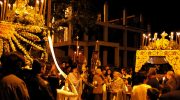
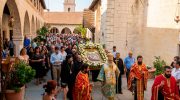
Icon processions, known as litanies in Greek, are among the most visible and long-standing ceremonial traditions in Cyprus villages. These events involve carrying symbolic religious images through village streets during annual festivals and designated communal celebrations. The practice temporarily transforms public spaces into structured ceremonial routes where participants move together in organized formation. These processions occur throughout the year, particularly during major seasonal festivals and village celebrations. They remain closely tied to Cyprus’s historical village culture, where collective rituals, shared events, and seasonal gatherings play an important role in maintaining community identity. Historical Origins of Processional Traditions The practice of carrying religious images in public processions developed during the Byzantine period, when ceremonial rituals became an established part of public…

Read more
Religious Processions with Musical Accompaniment in Cyprus

Religious Processions with Musical Accompaniment in Cyprus

In Cyprus, religious processions are not confined to church interiors. On major feast days, faith moves outward, carried through streets, village lanes, and open squares by chanting voices, ringing bells, and slow communal steps. These processions turn ordinary space into sacred ground, if only for an evening. They are not performances staged for an audience, but living traditions that reveal how religion, sound, and community remain tightly bound in Cypriot life. What makes them unforgettable is often the sound. Not a concert sound, not a soundtrack added for effect, but the steady human voice, the measured toll of bells, the hush that falls over a neighbourhood when an icon approaches. In Cyprus, sacred music is not something you only listen…

Read more
Cypriot Religious Songs Poetry

Cypriot Religious Songs Poetry

Ecclesiastical and theological themes have influenced the evolution of Cypriot music and literature for over two thousand years. These creative expressions developed alongside the island's long administrative and cultural history, integrating early Mediterranean traditions with a distinct local character. From solemn church hymns to joyful seasonal carols, religious content touches nearly every aspect of traditional Cypriot music. The themes range from celebrations of Christ's birth to lamentations of the Virgin Mary, from praise of local saints to prayers for protection. From formal liturgical chants to festive community carols, these motifs appear frequently throughout the history of traditional Cypriot composition. The subject matter typically centers on significant historical figures, regional narratives, and various traditional invocations for community safety. Byzantine Roots and…

Read more
Cyprus Religious Life: Family in Rhythm

Cyprus Religious Life: Family in Rhythm

Religious family celebrations in Cyprus structure the year, linking church life to home routines through repeated gatherings, shared food, and public ritual. Easter, Christmas, Name Days, and village panigyria work as social glue because they bring generations into the same spaces, reinforce kinship roles, and keep hospitality active rather than symbolic. This article explains how the calendar shapes family behaviour, what key celebrations look like in practice, and why these rituals still provide continuity in modern Cypriot life. A Calendar That Shapes Everyday Life The rhythm of Cypriot family life follows the Orthodox Christian calendar, which blends fixed feast days like Christmas with movable celebrations centred on Easter. This structure does not simply schedule holidays. It divides the year into…

Read more
Village Saints of Cyprus – Local Veneration Traditions

Village Saints of Cyprus – Local Veneration Traditions

Cyprus has a long historical relationship with early religious movements introduced to the island during the 1st century, which influenced its later social and cultural development. Over time, a large number of historical and semi-legendary figures became embedded in local traditions, with their stories preserved through oral history, village customs, and regional identity. Across the island, many villages associate themselves with a specific historical or symbolic figure. These associations are reflected in annual community festivals known as panigyria, which combine commemorative ceremonies with food markets, music, and public gatherings. The result is a tradition that connects medieval heritage with modern village life. These village-based commemorations function as a form of cultural continuity, linking local identity to historical narratives that have…

Read more