 English
 Greek
Greek German
 Russian
The Tombs of the Kings is an ancient burial complex in Paphos featuring underground chambers carved from solid rock. Located 2 kilometers north of Paphos harbor, this UNESCO World Heritage Site contains elaborate tombs used by high-ranking officials and aristocrats from the 3rd century BC to the 3rd century AD.
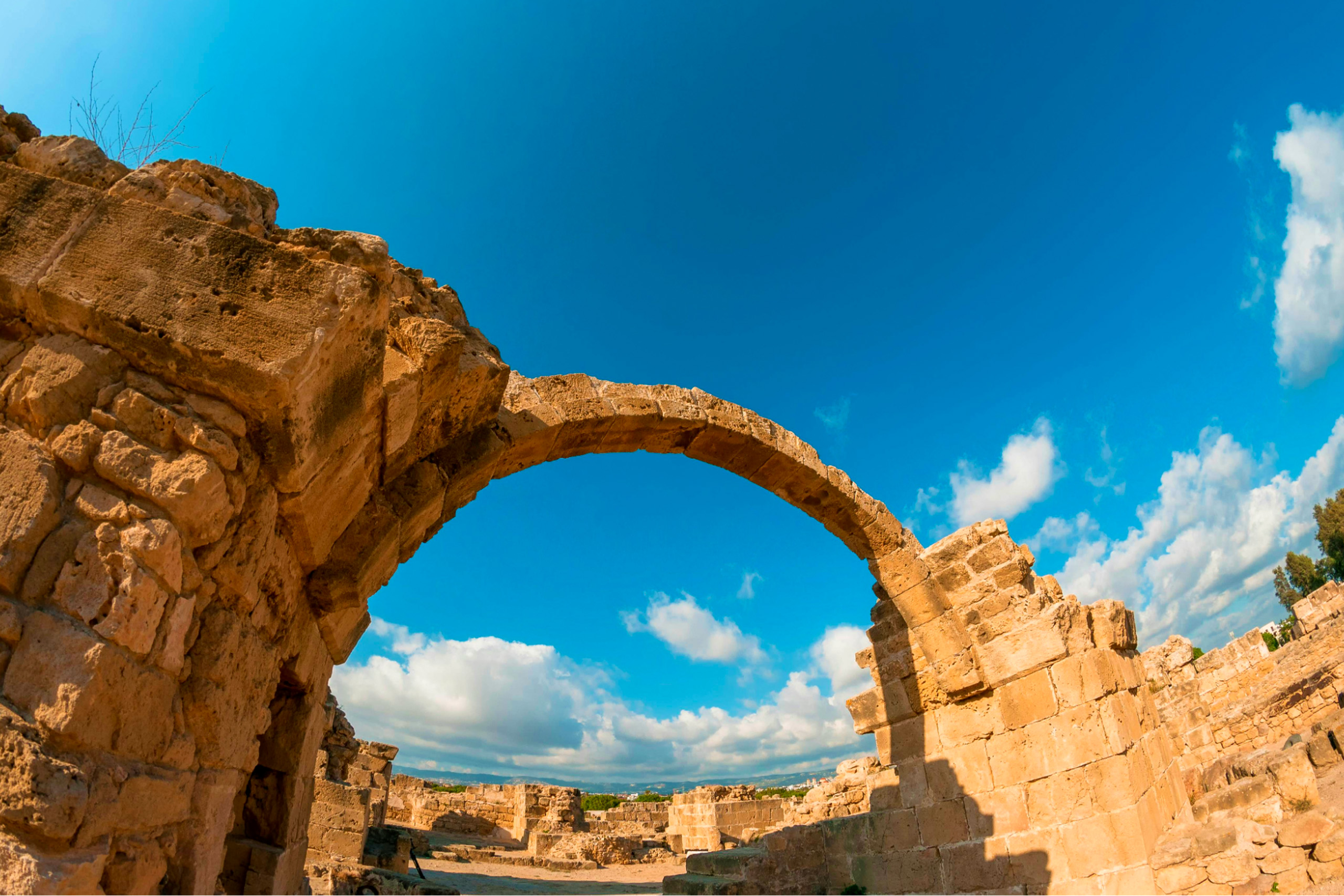
The site consists of a large necropolis spread across a wide area overlooking the Mediterranean Sea. Despite the name, no actual kings were buried here. The Cypriot monarchy was abolished in 312 BC, before most of these tombs were constructed. The name comes from the impressive size and grand architectural design of the burial chambers, which were considered worthy of royalty.
The tombs served as the cemetery for Nea Paphos, an ancient city located near the modern harbor. Approximately 100 Ptolemaic aristocrats and high-ranking officials were buried here during the Hellenistic and Roman periods. The site continued to be used until around the 4th century AD and was later repurposed by early Christians as places of refuge during persecution.
Historical Background
The tombs were built during a time when Cyprus was under the control of the Ptolemaic Kingdom of Egypt, following the death of Alexander the Great. The Ptolemaic dynasty ruled Cyprus from 294 BC until 58 BC, when the island became part of the Roman Republic. This political connection to Alexandria explains the strong Egyptian architectural influences found in the tomb designs.
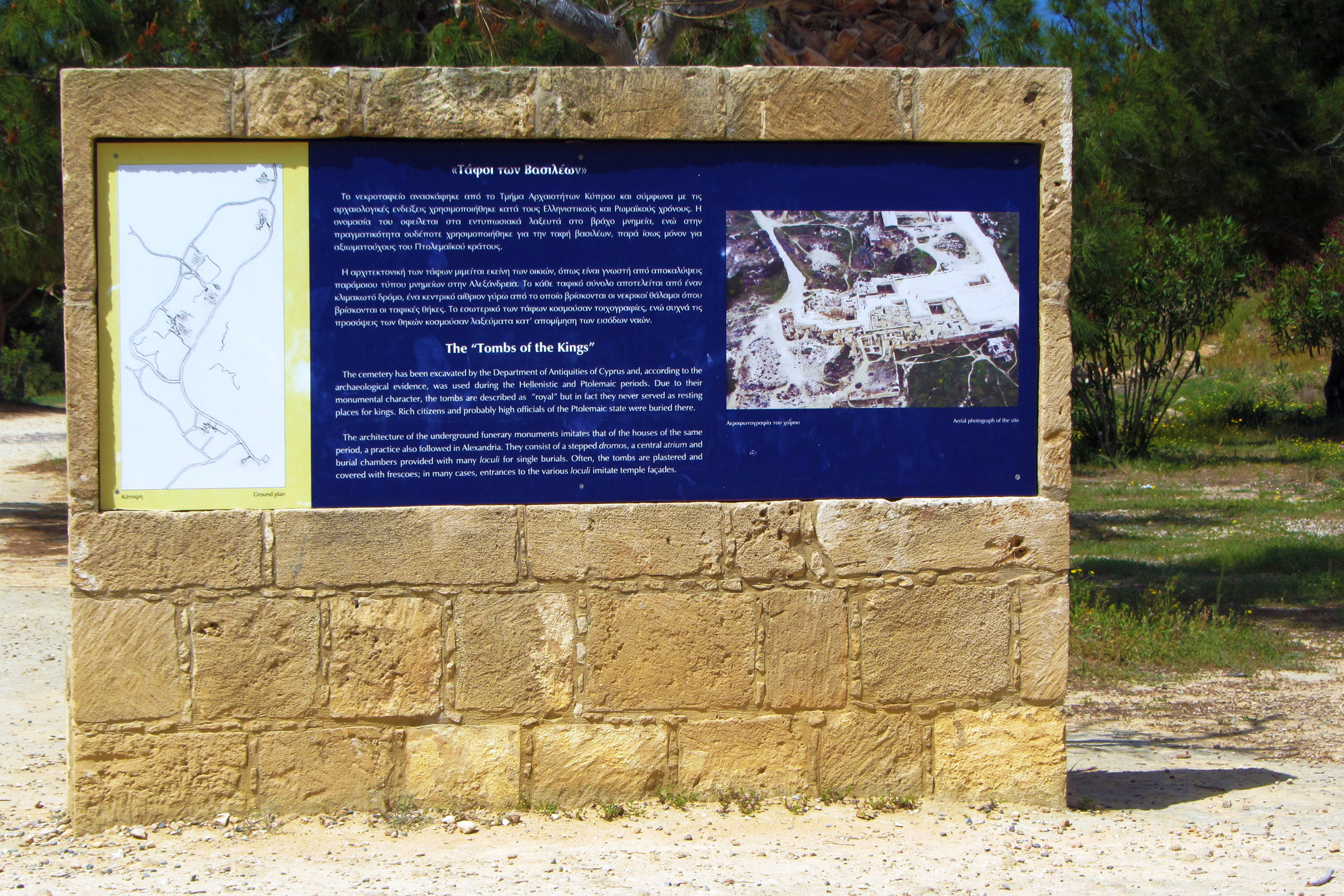
The ancient Egyptians believed that tombs for the dead should resemble houses for the living, and this tradition is clearly reflected in the Paphos tombs. The architects created underground structures that mimicked the layout of actual residences, with courtyards, columns, and multiple chambers. This practice demonstrated the belief in an afterlife where the deceased would continue to live in a manner similar to their earthly existence.
The site remained mostly unknown to modern scholarship until the 19th century. In 1870, Luigi Palma di Cesnola, the Italian-born American consul to Cyprus, conducted the first archaeological excavations at the necropolis. His methods were controversial, and much material was removed from Cyprus during his tenure. The first scientific excavations took place in 1915 under the direction of Menelaos Markides, curator of the Cyprus Museum. Systematic excavations continued in the late 1970s and 1980s led by Sophocles Hadjisavvas, former director of the Department of Antiquities of Cyprus. Excavations and research continue today, making this an active archaeological site.
Architecture and Design
The tombs are carved directly into the natural limestone bedrock of the area. Seven major tomb complexes have been excavated and are open to the public, though more tombs remain buried throughout the necropolis. The most impressive feature of several tombs is the peristyle courtyard, an open-air atrium surrounded by columns. This architectural element was common in Hellenistic and Roman buildings and represents a sophisticated level of construction skill.
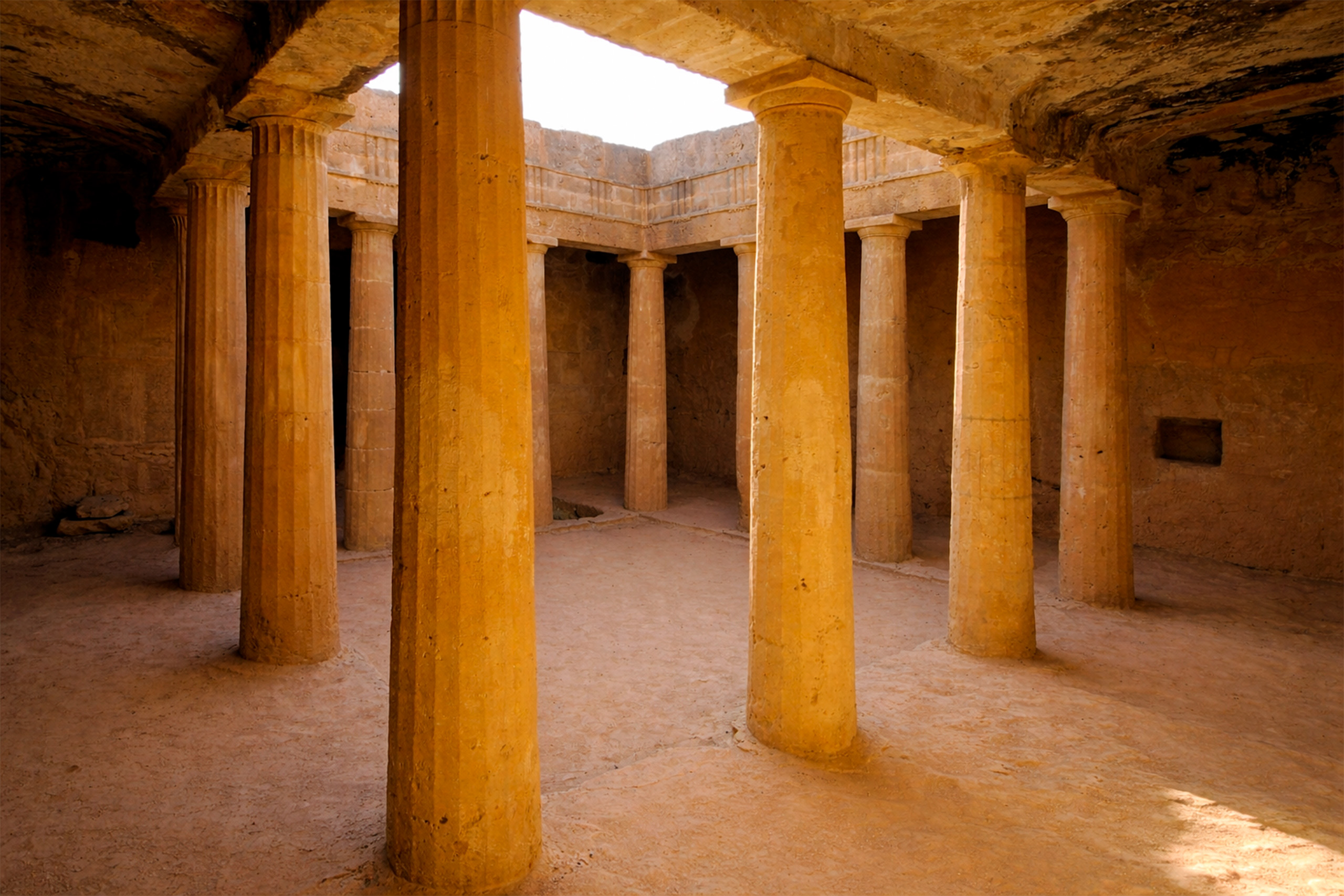
The most notable tomb is Number 3, which has been recently restored. This tomb features an underground rectangular courtyard surrounded by well-preserved Doric columns. These columns support decorated elements including triglyphs and metopes, architectural features typically found in Greek temples. A wooden staircase has been added to provide easier access for visitors.
Tomb Number 5 contains 12 intact Doric columns that support the peristyle courtyard. The columns are carved from the same rock as the rest of the structure, requiring precise measurements and exceptional craftsmanship. Several tomb complexes branch out from the main courtyard, demonstrating the elaborate nature of these burial sites.
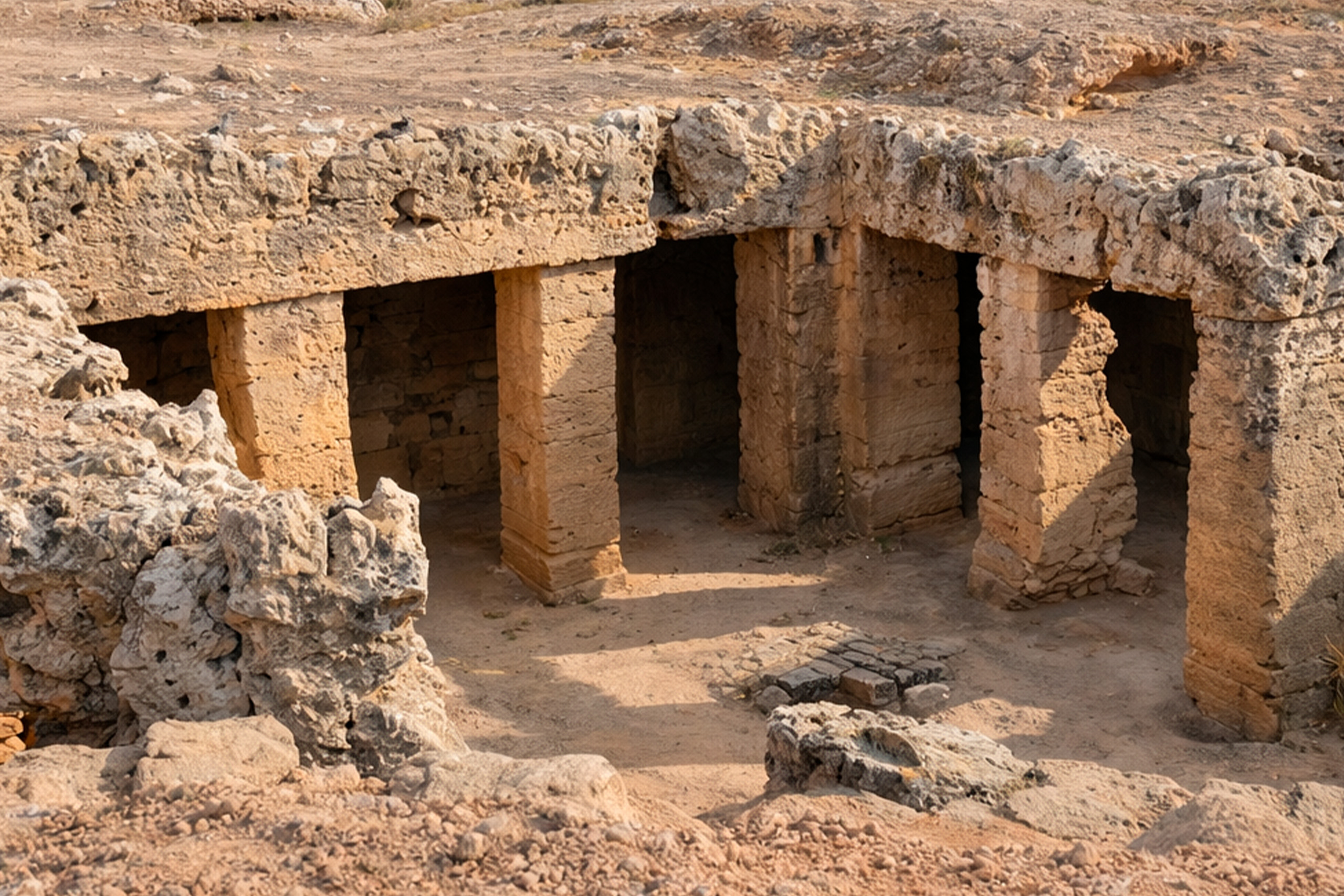
Tomb Number 8 stands out as particularly unusual. The center of its atrium is occupied by a square rock with a carved chamber inside. A corridor forms around this central structure, with burial chambers positioned around it. Two stone bird figures were discovered here, causing considerable debate among archaeologists. Some experts believe these represent eagles and are identified with the royal emblem of Ptolemy, suggesting this tomb may have held the body of a Ptolemaic king who died in Cyprus. One theory proposes it was the burial ground of Ptolemy XIV, the brother of Cleopatra VII. Other scholars argue the statues represent hawks, another form of the Egyptian god Horus, and are simply decorative elements from Alexandrian Egypt.
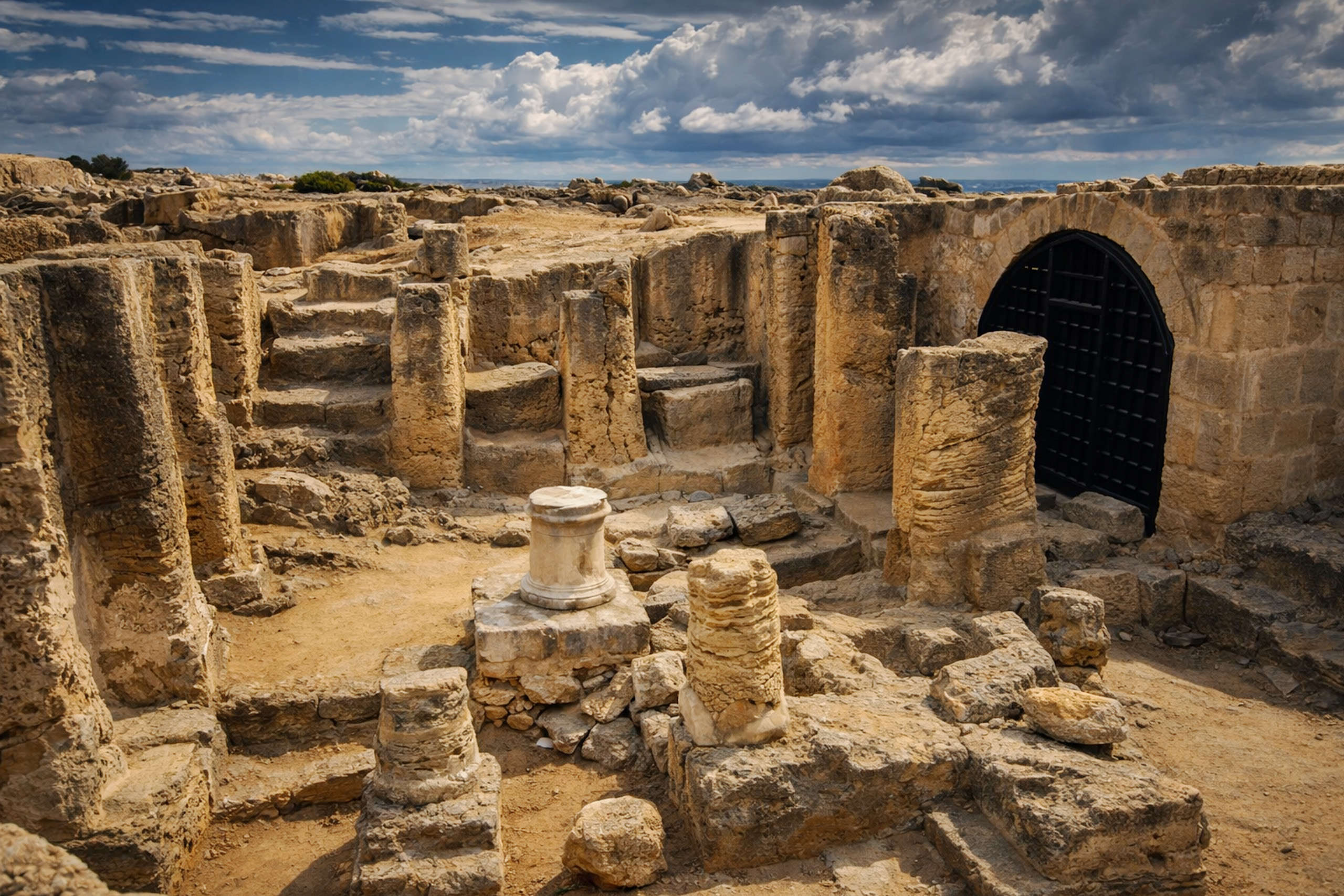
The tombs feature different types of burial arrangements. Some have niches built directly into the walls where bodies were placed. Others contain pit-shaped graves dug into the floor. The eastern side of Tomb 3, excavated in 1977, revealed several pit-shaped tombs including chambers designed for young children. The western side, excavated in 1989, uncovered additional tombs and evidence of a drainage system designed to channel water away from the burial chambers.
Modern Recognition
The entire city of Paphos, including the Tombs of the Kings and the Kato Paphos Archaeological Park, was inscribed as a UNESCO World Heritage Site in 1980. This recognition acknowledges the exceptional historical value of the site and its importance to understanding Hellenistic and Roman culture in the Eastern Mediterranean. The UNESCO designation has supported conservation efforts and brought international attention to Cypriot archaeology.
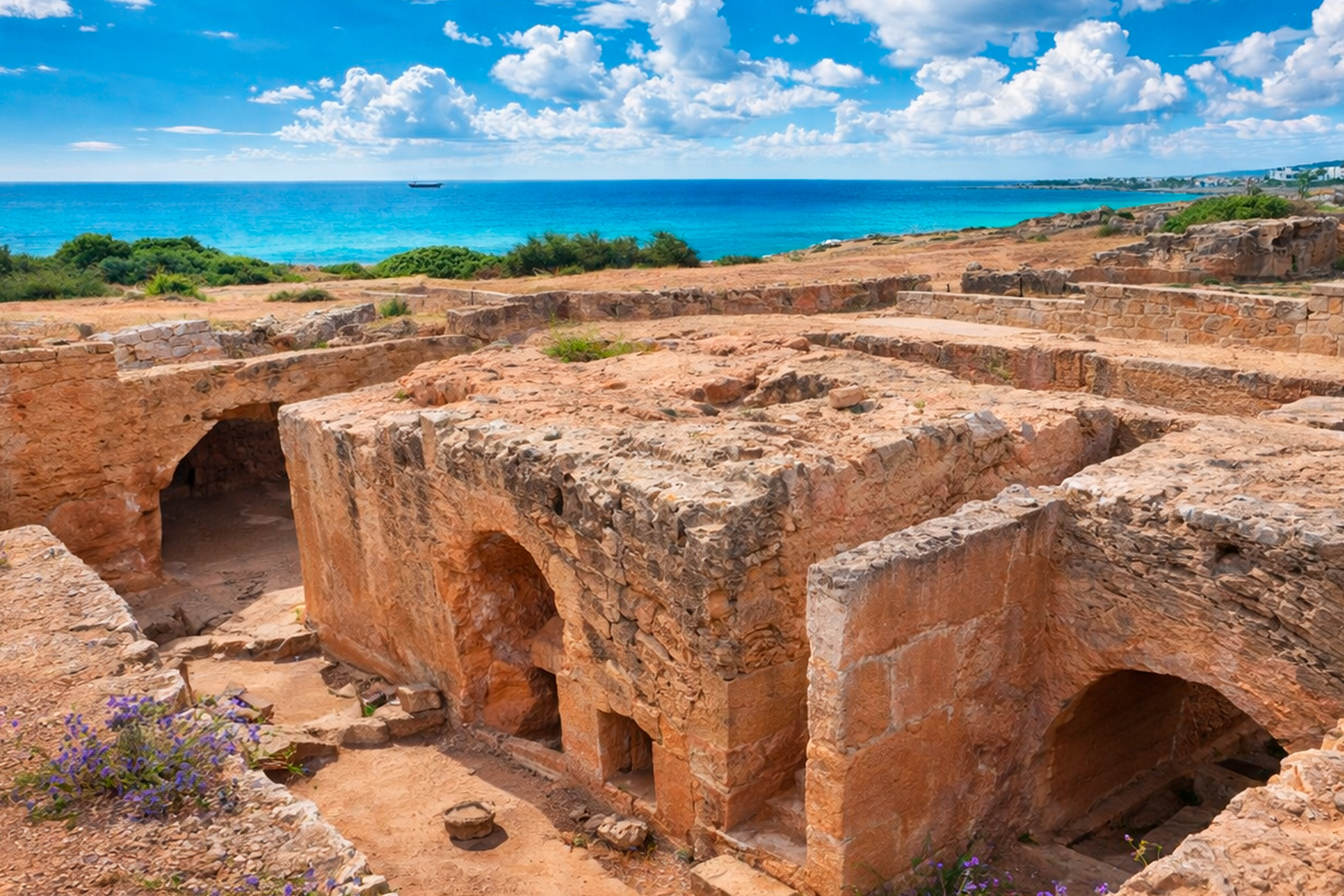
The site is considered one of the finest examples of ancient funerary architecture in the Mediterranean region. The unique combination of Egyptian burial traditions with Greek architectural elements makes the Tombs of the Kings particularly valuable for studying cultural exchange in the ancient world. The underground peristyle courtyards are unique to Cyprus and represent a distinctive local interpretation of international architectural trends.
Current State
Today, the Tombs of the Kings remain an active archaeological site. Work continues to excavate additional tombs and analyze previous finds. The site has been carefully prepared for tourism. Modern staircases have been installed at several tombs to provide safe access, though the original stone steps are also preserved where they exist.
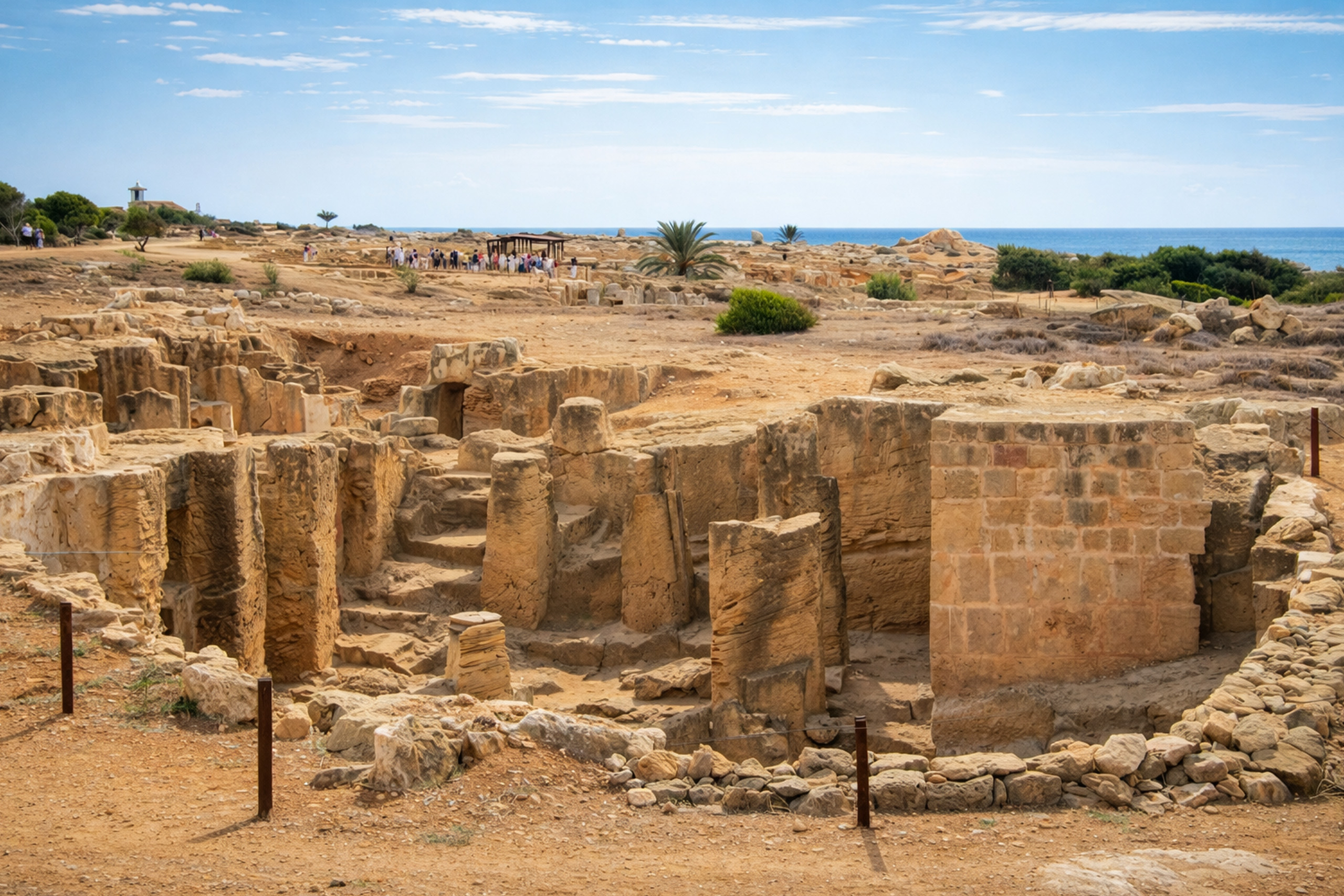
The site is large and mostly exposed to the elements. It creates a landscape that looks somewhat barren and desert-like. The rocky terrain stretches across a wide area with tombs scattered throughout. The Mediterranean Sea is visible from many points in the necropolis, and the sound of waves crashing on rocks creates an atmospheric backdrop for exploration.
Visiting the Site
The entrance to the Tombs of the Kings is located on the road connecting Kato Paphos with Coral Bay, now called Tombs of the Kings Avenue. A large parking area is available near the entrance. The site can be reached by bus, with Route 615 to Coral Bay stopping directly outside the entrance. Buses depart approximately every 15 minutes from the Paphos Harbour Bus Station. The journey from the harbor takes about 5 minutes by bus or roughly 40 minutes on foot along the coastal path.
Entrance fees are 2.50 euros for adults. Free admission is available for visitors over 65 and students of any nationality with proper identification. The site is open year-round except for certain public holidays. Operating hours vary by season. From April 16 to September 15, the site is open from 8:30 AM to 7:30 PM. From September 16 to April 15, hours are 8:30 AM to 5:00 PM.
Cultural Impact
The Tombs of the Kings represent an important chapter in Cypriot history. The site demonstrates how Cyprus served as a crossroads between Egyptian, Greek, and Roman cultures. The architectural choices made by ancient Paphians reveal their desire to adopt international styles while creating something unique to their own city.
The tombs also illustrate social stratification in ancient Paphos. Only the wealthiest and most powerful members of society could afford such elaborate burial chambers. The size of the tombs, the quality of construction, and the decorative elements all served to display the status of the deceased and their families. This conspicuous display of wealth through monumental architecture was common throughout the ancient Mediterranean world.
Archaeological Research
Ongoing research at the Tombs of the Kings continues to reveal new information about ancient burial practices, architecture, and daily life. The pottery, coins, and other artifacts found in the tombs provide evidence about trade networks, artistic styles, and technological development. Each excavation season adds to our understanding of how Paphos functioned as a major urban center during the Hellenistic and Roman periods.
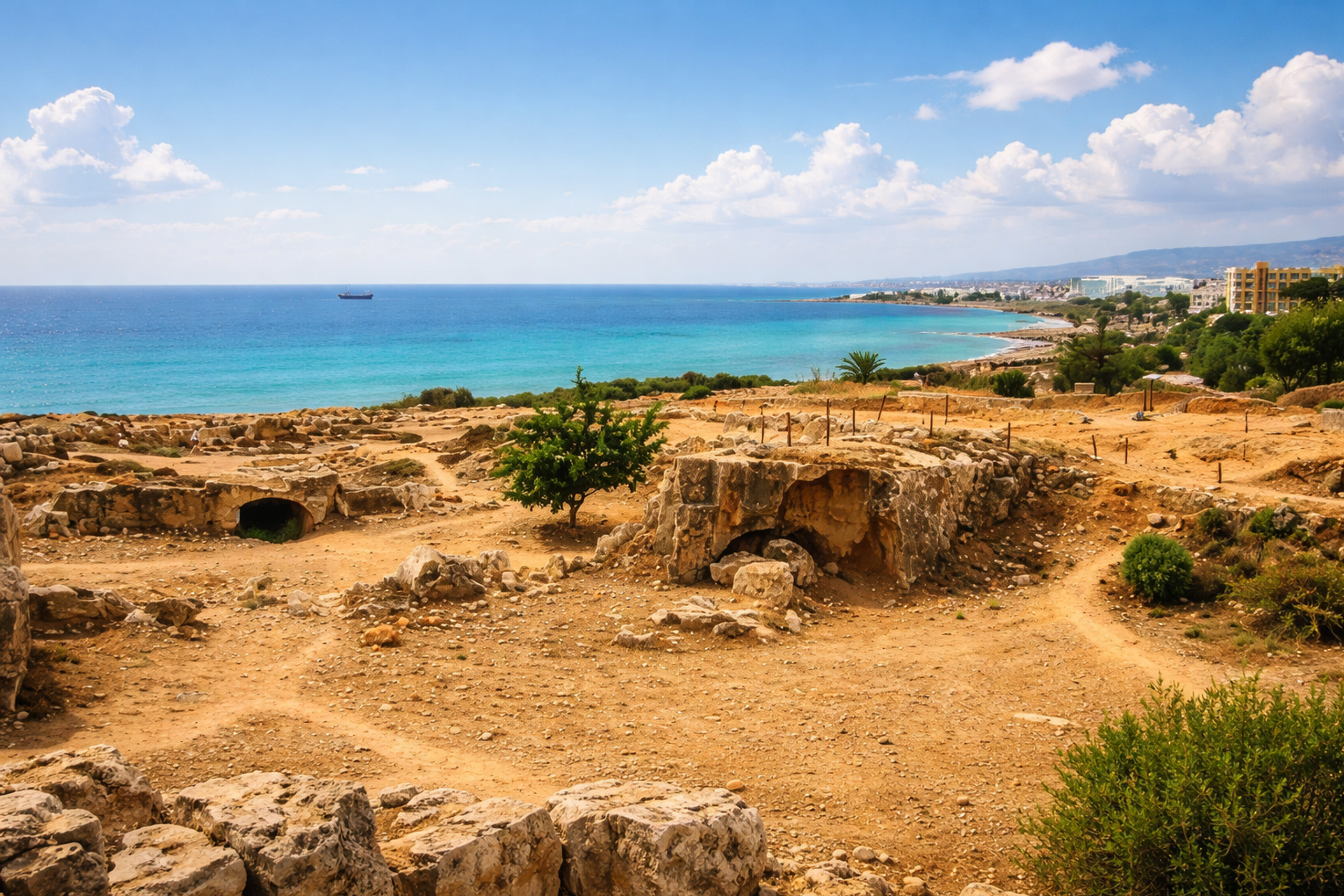
The site serves as a training ground for archaeologists and students from Cyprus and around the world. The combination of well-preserved architecture and continuing excavation opportunities makes it valuable for teaching archaeological methods and interpretation. Publications documenting the finds are still being prepared, with international collaboration bringing together expertise from multiple research traditions.
Significance for Cyprus
The Tombs of the Kings stand as one of Cyprus’s most important archaeological sites. They attract thousands of visitors annually, contributing to the local economy through tourism. The site helps establish Paphos as a cultural destination rather than simply a beach resort, adding depth to the visitor experience.
For Cypriots, the tombs represent a tangible connection to the island’s ancient past. They demonstrate that Cyprus was home to sophisticated urban centers with wealthy elites who participated in broader Mediterranean culture. The preservation and presentation of the site reflects Cyprus’s commitment to protecting its archaeological heritage and making it accessible to both scholars and the general public.
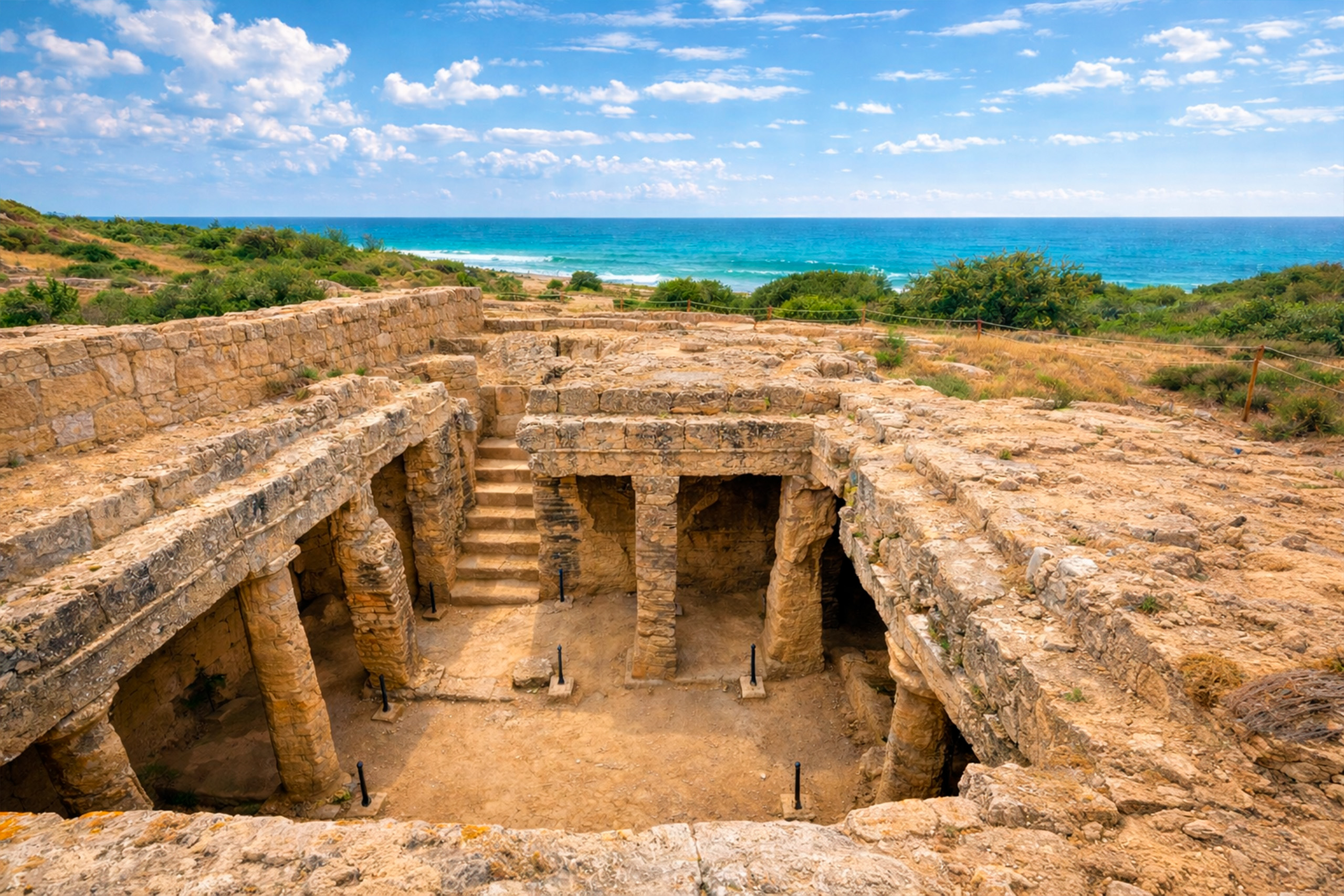
The Tombs of the Kings provide evidence of over 600 years of continuous use and demonstrate how burial sites can reveal information about religious beliefs, social organization, artistic traditions, and technological capabilities. The underground chambers carved from living rock stand as a monument to ancient engineering skill and the human desire to honor the dead with permanent, impressive structures.