 English
 Greek
Greek German
 Russian
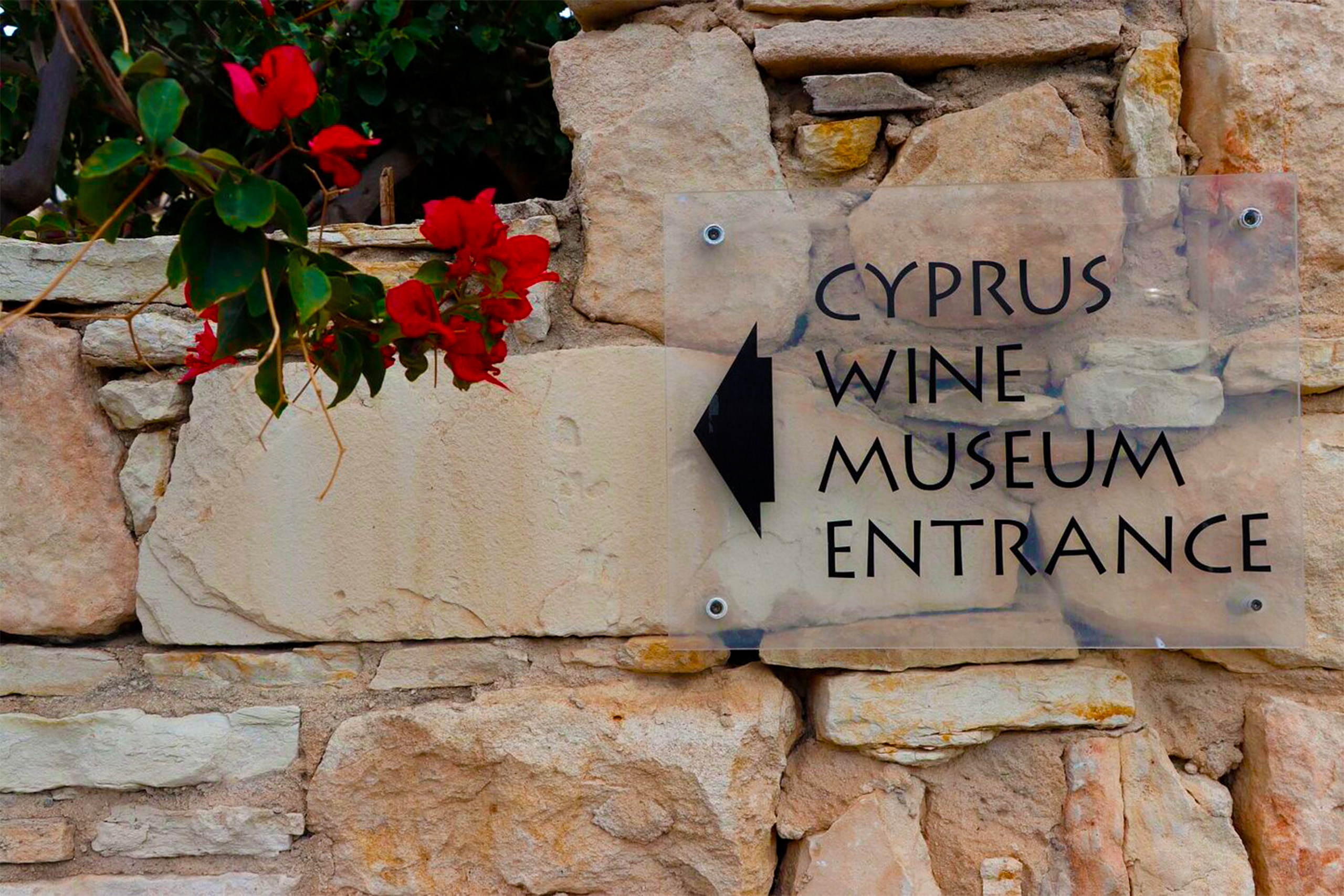
The Cyprus Wine Museum sits at the most important historical crossroads in Cyprus. The location connects the road between ancient Kourion and Kolossi Castle, the old Limassol to Paphos route, and the roads leading to the wine villages in the Troodos Mountains. Erimi village itself has produced wine for over 5,500 years. The prehistoric settlement of Sotira lies nearby, where archaeologists discovered the oldest grape seed remains on the island. Kolossi Castle stands just a short distance away, the medieval headquarters of the Knights Hospitaller who gave Commandaria wine its name.
Historical Background
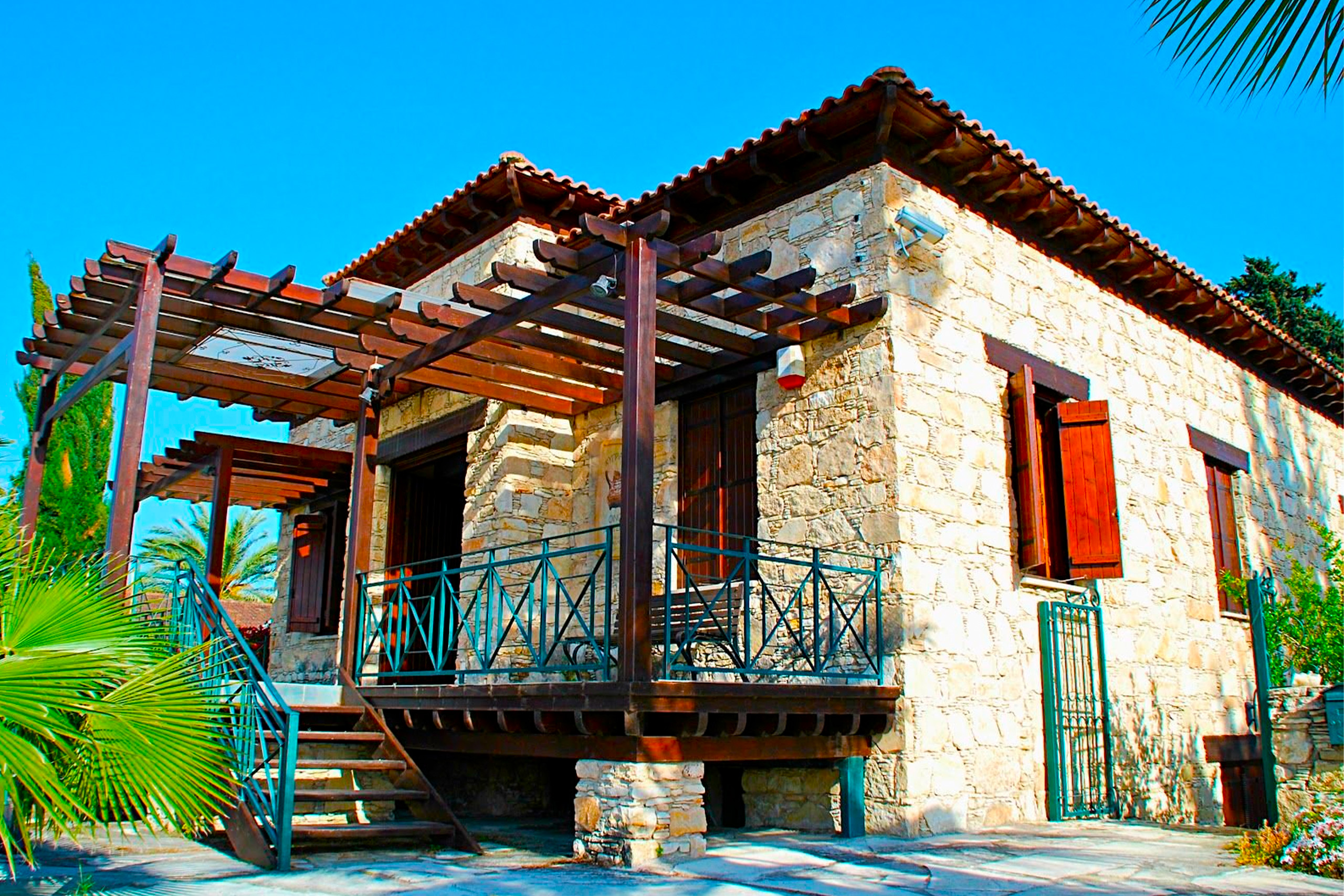
Composer Anastasia Guy founded the museum in 2004 after years of planning. The building belonged to her family for generations and originally functioned as a traditional Cypriot inn. Guy recognized that Cyprus was one of the first wine-producing countries in the world and saw an opportunity to preserve this heritage. The concept, developed in 1998, received approval from the Cyprus Tourism Organization in 2001 and underwent construction from 2002 to 2004.
President Tassos Papadopoulos performed the official inauguration in 2004. The museum immediately began enriching its collections with archaeological items on loan from the Cyprus Archaeological Museum, the Pierides Museum of Marfin Laiki Bank, and other institutions. In 2005, the Ministry of Transport approved official road signs directing visitors from archaeological sites and public roads. The Ministry of Education and Culture approved the museum as suitable for school visits from all levels, including kindergartens.
The Cyprus Wine Museum Art and Culture Association was established in 2006 to support the institution. A model vineyard was licensed the same year. Between 2009 and 2011, the museum developed partnerships with museums, organizations, and institutions both domestically and internationally.
Collections That Span Millennia
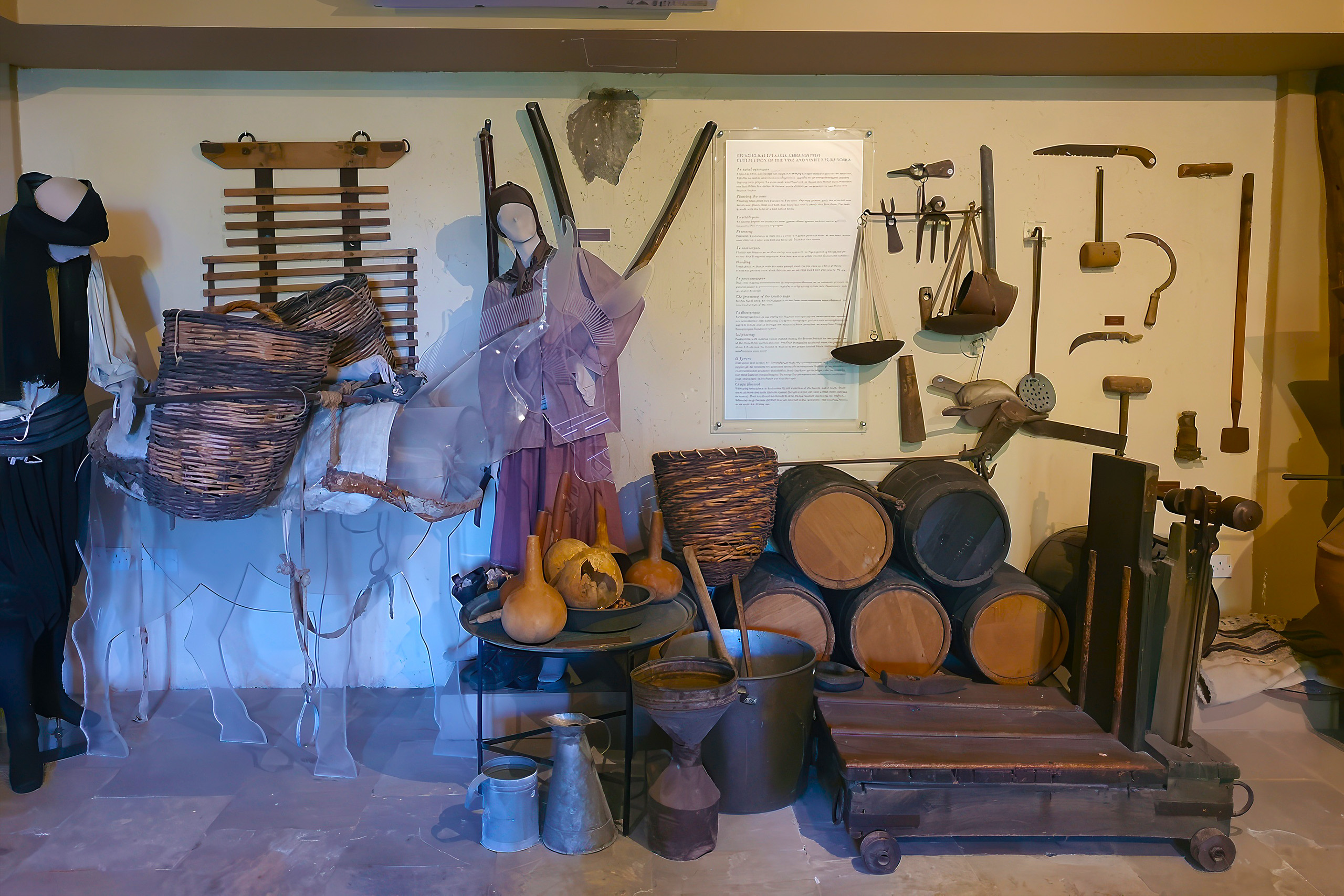
The museum may be the only wine museum in the world that presents 55 centuries of winemaking history from a single country. The collections include archaeological artifacts, medieval drinking vessels, ancient jars and canisters, old documents, and traditional winemaking instruments. A fragment of a canteen dating to 3500 BC from the 1933 Sotira excavation ranks among the oldest items displayed.
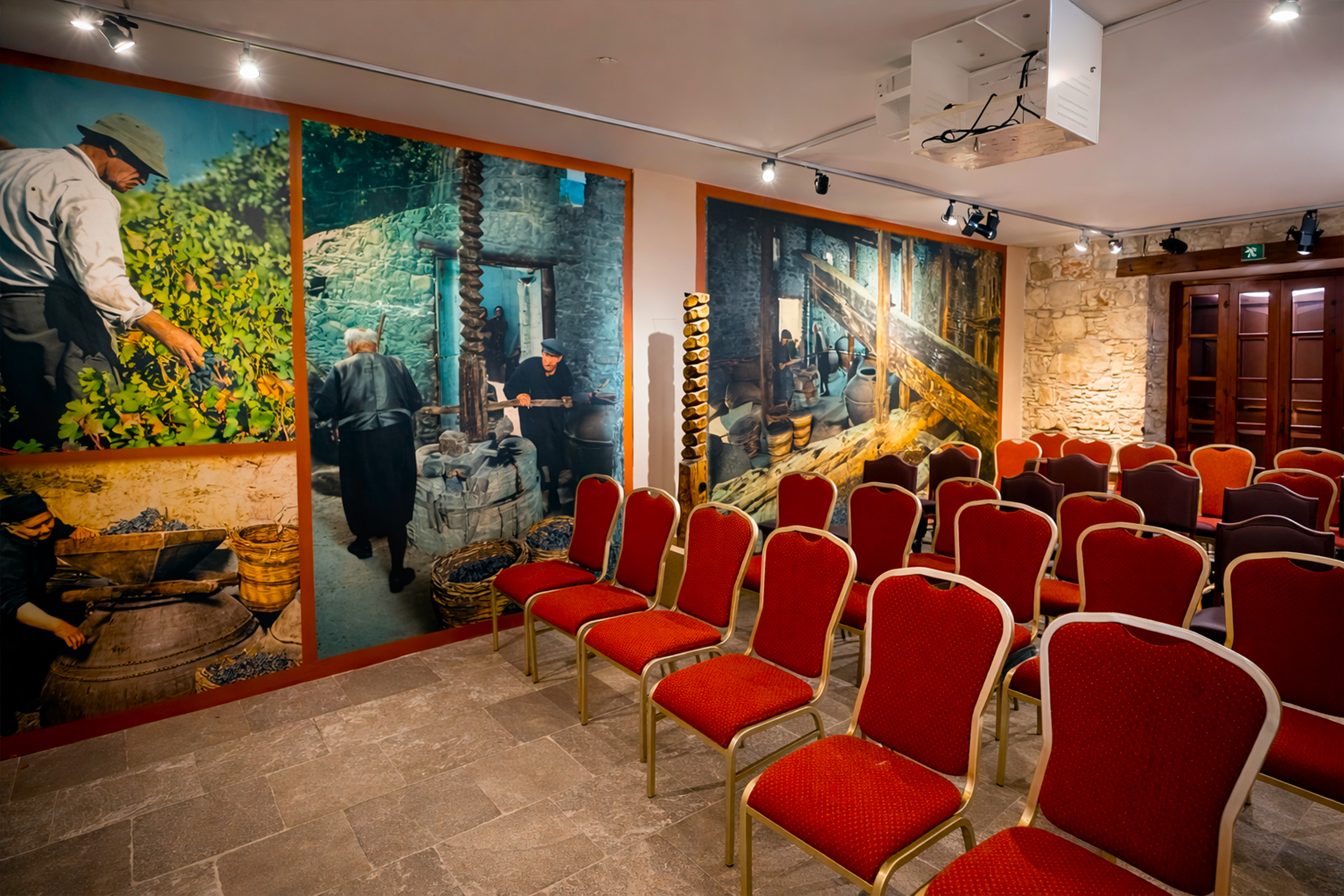
The Giorgos Seferis Hall on the upper floor houses the main exhibition. Visitors follow a chronological journey through Cyprus wine history from antiquity to today. The displays explain production methods, storage techniques, trade routes, and the social and economic importance of wine across different periods. Photographic and audiovisual materials supplement the physical artifacts.
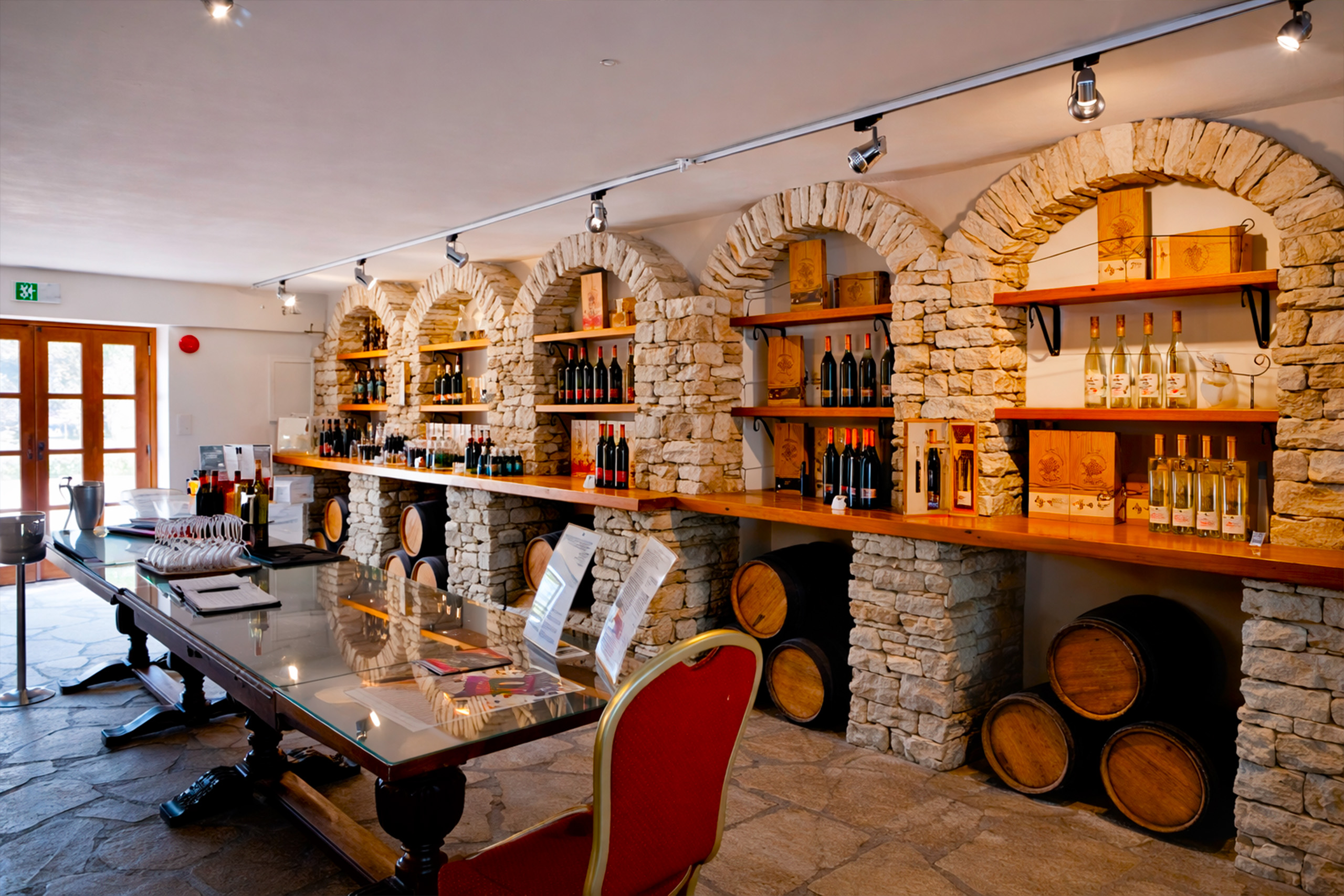
The ground floor St Hilarion Hall features the Wine Routes exhibition. This permanent display showcases products from approved Cypriot wineries. Visitors receive information about indigenous grape varieties and learn about the current state of the Cyprus wine industry. The hall serves as a tasting room where guests can sample local wines.
The Story of Commandaria
The museum places special emphasis on Commandaria, recognized by the Guinness Book of Records as the oldest named wine still in production. The wine’s origins trace back approximately 4,000 years to ancient times when it was called nama. Ancient Greek poets Homer and Euripides praised its quality nearly 3,000 years ago.
The current name dates to the medieval period when the Knights Hospitaller established their headquarters at Kolossi Castle. The knights administered a region called the Grande Commanderie, encompassing 40 villages including 14 wine-producing settlements. These same 14 villages in the Limassol District still produce Commandaria today according to strict protected designation of origin rules.
King Richard the Lionheart supposedly served Commandaria at his wedding to Berengaria in Limassol in 1191. Upon tasting it, he declared the wine to be the wine of kings and the king of wines. During the 13th century reign of French King Philippe Augustus, Commandaria won what is believed to be the world’s first wine competition. In December 2024, UNESCO declared Commandaria an intangible cultural heritage.
The traditional production method involves harvesting indigenous Mavro and Xynisteri grapes, then leaving them in the sun for 7 to 12 days to concentrate the sugars. The wine matures in oak barrels for at least two years before bottling. The recipe includes honey, herbs, vanilla, spices, and dried fruits to produce the complex sweet flavor.
Educational Programs and Events
The museum organizes lectures, wine tasting sessions, performances, and concerts throughout the year. Educational programs accommodate school groups of all levels. The Commandaria Orchestra takes its name from the legendary wine and performs at the museum. The word orchestra derives from orchos, which in Homeric times meant row of vines. The orchistes were dancers and musicians who worshipped Dionysus in the vineyards.
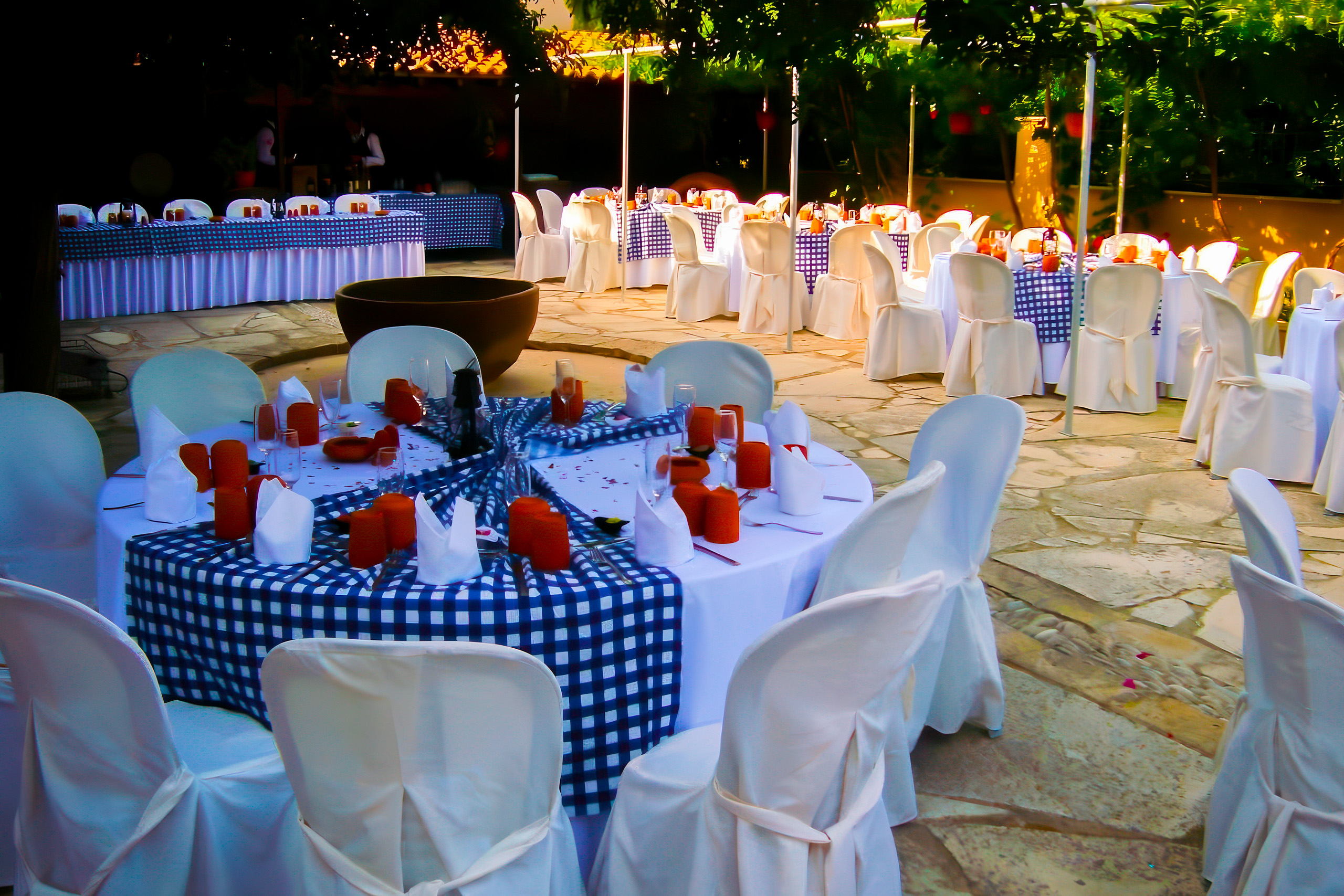
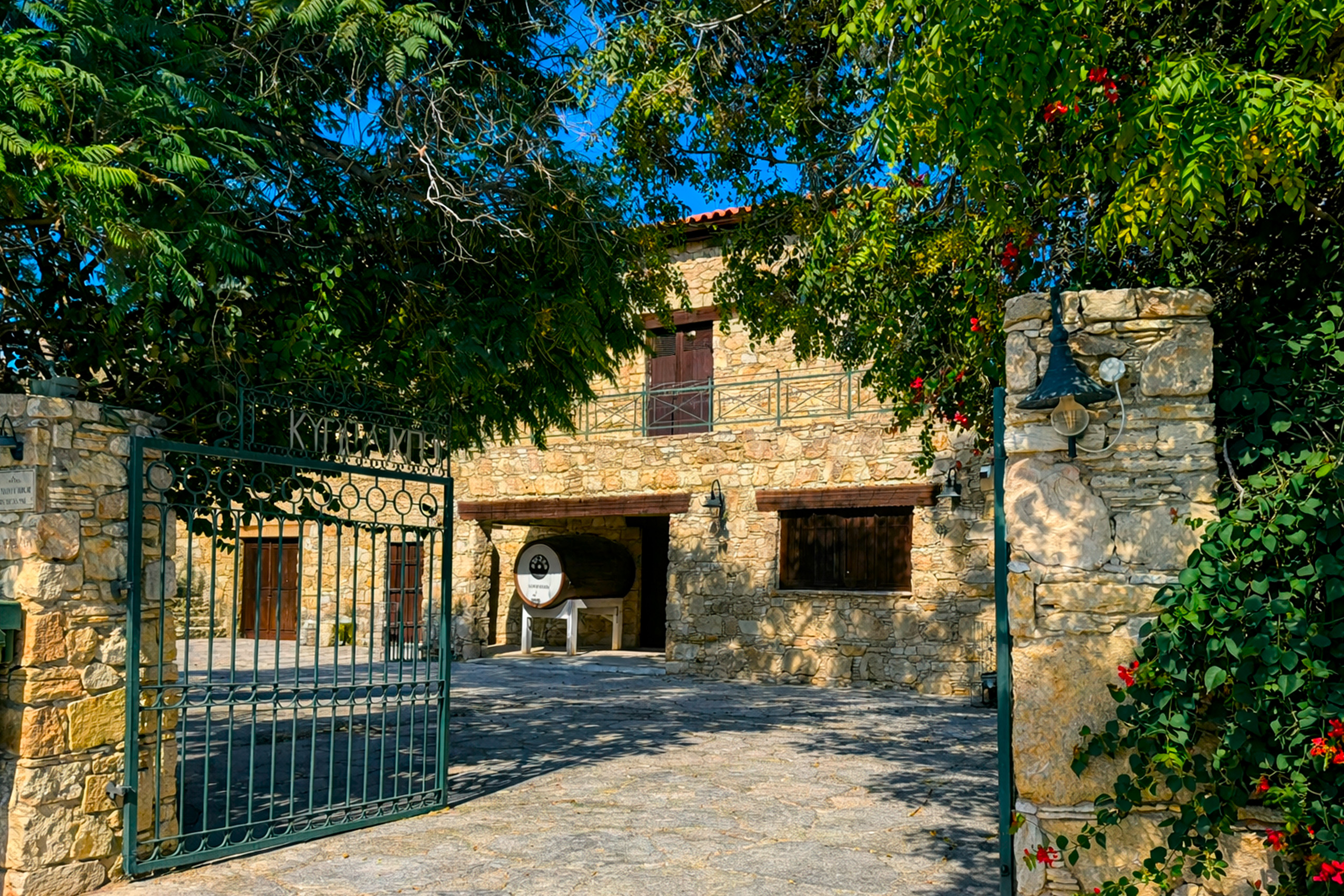
Two large stone courtyards connect to each other and serve different functions. The Commandaria courtyard on the east side displays traditional zivania stills, wine presses, and related equipment. The Knights courtyard on the west provides landscaped outdoor space for cultural events and conferences. Large parking areas accommodate cars, coaches, and other vehicles.
What Visitors Experience
Admission costs 4 euros for adults, with various wine tasting packages available for individuals and organized groups. The museum operates guided tours that last approximately 45 minutes to an hour. Visitors can explore independently or join scheduled tour groups. The displays include text in both Greek and English.
The tasting room offers samples of indigenous varieties, including Xinisteri and Maratheftiko. The exclusive Commandaria Orchestra dessert wine is available in various vintages. The museum address is 42 Paphos Street at the corner of Knights Street in Erimi village, postal code 4630. The location sits on road B6 between ancient Kourion and Kolossi Castle. Erimi lies approximately 14 kilometers west of Limassol city center. Public buses serve the village, and ample parking is available for private vehicles.
Why Cyprus Wine Museum Matters
The Cyprus Wine Museum preserves knowledge about one of humanity’s oldest agricultural traditions. Archaeological evidence proves that Cyprus was among the first places in Europe where people cultivated grapes and produced wine. The museum documents how this tradition evolved over 5,500 years through different civilizations, each adding its own techniques and preferences.
The location in Erimi connects the museum to authentic winemaking heritage. This is not a museum created in a tourist area for commercial purposes. The village sits at the actual crossroads of Cyprus wine routes, surrounded by working vineyards and historic sites linked to wine production. Visitors experience the real geography and culture of Cyprus’s winemaking.
For Cyprus, the museum reinforces national identity linked to ancient traditions. Wine production gave Cyprus economic importance throughout history. The island supplied wine across the Mediterranean in ancient times, to Crusader kingdoms in medieval times, and continues exporting today. The museum shows continuity across this long history and celebrates Cyprus as a wine culture, not just a wine producer.