 English
 Greek
Greek German
 Russian
Amathus is one of the oldest royal cities on the island of Cyprus. Situated on the southern coast, just 11 kilometers east of modern Limassol, it sits among sandy hills and coastal cliffs overlooking the Mediterranean Sea.
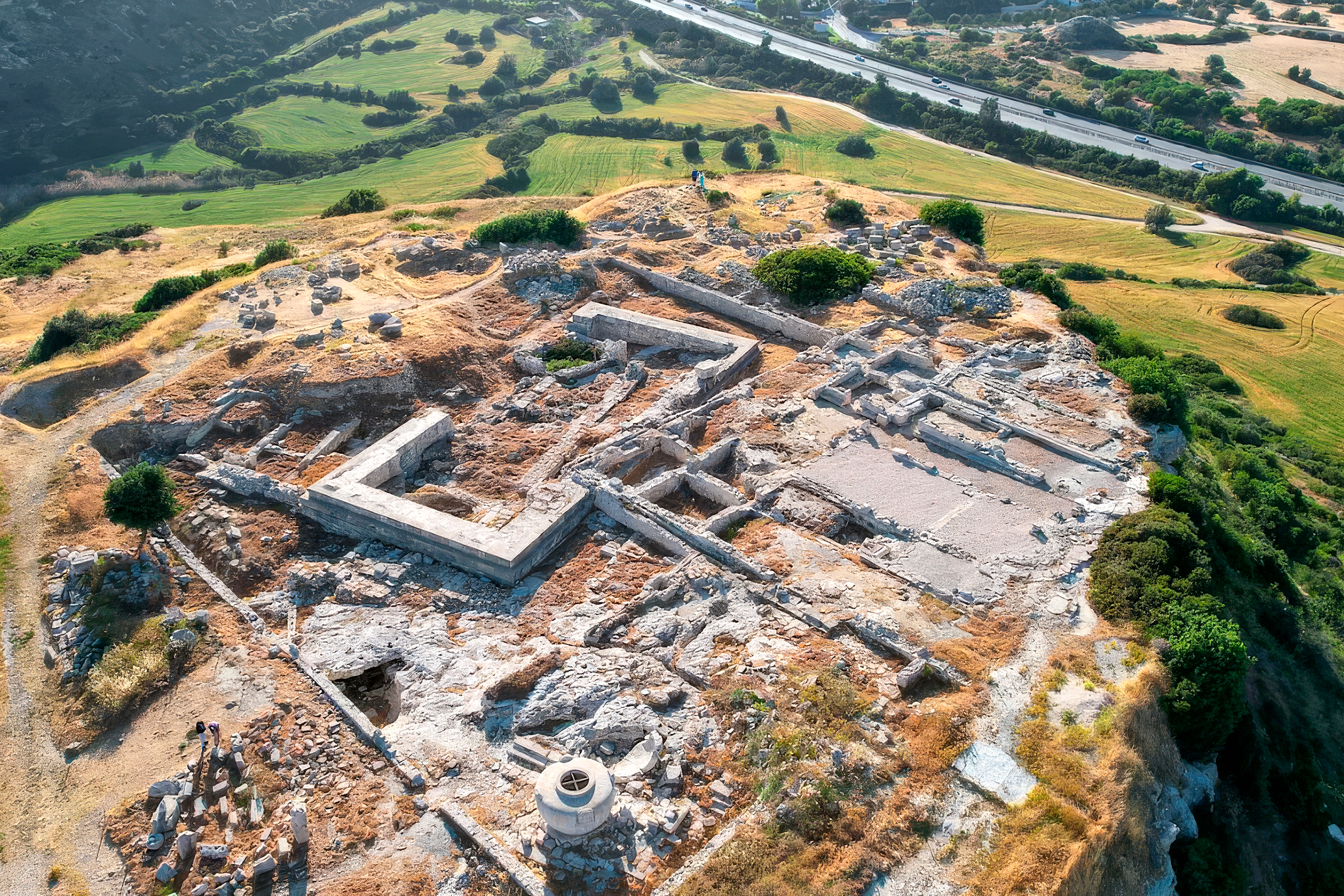
The city dates back to around 1100 BC, making it over three thousand years old. For centuries, it was one of the most powerful and wealthy kingdoms on the island. Today, its ruins tell a story of trade, religion, myth, and survival that stretches across dozens of generations.
Historical Background
The first people to settle in Amathus were the Eteocypriots, an indigenous group who lived on Cyprus before both the Greeks and the Phoenicians arrived. They chose a rocky coastal hill for a reason: it offered a natural harbor below and a defensible position above. The earliest signs of human presence at the site date to around 1100 BC, which places its founding right at the start of the Iron Age in the Eastern Mediterranean.
The name itself likely comes from the Greek word “amathos,” which simply means “sand,” a fitting reference to the dunes and sandy hills surrounding the city. Legend, however, tells a different story. According to myth, the city was founded by a king called Cinyras, who named it after his mother, Amathous. Other myths connect the place to Adonis, one of the most famous figures in Greek mythology, whose birth is tied directly to Cinyras.
What Made Amathus So Special
Amathus was not just another coastal settlement. It grew into a full city-kingdom with a palace, a port, thick city walls, and a large population. By the 8th century BC, it had already become one of the most important royal cities on the island, on the same level as Salamis, Paphos, and Kourion.
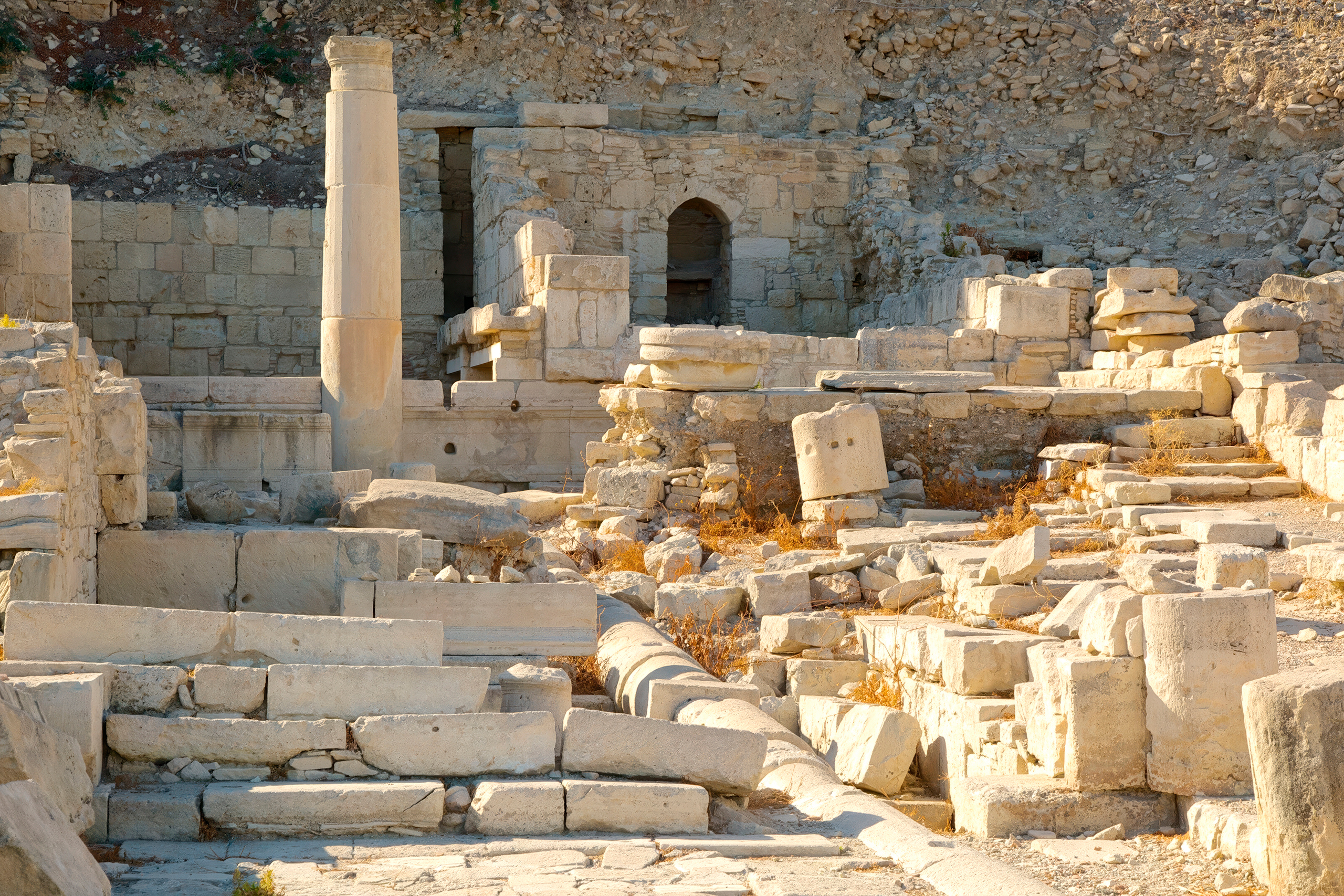
Its power came from two main sources. The first was copper. The nearby Kalavassos mines were rich in copper ore, and workshops within the city itself processed and exported it across the Mediterranean. Copper was one of the most valuable resources in the ancient world, and Amathus sat right on top of it. The second source of wealth was trade. The city’s natural harbor connected it to merchants from Greece, Phoenicia, and the Levant. Grain and sheep were also major exports, and archaeological finds show pottery and goods coming in from as far as Egypt and Syria.
The city was also home to one of the most important religious sanctuaries on the entire island: the Temple of Aphrodite. This sanctuary, built on top of the acropolis, was the second most significant site for the worship of Aphrodite in all of Cyprus, after Paphos. Votive offerings found at the site date back to the mid-8th century BC, which means people were worshipping there for hundreds of years before the Romans even arrived.
Facts That Stand Out
There are several facts about Amathus that are difficult to forget. The city was the only royal kingdom on Cyprus that refused to revolt against Persian rule. While every other city joined the rebellion led by Onesilos of Salamis around 500 BC, Amathus stayed loyal to the Persians. This loyalty kept it safe and prosperous during a time when other cities suffered.
In the Roman period, the city became the capital of one of the four administrative regions of Cyprus. Its influence was so strong that Roman writers used the word “Amathusia” as a general synonym for “Cypriot.” That level of recognition says a great deal about the city’s reputation.
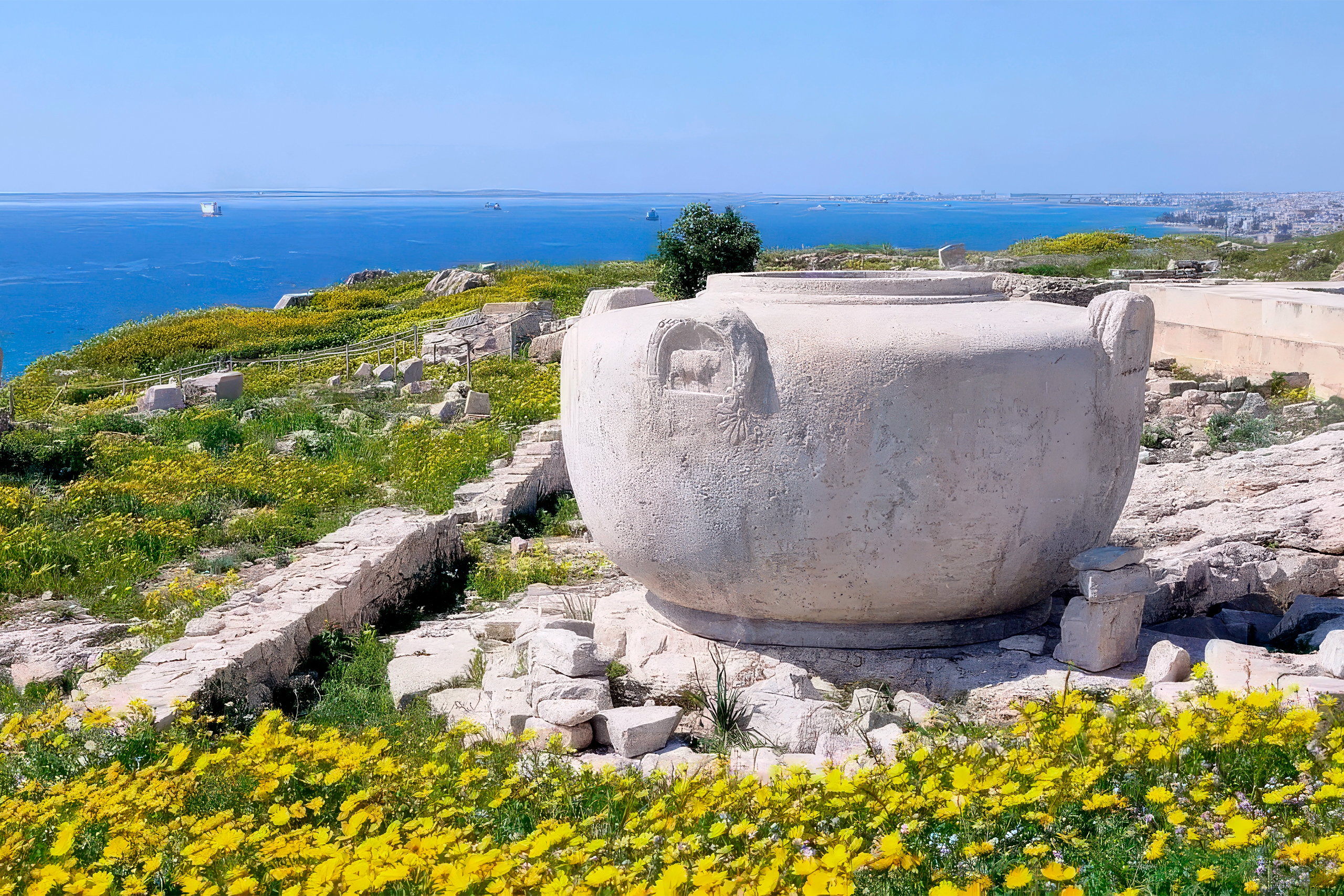
Perhaps the most remarkable fact concerns a giant stone vase that once stood at the entrance to the Temple of Aphrodite. Carved from a single block of limestone, the vase stands 1.85 meters tall and weighs 14 tons. It has four handles, each decorated with a carved bull. In 1865, the vase was shipped to France, and it now sits in the Louvre Museum in Paris. A replica stands at the original site today.
Saint John the Merciful, who later became Patriarch of Alexandria, was born in Amathus in 539 AD. He is remembered as one of the most generous religious leaders in early Christian history.
A Crossroads of Cultures
Amathus was never a single-culture city. Greeks, Phoenicians, and the indigenous Eteocypriots all lived there, and all left their mark. The city used three languages: Greek, Phoenician, and Eteocypriot, which was written in a unique script called the Cypriot syllabary. This script survived the Bronze Age collapse, unlike most other writing systems in the region, and continued to be used at Amathus until the 4th century BC.
The religious life of the city reflected this mix as well. The worship of Aphrodite blended with Phoenician traditions of Astarte and Egyptian traditions of Hathor. Copper smelting furnaces were found right next to the sanctuary, which fits with an ancient belief that the goddess was linked to the land and its resources, including metal.
Amathus in the World Today
The ruins of Amathus are an active archaeological site to this day. French and Cypriot teams have been excavating there since 1980, and new discoveries continue to emerge. Finds from the site are kept in the Limassol District Archaeological Museum and the Cyprus Museum in Nicosia. Some objects ended up in the British Museum and, of course, the Louvre.
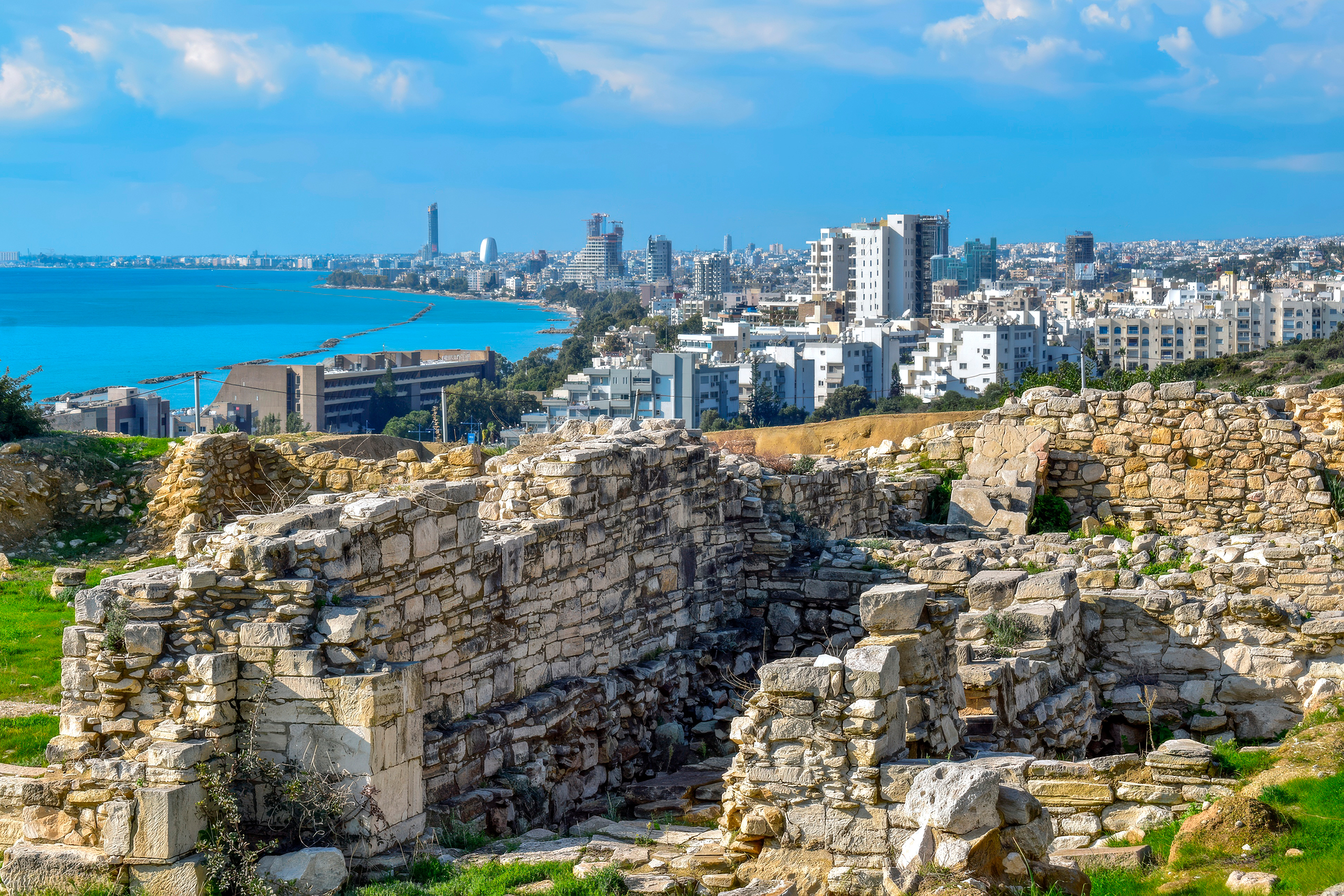
The site also carries spiritual weight. Amathus is still recognized as a see of the Church of Cyprus, and the Catholic Church lists it as a titular see as well. The nearby village of Agios Tychonas, named after an ancient bishop of Amathus, sits close to the ruins today.
A Walk Through the Ancient City
Visiting Amathus today means exploring two distinct areas: the lower city and the upper acropolis. The lower city contains the remains of the agora, public baths, and administrative buildings, some of which can be seen directly from the road.
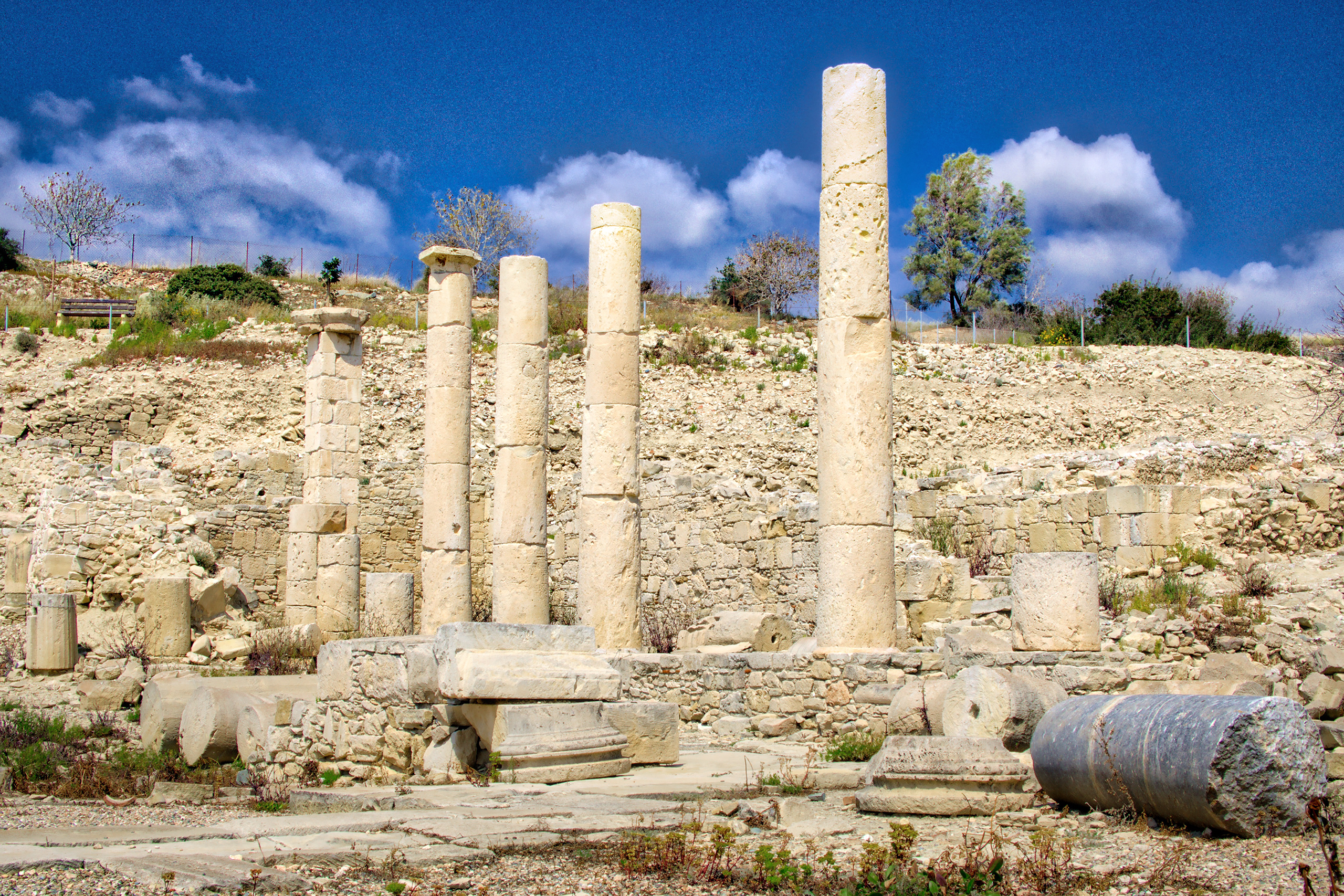
The upper city requires a short climb up the hill, but the view from the top is worth the effort. From there, you can see the replica of the giant stone vase, the foundations of the Temple of Aphrodite, and a wide stretch of the Mediterranean coastline. The site is open throughout the day, and admission to the acropolis area is free.
Why Amathus Still Matters
Amathus is more than a set of ruins on a hill. It is one of the clearest examples of how Cyprus was shaped by multiple civilizations at once. Greeks, Phoenicians, Egyptians, Persians, Romans, and Byzantines all passed through this city, and each one left something behind.
The copper that built its wealth, the myths that gave it meaning, and the languages that filled its streets all point to a place that was, for over two thousand years, one of the most connected cities in the ancient Mediterranean. That story does not end at the ruins. It continues in the museums, the churches, and the island itself.