 English
 Greek
Greek German
 Russian
The ruins of Amathus spread across a coastal hillside 11 kilometers east of Limassol, where stone walls and column fragments mark one of Cyprus’ oldest city kingdoms. Archaeological evidence shows continuous occupation from 1100 BCE until the 7th century CE, a span of nearly 2,000 years. During the Roman period, Amathus became the capital of one of four administrative regions on Cyprus. The city’s importance grew so significant that Romans used the term Amathusia as a general synonym for Cypriot.
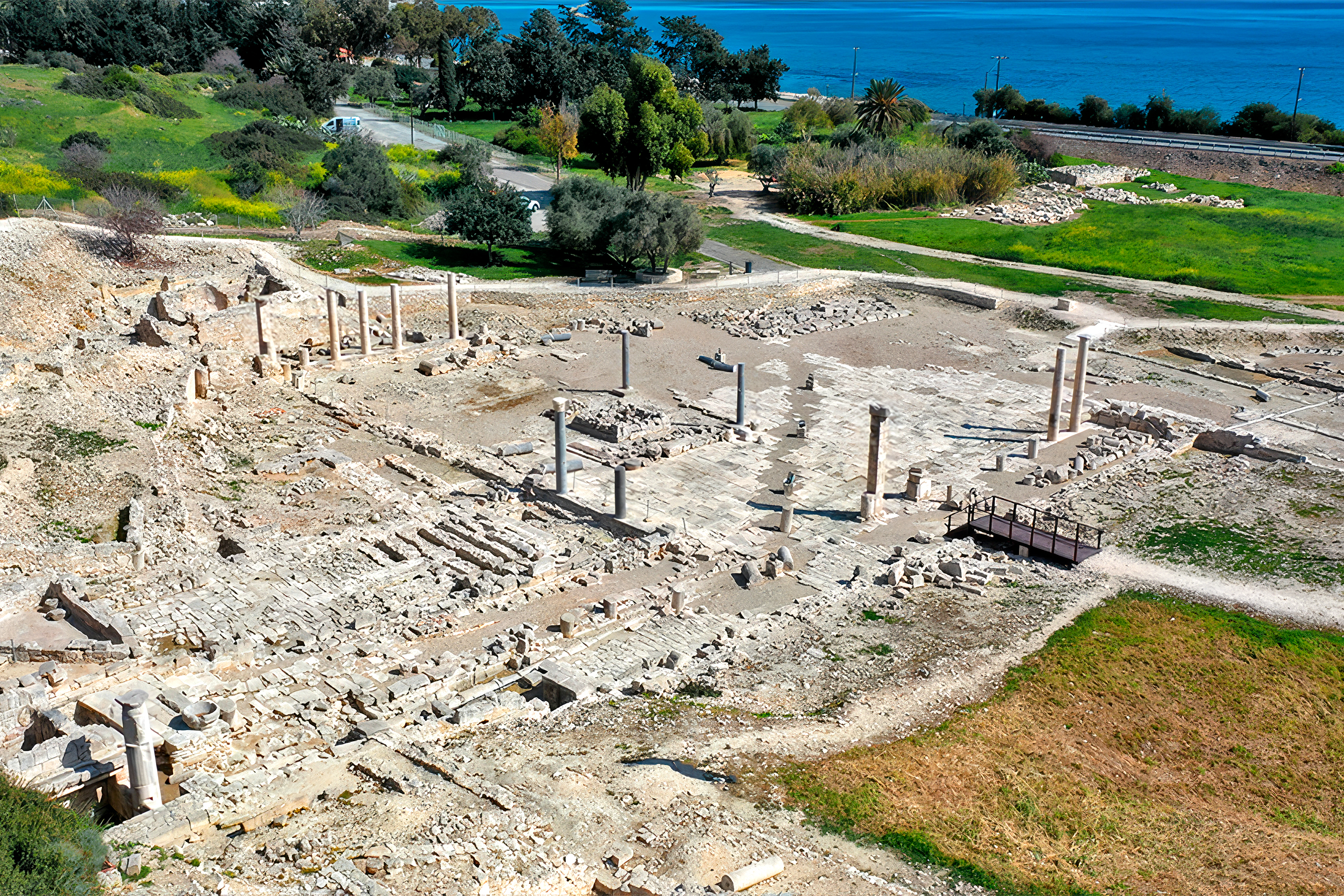
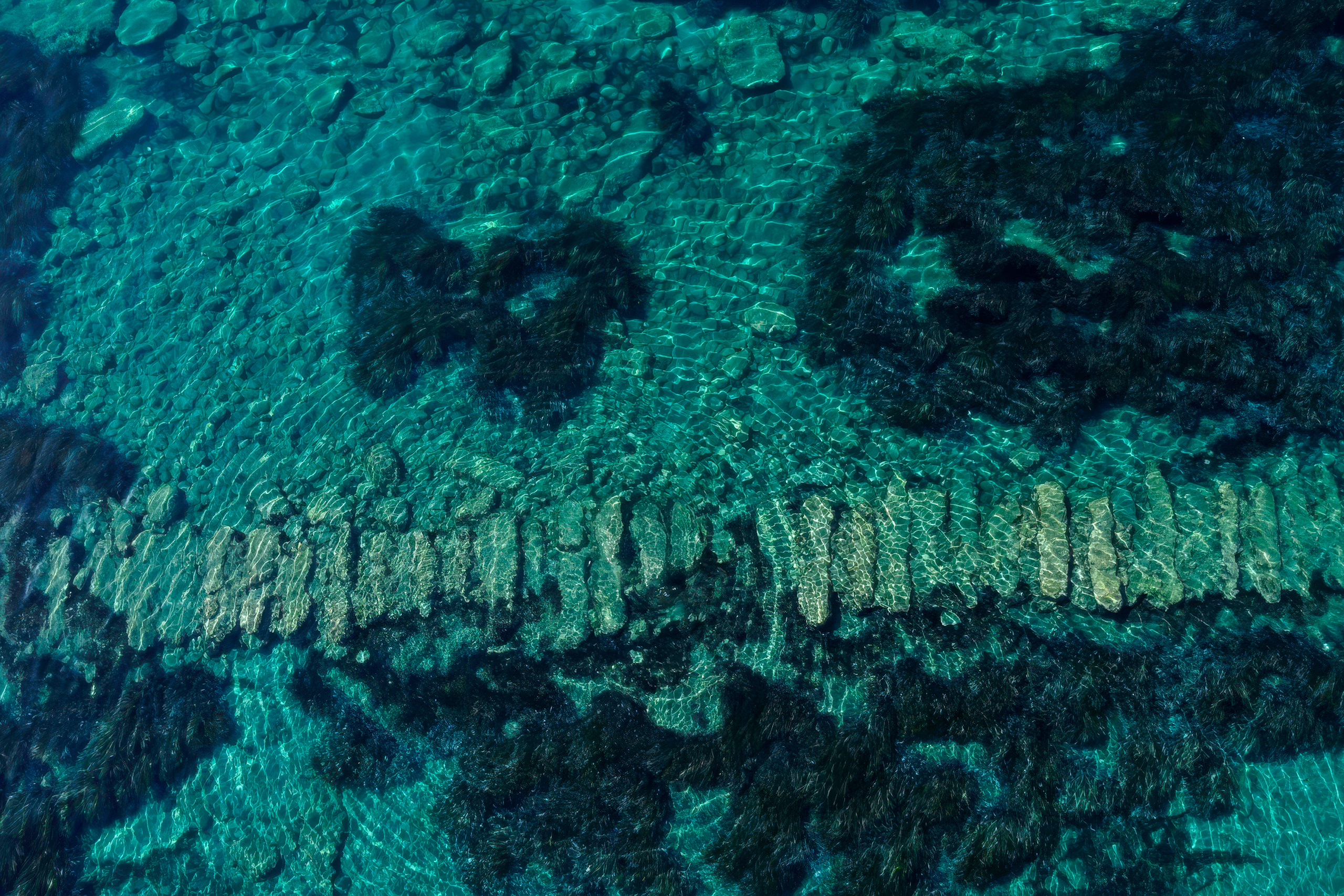
Today, visitors walk through the remains of public baths built during Emperor Hadrian’s time, explore an agora where merchants traded goods from across the Mediterranean, and view foundations of the great Temple of Aphrodite that made this the second most important worship site for the goddess on her homeland island. Below the waves, 60 meters from shore, lie the stone moles of a Hellenistic harbor built during conflicts between Alexander the Great’s successors. This combination of land and underwater remains provides a complete picture of ancient coastal city life.
Historical Background
The Roman bath complex at Amathus sits adjacent to what was once the central agora or marketplace. Constructed in the 2nd century CE during a period of public improvements commissioned by Emperor Hadrian, the baths demonstrate typical Roman bath design adapted to the Cyprus climate. The structure forms a square layout with cold rooms positioned on the east side and hot and warm rooms on the west, all heated by an underfloor hypocaust system.
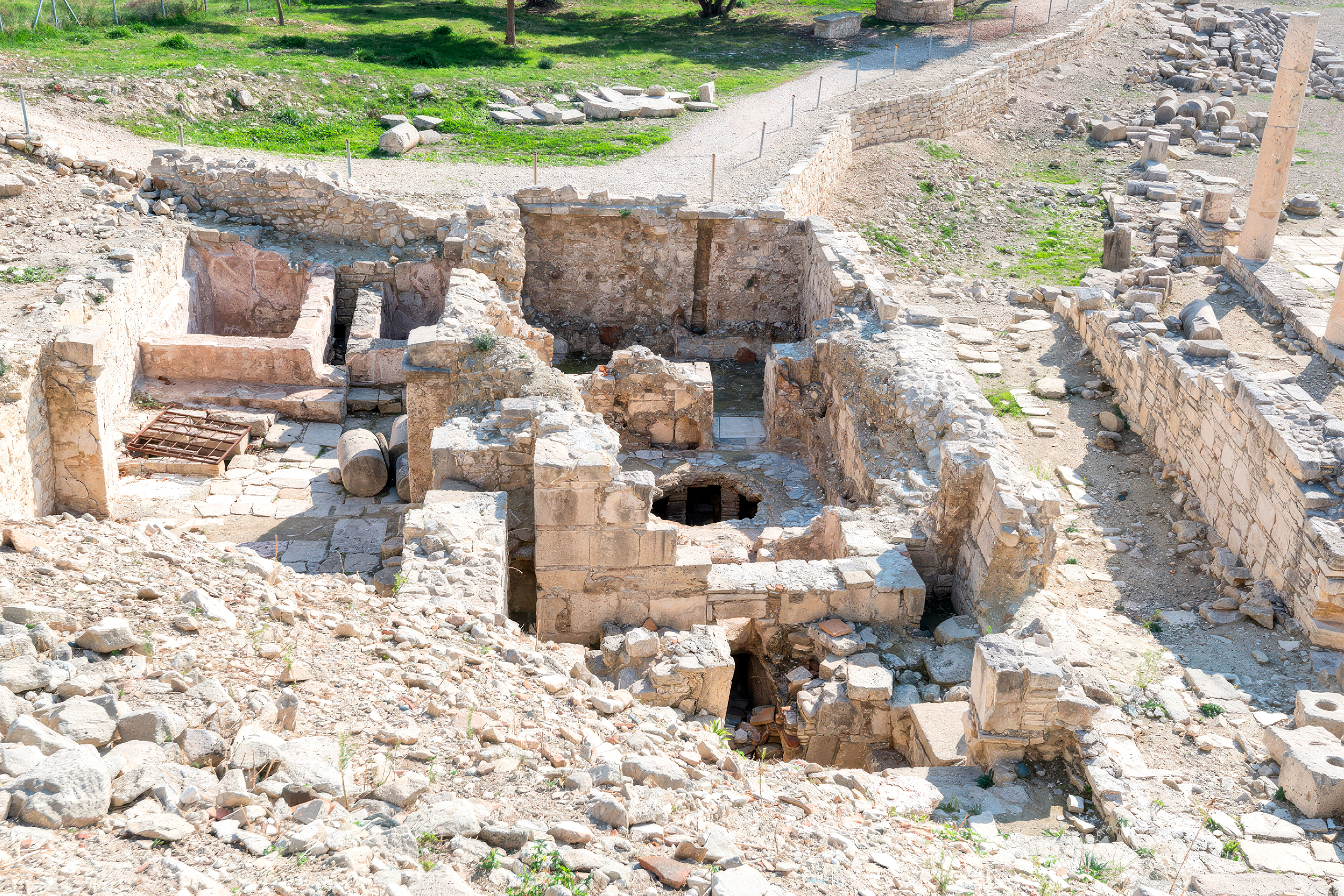
The hypocaust worked as a central heating system that circulated hot air beneath raised floors and through wall cavities, similar to modern forced air heating. A wood-fired furnace called a praefurniae supplied the heat. Hot air flowed from this furnace through spaces beneath raised floors called suspensurae and into gaps within the walls, warming the entire building. The hypocaust benefited from stacked pillars of terracotta brick tiles called pilae that supported the floors. These tiles absorbed and retained heat, making the system more efficient.
Hot water came directly from lead boilers fitted over the furnace. At Amathus, these boilers were made of bronze. Metal pipes called testudo alvei circulated hot water between the boilers and bathing pools, heating the water through convection. The terracotta support tiles remain among the most visible features today, standing in neat rows where floors once rested overhead.
Visitors entered through the main entrance in the north wall into the apodyterium, a changing room where bathers removed and stored their clothing. From there, they could proceed to the frigidarium, the cold room, which featured cold plunge pools and possibly a central well covered today by a metal grate. A doorway led west to the sudatorium, a small vaulted room with double-width walls faced with limestone and marble veneer. The gap between these double walls and the space below the floor were heated by the hypocaust, creating conditions for light sweating. This room served as a transition between the cool frigidarium and the hotter caldarium.
The Acropolis Towers Above the Ancient City
The acropolis stands on a natural fortress overlooking the Mediterranean Sea. This elevated position provided defensive advantages while serving as an observatory due to its commanding views. The hilltop location made the acropolis visible from great distances, marking the city’s presence to approaching ships. Archaeological excavations have uncovered multiple layers of occupation, showing how different cultures built upon previous structures.
The Temple of Aphrodite occupied the summit during the Roman period. A new Roman temple was constructed in the 1st century CE directly on top of the Hellenistic predecessor. The temple facilities remained so important in Roman times that Amathusia became synonymous with Cypriot throughout the empire. The cult of Aphrodite at Amathus represented the second most significant worship site for the goddess on Cyprus after Paphos, her legendary birthplace.
A massive stone vessel found on the acropolis dates to the 6th century BCE. This urn stands 1.85 meters tall and weighs 14 tons. Craftsmen carved it from a single piece of stone, including four curved handles decorated with bulls. A similar vessel was transported to the Louvre in 1867, demonstrating the artistic skill of ancient Amathus. These enormous stone vessels likely served ceremonial functions related to the temple cult.
Early Christian basilicas later appeared on the acropolis, showing the transformation from pagan to Christian worship. Five basilicas have been identified at the site, dating to the period after Amathus became a bishop’s seat in the 4th century CE. These churches testify to the city’s continued prominence within the evolving religious landscape of late antiquity Cyprus.
Archaeological Discoveries Reveal Daily Life
Excavations at Amathus began in the late 19th century when British archaeologists and Luigi Palma di Cesnola, the first American consul in Cyprus, explored the extensive necropolis. Di Cesnola excavated large tombs situated north of the acropolis and west of the acropolis hill. Many objects from these early excavations enriched collections at the Metropolitan Museum of Art and the British Museum. The Swedish Cyprus Expedition excavated approximately 25 tombs in 1930, documenting shaft tombs with dromos entrances, a tomb type rather rare on Cyprus.

The tombs vary in construction based on space constraints, economics, and difficulties in cutting rock. Archaeologists identified six different styles, differing mainly in dromos shape. Tombs 1 and 2 stand apart in quality and construction, suggesting creation for wealthy individuals or royalty. Tomb 26 featured a large tumulus and contained a stone pithos with an alabastron holding a burnt skeleton. Around the alabastron rim was placed a wreath of gilded myrtle leaves. Excavators suggested this might have been a Ptolemaic official who died in Amathus and was buried according to foreign customs.
Modern joint Cypriote-French excavations started in 1980 and continue today. Unlike many ancient settlements obscured by modern construction, large portions of Amathus remain government property and accessible for excavation. This provides distinct advantages for archaeological investigation. The site yields information about the socio-political, economic, and cultural developments of Cyprus from the Iron Age through late antiquity.
Finds demonstrate active involvement in Eastern Mediterranean trade networks. Imported pottery from the Levant dates to the Early Iron Age, 10th century BCE. The earliest evidence of imported vessels from Euboea in the Aegean also appears at Amathus. Clay ship models found in tombs and in the sea attest to increased maritime activity during the Archaic period, 7th to 6th centuries BCE. The city’s economic prosperity was firmly rooted in copper trade and its strategic coastal location with natural harbors.
The City’s Final Centuries and Abandonment
Christianity transformed Amathus beginning in the 4th century CE when it became the seat of a bishop. The temple of Aphrodite on the acropolis gave way to Christian basilicas. Five early Christian basilicas have been identified at the site, showing the scale of religious construction during this period. The city maintained continuous occupation into the late Roman period, evidenced by finds from the forum and residential areas.
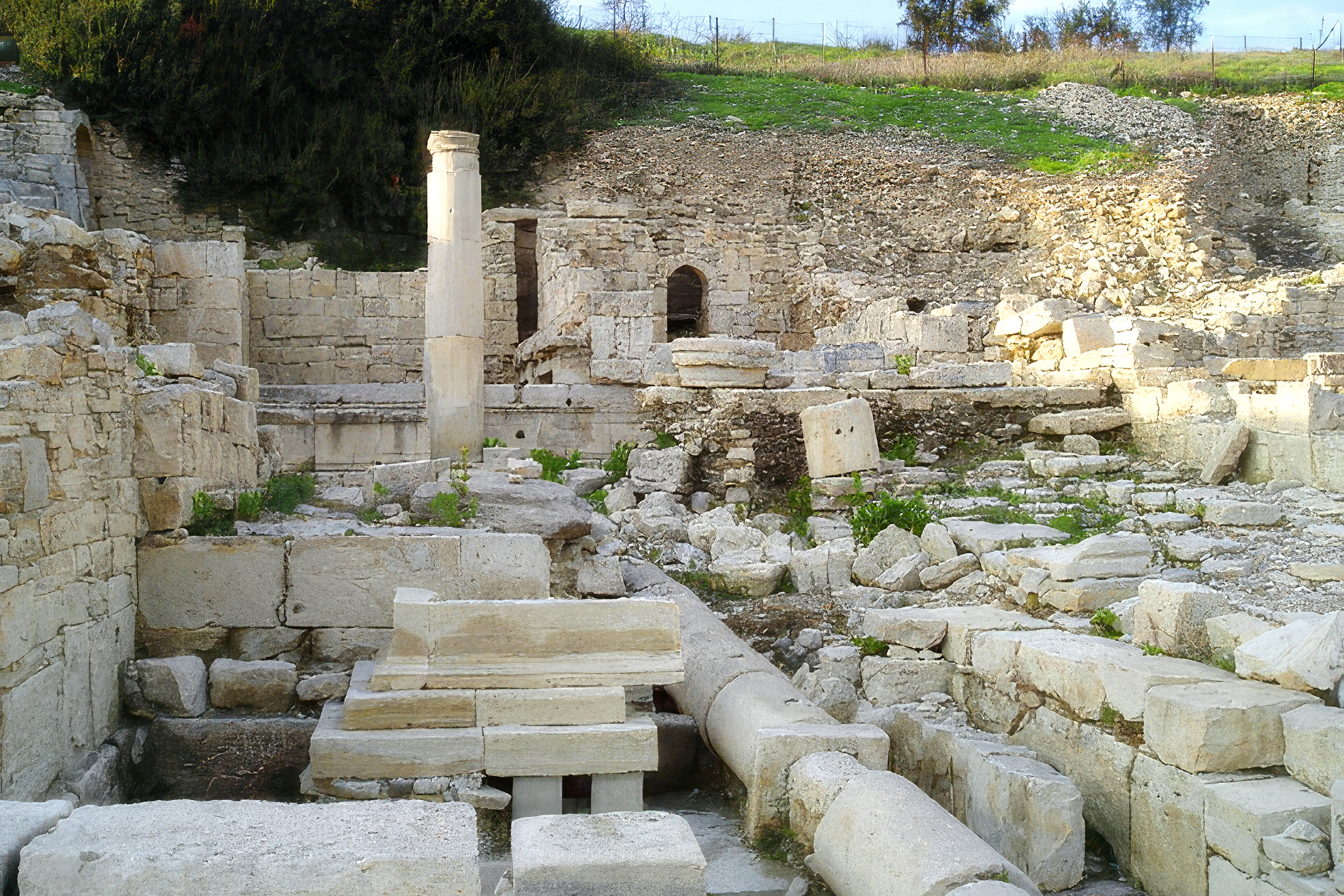
The lower town area known as Amathus Palaea Lemesos showed active habitation well into the 6th century CE. Wells excavated north of the former harbor basin contained pottery, amphorae, and saqieh jars dating uniformly to the end of the 6th or beginning of the 7th century CE. These wells connected to artisanal activities in the lower town. Animal bones from this period provide a rare picture of fauna present on late Roman Cyprus.
Arab raids beginning in the mid-7th century CE led to gradual abandonment. The agora was abandoned during this period, with residents fleeing to safer locations. The urban center transferred west to what became Limassol. By the 7th century CE, Amathus ceased to function as a city after nearly 2,000 years of continuous occupation.
The site remained largely undisturbed for over a millennium. Unlike most ancient cities, modern development did not cover the ruins. This preservation allowed for comprehensive archaeological investigation beginning in the late 19th century and continuing today. Visitors to modern Amathus walk through a coastal archaeological park where Roman bath ruins stand near Byzantine church foundations, where agora columns frame views of the Mediterranean, and where an underwater harbor tells the story of Hellenistic warfare. The combination of well-preserved land and underwater remains makes Amathus unique among Cyprus archaeological sites, offering insights into 2,000 years of coastal urban life in the ancient Mediterranean world.