 English
 Greek
Greek German
 Russian
The Archbishop’s Palace in Nicosia serves as the official headquarters of the Orthodox Church of Cyprus and the residence of the Archbishop.
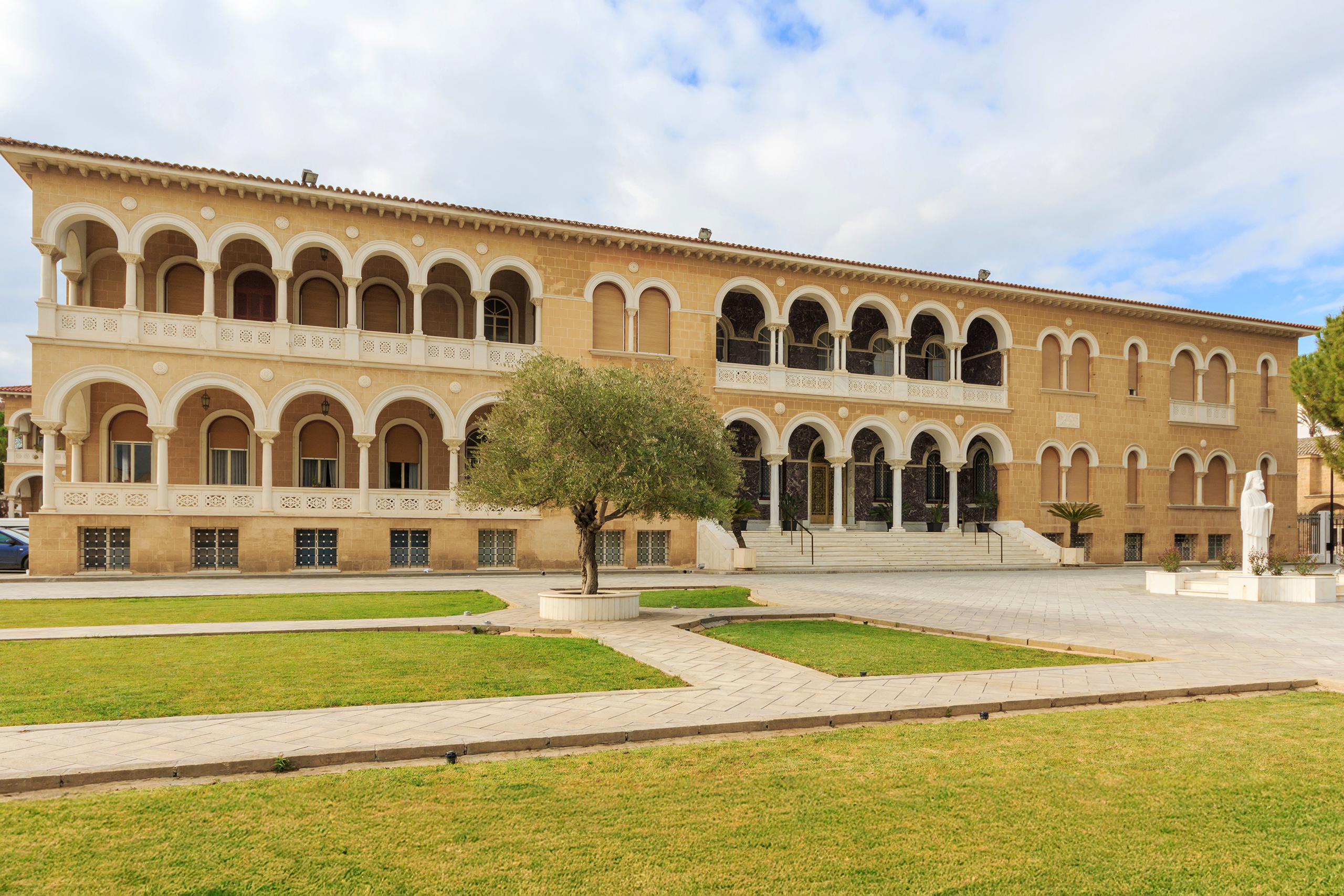
The Archbishop’s Palace functions as both the administrative center of the Cypriot Orthodox Church and a major cultural complex. The building houses the offices of the archdiocese, the residence of the Archbishop of Nova Justiniana and All Cyprus, the Byzantine Museum with over 200 icons spanning 1,000 years, the Library of the Archbishopric, and an art gallery displaying European paintings from the 15th to 19th centuries.
The palace stands adjacent to the Old Archbishop’s Palace, which now contains the Folk Art Museum and the EOKA Struggle Museum. The complex represents the enduring power and influence of the Orthodox Church in Cypriot society, while also serving as a guardian of the island’s cultural heritage.
Historical Background
The current Archbishop’s Palace was constructed between 1956 and 1960, during the final years of British colonial rule and the lead-up to Cypriot independence. Archbishop Makarios III commissioned the palace, recognizing the need for a modern building to reflect the importance of the Church of Cyprus. The timing of construction proved significant, as Makarios would soon become not just the spiritual leader of the Orthodox community but also the first president of the Republic of Cyprus in 1960.
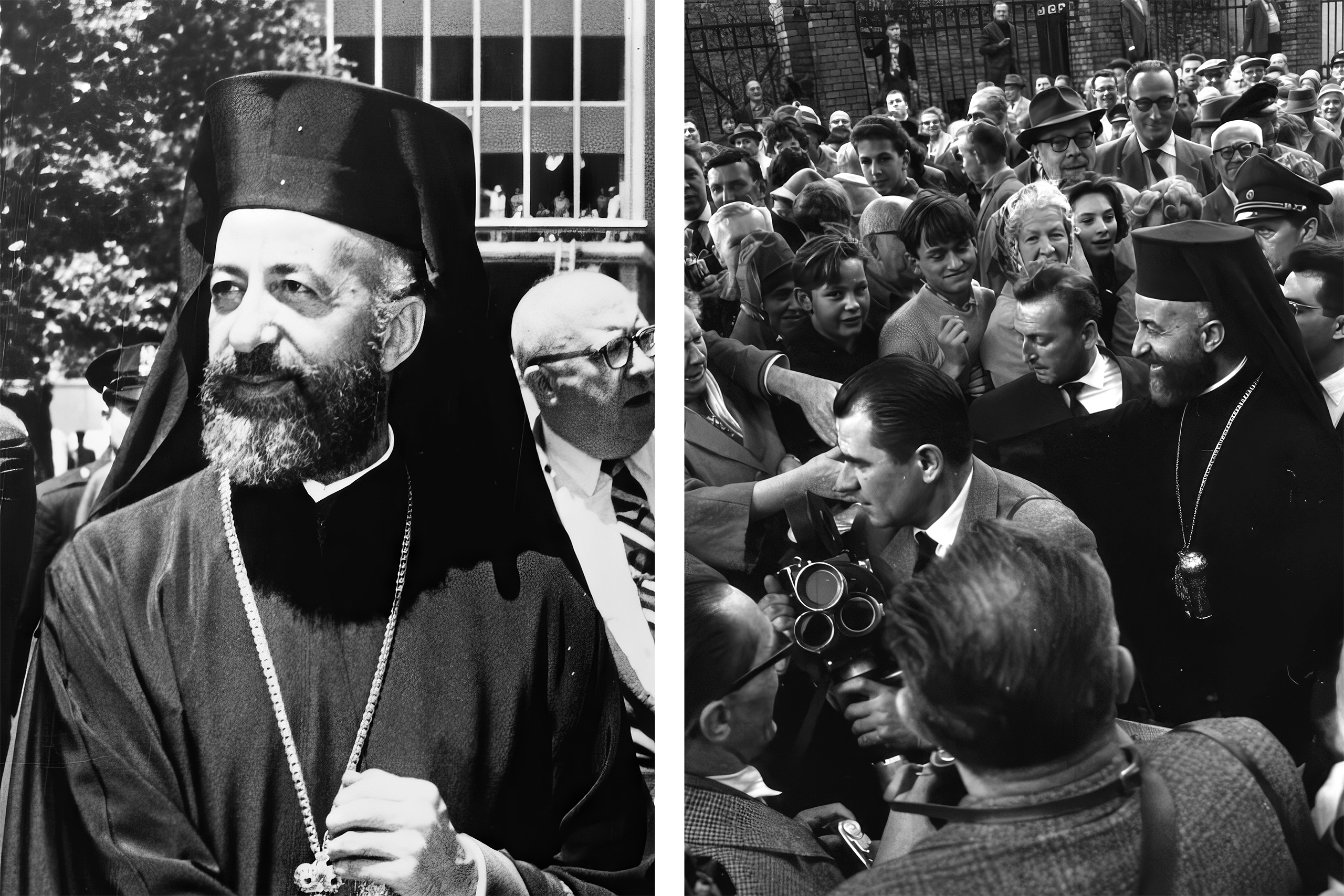
Greek architect George Nomikos designed the general plans in Athens, while Nicholas S. Roussos and John Pericleous from Limassol handled all other architectural work. The architects chose the neo-Byzantine style deliberately, connecting the new building to the island’s Byzantine past and the Orthodox Christian tradition. This architectural choice made a clear statement about Cypriot identity and the central role of Orthodox Christianity in defining that identity.
The palace replaced functions previously housed in the Old Archbishop’s Palace, a 17th-century structure that originally served as a Benedictine monastery during the Frankish period. The old palace, built around 1730, had become inadequate for the growing administrative needs of the church and the cultural institutions it supported.
Architectural Features and Design
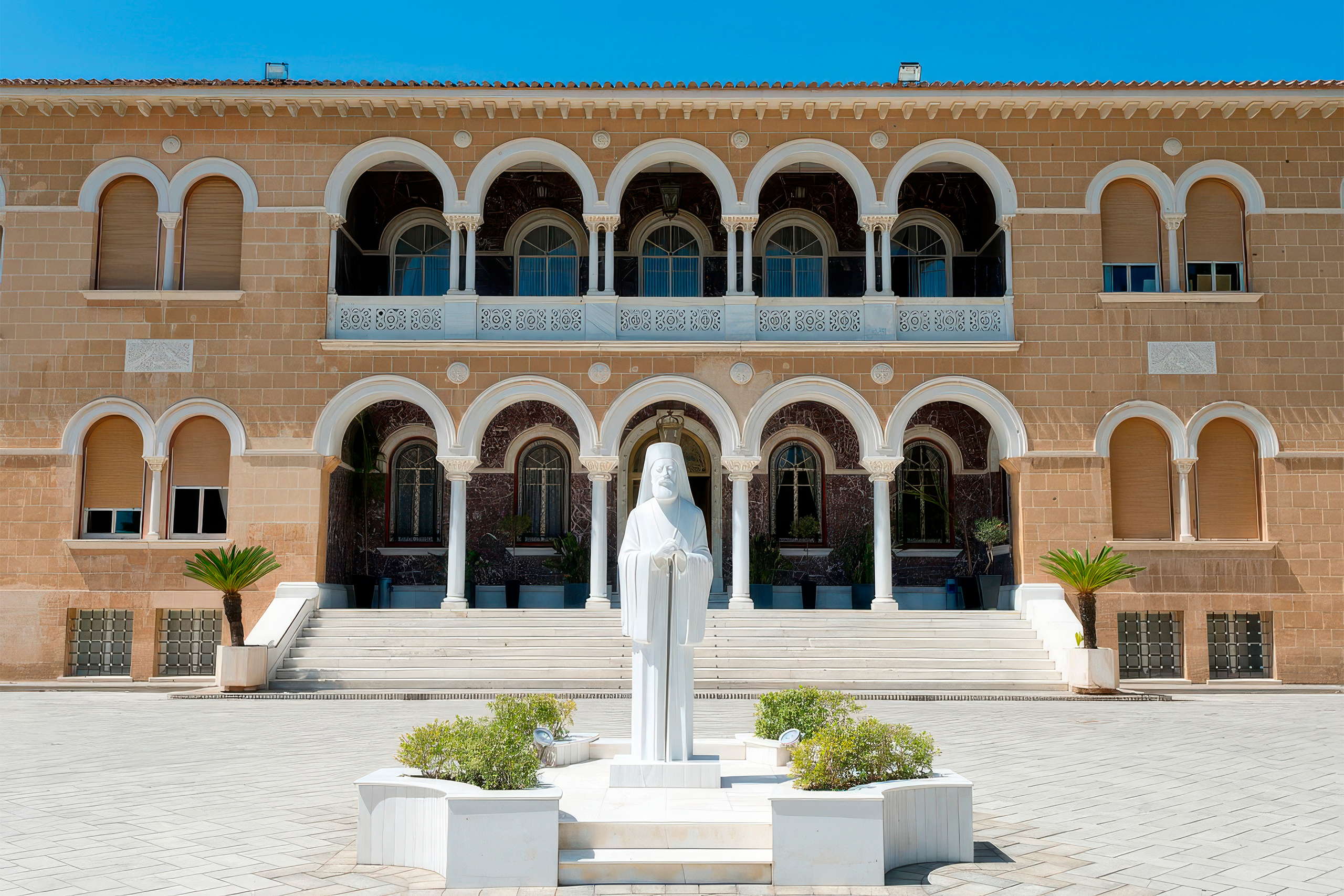
The Archbishop’s Palace presents itself as a grand two-story building decorated with high arches, large windows, and elegant architectural details. The neo-Byzantine style incorporates elements from medieval Byzantine church architecture, including rounded arches and ornamental stonework. The facade features a symmetrical design that conveys both authority and tradition.
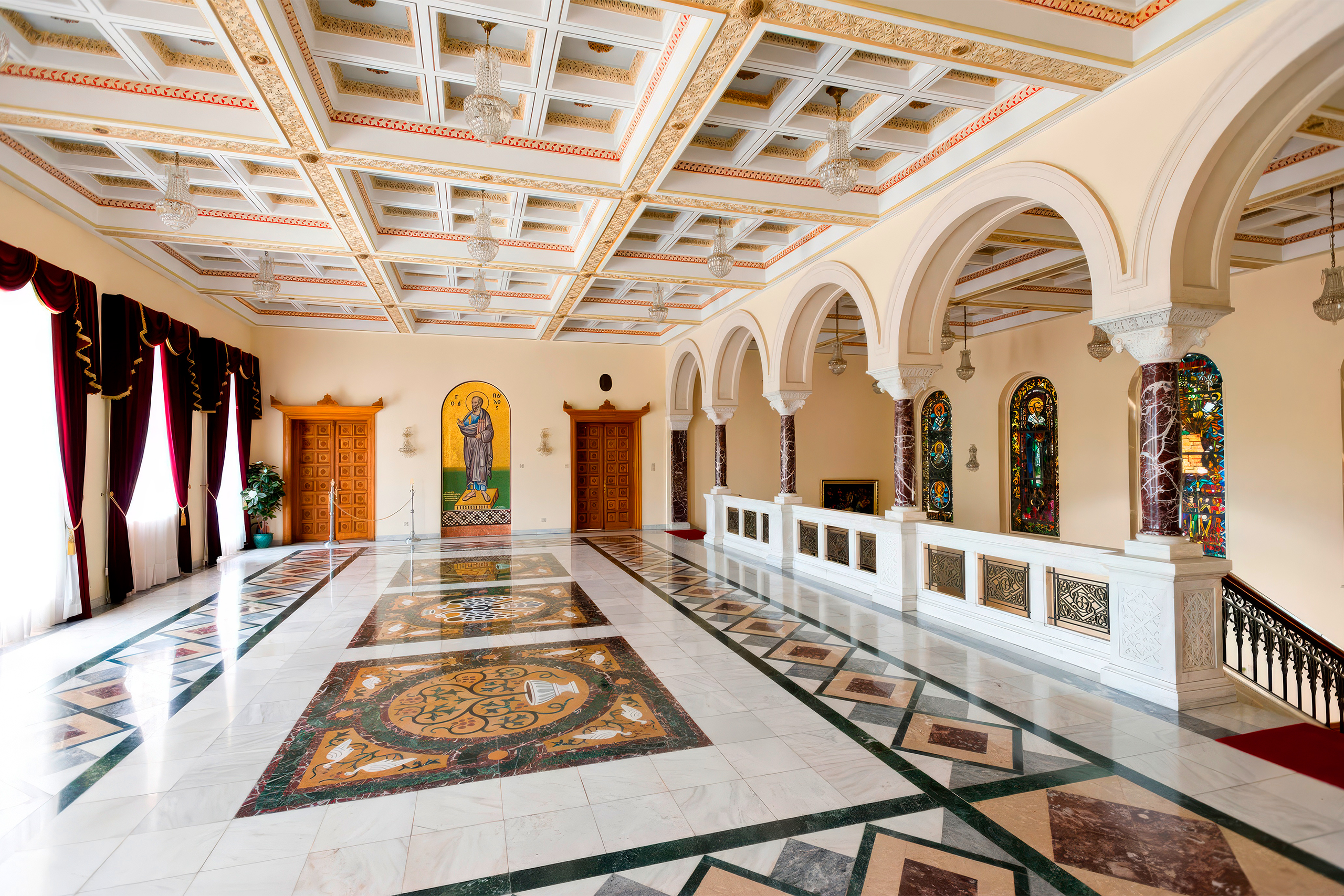
Behind iron gates bearing the coat of arms of the Byzantine Empire, a large open-air courtyard dominates the complex. The courtyard contains a small garden with flowers and serves as the ceremonial heart of the palace.
For many years, a massive bronze statue of Archbishop Makarios III stood in this courtyard. Sculpted by Nikolas Kotziamanis, the statue weighed approximately 13 tons and stood about 30 feet tall. In 2008, this bronze monument was relocated to Kykkos Monastery near Makarios’s tomb on Throni Hill, replaced by a life-size marble statue at the palace.
The palace suffered considerable damage during the 1974 coup d’état and Turkish invasion of 1974. The building underwent complete restoration in the 1980s, which preserved its structural integrity and architectural character. Today, the restored palace stands as one of the most majestic buildings in central Nicosia.
The Byzantine Museum Collection
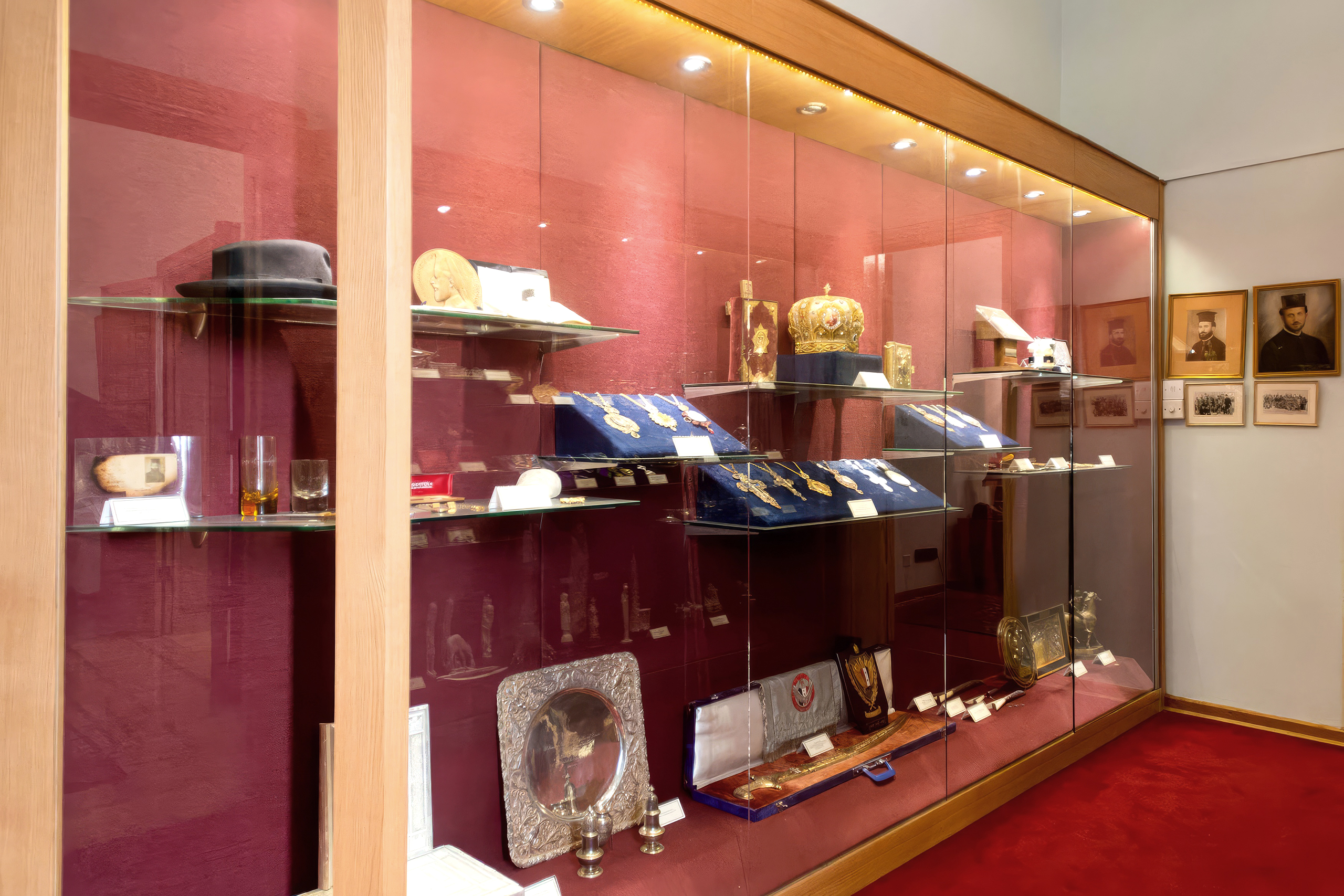
The Byzantine Museum occupies space within the Archbishop’s Palace and holds the richest collection of Byzantine art in Cyprus. The museum displays over 200 icons dating from the 9th to the 19th centuries, representing one of the most comprehensive collections of Byzantine iconography in the eastern Mediterranean. Many icons from the 12th century feature prominently, a period when Byzantine iconography reached its artistic peak.
The collection includes sacred vessels, vestments, robes, and books that provide insights into Orthodox liturgical practices over the centuries. These artifacts demonstrate the technical skill of Byzantine craftsmen and the importance of religious art in Orthodox worship. The museum organizes its collection chronologically and thematically, allowing visitors to trace the evolution of iconographic styles and techniques across ten centuries.
The museum’s most notable exhibit consists of the famous 6th-century mosaics from the church of Panagia Kanakaria in Lythrangkomi Village. These mosaics rank among the oldest examples of Christian art in Cyprus and hold immense historical and artistic value. The pieces were illegally removed from the church in the occupied northern part of Cyprus after 1974 and smuggled out of the country. Following lengthy legal battles and international efforts, the mosaics were recovered and brought back to Cyprus, where they now occupy a place of honor in the Byzantine Museum.
In 2013, the museum received another significant addition when 174 icons and other Byzantine treasures were discovered during a raid on a Turkish antique dealer in Munich. These items, looted from churches in the Turkish-occupied part of Cyprus after the 1974 invasion, were repatriated and added to the collection. The museum also displays 7th-century frescoes from Antiphonitis Monastery and 13th to 14th-century frescoes from the church of St. Euphemianos near Famagusta, all recovered after their provenance was detected by international institutions.
The Art Gallery
Four rooms on the top floor of the Archbishop’s Palace house an art gallery displaying works from Western Europe spanning the 15th to 19th centuries. The gallery includes paintings, engravings, and maps from the Greek War of Independence in 1821, along with Cypriot and Greek artworks. This collection complements the Byzantine Museum by showing different artistic traditions and their influence on or relationship with Orthodox Christian art.
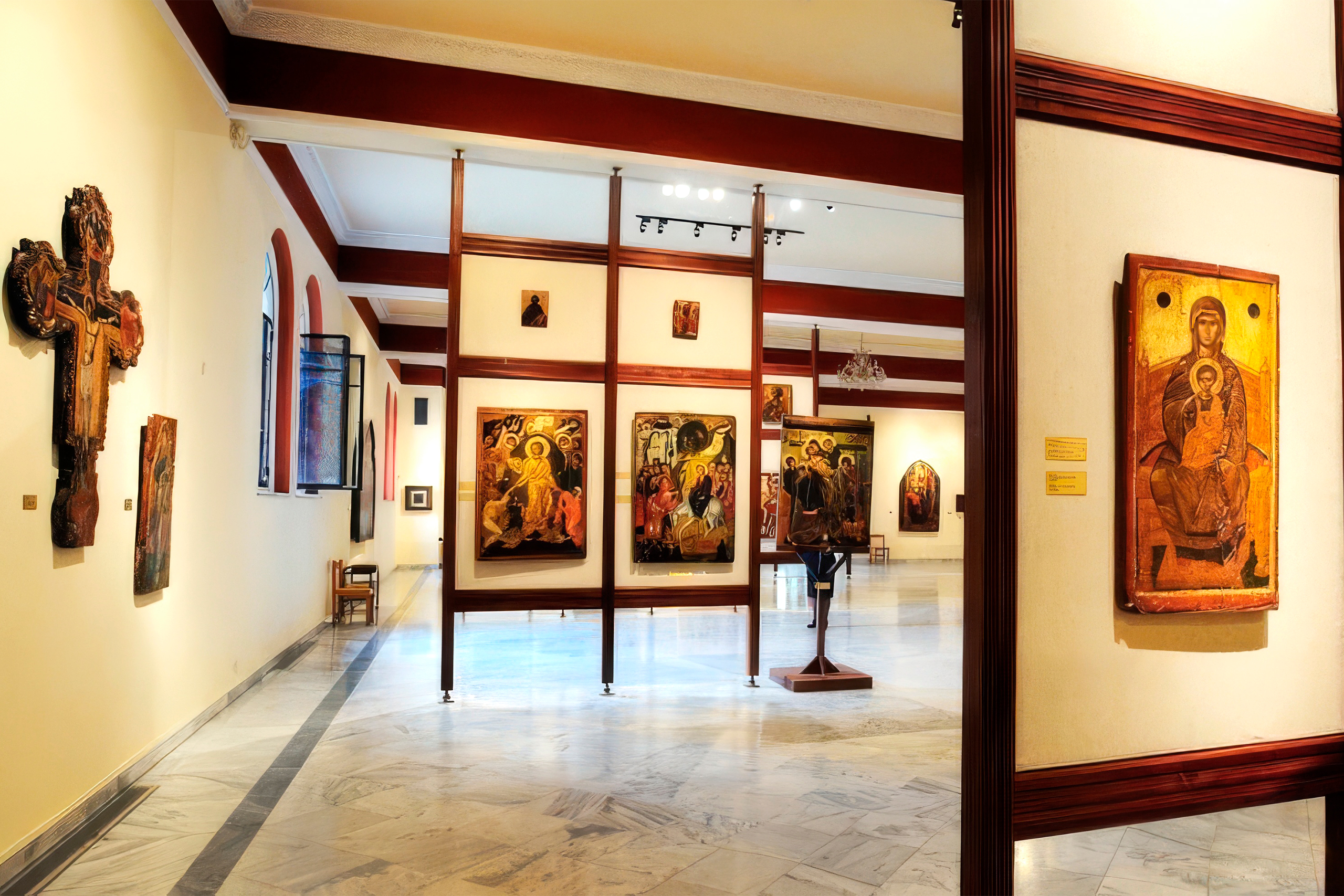
The presence of Western European art in the palace reflects the complex cultural exchanges that occurred in Cyprus over the centuries. As successive powers controlled the island, artistic styles and techniques from Italy, France, and other European centers reached Cyprus and interacted with local Byzantine traditions.
The Church’s Political Role
The Archbishop’s Palace symbolizes the unique position of the Orthodox Church in Cypriot society. Unlike many modern nations where church and state maintain strict separation, the Orthodox Church of Cyprus has long played a direct political role. The Archbishop traditionally served as the Ethnarch, the national leader of the Greek Cypriot community, particularly during periods of foreign rule when no independent Cypriot government existed.
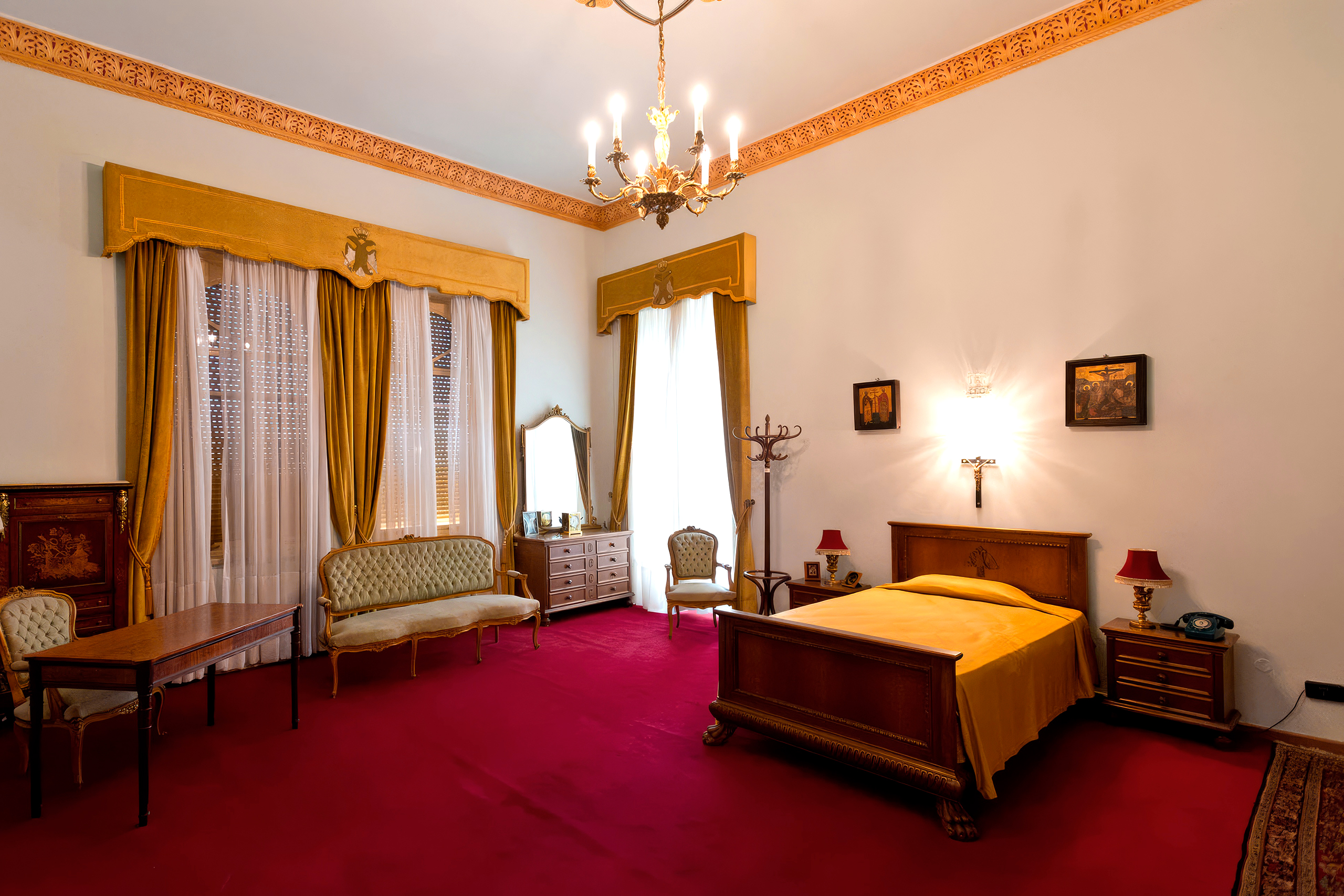
This tradition reached its peak with Archbishop Makarios III, who simultaneously served as Archbishop from 1950 to 1977 and as the first President of Cyprus from 1960 to 1977. Makarios embodied the dual religious and political authority of the Orthodox Church. His preserved heart remains in his former bedroom in the Archbishop’s Palace, a testament to his enduring significance in Cypriot history.
The palace continues to function as a center of both religious authority and political influence. While modern Cyprus has secular governmental institutions, the Orthodox Church maintains considerable moral authority and plays an active role in debates about national identity, cultural preservation, and Cyprus’s relationship with Greece and the wider Orthodox world.
The Palace in Modern Cypriot Life
Today, the Archbishop’s Palace remains the official residence and office of the Archbishop of Cyprus. The current archbishop conducts church administration, receives visiting religious leaders, and issues statements on matters affecting the Orthodox community from this building. The palace serves as the nerve center of Orthodox religious life in Cyprus, coordinating the activities of parishes, monasteries, and church institutions across the island.
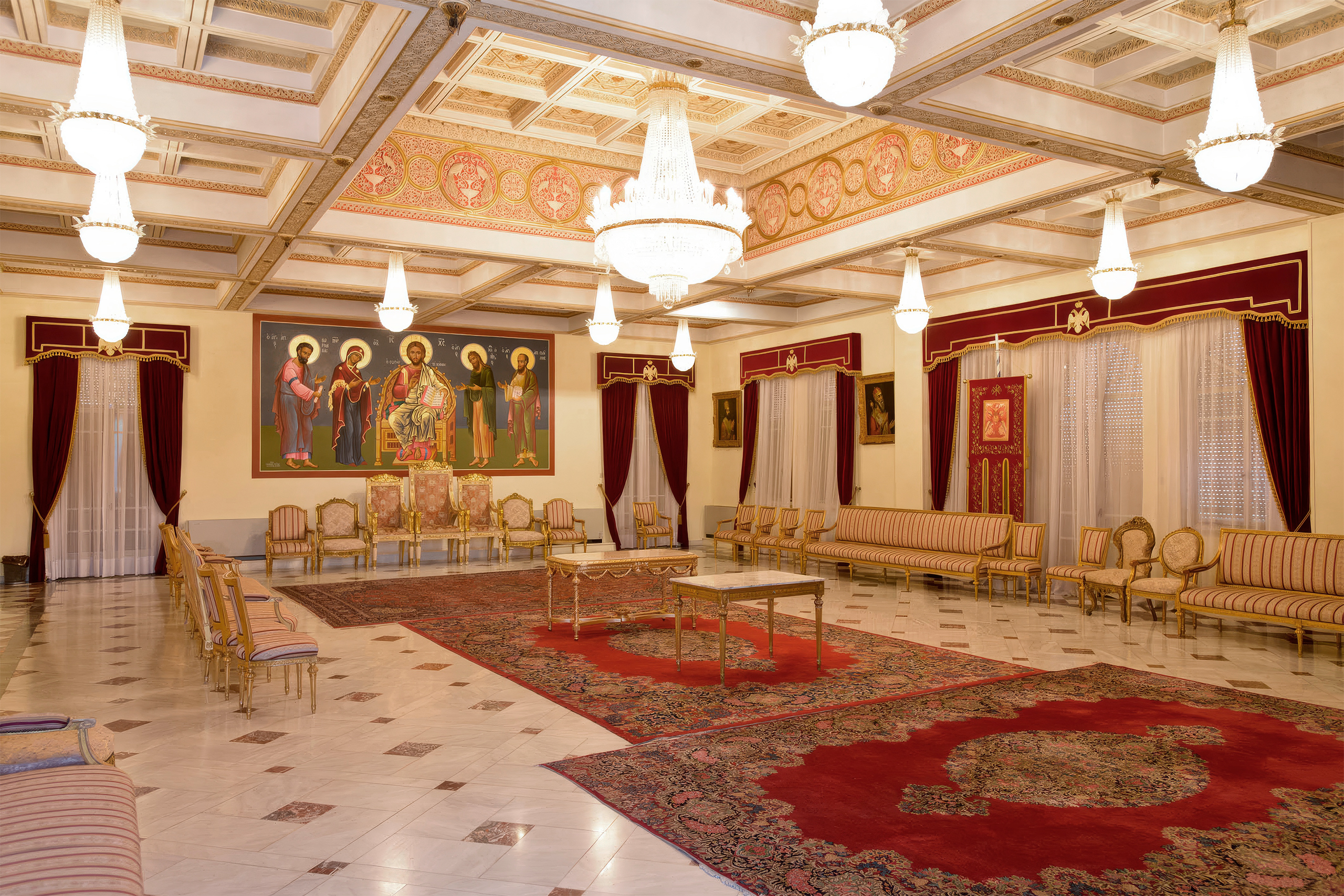
The palace complex hosts important religious ceremonies, particularly during major Orthodox holidays like Easter and Christmas. Church officials, government ministers, and foreign dignitaries often gather at the palace for formal events that blend religious and civic functions. The palace courtyard provides a setting for outdoor ceremonies and gatherings that maintain traditional practices while accommodating modern needs.
The museums housed within the palace complex attract thousands of visitors annually, both pilgrims drawn to the religious art and tourists interested in Cypriot culture and history. The Byzantine Museum in particular serves an educational function, preserving and displaying treasures that might otherwise have been lost to time, conflict, or illegal trafficking.
Visiting Archbishop Kyprianos Square
Although the Archbishop’s Palace itself remains closed to the public, visitors can access the Byzantine Museum, the Library of the Archbishopric, the Folk Art Museum in the Old Palace, and the National Struggle Museum. The Byzantine Museum typically operates Monday through Friday from 9:00 AM to 4:30 PM, and Saturday from 9:00 AM to 1:00 PM, though these hours should be confirmed as the museum has undergone periodic closures for restoration work.
The complex sits in central Nicosia within the Venetian walls, at Archbishop Kyprianos Square. The location makes it easily accessible from other attractions in the old city. The Cathedral of St. John the Theologian stands immediately adjacent to the palace. This 17th-century cathedral features a modest exterior that conceals a richly decorated interior with finely carved iconostasis covered in gold leaf and beautiful frescoes covering the walls.
Across the square stands the Pancyprian Gymnasium, one of Cyprus’s oldest and most prestigious schools, founded in 1812. The proximity of the palace, cathedral, and gymnasium creates a compact cultural and educational center that has shaped Cypriot society for generations.
Why the Archbishop’s Palace Matters
The Archbishop’s Palace represents the intersection of religion, politics, and culture that defines much of Cypriot history. The Orthodox Church has shaped the island’s identity for over 1,500 years, surviving successive waves of foreign rule while maintaining its traditions and authority. The palace embodies this continuity and resilience.
The building also preserves invaluable cultural treasures that document Cyprus’s artistic and spiritual heritage. The icons, mosaics, and religious artifacts in the Byzantine Museum represent some of the finest examples of Byzantine art surviving anywhere in the world. The recovery and preservation of looted artwork demonstrates Cyprus’s commitment to protecting its heritage despite political division and ongoing conflict.
The palace serves as a reminder that Cyprus’s story cannot be told solely through political events or military conflicts. The Orthodox Church, its art, its architecture, and its enduring influence on Cypriot society form an essential part of understanding what makes Cyprus distinctive. The Archbishop’s Palace stands not just as an administrative building or museum complex, but as a living symbol of Orthodox Christianity’s central role in shaping Cypriot identity and culture across the centuries.