 English
 Greek
Greek German
 Russian
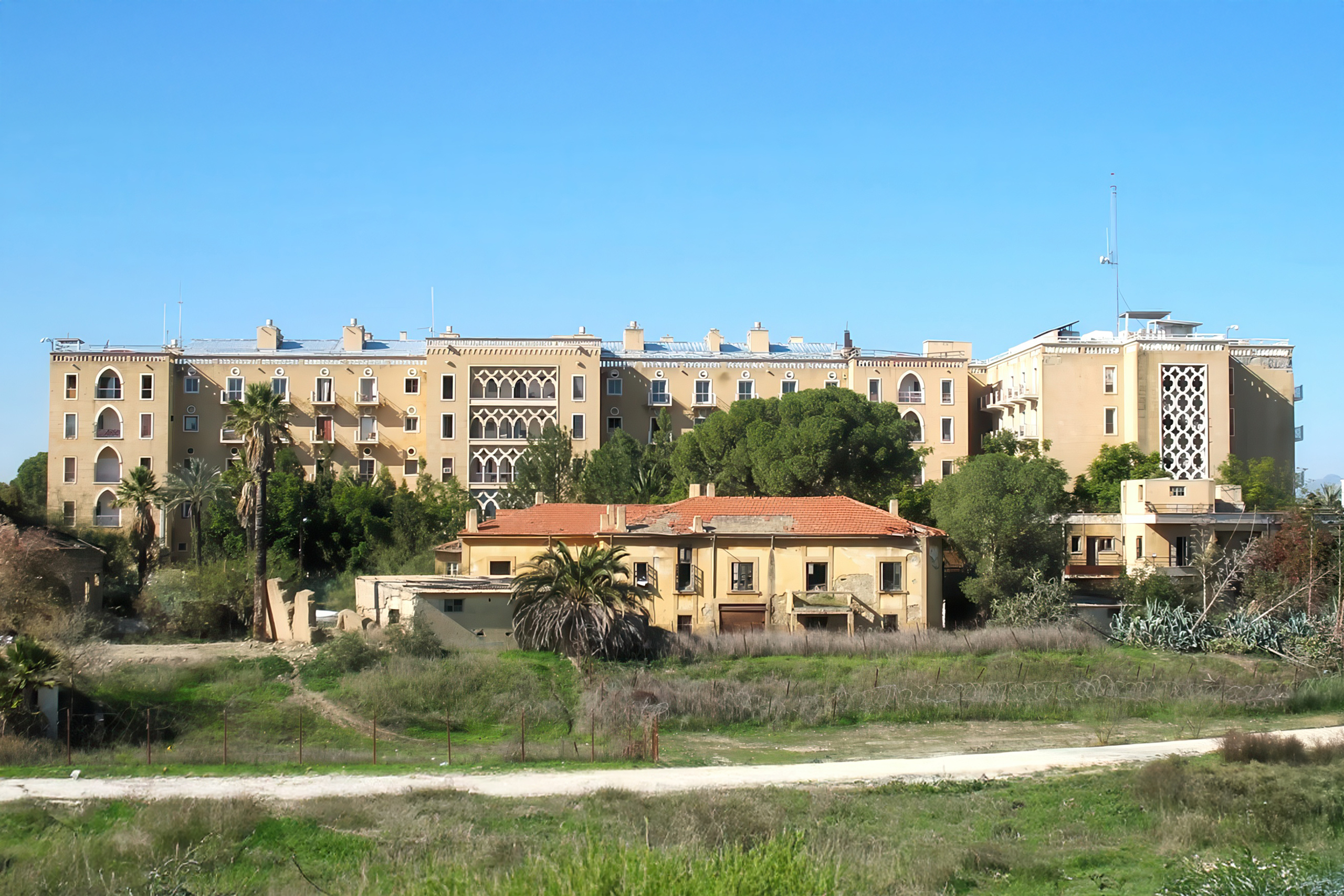
The Ledra Palace Hotel stands in central Nicosia, caught between past glory and present division. Once the capital’s most glamorous hotel, it now sits in the UN buffer zone that splits Cyprus in two. The Ledra Palace Hotel occupies a unique position in Cyprus’s modern history. Built as a luxury establishment in the late 1940s, it served as the island’s social center for Greek, Turkish, British, and Armenian elites. Today the building remains frozen in the Green Line buffer zone, its facade scarred by bullets and mortar craters from the 1974 conflict. The hotel has transformed from a place of celebration to a symbol of division, yet it continues to serve as neutral ground where both communities meet.
Historical Background
Three businessmen conceived the Ledra Palace in 1947 when tourism on Cyprus was just beginning. George Skyrianides, already owner of the luxurious Forest Park Hotel in Platres, partnered with Nicosia’s Vice Mayor George Poulias and Egyptian businessman Dimitrios Zerbinis. Together they formed Cyprus Hotels Limited with the goal of creating the island’s finest accommodation.
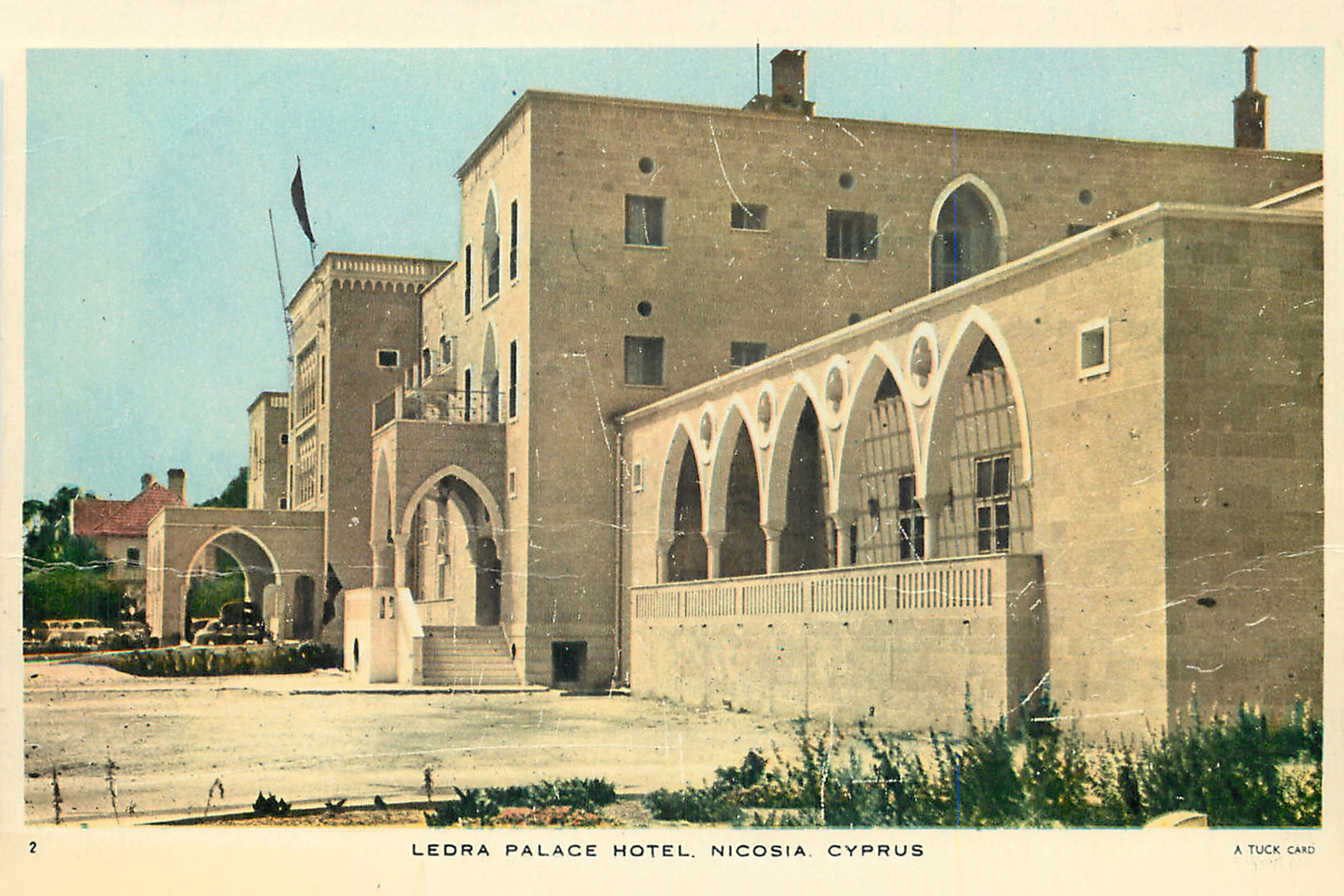
The hotel was designed by German Jewish architect Benjamin Günsberg, who also created the Curium Palace in Limassol. Construction took two years and costs far exceeded the original budget, reaching approximately £240,000 Cyprus pounds. The hotel opened on October 8, 1949, with British Governor Sir Andrew Wright attending the ceremony.
The location chosen was King Edward VII Street, later renamed Markos Drakos Avenue. The site would prove both advantageous and fateful, positioned near the old Wolseley barracks and adjoining what would become known as the Turkish quarter.
The Height of Luxury
The Ledra Palace opened with 94 bedrooms and 150 beds, officially rated as deluxe. Every room featured hot and cold water, central heating, and a telephone. The hotel boasted two restaurants, two bars, a café, and multiple social spaces including a conference room, reading room, bridge room, and a grand ballroom lit by 1,350 direct and indirect lights.
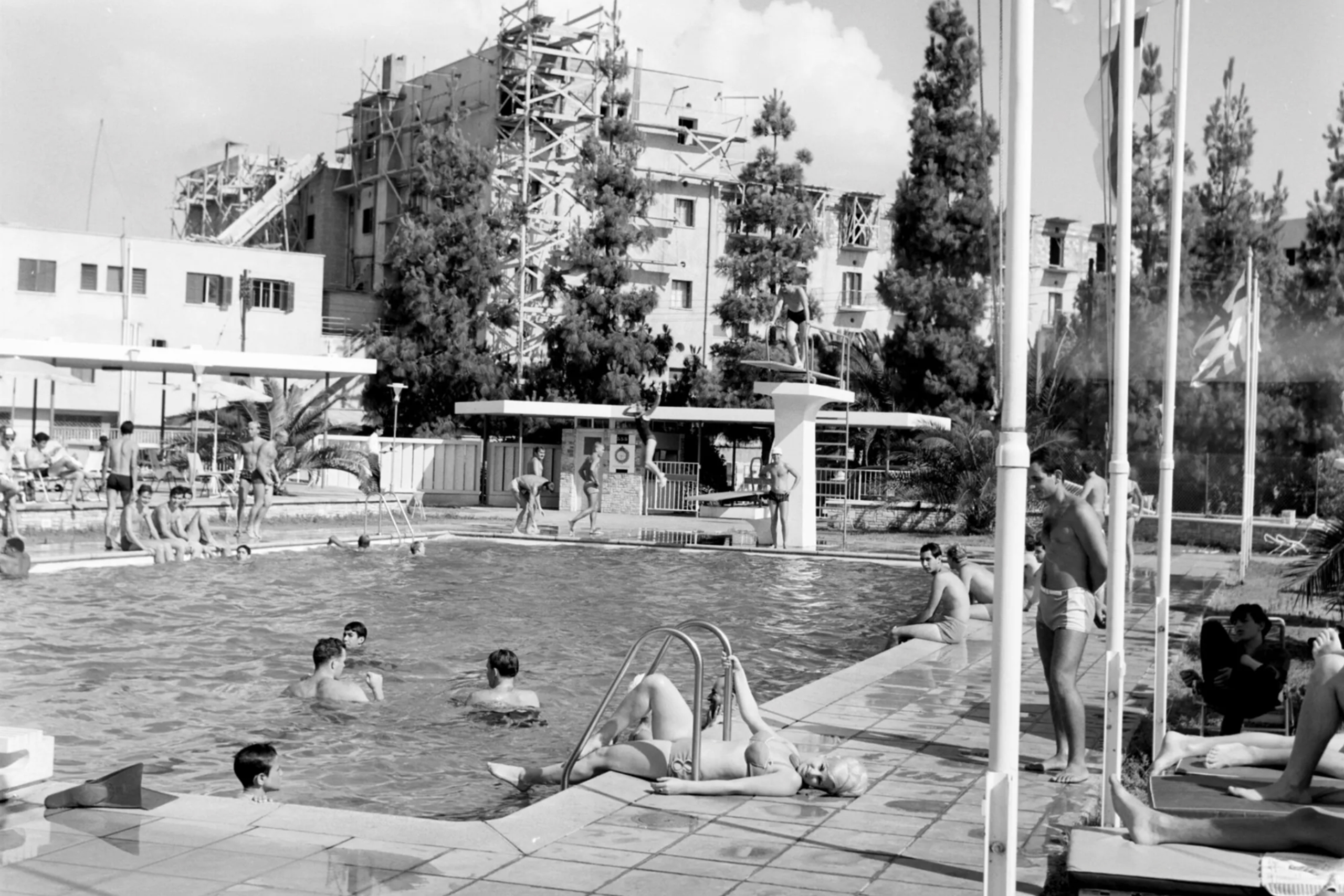
The ballroom featured murals of Kyrenia and Venice. The floors were marble imported from Greece. Chandeliers and furniture came from Italy at considerable expense. The dance floor was made of expensive oak wood. In the gardens outside, the hotel added a swimming pool in 1964, along with tennis courts, a paddling pool, and a children’s playground.
Initially the two-floor hotel had 93 rooms, with prices ranging from 30 to 45 shillings. The hotel was later expanded with three additional floors, raising the total number of rooms to 240. The establishment positioned itself with the slogan “Your Home Base in the Middle East.”
A Gathering Place for All
Within months, the Ledra Palace became a magnet for Cyprus’s upper society, including Greek, Turkish, English, and Armenian elites. The hotel had always been filled with stars, politicians, and businessmen from across the Mediterranean and beyond.
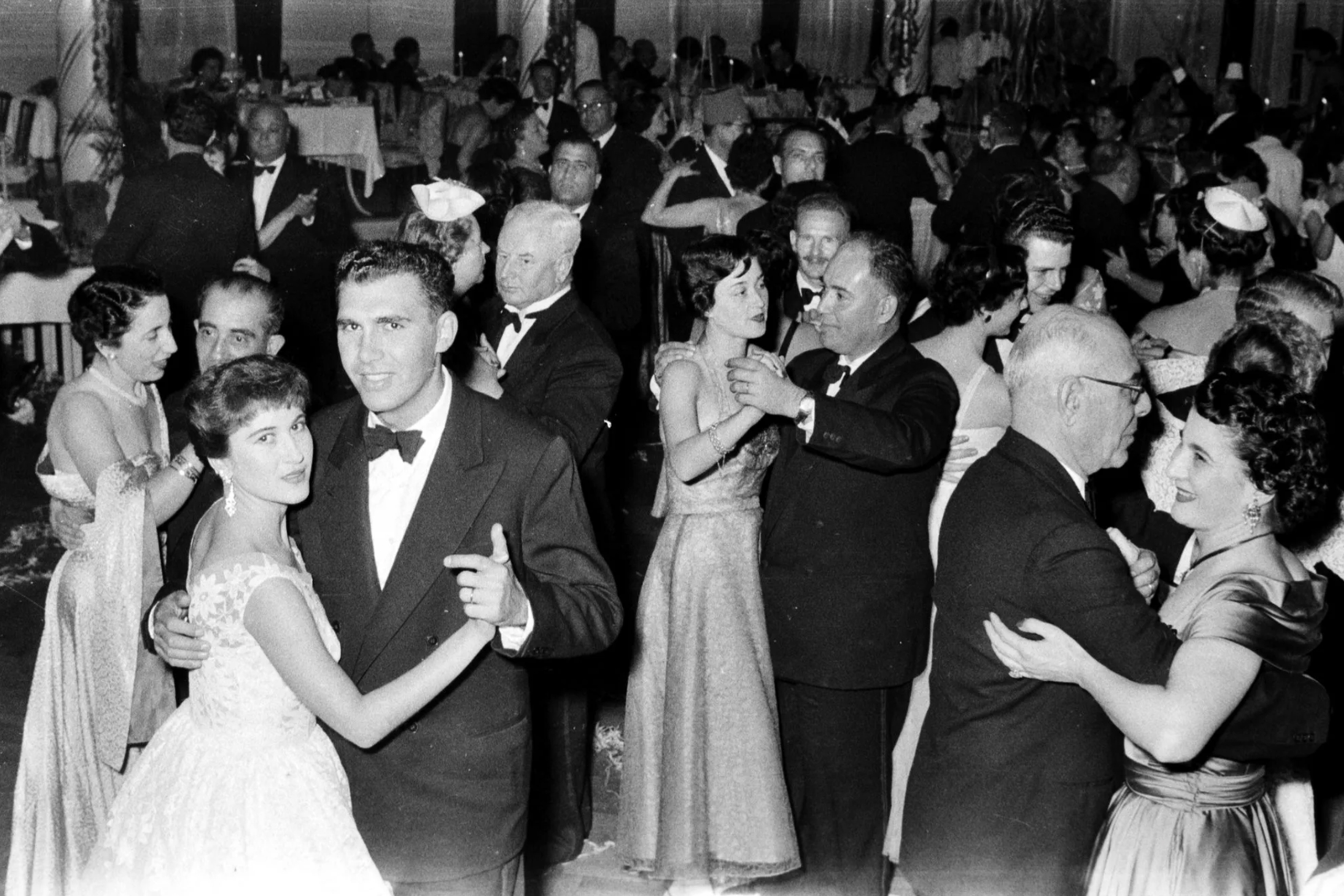
Among the famous guests were American actress Elizabeth Taylor, King Farouk I of Egypt and Sudan, and Soviet cosmonaut Yuri Gagarin. President Lyndon Johnson visited, and due to his height of 1.92 meters, the hotel administration had to urgently purchase a king-size bed since he couldn’t fit into a standard one.
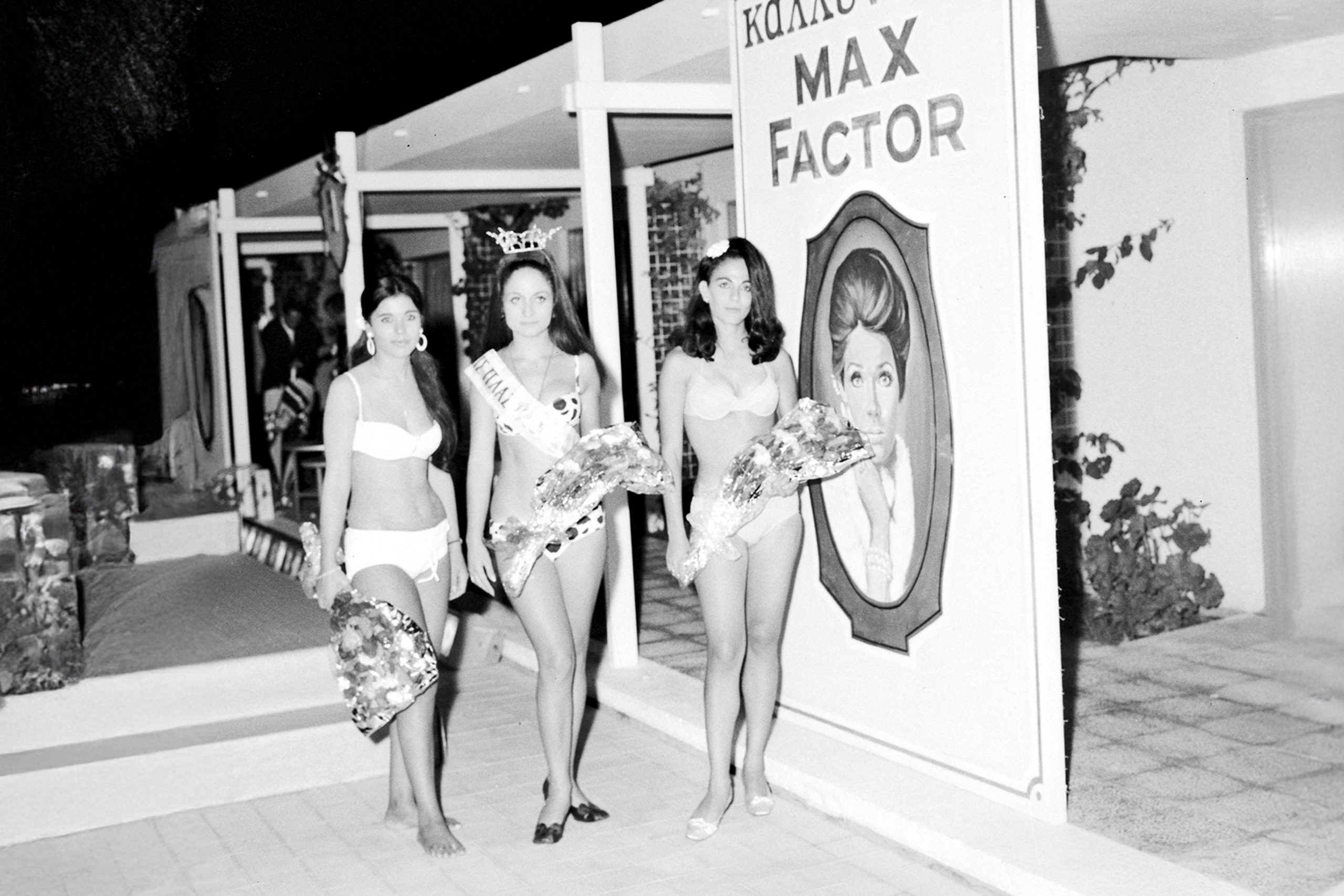
The hotel’s ballroom hosted weddings, carnival celebrations, scout dances, and balls where well-known musical groups from Europe, Lebanon, and Egypt performed. The swimming pool, when it opened in 1962, became particularly popular with Nicosia’s bikini-clad sunbathers.
The hotel also played host to important political meetings. After Cyprus gained independence from British colonial rule in 1960, experts from Greece, Turkey, and both Cypriot communities met at the Ledra Palace to help draft the new constitution.
When Violence Arrived
On April 1, 1955, the underground organization EOKA declared war on the British, aiming to expel them and unify Cyprus to Greece. The Ledra Palace found itself at the center of events.
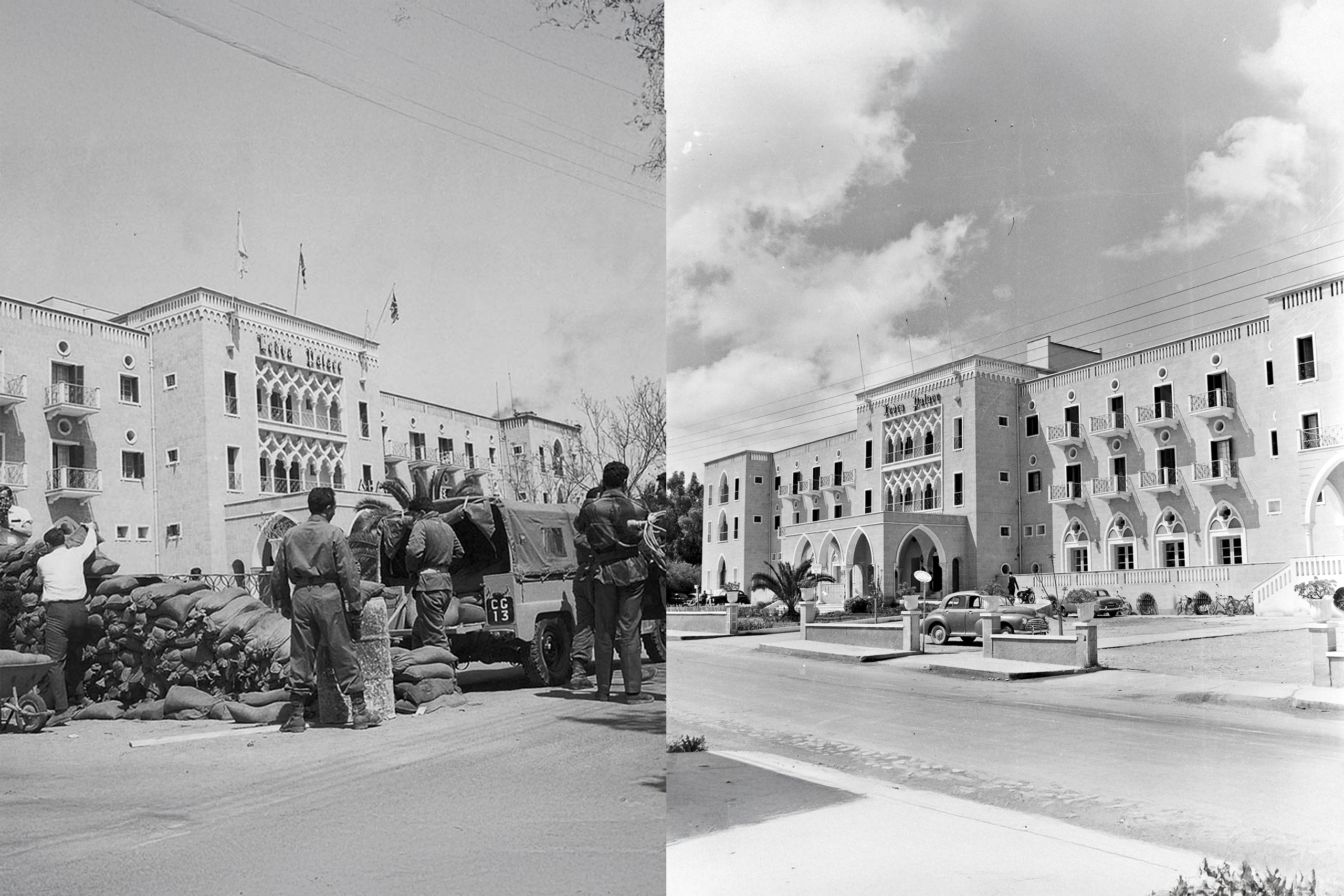
On the night of November 28, 1955, when the British elite celebrated St. Andrew’s Day, EOKA threw a grenade into the hotel’s ballroom, seriously injuring four people. The hotel transformed overnight from a multicultural space to a predominantly Greek establishment. British and Turkish elites stopped visiting.
In 1952, due to a military coup in Egypt and financial difficulties, Dimitrios Zerbinis was forced to sell the controlling stake to British holding company Trust House Forte. Later, worried that the British might resell shares to Turkish interests, Louis Hotels and the Cyprus Orthodox Church took a loan from Barclays Bank and bought 67% of the shares. The Church eventually became the main owner.
The Battle of 1974
On the dawn of July 20, 1974, when Turkish parachutists landed near Kyrenia, the Ledra Palace Hotel was full. The hotel’s location made it strategically vital. Its potential seizure would endanger nearby administrative centers, courts, the telecommunication authority, parliament, ministries, and the Central Bank.
Forty Greek Cypriot soldiers and reservists received orders to take hold of Ledra Palace and the surrounding area before the Turkish military. Soldiers from the 1st Company of the 211th Infantry Battalion went to the roof and mounted a 50mm machine gun, firing on descending Turkish paratroopers.
Around 380 civilians, mostly foreign nationals including women, children, and international media representatives, were trapped in the hotel. What followed was one of the fiercest incidents of fighting in Cyprus. Three Greek Cypriot soldiers lost their lives in the early hours, and others were injured.
By evening, after Turkish allegations that the hotel was being used by National Guard snipers and several unsuccessful ceasefire attempts, the United Nations declared the hotel a UN-protected area from which both sides were excluded. The Greek Cypriot National Guard initially refused to leave. After two mortar rounds hit the hotel the next day, all trapped civilians were escorted out by a Canadian-led UN convoy, and by afternoon the soldiers were persuaded to leave.
Life as a UN Base
Following the truce, the hotel fell within the boundaries of the UN Buffer Zone and from 1974 to 2019 served as the headquarters for Sector 2 United Nations Roulement Regiment, part of UNFICYP. Canadian peacekeepers took over the building soon after fighting ended.
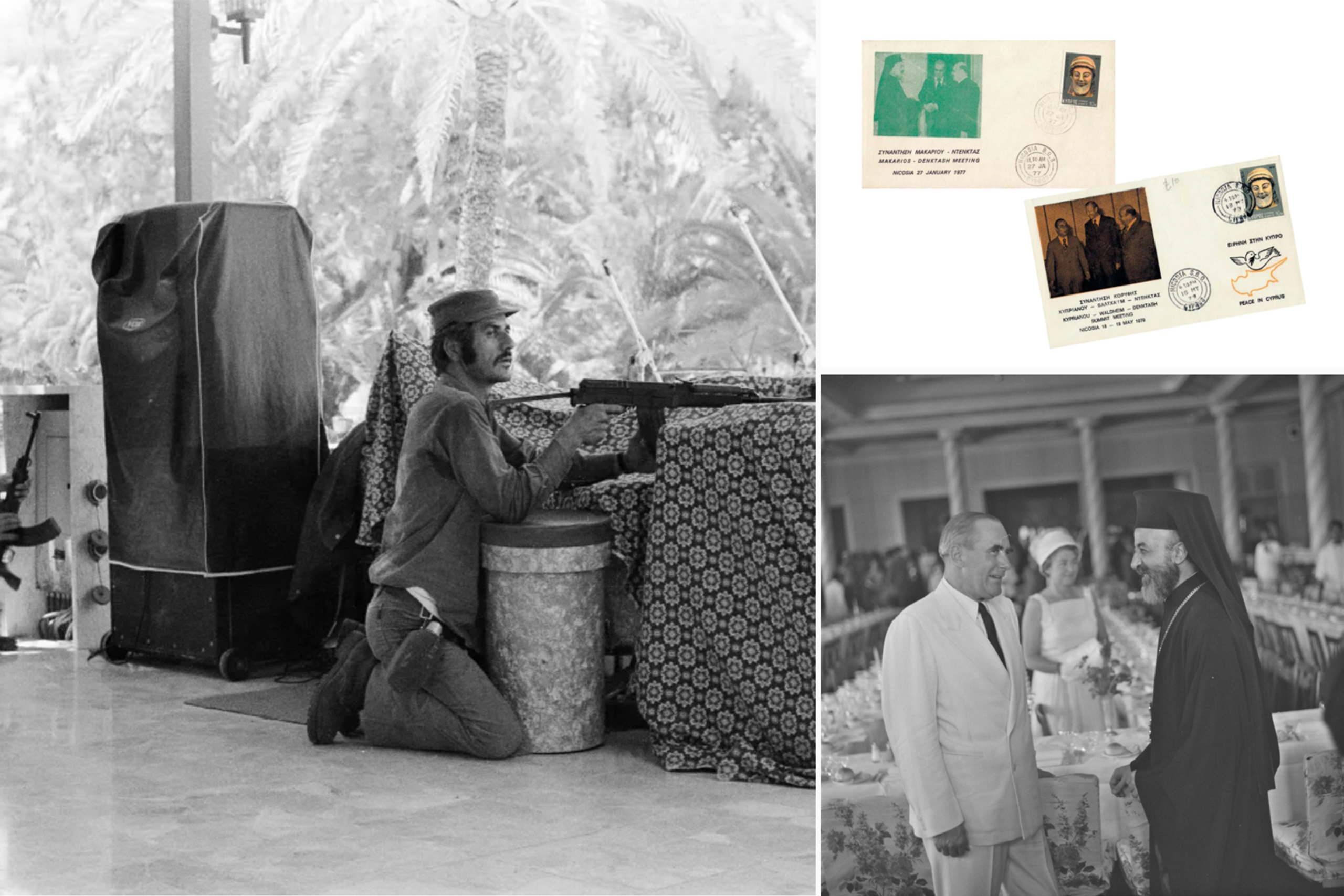
The building’s transformation was dramatic. Marble floors that once reflected chandeliers now bore the weight of military equipment. Ballrooms where Cyprus’s elite had danced became meeting rooms for peace negotiations. The swimming pool, heated by the Cypriot sun, continued to serve UN personnel.
In 2017, a Strategic Review Team from United Nations Headquarters found that due to outdated health and safety measures, the upper floors would have to be vacated. A new location opposite the hotel, named Wolseley Barracks, was chosen as the new headquarters, with capacity for 151 troops and 24 officers, opening in 2019.
Opening the Border
In April 2003, a political thaw between the two sides enabled the opening of a crossing point at the Ledra Palace for use by people from either community. This was the first time in over 30 years that the buffer zone became permeable. Hundreds of people queued in anticipation.
Since 2004, the hotel has been the site of a designated crossing point separating the Republic of Cyprus from the Turkish-controlled northern part of the island. The crossing remains open to pedestrians and cyclists, providing a vital connection between the two communities.
Interesting Facts Worth Knowing
The hotel’s barber, Andreas Kounnis, witnessed the transformation of the establishment firsthand. He served British soldiers when 30,000 troops were stationed in Cyprus during the EOKA struggle.
The famous Cyprus Bar became a legendary gathering place. Journalist James Cameron wrote about it in the New York Times in 1970, calling it one of the great bars he had known. Author Lawrence Durrell also mentioned the bar in his book “Bitter Lemons.”
The hotel featured a barber shop, hair salon, shops, and even a petrol station in its heyday. These amenities were unusual for hotels of that era.
In 2021, the Leventis Municipal Museum of Nicosia held an exhibition titled “Ledra Palace: Dancing on the Line.” The exhibition attracted more than 20,000 visitors and collected memories and memorabilia from hundreds of people across the island who shared their personal connections to the hotel.
The building’s architecture followed a simple modernist style without complicated forms, as described by the son of architect Benjamin Günsberg.
Current State and Meaning
The Ledra Palace now stands with mortar shell craters and bullet holes scarring its sandstone facade. The building is in a deplorable state and requires major renovation. Its exterior and interior have changed beyond recognition, with little remaining to remind visitors of its glorious past.
The two lower floors remain in use for events aimed at building bridges between Turkish Cypriots and Greek Cypriots. The hotel continues to serve as a base for UN soldiers who patrol the buffer zone and prevent tensions from rising between opposing forces, who in some areas stand only meters apart.
The building has become what scholars call a “container of memory,” a palimpsest of meanings that reflects Cyprus’s difficult modern history. It represents both division and the hope for reconciliation.
Visiting the Crossing Point
The Ledra Palace crossing point is accessible to pedestrians and cyclists. Visitors can walk from Eleftheria Square in central Nicosia west along Ledra Street through the pedestrian zone until reaching the clearly marked border crossing with signs for passport control.
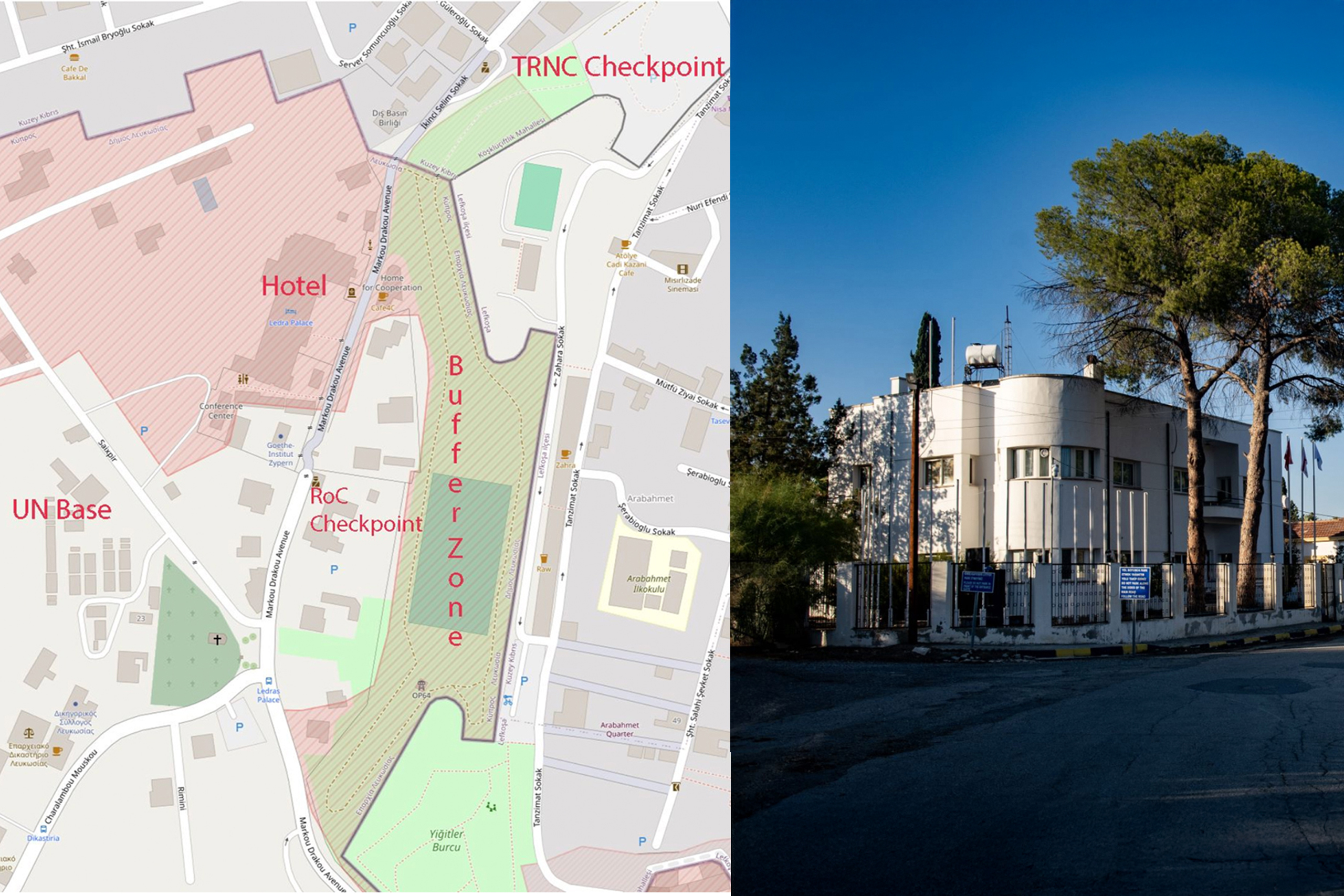
The crossing is free to use and provides a unique opportunity to experience the divided city. After passing through checkpoints on both sides, visitors enter the northern part of Nicosia. The experience offers a tangible sense of Cyprus’s ongoing division.
The area around the crossing includes the Home for Cooperation building, established by the Association for Historical Dialogue and Research in 2007. This shared space serves as an educational center and bridge-builder between the separated communities.
Why This Hotel Matters
The Ledra Palace Hotel tells the story of modern Cyprus in a single building. It represents the optimism of the post-war years when communities lived and celebrated together. It witnessed the violence that tore the island apart. It survived as neutral ground when nowhere else could claim that status.
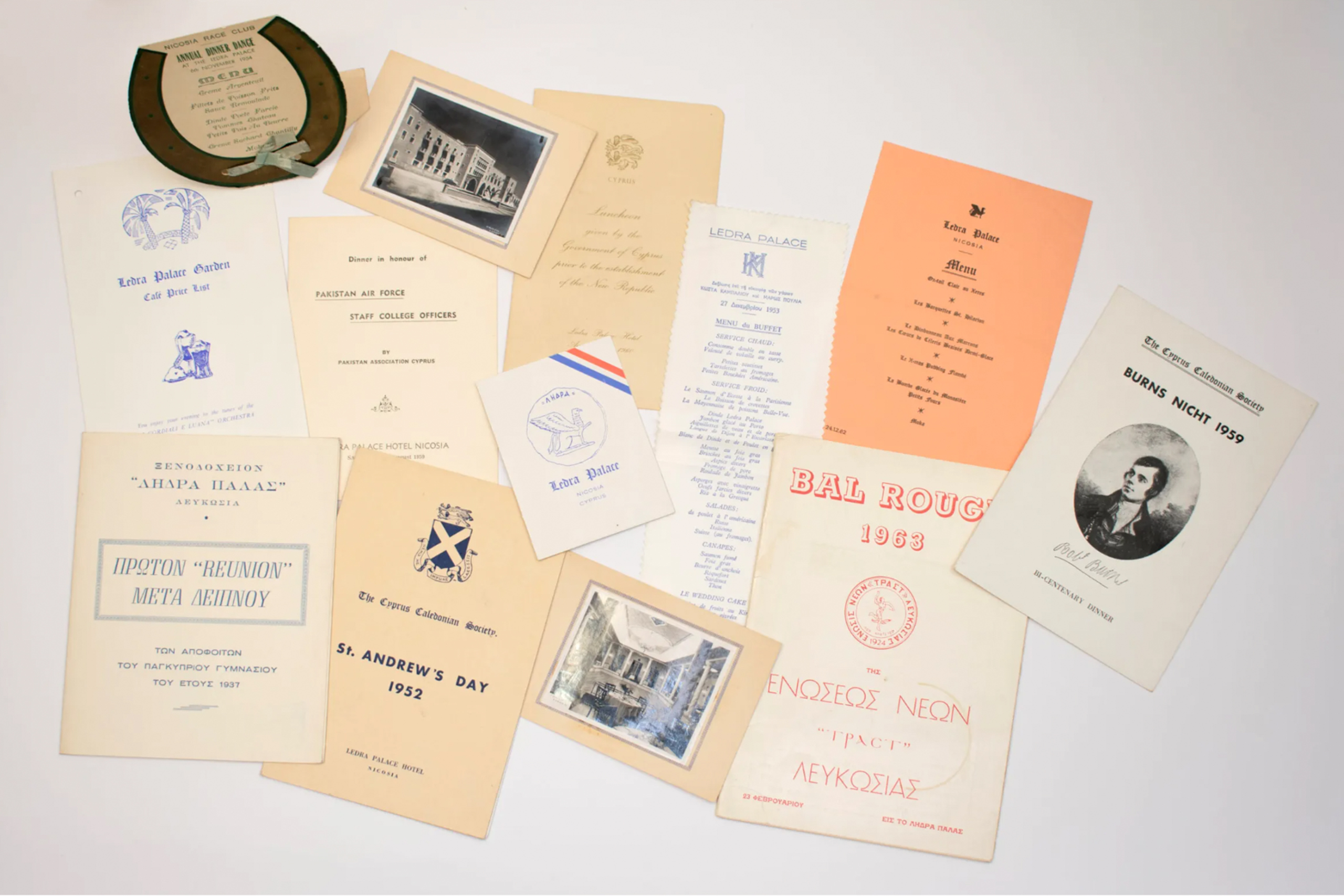
The hotel matters because it refuses to let anyone forget what was lost and what might still be regained. Every bullet hole in its facade, every meeting room where leaders sit across from each other, every person who crosses from one side to the other through its grounds carries forward the same message. Cyprus was once unified, became divided, and continues to search for a way forward.
The Ledra Palace stands as proof that even in the deepest divisions, spaces for dialogue can exist. It remains the most famous hotel in Cyprus, not for its luxury, but for its endurance through the island’s most difficult decades.