 English
 Greek
Greek German
 Russian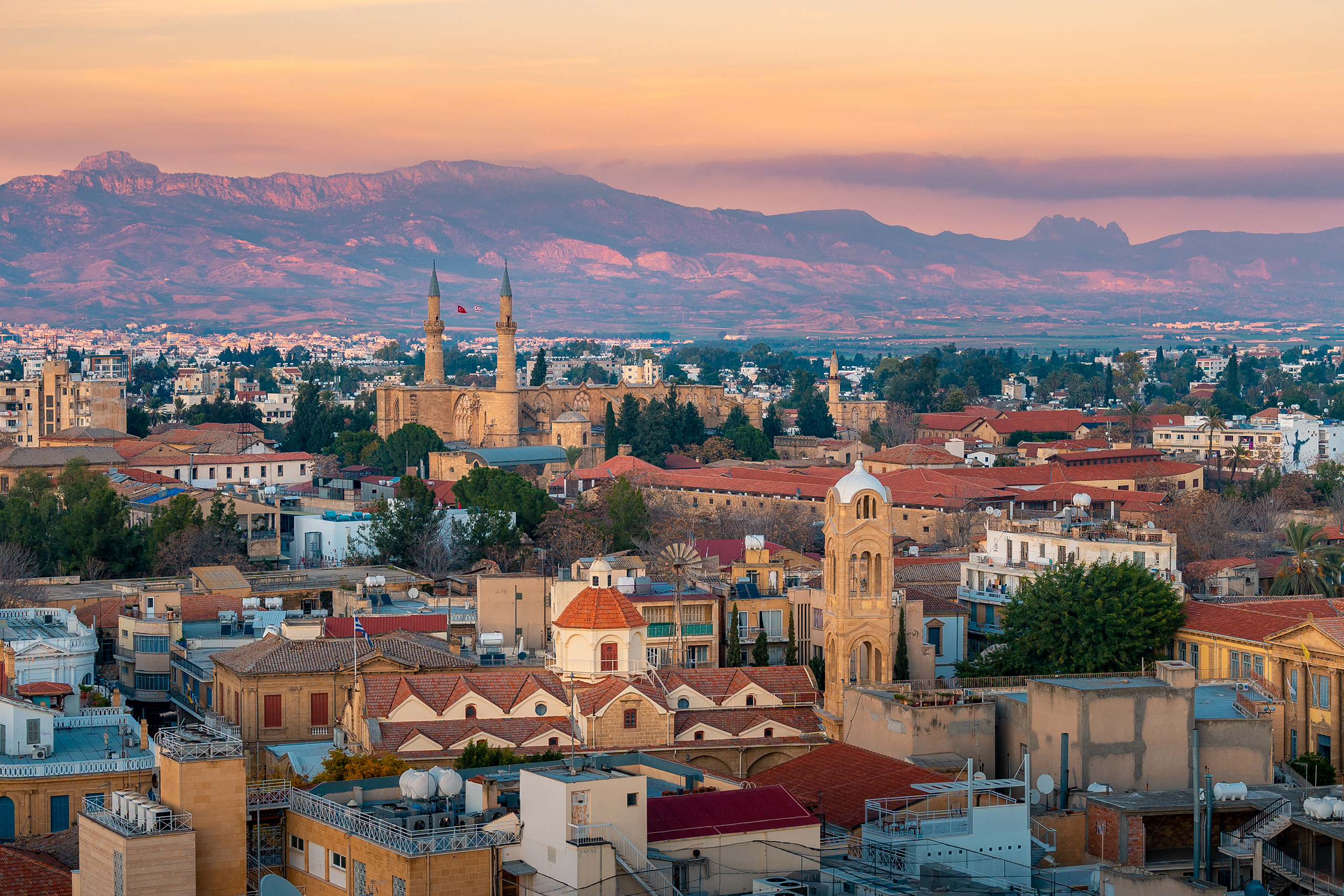
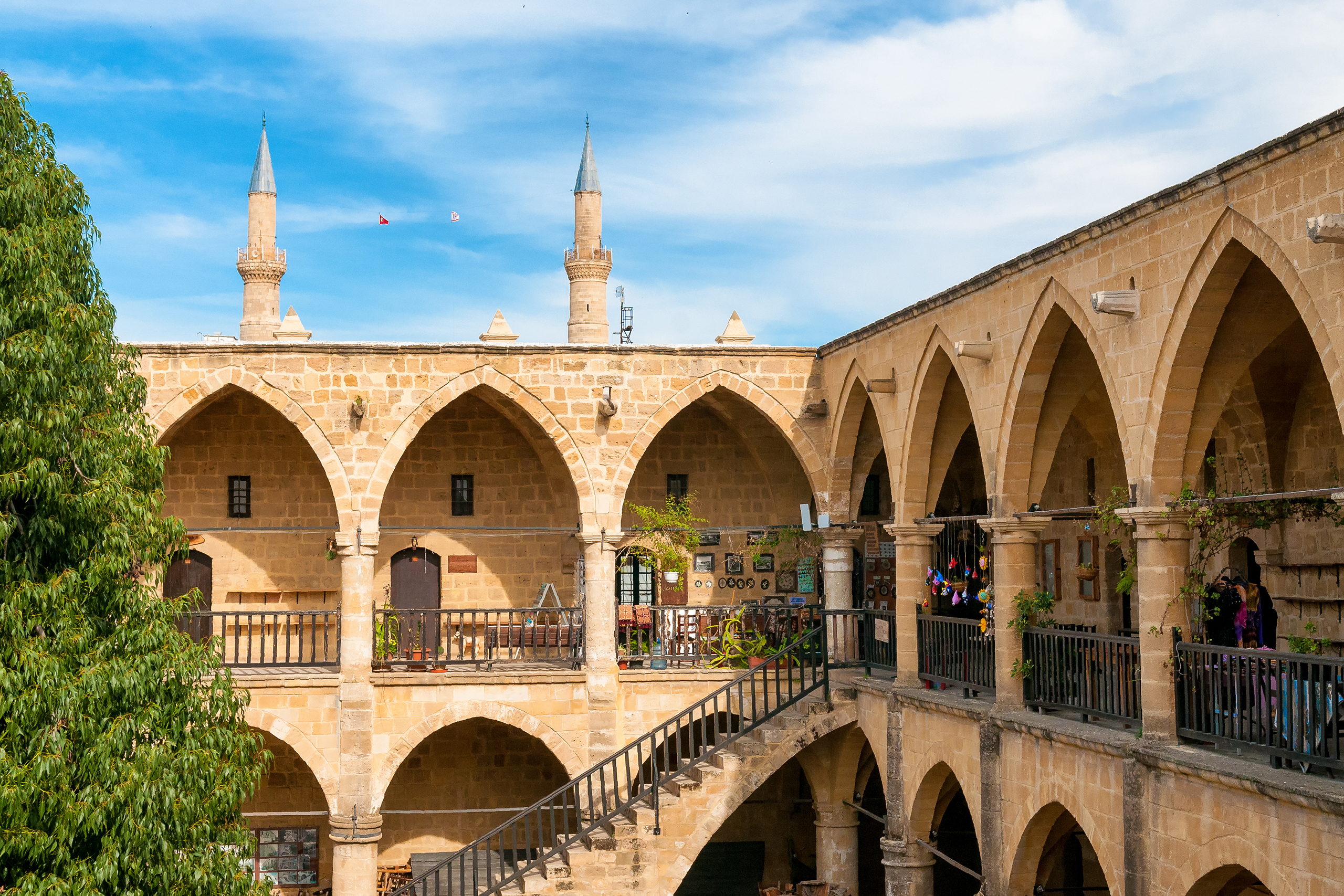
The Omeriye Mosque stands in the old walled city of Nicosia as one of the most significant Islamic buildings in the Greek Cypriot sector of the divided capital. The site began as the Augustinian monastery of St. Mary, constructed during the first half of the 14th century under Lusignan rule. By 1395, it ranked as one of the three most important monasteries in Nicosia. The complex originally covered approximately six acres and included extensive grounds with gardens, orchards, fields of wheat and barley, and even a sugar plantation. This made it one of the wealthiest religious institutions in medieval Cyprus.
Historical Background
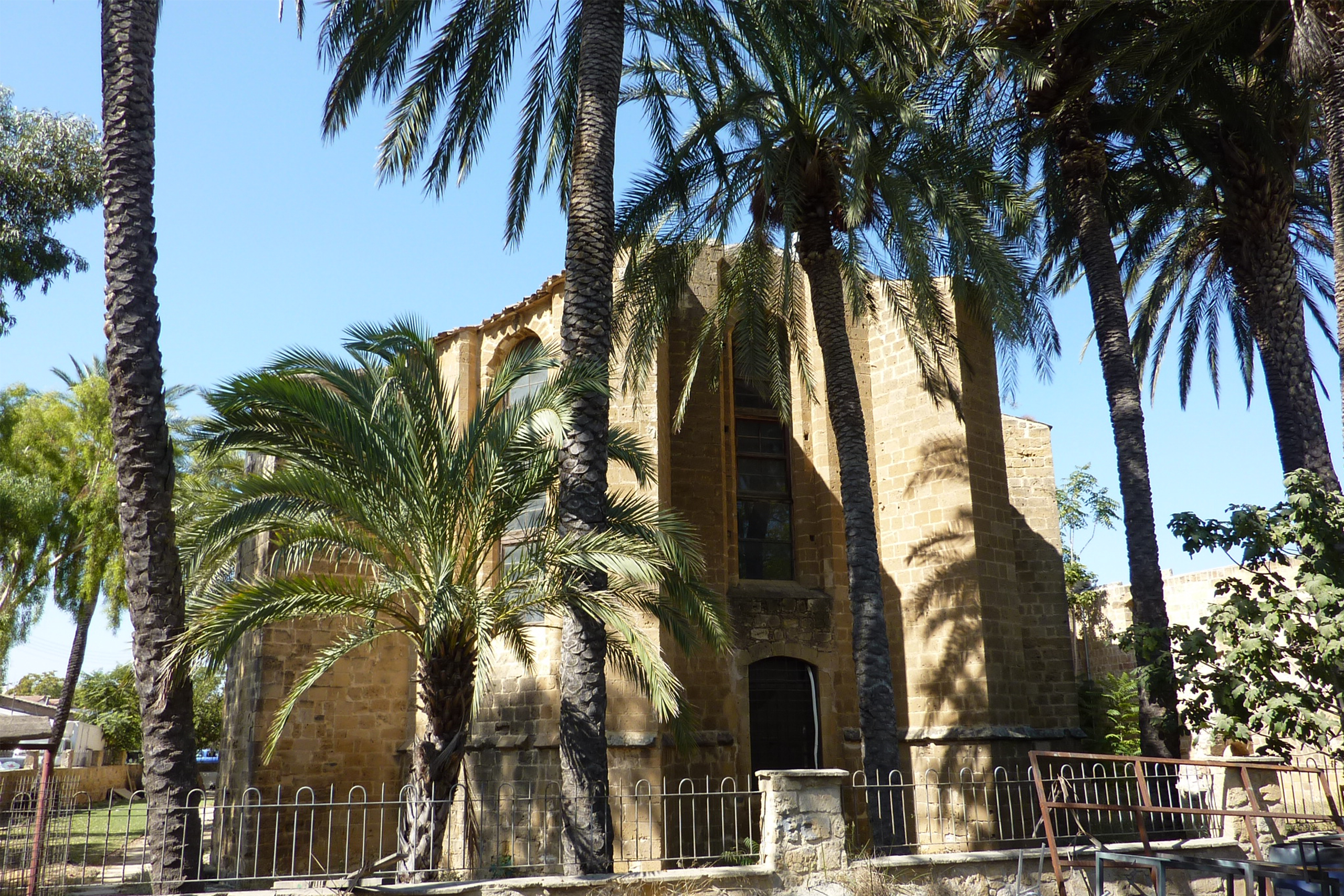
The monastery’s fortunes changed dramatically during the Ottoman siege of Nicosia in 1570. The building’s location between the Constanza and Podocattaro bastions placed it directly in the path of Ottoman artillery bombardment. The upper portions of the church, including the roof and superstructure up to approximately the height of the windows, were destroyed by Ottoman cannonades during the 48-day siege.
After Nicosia fell to Ottoman forces on September 9, 1570, the damaged monastery was abandoned. The conquest marked the end of Venetian rule in Cyprus and the beginning of over three centuries of Ottoman administration. The monastery buildings stood in ruins while Ottoman commander Lala Mustafa Pasha established control over the island.
In 1571, Lala Mustafa Pasha ordered the conversion of the ruined monastery into a mosque. The decision was based on an Ottoman tradition claiming that Caliph Omar, the second caliph of Islam and a companion of the Prophet Muhammad, had visited Nicosia in the 7th century while traveling from Damascus to Egypt. According to this legend, Omar rested in the porch of a ruined church at this location. Lala Mustafa Pasha believed the Augustinian church with its western porch was the site mentioned in the tradition, and he dedicated the new mosque to Omar’s memory.
The conversion required substantial reconstruction. Ottoman builders repaired the damaged walls and added a plain wooden roof supported by the existing pointed arches, replacing the destroyed cross vaults. They plastered the interior walls to cover the Christian frescoes and decorations. The mosque was named Omeriye in honor of Caliph Omar. The entire surrounding area also became known as the Omeriye quarter. Lala Mustafa Pasha donated the mosque complex to the city, and it became an important center of Islamic worship in Ottoman Nicosia.
Architectural Features Today
The current structure preserves elements from both its Christian and Islamic periods. The main entrance on the northeastern side features a Renaissance-style doorway, believed to be a remnant of the original 14th-century Lusignan monastery. This decorated doorway contrasts with the otherwise plain exterior walls and massive buttresses that date from the medieval church.
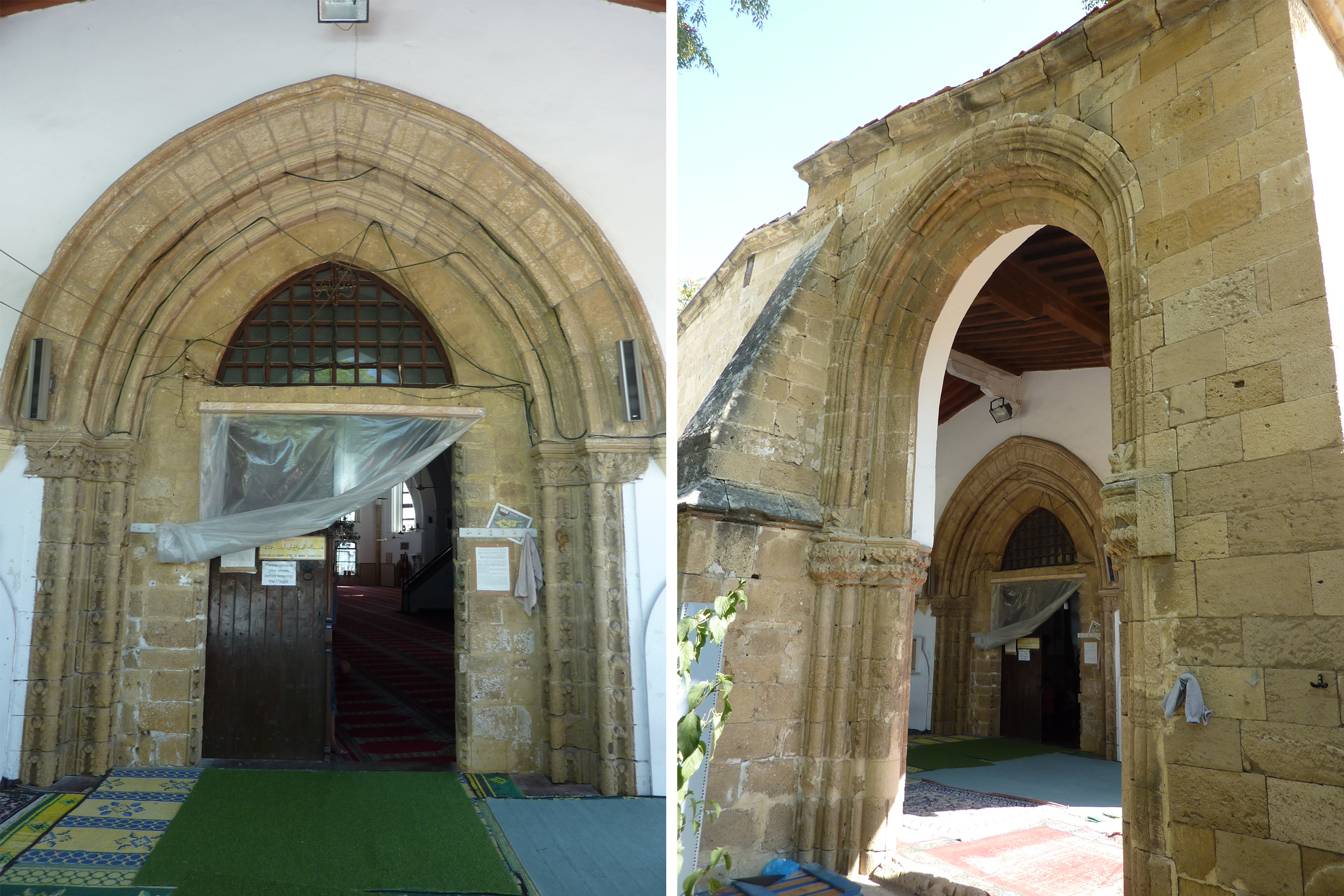
The prayer hall retains its Gothic proportions with the single nave ending in the three-sided apse. The pointed arches supporting the wooden roof are clearly medieval in design. The thick stone walls and small windows reflect the defensive architecture common in 14th-century Cyprus, when churches were often built to withstand attack. The interior floor is covered with green carpeting, a color that symbolizes paradise in Islamic tradition.
The Hamam Complex
Adjacent to the mosque, Lala Mustafa Pasha established the Omeriye Hamam (Turkish bath) around 1571. The hamam was built to serve the Muslim community and quickly became an important social and hygienic facility. Ottoman bathhouses followed a traditional design with three temperature zones: a cool entrance area for undressing, warm intermediate rooms, and a hot inner chamber with steam.

The Omeriye Hamam featured a large domed entrance hall with an octagonal pool in the center. From there, bathers proceeded through two rooms in the warm zone before reaching the domed hot room where they would bathe and receive massages. The building used small domes characteristic of Ottoman bath architecture, with star-shaped openings that allowed light to filter in while maintaining privacy.
The hamam fell into disuse during the 20th century and deteriorated significantly. Between 2002 and 2004, it underwent complete restoration as part of the Nicosia Master Plan, a bi-communal project funded by the United Nations Development Programme, the European Union, and USAID. The restoration respected the original Ottoman design while installing modern plumbing and heating systems.
Visiting Information
The Omeriye Mosque welcomes both worshippers and tourists. Non-Muslim visitors are permitted to enter outside of prayer times, though they must observe appropriate etiquette. This includes dressing conservatively with shoulders and knees covered, removing shoes before entering the prayer hall, and maintaining quiet and respectful behavior inside.
Women visitors should bring a headscarf to cover their hair, though coverings are usually available at the entrance if needed. Photography is generally permitted but visitors should ask permission before taking photos of people praying. The mosque is most crowded during Friday midday prayers when the congregation gathers for the weekly sermon and communal prayer.
The mosque is open throughout the day except during the five daily prayer times, which last approximately 15 to 20 minutes each. Prayer times vary with the seasons according to the position of the sun. Visitors should check current prayer schedules before planning their visit to avoid arriving during restricted times.
The entrance is located off Trikoupi Street in the Omeriye quarter of old Nicosia. The area is known locally as the Arab quarter due to the concentration of shops, restaurants, and services catering to the Arab and broader Muslim community. The narrow streets around the mosque preserve the medieval layout of this part of the city.
Architectural Significance
The Omeriye Mosque is the only Gothic church converted to a mosque in southern Nicosia. This makes it architecturally unique compared to other religious buildings in the Greek Cypriot sector. The combination of medieval Frankish construction with Ottoman modifications demonstrates how buildings can be adapted to serve different religious needs while preserving their structural integrity.
The survival of the Renaissance doorway, the Gothic pointed arches, and the medieval buttresses provides evidence of construction techniques used in 14th-century Cyprus. The thick walls and defensive features reflect the period when churches were built to withstand attack, a necessary precaution during the unstable Lusignan period.
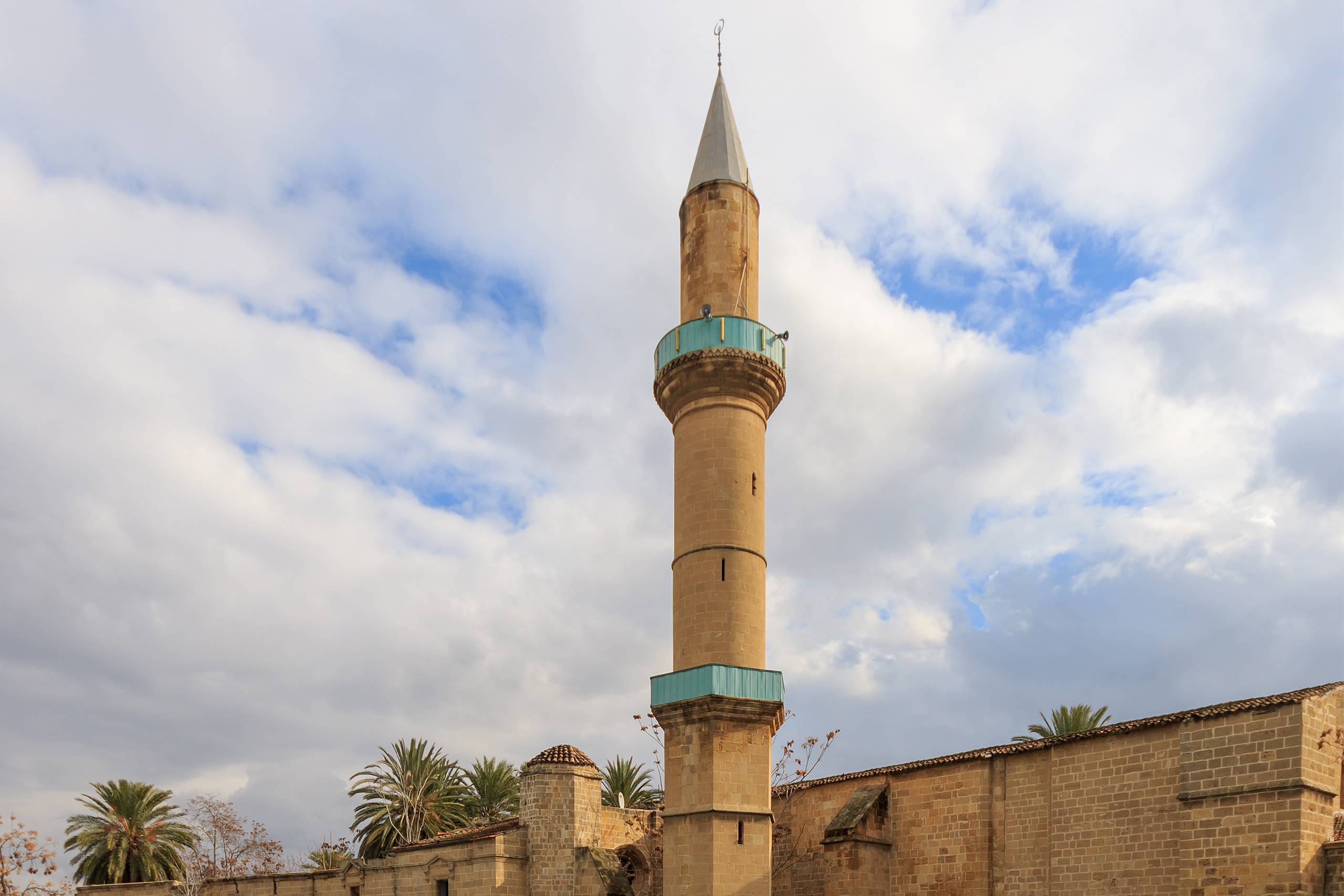
The Ottoman additions, particularly the minaret and the wooden roof, show how Islamic architecture was implemented in Cyprus using local materials and adapting to existing structures. The relatively simple conversion demonstrates that Ottoman builders prioritized function over elaborate decoration, creating worship spaces that met Islamic requirements without unnecessary expense.
Cultural Heritage Value
The Omeriye Mosque represents an important example of architectural continuity and religious transformation. The building documents the transition from Crusader Christianity to Ottoman Islam, a change that fundamentally altered Cypriot society. The physical evidence of both periods preserved in a single structure makes it valuable for understanding how religious buildings evolve over time.
The mosque also represents the Ottoman presence in Cyprus, a period of over 300 years that left lasting impacts on the island’s culture, architecture, language, and society. As one of the relatively few Ottoman buildings that remain in active use for their original purpose, it provides tangible connection to this historical period.
The restoration of both the mosque and hamam in the early 2000s demonstrates how heritage conservation can serve contemporary needs. The projects balanced respect for historical authenticity with practical requirements for modern use, creating spaces that honor the past while serving present communities.
Historical Lessons
The Omeriye Mosque teaches several lessons about cultural heritage and religious architecture. It shows that buildings can successfully serve different religious purposes without losing their historical value. The Gothic arches that once framed Christian worship now define Islamic prayer space, demonstrating architectural flexibility.
The conversion also illustrates how conquering powers dealt with existing religious buildings. Rather than complete destruction, the Ottomans chose adaptation, preserving the structure while modifying it for new purposes. This practical approach resulted in the survival of medieval architecture that might otherwise have been lost.
The 20th-century challenges faced by the mosque, including periods of abandonment and intercommunal tension, reflect broader Cypriot history. The building’s resilience and eventual restoration parallel efforts to preserve shared heritage despite political divisions. The success in maintaining the mosque as an active religious site demonstrates that cultural preservation can transcend contemporary conflicts.
Place in Nicosia’s Heritage
The Omeriye Mosque forms part of the rich architectural heritage concentrated within Nicosia’s Venetian walls. Together with the nearby Selimiye Mosque (formerly St. Sophia Cathedral) in the Turkish-occupied part of Nicosia, the Byzantine churches, the Venetian fortifications, and various medieval buildings, it contributes to making old Nicosia one of the most historically diverse city centers in the Mediterranean.
The mosque’s Gothic origins connect it to the Crusader period and the Lusignan kingdom, while its Ottoman modifications link it to the three centuries of Turkish rule. This dual heritage makes it valuable for understanding the full span of medieval and early modern Cypriot history. The building serves as a physical archive documenting major historical transitions.